Alcohol products were as affordable or became more affordable in most countries over the last few years, when evidence shows that reducing affordability is a crucial step to curbing alcohol harm, found a WHO report released yesterday.
Beer was at least as affordable in 69% of the countries where data was available when prices in 2025 werecompared to two years earlier. For spirits this was the case in 78% of countries. This was often because alcohol taxes failed to match inflation.
“Most alcohol taxes remain low and are not optimally designed,” the report says. Alcohol interests are strongly opposed to raising alcohol taxes because it reduces their profits which derive in large part from higher levels of consumption.
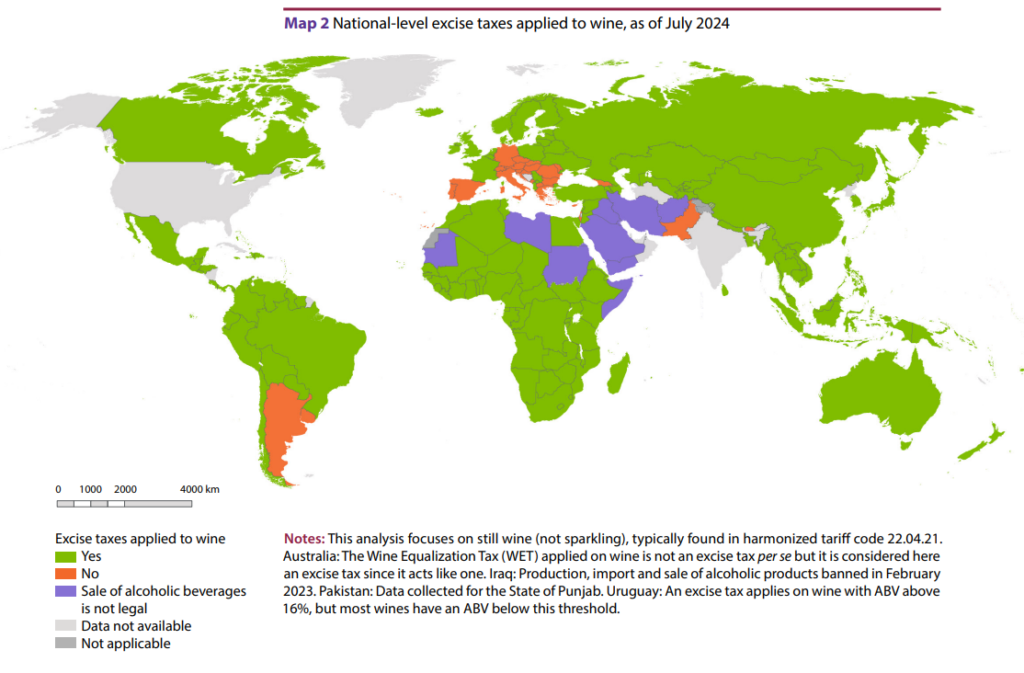
At least 167 of the 181 countries surveyed applied national-level alcohol excise taxes to at least one type of alcohol product, with most of the rest banning the sale of alcohol. Wine is not specifically taxed in 25 countries, 14 of them in Europe (see map).
The WHO launched an initiative called “3 by 35” in July to encourage countries to reduce the affordability of alcohol, along with tobacco and sugary drinks. It hopes to see real terms price of “any or all” of these products by 50% by 2035.
The affordability crisis is deeply unpopular, but raising alcohol taxes is not. A Gallup poll across five diverse countries–Colombia, India, Jordan, Tanzania and the US–found 69% support for higher alcohol taxes in 2023. ■