• Skip to main content

Alcohol Review

Alcohol understanding for all

  • Highlights
  • AR2026
    • AR2025
    • Earlier events
  • Register
  • About
    • Organisers
    • Contact
  • Log In

story

Temperance, unfinished history

January 10, 2024

This week BBC Radio 4’s In Our Time told the story of the Temperance movement in Britain which is said to have really got going in 1832 in Preston. It provides fascinating insight into where we find ourselves now, where we have moved forward and where the debate has become frozen in time. You can listen yourself here.
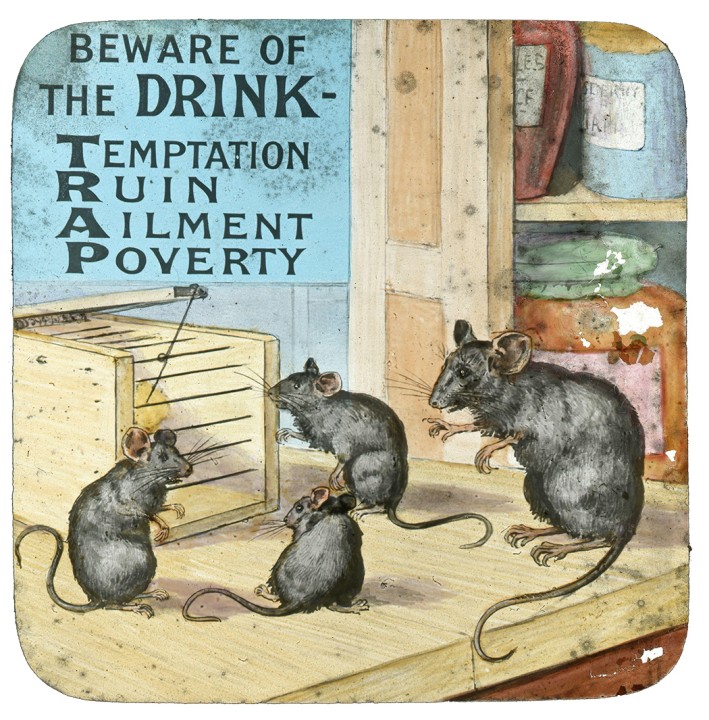
What struck me was that we are not so much reliving this history, but that the knotty issues raised by retailing addictive psychoactives were never resolved. While we might scoff at our ancestors, we have not come much further. What we see now on the internet are, perhaps, are echoes of the arguments made in temperance halls and colourful lantern slides.

One notable quote from the programme came from Bishop of Peterborough in 1872. Looking it up verbatim in Hansard it was, “…it would be better that England should be free than that England should be compulsorily sober.” He went on, however, “I would distinctly prefer freedom to sobriety, because with freedom we might in the end attain sobriety.”

The bill he was opposing with this speech to the House of Lords was one to allow local parishes to stop the issue of alcohol licences. This might well have been a blunt and ineffective instrument. I don’t know. But what is clear is that the bishop’s argument brushed aside positive freedoms we typically value on a par with the freedom to do business.

This is a fateful oversimplification of the conception of freedom, which has the dire consequence of polarising the discussion from there on. I outline this more fully in the opening chapter of Alcohol for Nerds, drawing on the work of intellectual historian Professor Quentin Skinner who created a detailed genealogy of freedoms, plural.

But, in essence, 150-years on it is still not accurate to portray those who seek to regulate alcohol sales more as being “against freedom” and those in favour of fewer regulations as being “for freedom”. It ignores the fact that restrictions help curb the freedom-reducing effects of things like inebriation, violence, dependence, illness and disability.

As the BBC programme makes clear the Temperance movement was largely led by and for the benefit of working people looking to improve their lives, by avoiding the many perils of Victorian life. It was also part of a wider struggle to find a political voice. This is a struggle for freedom, not against it, although it can impinge on some commercial freedoms.

The UK has not found a satisfactory democratic solution to this day. Elected representatives have long abdicated responsibility for regulating alcohol marketing and advertising, handing it to the alcohol industry itself, despite the direct conflict of interest. The results are predictably poor, with government ministers unable to introduce something simple as guideline labelling.

We have changed enormously since the days of the Temperance movement, as has the knowledge-base from which we work. But the balancing of different conceptions of freedom goes on. This is society struggling to decide what freedom is and how to deliver it. Long may it continue. ■
Alcohol worsens disadvantages

January 10, 2024

With a welcome spotlight being shone on rising inequality this week it is worth noting that alcohol makes it harder for poorer people to succeed in a game already heavily weighted against them.

This fact is not as widely acknowledged as it should be. A large charity told me to call elsewhere because it focuses on poverty not alcohol. Of course, specialism is necessary, but not when it means neglecting clear links. Luckily it seems they will not be ignored much longer.

On the radar
“One cause for concern is a rise in ‘deaths of despair’” said the IFS Deaton Review, launched in the UK this week, referring to deaths from suicide, drug and alcohol overdose and alcohol-related liver disease. They have overtaken deaths from heart disease in recent years (see chart).

Of course death is the most stark outcome. With luck, the review’s army of sociologists, demographers and epidemiologists will also shed light on a myriad more nuanced inequalities to which alcohol contributes. As the Alcohol Change UK campaign pointed out alcohol harms poorer people more in many other ways.

Poorer people tend to live with fewer healthcare facilities, more crime, more stress and higher levels of alcohol availability, so slipping more easily into heavy drinking. The middle classes have their difficulties, but generally nothing to compare with the perils faced by people struggling to get by.

A dicey game
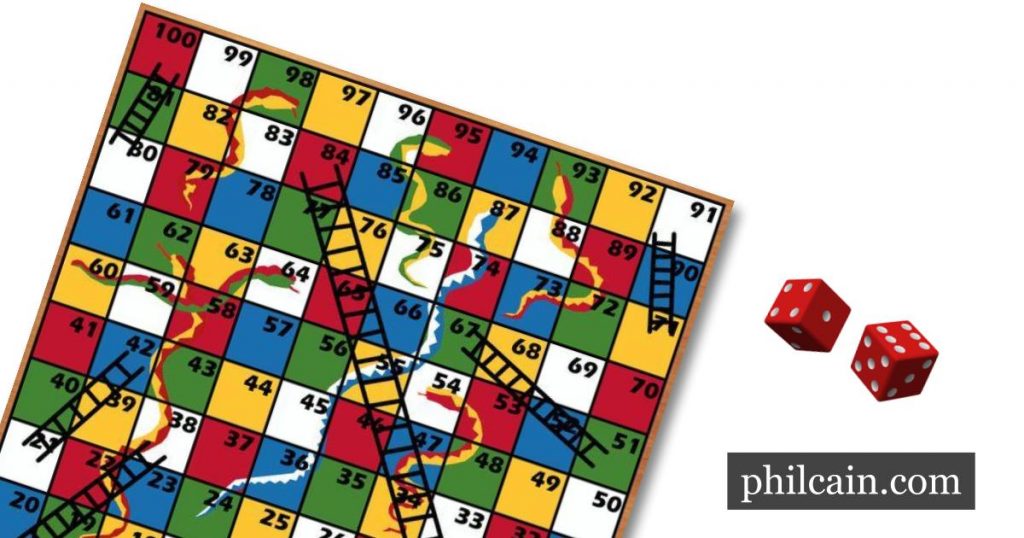
The board game snakes and ladders, or chutes and ladders in the US, can help picture how circumstances alter our chances of success or mishap. Each player moves along the board and when landing on a ladder takes a big step up and when they land on a snake they slip a long way down.

But, crucially, we do not all play on the same board. Poorer people start further away from the giddy heights of their terrain. And, to reflect their less fortunate circumstances, they face more penalties and fewer bonuses, so fewer and shorter ladders, and more, longer snakes. Consequently a smaller percentage of poorer people make as much progress.

To make it more realistic we should test a skill to decide whether we necessarily slide down a snake or climb a ladder. Maybe we have to answer an exam question or, something silly like catch a ball in a cup, anything really to mimic a real life test. Adding this extra obstacle simply multiplies the extra difficulties faced by poorer people.

Now, finally, we can add another level of realism to the model, alcohol. Consuming alcohol impairs our skills, judgement and planning, so meaning we fall down even more snakes and can take advantage fewer lucky breaks. Adding alcohol to the equation tips the balance of an unfair game even further against poorer people.

At the same time advertising relentless associates alcohol with success and winning, deliberately obscuring the fact that it is far more likely to increase our chances of losing.

Clear, not less subtle
The “alcohol paradox”, the name often given to the way alcohol disproportionately harms poorer people is unhelpful, adding intrigue to something which is not mysterious. It is not paradoxical that poorer people are harmed more It is simply a testament to the combined effect of more challenging circumstances and substance blunting our abilities.

It is, of course, vital for the review unveiled this week to go beyond this simplistic model and to shed light on the details. But, as a starting point, the reason alcohol tends to compound inequality can be an unfortunate effect everyone can readily understand and find ways to avoid. With luck, more policies will emerge to make it easier. ■

Covid-19 shows life-saving policies are popular

January 10, 2024

The effort to control the covid-19 outbreak shows the public welcomes government action to protect life. Politicians might take note when formulating policies on alcohol, responsible for one in twenty deaths.

Billions of us have overnight willingly complied with often stringent laws curtailing our business and social lives, thanks to our clear understanding that doing so is saving millions of lives.

It seems reasonable to suggest that we would also gladly accept modest extra tax, advertising restrictions, and labelling and availability measures to cut millions of deaths, injury and suffering from alcohol consumption.

Far harsher restrictions are in place. Alcohol sales have been banned under lockdown laws in South Africa, Botswana, and parts of Thailand, Greenland and among a native group in Canada. The impact is uncertain.

Alcohol dependents will likely suffer the physical and mental health effects of withdrawal.Some have reportedly died as a result of “toddy” becoming hard to come by in India, largely by their own hand.

Providing support will be more challenging in coming months. Can Zoom support ever really replace a face-to-face meeting? Or might online even attract new people and offer more privacy?

Or will online help miss those who need it most? One former alcohol dependent said in a philcain.com discussion that being in covid-19 isolation with a stash of alcohol would have been her “happy place”.

Like it or not, we will find out some answers in the very near future. But our exceptional circumstances will also create exceptional statistics, full of “confounders”, making them incomparable with those before.

Road accidents in places where alcohol is suddenly off-limits, for example, are likely to drop sharply. But, then again, there is going to be hardly anyone on the road. So what will the numbers mean?

The first phase of the covid-19 outbreak has shown the public welcomes decisive government action to protect health and we will gladly accommodate them. 

As a species we are adaptable survivors. And we have now shown we welcome advice that helps us survive. We might also use this time to reflect and rethink our priorities and habits.

There is room for a glimmer of optimism we might make the best of this unusually bleak situation. ■

Recovery Channel Podcast: interview

January 10, 2024

On a virtual trip to San Antonio, Texas recording a chat about alcohol’s lack of utility, national drinking patterns, Dry January, the stress of political division and the merits of podcasting while standing. ■

Visualising alcohol’s calories

January 10, 2024

One way to visualise alcohol calories is to see it has has roughly the same amount as oil 5-9cal/ml. So 500ml of 5% lager alcohol contributes roughly the same as 25ml of oil, ~200 calories. And in a 75ml bottle of, say, 12% wine alcohol contribute about as much as 90ml of oil, 700 calories.

This high level should not be too surprising, given that alcohol is manufactured from sugar, again roughly the same order of calorie density. Part of Victorian doctors’ mistaken enthusiasm for prescribing alcohol was it provided weakened invalids with a “clean” source of energy.

It’s by no means perfectly accurate, but it is a reasonable way to get a feel for it, in the absence of clear labelling. ■

Brits drank less alcohol in early pandemic

January 10, 2024

Brits overall drank less alcohol than usual in the first few months of the pandemic last year, despite scenes of frenzied panic buying.

There was a fall of around 10% in England and Wales and 5% in Scotland in the second quarter of 2020, according to figures published by Public Health Scotland yesterday. But these were just averages.

“Unfortunately we know that some of us—particularly heavier drinkers— have been drinking more. We need to make support available,” wrote Alison Douglas of Alcohol Focus Scotland. 

Average amounts may not have changed much but the average context has. We now drink more often alone at home to soothe anxiety or cheer ourselves up, uses in which alcohol backfires in the longer term.

This means, taking the population as a whole, the dramatic rise in the amount consumed at home was not enough to outweigh the amount they would normally drink in pubs and bars.

In England and Wales men’s drinking on average fell by just under 13% and women’s by 7%. In Scotland the falls were 7% for men and just 1% for women.

What happened in the third and fourth quarters of 2020 is currently unclear, with tax figures suggesting a rise in overall alcohol consumption and industry figures a fall. ■

  • « Go to Previous Page
  • Page 1
  • Interim pages omitted …
  • Page 21
  • Page 22
  • Page 23
  • Page 24
  • Page 25
  • Interim pages omitted …
  • Page 44
  • Go to Next Page »

Copyright © 2026 · Phil Cain Impressum