• Skip to main content

Alcohol Review

Alcohol understanding for all

  • Highlights
  • AR2026
    • AR2025
    • Earlier events
  • Register
  • About
    • Organisers
    • Contact
  • Log In

story

Not drinking is pure hedonism

January 10, 2024

Taking an alcohol break, as many are doing now, can be seen as a step towards a purposeful pursuit of pure pleasure, or hedonism, instead of a spartan act of self-denial.

Maximising pleasure is more than giving ourselves a series of nice feelings. Otherwise we might simply lie around all the time gorging ourselves on delicious snacks and, er, tickling ourselves.

Some pleasures we discover are transient and not connected to anything else. So, over time, we learn not to invest excessive amounts of time in pleasures which do not pay off, or which bring downsides.

Thankfully, however, as uniquely sophisticated, conscious mammals capable of reasoning, our range of pleasures are uniquely wide, varied and adaptable. It is no coincidence they take in activities which help us thrive.

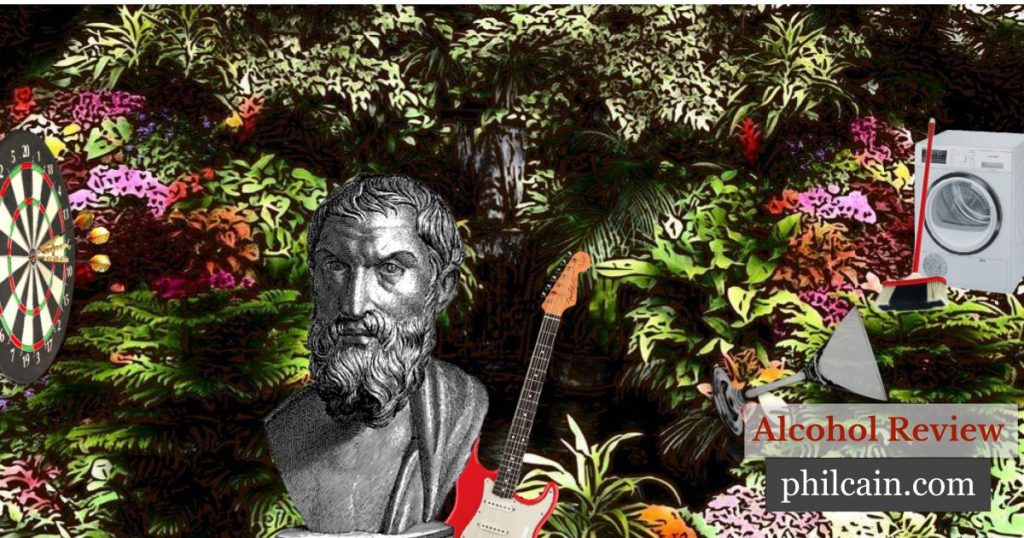
We typically get great pleasure from learning, practising and succeeding, getting a buzz from passing exams and triple-twenties in darts. And we enjoy work, music, movement, socialising, sights, sounds and sensations.

And we can even conjure joy from outwardly tedious activities which pay off. Some of us can, for instance, with the right mind-games, elicit unlikely gratification from catching up with paperwork or sweeping behind the tumble dryer.

Epicurus, a Greek hedonist from 2,300 year ago (pictured), plumped for chilling in a communal garden talking with mates about philosophy. He rejected the idea that drinking a lot of alcohol as the best route to pleasure.

Alcohol, a psychoactive, gives us an out-sized impression of its reward. This can mean we invest more time and energy in alcohol than it deserves. Our human relish for persistence in the face of hardship does us no favours here.

We can persist in drinking alcohol even though it  brings scant pleasure and is causing us grief. We can want alcohol without liking it, with its pleasures and rewards long outweighed by hangovers, crappy sleep and low mood. 

Not drinking for a month or longer is a good way for us to weigh up the pleasures and downsides of alcohol. What things positive and negative do we correctly attribute to it? And what downsides does it have we did not notice?

It can take us from three months to a year to be free of side-effects that heavier alcohol drinking can bring, like anxiety and low or changeable mood. If we make one month it can be worth banking the investment and carrying on.

Taking time without alcohol is a route to finding more pleasure in life. And it can also be the beginning of a life devoted to pursuing of long lasting pleasures without serious downsides. This is a pure form of hedonism. 

Stopping alcohol for any length of time we choose is not a hair-shirt exercise. It is time we can use to rid ourselves of any illusions conjured up by alcohol and to focus on greater pleasures. ■
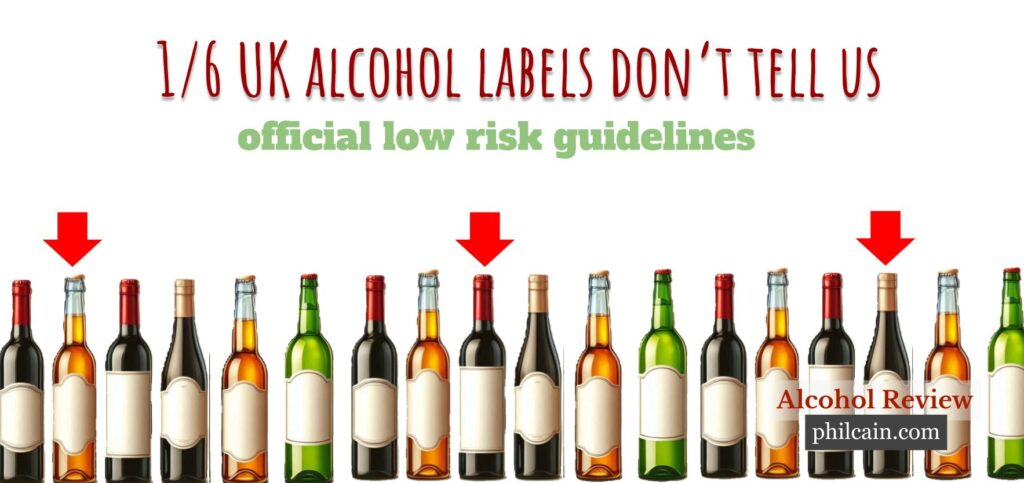
Chronic labelling failure

January 10, 2024

Around one-in-six alcohol labels in the UK fail to give the official 140ml per week low risk drinking guidelines eight years after their introduction, according to the alcohol industry’s own figures. ■

This is one of a collection of shareable alcohol messages created since 2018. If you think more people should know, please share and join the supporters.

Forging language for change

January 10, 2024

Creating change around alcohol and elsewhere requires us to describe dynamic situations accurately, an area where English could be improved.

Our language often ties us to a static picture of situations more usefully seen as being in dynamic change, so blinding us to possibilities.

We are not, for instance, smokers in the same way we are right-handed, brown-eyed, male or female.

Being a smoker is a status we acquire as a result of what we consume and something we can change by making different choices.

English we say, “I am a smoker,” in the same way as, “I am from Manchester,” or “I am human.” But they are not the same.

In this way, as my brilliant friend and first giveaway book recipient pointed out,  we English-speakers have made a hash of it.

“There is no escape save by stepping out of it into another [language],” as Enlightenment polymath Alexander von Humboldt put it.

Not “to be”
If we are serious about change we should distinguish between inherent states and transient ones.

Making the distinction clear would  help us all see better where fruitful change is possible.

Portuguese and Spanish—and other Iberian languages—have a way to do this built in, using the word “estar” for potentially passing states.

Mixing it into English unforgivably, “I estar alcohol dependent,” would mean we are currently alcohol dependent, but not always and forever.

Using estar like this would convey a sense of changeability to a state of illness, boredom, sadness, or being a smoker too.

I am told estar is not often used to emphasise that substance use problems are shifting and dynamic, but doing so would be easy.

In English it is more difficult. A new word, an English estar, has only a very remote chance of catching on.

Emphasising change
Given introducing a new English verb is impossible we could still make better use of the language we already have.

“Now” is, perhaps, useful: I am now a smoker; I now have a cold; I am now alcohol dependent; I am now not alcohol dependent.

Yes, it is clunky, but perhaps we should accept some clunk if it means we avoid binding ourselves to things which we can change.

It offers the potential to soften and shift our outlook and allows, if we wish, our self-image to adapt to new circumstances.

Routinely acknowledging change is possible, in alcohol consumption, smoking and much else, can surely help us realise our choices. ■

UPDATED: UK lockdown alcohol volume estimates disagree

January 10, 2024

A UK alcohol industry trade body says beer and wine sales measured in litres both fell in the covid-19 lockdown, apparently contradicting a health analyst’s findings.

Beer sales fell 10% by volume in the year to October 2020 and the volume of wine sold fell by 5% in the same period, says the Wine and Spirit Trade Association (WSTA).

It gave no number for spirits, but in a later press release on low- and no-alcohol labelling it said “spirits sales are flat”.

“It combines sales across on-trade venues with off-trade sales from shops, supermarkets etc to produce an overall volume sales figure,” says Tom Pratt, the WSTA data manager.

An estimate by Sheffield University’s Colin Angus published last year showed an overall increase in alcohol consumption, based on official tax information. WSTA says its estimate is based on Nielsen and CGA data.

Neither estimate sheds light on which groups of people are drinking more alcohol and in what circumstances, which may be more useful in pinpointing harm than the average over the population. ◼

Euro beer placement rules unclear for non-religious

January 10, 2024

The Euro 2020 organiser will not say if footballers can give secular reasons for withholding their apparent endorsement for a beer brand in press conferences.

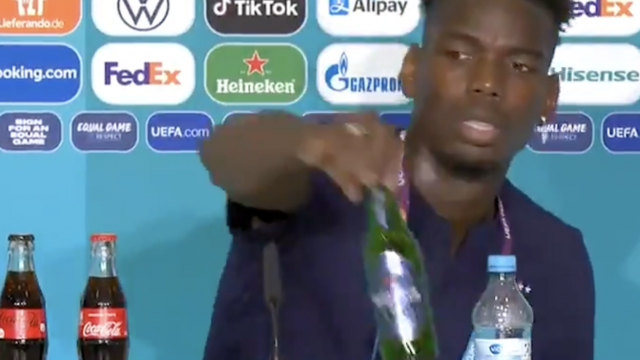
The freedom was clearly given to religious believers last week after Paul Pogba (pictured), a Muslim, publicly set aside a bottle of Heineken 0.0 in a press conference a fortnight ago.

The Heineken 0.0 brand can be easily mistaken for its alcoholic sister product which means that appearing to endorse one can unwittingly promote the other.

The Euro 2020 organiser UEFA confirmed to Alcohol Review that players and managers can give religious reasons to have Heineken 0.0 bottles removed from in front of them in press conferences.

The objection it says needs to be made “owing to religious beliefs”. It is currently unclear if the same freedom is available to those objecting to the placement for secular reasons, like a wish to support football fans in adopting healthy lifestyles.

“UEFA has reminded participating teams that partnerships are integral to the delivery of the tournament and to ensuring the development of football across Europe, including for youth and women. We have no further comment,” UEFA replied.

Limiting freedoms to just one religious group or belief system is “an affront to human dignity and a disavowal of the principles of the Charter of the UN”, the UN says in a 1981 declaration on intolerance and discrimination.

The Heineken 0.0 bottles may disappear from some press conference tables but will still appear on the wall of logos behind and also features prominently during games. This is of concern to health advocates of all backgrounds. ■

CAMRA launches minimum alcohol price investigation

January 10, 2024

The leaders of a UK organisation representing traditional pub and ale enthusiasts have decided to hold an investigation into the effects of minimum alcohol pricing.

The move comes in response to a motion passed at the Campaign for Real Ale (CAMRA) annual conference in Dundee last month calling for the organisation to back the “urgent introduction” of minimum pricing in England, after it was introduced in Scotland last year.

“The national executive are carrying out further investigation into the issue to determine the best way to deliver the decision taken by conference,” a CAMRA spokesperson said. “We are unlikely to have any different updates imminently.”

Alcohol has retailed for more than 50p ($0.66) per 10ml UK unit in Scotland since May last year. Supporters hope it will curtail the drinking of very heavy drinkers who gravitate towards cheap sources of alcohol. In England the price per unit starts at 16p.

The price of beer sold in pubs is unaffected by minimum pricing, typically being more than three times the 50p minimum price. Supporters within CAMRA argue minimum pricing may help counter the decline of British pubs by narrowing the price gap with supermarkets.

Others do not see it this way, saying on social media the pro-minimum price motion panders to “anti-alcohol” forces, threatening to cancel their CAMRA memberships. Some, however, wonder if an appreciation of untainted liberal economics is a necessary part of appreciating traditional beer.

Help may be at hand. An initial evaluation of the short-term economic impact of minimum pricing in Scotland is due later this year. And some insight into its effectiveness in achieving its goal of reducing harmful drinking is expected next year.

The conference also saw the arrival of a new CAMRA chairman, Nik Antona. ■

  • « Go to Previous Page
  • Page 1
  • Interim pages omitted …
  • Page 23
  • Page 24
  • Page 25
  • Page 26
  • Page 27
  • Interim pages omitted …
  • Page 44
  • Go to Next Page »

Copyright © 2026 · Phil Cain Impressum