• Skip to main content

Alcohol Review

Alcohol understanding for all

  • Highlights
  • AR2026
    • AR2025
    • Earlier events
  • Register
  • About
    • Organisers
    • Contact
  • Log In

story

DIY alcohol label

January 10, 2024

This is one of a collection of shareable alcohol messages. If you think more people should know, please share and join the supporters.
We should not drink alcohol to ward off any condition. Its many hazards, including cancer, outweigh any benefits. Alternatives like regular moderate exercise, a balanced diet, stress reduction and health care improve health without bringing any added risk. Please join Alcohol Review‘s supporters. ■

Orkney’s link in nascent alcohol-free hotel chain

October 23, 2023

The owner of Orkney’s Stromness Hotel confirmed it will not sell alcohol as part of a nascent socially-engaged hotel chain.

Jersey-based Payman Investment already owns a dozen hotels and has three more in the pipeline, says CEO Na’im Anis Payman, on a call from Albania.

“There is no huge money pot,” says Payman, saying the chain’s expansion is funded from bank financing.

Its eclectic portfolio already offers stays in locations from Stoke-on-Trent to Ulaanbaatar and points between.

Payman follows baha’i, a faith barring the consumption and sale of alcohol, but he notes his view also fits with science.

The company’s alcohol-free approach is best seen as part of a human and women’s rights agenda, says chief impact officer Tahirih Danesh.

The details of Stromness’s offer are still being finalised, but a common feature of all the hotels will be strong ties with local communities, Danesh says.

It will definitely include serving soothing alcohol-free drinks in the public Flattie Bar. Other possible options will include a spa, massage, yoga and tai chi.

The hotel will not be entirely alcohol-free either, because guests at events like weddings will be allowed to bring their own supply.

Payman says the clarified alcohol-free plan now has significant public and private support, having caused a rumpus when first floated in August. ■

See alcohol’s threat to freedoms

October 10, 2018

It is not surprising people see overcoming their alcohol problems as a great liberation because alcohol can undermine every form of freedom ever conceived.

My list of ways alcohol can do this to every idea of freedom developed over the last 350 years is “impressively comprehensive” says revered intellectual historian Professor Quentin Skinner, adding that the question is “very important”.

I would like to pretend this amounted to some major intellectual achievement, but I cannot. I simply overlaid my working knowledge of alcohol’s effects on to Skinner’s “genealogy of freedom”, an overview of the ideas of freedom in play over the last few centuries.

Choosing freedom
Politicians and commentators often talk with impressive certainty about what freedom is. But, in reality, there is no such certainty to be had. It is all rhetorical bluster, often with selfish ends. Freedom is an elusive idea which nobody can dictate.

What freedom means is a matter of personal preference and discussion. There is no absolute right or wrong answer. We need to weigh up the options and choose the account we think best. Skinner’s genealogy lays out the enormous range of coherent alternatives open to us. 

“These are all just vocabularies,” says Skinner, who favours a pragmatist approach to choosing between them. “The question we should be asking ourselves is: Which one is going to go deeply into our society and do the most for us.”

Despite the huge range of coherent, sophisticated accounts, incoherent and potentially harmful accounts still abound. The freedom to tote guns, not wear a face mask in a pandemic or to purchase alcohol unhindered is unlikely to serve us well.

Beware self-serving dogmas
Alcohol sellers, as one might expect, simply champion a version of freedom which suits them, damning anything which impedes sales and implying that alcohol is inherently liberating to boost sales.

It is unwise to take this self-serving account seriously. We need to be able to think clearly to benefit from every form of freedom ever devised, with regulations there to help more of us do so.

Logic goes out of the window in likening lower US guidelines to “stealth prohibition”. It is an absurd exaggeration to suggest medical guidance even amounts to coercion, let alone a bygone legal bar.

Following the same approach, we might portray the posting of a sign saying “mind the step” as first stages in a banning free movement. It uses the rhetorical power of an idea of freedom to protect a commercial interest.

The goal is not a meaningful discussion but a distraction from it. Thankfully there remain many genuine and coherent ideas of freedom to choose from intended to serve human goals rather than commercial targets.

Real accounts of freedom
Over the past three-and-a-half centuries formulations of freedom have fallen into three main types, according to Skinner’s genealogy (see image): not having outside interference; not being answerable to arbitrary power; and in self-fulfilment.

Thinkers and countries shift from one school of thought to another, as did JS Mill to defend women’s rights and so too has the US ever since its foundation. We need not be any more wedded to a single vocabulary. Some ideas of freedom might work better in some areas of life than others.

To figure out which view suits us, it may be useful to look at the consequences for different areas of life, say family, education or health, for instance. And we could also usefully be aware of what threatens them since the price of freedom is eternal vigilance.

My rough shortlist of ways alcohol threatens every formulation of freedom so far invented includes:

  • Alcohol dependence can put us under the arbitrary power of alcohol suppliers, so making us unfree in the “republican” tradition.
  • In the “no-interference” liberal tradition, our freedom is undermined by coercion in the form social pressure, advertising and withdrawal.
  • In the same tradition alcohol also acts on ourselves to arguably induce inauthenticity, impaired judgement or false consciousness.
  • In the traditions of self-realisation alcohol inebriation, dependence and withdrawal may undermine our chances of realising our spiritual or political natures.

We do not need to exclude alcohol from our lives or societies to be free. But we would benefit from the awareness that the commercial exploitation of an addictive psychoactive poses a threat to freedoms we may cherish.

Positive alcohol experiences could also be included in the picture. Alcohol’s sedative effect may aid forms of self-realisation, allowing us to see the upside of being less uptight, perhaps finding it also without alcohol.

A debate we need
What adds and detracts from our freedoms is something we have to decide for ourselves. It has been discussed for centuries and the debate has never seemed more important. Science, society, technology, nature and our fellow humans are creating new threats and new opportunities.

New forms of demagoguery, authoritarianism, geopolitical rifts, pandemic, social division, deception, coercion and censorship threaten freedoms we value. We should be as clear as we can be about what these freedoms are and what they are not so we can defend them effectively.

Alcohol offers a warning that we can lose our freedom without realising it, perhaps partly because we seldom stop to think what it is. It also reminds us that, while freedom can be easily lost, it can also be rediscovered. ■

Is there “no safe level” of alcohol drinking? | BBC World News

August 26, 2018

Is there “no safe level” of alcohol drinking? I spoke to BBC World News about a Lancet report which reinforces much of what I say in Alcohol Companion. ■

Our legacy social medium

October 10, 2017

This is an extract of Alcohol for Nerds the follow up to Alcohol Companion.

There was a social media giant in start-up tens of thousands of years before Facebook, LinkedIn, and Twitter started vying for our attention: alcohol.

Alcohol has far higher spec in some ways. A pleasant taste, high-fidelity surround sound, and 3D-graphics are standard, with feelivision optional.

To access our alcohol social accounts, we just need to find a few acquaintances and add a glass or two. As if by magic, our responsibilities and hierarchies melt away with acceptance and mirth, almost guaranteed.

With our inhibitions and anxiety dissipated, we listen, talk, and laugh more freely than usual. Alcohol’s sedative effects throw a blanket around us, allowing us to savour social connection without distraction.

And this feels great because having a social connection is one of the key elements in sustained feelings of happiness. The warm glow from it is likely to have evolved to reward us for getting in with a good tribe.

We only need to look at how wedded we now are to social media to see how compelling the feeling can be. Alcohol is at least as compelling, altering the way our brain works at the same time.

Inebriation itself can also feel quite cosy and, over time, the feeling can be heightened by association with the sense of social bonding. It can start to seem alcohol is inherently worthwhile.

People receiving a placebo drink (who think it contains alcohol) are also more jolly and friendly, making more eye contact and smiling and laughing more. The okay to loosen up is more important than inebriation.

A buggy system
This is all very curious, but not a problem. However, the problem is that alcohol is a very buggy legacy program. We are meant to use “common sense” to avoid crashes, but it is not commonsensical.

If we indulge in alcohol on our own, it does not have quite the same heart-warming results. It can temporarily blot out our worries, but over time makes it harder for us to fend them off ourselves.

Long-term heavy drinking or binging can alter our brains to make us jumpy when we are not sedated with alcohol. The bringer of peace and tranquillity starts to have the opposite effect.

Something we have been told can uncork our inner passions can leave us listless, among other things. Moreover, if we do not find much social connection without it, it can become life’s only feel-good experience.

Stopping is the answer, or at least getting under the guideline maximum. The latter is no guarantee of problem-free alcohol use, but the risk is low. Long-term moderation is harder than quitting.

Leaving the lock-in
We may have to face getting out of a lock-in. If our brains have adapted to alcohol’s sedative effects, initial discomfort comes with an immediate payoff, followed by annoying niggles that often last a year.

On top of the possible discomfort of our brains returning to equilibrium, we can also feel socially adrift without our trusty alcohol app to hand. This can sound like a mental siren for straying outside the safety of the clan.

Anyone unfamiliar with the sensation could try logging out of Facebook for a day or two or locking away their mobile phones. You might feel a similar pang.

But we have reason to be positive. We did not evolve to drink alcohol as we often do, following patterns formed in pre-scientific times. It is no surprise dosing up on an ancient potion gives us problems.

Only in the last few decades have we realised how our conscious and unconscious lives are harmonised by the miraculous blancmange between our ears. Alcohol has nothing to offer us as fuel or medicine.

Alcohol’s lock-in is a nuisance but does not last forever. Pushing through has overwhelmingly positive results. We can connect, clown around, and relax perfectly well without the help of an alcohol app if we allow ourselves. ■

Breakthrough for children of alcohol dependents in moving debate

February 2, 2017

Click for video ►

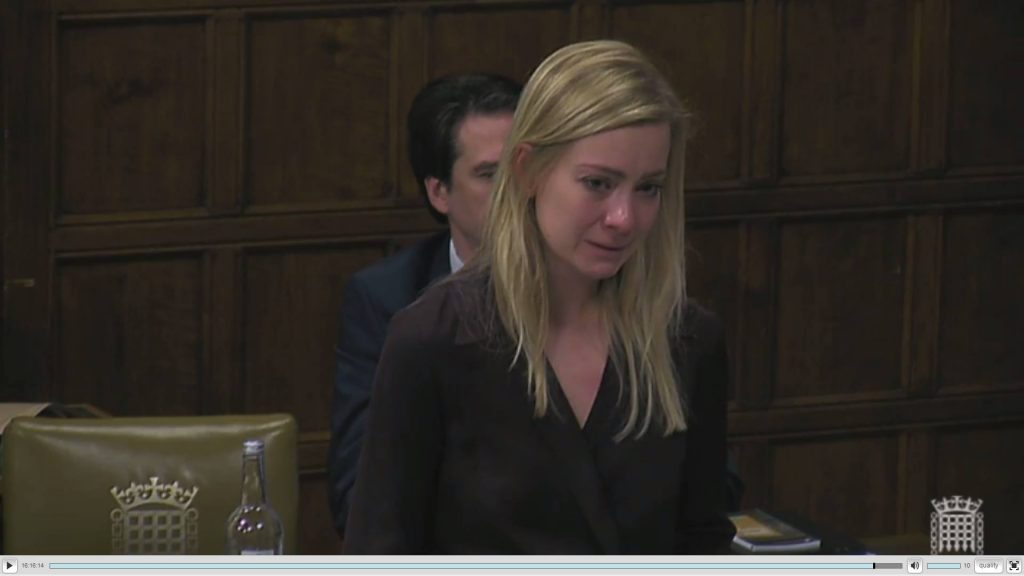
Junior Heath Minister Nicola Blackwood (pictured) agreed no child of an alcoholic should feel alone in a emotional debate on alcohol harm.

“Great social change requires three things: long-term political will, non-partisan partnership and it requires bravery. I have heard all three today,” she said, concluding her speech to a sparsely-attended meeting of MPs at Westminster Hall.

This came after poignant testimony from Labour’s Liam Byrne and Shadow Heath Minister Jonathan Ashworth, who both had alcohol dependent fathers. Byrne described the lack of support he received, as he fell between the cracks in the system.

A transcript can be found here and a video here. ■

  • « Go to Previous Page
  • Page 1
  • Interim pages omitted …
  • Page 41
  • Page 42
  • Page 43

Copyright © 2026 · Phil Cain Impressum