UPDATED: Decisive steps to tackle alcohol harm seem unlikely under prime ministerial heir-apparent Andy Burnham, who has political ties to alcohol industry champions and a pub-loving political persona. But the policy blueprint set by Greater Manchester’s WHO-guided alcohol harm strategy also offers an alternative.
Today Burnham said he would consider overturning restrictions on alcohol drinking at football games in England having last week outlined a plan for the economy that combined supporting pubs and prevention.
“We will reform business rates to support pubs and high street businesses, businesses that bring social benefits to communities,” said Burnham in a pivotal speech to laying out his “Manchesterist” economic vision of “good growth”. He talked about a shift to a “more preventative, productive state” in reference to boosting council housing. But he concluded by saying, “Let’s make it happen,” inspired by line from a song by Manchester band Oasis, “Cigarettes and alcohol”.
Alcohol ties within his inner circle raise further queries. He is expected to make James Purnell, a corporate lobbyist, his new chief of staff. It “would appear to be a classic oligarchical move” journalist Peter Oborne told the Democracy for Sale podcast. Blairite Purnell resigned his seat in parliament in 2009 in an unsuccessful bid to unseat Blair’s successor Gordon Brown, becoming chief executive of lobbying firm Flint Global two years ago. Flint’s clients include alcohol giant Diageo. Purnell championed licensing changes that heralded 24-hour drinking in the early noughties–later seen as a mistake–and later suggested making welfare dependent on people having treatment for alcohol problems.
Burnham has other political allies with alcohol interests. One of his staunchest supporters is Sacha Lord, chair of the Night Time Industries Association and former night life “tsar” in Manchester. Questions were raise about conflicts of interest because Lord is the pre-eminent rave promoter in Manchester. Earlier this year Lord co-authored a paper on night life with the right-wing libertarian Adam Smith Institute think-tank. Lord resigned his post after controversy over a £400,000 covid grant obtained using false information. Burnham said he believed Lord’s contention that the falsehoods were included by mistake.
Brand consistency
Burnham, whose carefully curated brand is that of a blokish northern everyman, portrayed himself as sympathetic to alcohol interests throughout his campaign for the Makerfield constituency, which looks set to propel him into Number 10.
“I’m going to go and have a pint,” he told reporters after his decisive victory was announced in the early hours of Friday morning. And during the campaign he was pictured talking over pints of Guinness, logos dutifully turned to face the camera, with “Vote Andy” written in the foam.
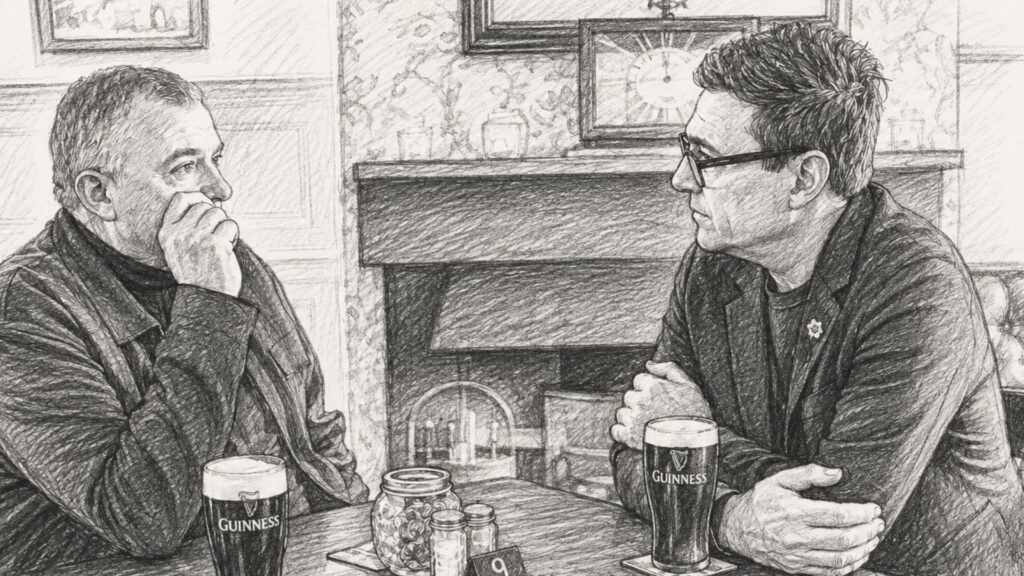
Burnham raised this pint to the Telegraph’s “Save our pubs” campaign and pledged to cut local business taxes for pubs, clubs and music venues by 20%. He also said he would raise the threshold at which these local taxes are paid.
Tax expert Dan Neidle said such cuts to local business taxes would amount to a tax handout to business property owners rather than to the hospitality businesses that rent from them.
A WHO-led alternative
But what happens on the campaign trail may also stay on the campaign trail. If so, Manchester’s approach to alcohol may be a stronger indicator, with nationwide “Manchesterism” said to underpin Burham’s plan.
Greater Manchester’s drug and alcohol strategy for 2025-2030 recognises that alcohol directly causes 1,500 alcohol deaths and over 12,000 hospital admissions a year and costs the region £1.7bn ($2.3bn) a year from crime, health, worklessness and social care.
To tackle the problem the region’s alcohol harm strategy draws on the WHO’s SAFER framework. “We are dedicated to taking high-impact actions to address the commercial determinants of health,” it says, which might mean banning alcohol ads on council property.
The strategy also commits Greater Manchester to advocating for “national licensing reform, with a review of the Licensing Act 2003 to prioritise public health, including making health a core fifth objective.” It also says it will push for a 65p minimum unit price.
This is a shift. As culture secretary under Gordon Brown in the late noughties Burnham championed the 2003 Labour licensing changes which allowed for 24-hour drinking. At the time he said a proposed 9pm advertising watershed in Scotland was “a bit silly”.
As health secretary in the last year of Brown’s tenure he also lent his voice to an alcohol industry responsible-drinking campaign. And he was outed as having been an enthusiastic drinker as a member of the exclusive all-male Mornie Onion Society at Cambridge university.
Alongside other Labour top brass Burnham admitted in 2015 that allowing 24-hour drinking was a mistake, adding another layer to Burnham’s self-contradictory picture around alcohol and alcohol harm policy.
Burnham’s policy programme is still far from clear, although the early indications are alcohol interests are at the fore. But he may still make some progress if he can be persuaded to put Manchester’s exemplary alcohol harm policy approach above alcohol interests. ■