• Skip to main content

Alcohol Review

Alcohol understanding for all

  • Highlights
  • AR2026
    • AR2025
    • Earlier events
  • Register
  • About
    • Organisers
    • Contact
  • Log In

philcain

Could you be more specific?

January 10, 2026

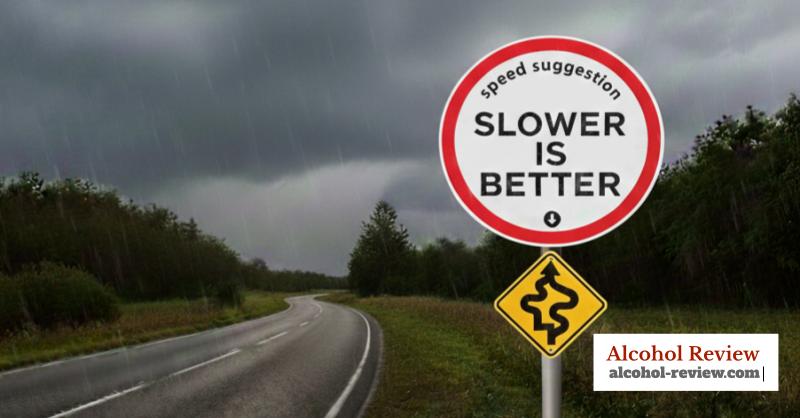
Alcohol harm experts this week criticised the Trump administration’s new guidance on alcohol for omitting low-risk amounts in favour of saying “consume less alcohol for better overall health”, leaving consumers to decide what this might mean in practice. Read more. ■
Trump administration drops clear alcohol guidance

January 10, 2026

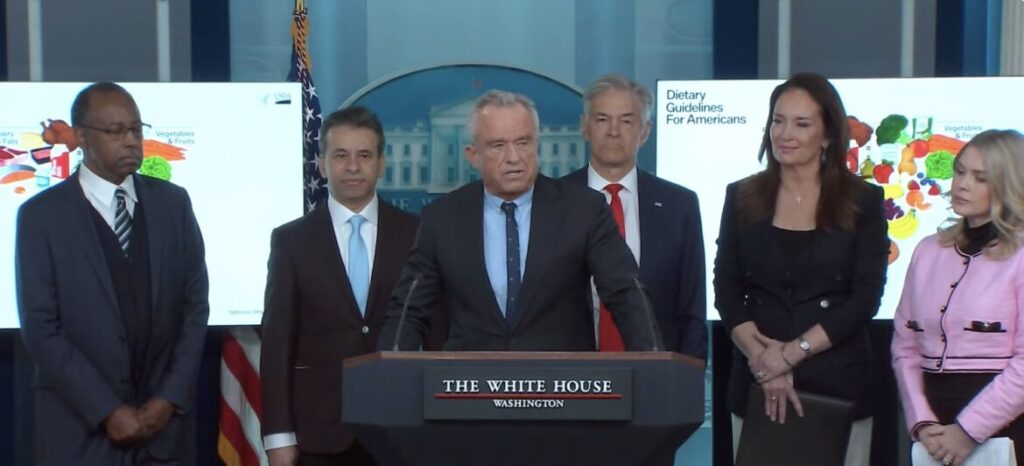
Secretary of Health and Human Services Robert F Kennedy Jr launching the new 2025–2030 Dietary Guidelines on January 7th

The Trump administration this week advised Americans to “consume less alcohol for better overall health”, dropping specific low-risk amounts from its guidance after 35 years. Alcohol harm experts had recommended the low-risk amount should be halved for men.

Alcohol harm experts say the official dietary guidelines should tell consumers what a low risk amount of alcohol consumption is based on robust statistical research, rather than leave it up to them to decide for themselves.

“The guidelines abandon specific consumption benchmarks—such as the long-standing limits of two drinks per day for men and one for women—leaving consumers without clear, actionable guidance.,” wrote Mike Marshall, CEO of US Alcohol Policy Alliance in an email.

Earlier drafts of the guidelines reportedly kept specific low-risk guideline amounts. Officials from the US Department of Health and Human Services had drafted a proposal to halve the recommended low risk amount of alcohol for men to one standard drink (18ml) a day like for women, said a Reuters news agency report.

The new guidelines also have other flaws, Marshall said, omitting mention of underage drinking, alcohol’s links to cancer.The US lobbing disclosure register shows the alcohol industry spent millions on lobbying efforts over the last two years. Alcohol industry hailed the new guidelines as a victory.

Alcohol deaths in the US were 20% above the pre-pandemic level in 2024 and look to have been at least 10% above in 2025, according to an Alcohol Review estimate based on provisional CDC data. These numbers tend to increase over time as data is gathered from data centres across the country. ■

Opinion: Cutting down? Put alternative activities above alternative drinks

December 30, 2025

Looking to the bottom of alcohol-free drink bottles can only take us so far in any bid to curtail our alcohol consumption. Even alcohol’s bogus answers to life’s problems are not to be found there.

It is true alcohol-free drinks can be tastier and healthier alternatives to sickly soft drinks. This is good. And they can also provide a useful visual prop for places hostile to people not drinking alcohol. But they are not alcohol alternatives.

To genuinely replace alcohol they would need to help us relax, feel rewarded, gain confidence, have fun, feel carefree and be sociable. Alcohol-free drinks will not do this for us. We need to look to alternative activities, not alternative beverages.

The quest for sober satisfaction turns what might be seen as an act of self-denial into one of hedonistic exploration. There are an endless array of new experiences, new skills and new social situations to be had. It is a journey not an event. 

Eleven years ago I was a standard-issue British Gen X weekend binger and then I gave alcohol for a couple of years to inform my book on alcohol. I then stayed off it for another three years, before becoming a low-risk alcohol drinker.

The first month was hard, really hard. It was not nearly enough time to find new activities or to build and find environments which suited me. But it got easier over time, until it was the new normal. One never stops learning how to make it better.

One thing that is perhaps worth sharing is that while it is nice to feel okay as a non-drinker in alcohol drinking scenarios, it is a questionable end goal. Even after more than a decade alcohol drinking scenarios can be okay for a while, but typically it is not where I would want to do for the whole night.

Not drinking alcohol around alcohol drinkers is typically very challenging and is very likely to remain so. We are, after all, literally in a different state of mind. Why fight it? Why not invest all that energy into alternative activities instead?

It is typically far easier for non-drinkers to spend time in alcohol-free environments and make one at home. So why not do that? Dodge the alcohol aisle at the supermarket and filter whatever alcohol ad and media exposure you can.

We deserve the freedom to look for the feelings we might want, be it relaxation, excitement, humour, camaraderie, whatever it might be. There is an likely activity to get closer to all of them and none of them need involve a bottle. ■

Alcohol harm reducers honoured

December 30, 2025

The UK’s New Year’s Honours list today recognised six people working to reduce the impact of alcohol harm, a former frontbench Labour MP, a family judge and four public health directors. 

Jonathan Ashworth, a former shadow health secretary, receives a CBE in part for advocating on behalf of the children of people with alcohol problems for the Children of Alcoholics charity. He made a poignant speech in parliament about his own experiences in 2017.

Judge Patrick Perusko receives a CBE for services to the administration of justice for his work pioneering Family Drug and Alcohol Courts in Bedford and Bedfordshire. He talked about the courts, and his background, in Oct 2021.

The honours list also recognises the work of several directors of public health. Greg Fell, president of the Association of Directors of Public Health (ADPH) and director of public health at Sheffield council, received an OBE.

MBEs went to three more public health directors: Dr Tim Allison, recently retired from NHS Highland; Dr Catherine Mbema at Lewisham council; and Professor Alice Wiseman in Gateshead, who is also vice-president of ADPH. 

Professor Wiseman’s presentation on combatting alcohol industry influence at the local level at AR2025 in March is available on the event page under the heading “Full live plenary sessions”.  ■

Alcohol Review – Issue 119, December 27th 2025

December 27, 2025

Read original

Join newsletter and events directlyor on Substack

In this issue: Heart NGO calls for prevention; Nigeria u-turn; Polish tax veto; England deaths high; Alcohol’s injury toll; Minimum age rise benefits; Breast cancer contradiction; 0.0 rules: New highlights from AR2025

Join AR2026. Register now to participate in a unique event to underpin global efforts to reduce alcohol harm. Live online sessions on March 26th will look at Alcohol and artificial intelligence, while impactful video sessions spotlight all kins of cutting-edge research, advocacy, ideas and innovations. Check out last year’s event, preview this year’s, and secure your place.

Sizing up the AI wave
The global effort to curb alcohol harm will see a wave of change from the rollout of artificial intelligence, but how big will it be?

Sizing up the AI wave: The global effort to curb alcohol harm will see a wave of change from the rollout of artificial intelligence (AI), but how big will it be? Will it be a ripple, crashing breaker, tidal surge or shattering tsunami? 

News

Heart NGO calls for prevention: The EU should “shift from harm reduction toward a clear alcohol prevention approach, combining awareness, regulation and fiscal action”, the European Heart Network this month. 

“Any level of alcohol consumption carries cardiovascular risk; there is no risk-free threshold,” said the Brussels not-for-profit, justifying the need for this prevention-centred approach in a new position paper.

The paper calls for: mandatory energy and health warnings on all alcohol products; establish minimum taxes; restrict alcohol marketing and sponsorship, especially when they reach young people; the elimination of EU alcohol product subsidies; and raise public awareness of the cardiovascular risks. [Comment]

Nigeria’s sachet u-turn: Nigeria’s federal government this month ordered the immediate suspension of all enforcement activities related to the ban on sachet alcohol, which the Senate last month ordered to be enforced from December 31st. The  Socio-Economic Rights and Accountability Project NGO took legal action to prevent the federal government from blocking enforcement. [Comment]

Polish veto: Poland’s right-wing populist president President Karol Nawrocki vetoed a government bill which would have raised taxes on alcoholic drinks. [Comment]

England’s deaths remain high: Alcohol deaths in England were 32% above pre-pandemic levels in 2024, despite a 7% fall from the post-pandemic peak the year before. Over 9,000 more people died from causes directly linked to alcohol since the pandemic than if deaths were at 2019 levels. [Comment]

Alcohol’s high injury toll: Alcohol caused nearly a third of the 460,000 injury deaths in Europe in 2019, says a new WHO Regional Office for Europe report. Alcohol attributable self-harm was the biggest contributor, at just under a third of cases, followed by road injuries with half that. [Comment] 

Minimum age rise benefits: Increasing the minimum legal drinking age in some European countries reduced the cohort’s alcohol consumption and increased their exam performance, a study found. [Comment]

Breast cancer contradiction: A new study did not find evidence that alcohol consumption increases breast cancer risk, contradicting previous research, but it did confirm increased cancer risk for body parts directly exposed to alcohol. [Comment] 

EU 0.0 rules: The European Parliament this month agreed the term “alcohol-free” can be used together with the shorthand “0.0%” if a product’s is less than 0.05% alcohol by volume. [Comment]


Feature

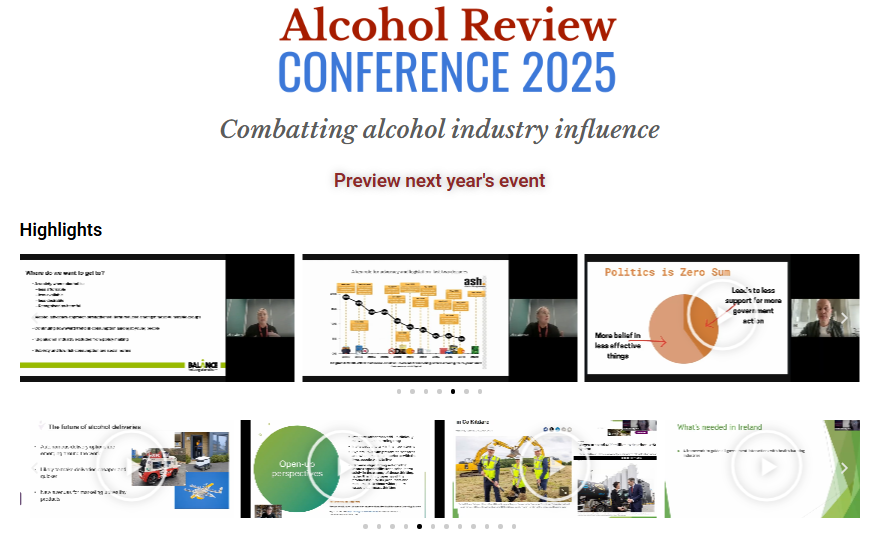
New highlights from AR2025

Before the AR2026 on March 26th we have assembled a few new highlights from this year’s debut annual event.

“Nanny is killing us right now. Government is subsidising alcohol,” said Grant Ennis, author of Dark PR, in a live plenary session at AR2025. Watch the full session.

Participants learned how Knowalcohol.ca enables users to better understand Canada’s guidance on alcohol and health. Watch the full session.

How will the future of alcohol delivery look and how do people feel about it? AR2035 offered some insights. Watch the full session.

Alcohol companies use “better for you claims” in their marketing to distract from alcohol’s health harms, participants learned. Watch the full session.

Are there potential loopholes in UK laws on the TV placement of alcohol products? It would seem there are. Watch the full session.

The alcohol industry intimidates alcohol researchers around the world, delegates heard. Watch the full session 

Join newsletter and events directly or on Substack ■

Sizing up the AI wave

December 15, 2025

The global effort to curb alcohol harm will see a wave of change from the rollout of artificial intelligence (AI), but how big will it be? Will it be a ripple, crashing breaker, tidal surge or shattering tsunami? Alcohol Review’s annual conference in March will try to find out, while showcasing many other key developments in the field. To read on, please, register for the event and newsletter, or the free event preview and log in.

The global effort to curb alcohol harm will see a wave of change from the rollout of artificial intelligence (AI), but how big will it be? Will it be a ripple, crashing breaker, tidal surge or shattering tsunami? Alcohol Review’s annual conference in March will try to find out, while showcasing many other key developments in the field.

The economic energy has been given for massive change, with tech firms this year stumping up $1.5 trillion on an AI loss-leader, more than the yearly economic output of Indonesia. It seems inevitable that AI will spread further into alcohol research, advice, treatment, health promotion, alcohol marketing and law enforcement, among other areas.

More than few questions come to mind: Where is AI best suited to play a role and what are its limitations? What are the risks? How sustainable is it? AI is currently cheap, but might it become too expensive after the loss-making rollout splurge? Where is human expertise and insight needed? Will AI help to amplify or diminish human contributions? 

I will take my own trade as a starting point on some of this, with journalism requiring a rag-bag of different skills including: research, fact checking, storytelling and interviewing. We first see that AI is very good at scraping the internet for relevant research and writing readable, well-sourced summaries of its findings. And it does this extremely fast, without the typos or drafting errors typical of its human rivals. 

But AI falls short. It presents information which does not belong together, not recognising inconsistency. This is because it knows nothing about the real world its output seems to be about. AI is not sensitive to conflicting interests, misinformation, unintended ambiguities and downright lies. This means AI will always be a vector for unreliable alcohol information where safeguards are absent.

A lack of worldly understanding means AI does not and cannot lay out information as a story, which is an essential molecule of  human communication. Instead it writes impressively comprehensive lists. It does not how the information fits together, what is surprising, or what is contradictory, touching, funny or likely interesting to readers. AI, then, cannot lead us through the material with an engaging story. This severely limits its communication capabilities.

To tell a story one needs to develop an angle for the story which provides a hook to engage readers. It might be picking out a particular detail, presenting a new relevant piece of information, a new viewpoint or a human experience we can empathise with. This all requires some understanding of the real world and the people in it and what they care about. AI images also lack this crucial storytelling element.

AI, at least in its current form, does not add new information to what it serves up. It does not talk to experts or pull in new sources of information or opinion. It does not interrogate a database or get out knocking on metaphorical doors looking for quotes. And its summaries do not bring new images or metaphors to clarify a subject. Journalists add, but AI simply compiles what is on the web already. 

At some point AI might become more pro-active in their information searches. What it can already do is impressive. In an AI speech interview I found it accurately picked up what I was saying and formed questions from it. This is better than many human interviewers, who often do not prepare, listen or adapt their questions to the answers given. AI can definitely collect new information, but it seems to be more like a questionnaire than an interview.

Again AI is missing a key ingredient of what a journalistic enquiry does. Interviewees are chosen based on an understanding of the real world, including an understanding of their role, interests and expertise in a topic. They are persuaded to talk by instilling trust. And a line of enquiry should change as new facts are added, again requiring some knowledge of how the world works. Investigating alcohol harm is as challenging, if not more, than many other areas.

We should be open to the benefits AI may offer, but surely empathy and understanding will always be core to understanding human foibles?  AI seems set to fall short in crucial areas of journalism’s attempt to do this. And it seems likely these shortcomings will also hamper AI in other complex truth-seeking and communication tasks, like that needed to reduce alcohol harm. 

Note: For more on joining these online sessions on AI and the wide-ranging participant presentations, please visit the conference homepage and check out the new preview. ■

AR2026: Alcohol harm and artificial intelligence
+ all the latest research, advocacy and innovation.
Thursday, March 26th 2026, everywhere. Registrations open
  • « Go to Previous Page
  • Page 1
  • Page 2
  • Page 3
  • Page 4
  • Page 5
  • Interim pages omitted …
  • Page 50
  • Go to Next Page »

Copyright © 2026 · Phil Cain Impressum