• Skip to main content

Alcohol Review

Alcohol understanding for all

  • Highlights
  • AR2026
    • AR2025
    • Earlier events
  • Register
  • About
    • Organisers
    • Contact
  • Log In

philcain

Forging language for change

January 10, 2024

Creating change around alcohol and elsewhere requires us to describe dynamic situations accurately, an area where English could be improved.

Our language often ties us to a static picture of situations more usefully seen as being in dynamic change, so blinding us to possibilities.

We are not, for instance, smokers in the same way we are right-handed, brown-eyed, male or female.

Being a smoker is a status we acquire as a result of what we consume and something we can change by making different choices.

English we say, “I am a smoker,” in the same way as, “I am from Manchester,” or “I am human.” But they are not the same.

In this way, as my brilliant friend and first giveaway book recipient pointed out,  we English-speakers have made a hash of it.

“There is no escape save by stepping out of it into another [language],” as Enlightenment polymath Alexander von Humboldt put it.

Not “to be”
If we are serious about change we should distinguish between inherent states and transient ones.

Making the distinction clear would  help us all see better where fruitful change is possible.

Portuguese and Spanish—and other Iberian languages—have a way to do this built in, using the word “estar” for potentially passing states.

Mixing it into English unforgivably, “I estar alcohol dependent,” would mean we are currently alcohol dependent, but not always and forever.

Using estar like this would convey a sense of changeability to a state of illness, boredom, sadness, or being a smoker too.

I am told estar is not often used to emphasise that substance use problems are shifting and dynamic, but doing so would be easy.

In English it is more difficult. A new word, an English estar, has only a very remote chance of catching on.

Emphasising change
Given introducing a new English verb is impossible we could still make better use of the language we already have.

“Now” is, perhaps, useful: I am now a smoker; I now have a cold; I am now alcohol dependent; I am now not alcohol dependent.

Yes, it is clunky, but perhaps we should accept some clunk if it means we avoid binding ourselves to things which we can change.

It offers the potential to soften and shift our outlook and allows, if we wish, our self-image to adapt to new circumstances.

Routinely acknowledging change is possible, in alcohol consumption, smoking and much else, can surely help us realise our choices. ■
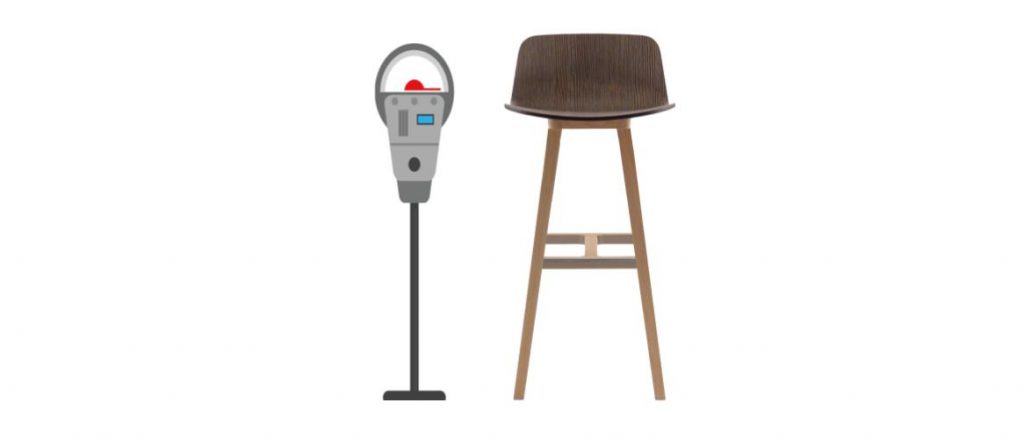
A “seat fee” could help reboot pubs

January 10, 2024

The pandemic offers a chance to consider better ways to pay for social environments we enjoy spending time in. A “seat fee” would be one.

A large chunk of the price we pay for a pint, for example, is gobbled up in tax and in paying the brewer, with what’s left used to cover the landlord’s rent, heat, rates, repairs and staff, and so on.

The enjoyment of being in a pub or bar is largely about playing. We do not need alcohol for that, but we do need access to well-run social spaces, other people and permission to play.

 The viability of our social spaces, is in this way, tightly bound to the volume of drinks we consume. The costs need to be covered whatever we buy, which is why a Coke or a lime and soda cost an arm and a leg.

And this is also why pubs and bars are set up to market drinks, snacks and other light refreshments so forcefully. Without selling a lot of them they would perish.

In the case of alcohol this is potentially problematic because of the harms it causes. This means there is a conflict of interest between the landlord’s bank account and the well-being of their customers.

To lessen this problem we could try decoupling the cost of our being in a particular location, absorbing its heat, seeing with its lights, hearing its music and wearing down its carpet, from what we consume.

A “seat fee” could be taken separately using some kind of whizzbang gadgetry which sensed when we were there and when we left. It could be a pound, a euro or dollar an hour, maybe?

Pitched at the right amount the fee would go a long way to sustaining the pub, allowing it to host people without having to pressurise them to consume more, although it would doubtless be a welcome top-up.

Adopting such a model would make pubs and bars more resilient to changes in the cost of their products, notably alcohol tax. And it would also mean being less reliant on selling any particular product, notably alcohol.

We might also stay longer because they place was nice to be in, because our friends were there, or because there was something interesting happening, perhaps, gigs, games or talks.

The idea of making a pub into a space you have to pay for goes against the grain, no-doubt, but at the same time we are fooling ourselves if we imagine we are not paying already.

There is an immediate proxy for such a system. If we want to discreetly help our local without drinking a large amount of alcohol, the price of a lime and soda or a cup of tea nearly all goes directly to the landlord.

It is a dreadful time for hospitality, particularly its often poorly-paid staff. It is a sector almost everyone misses as customers. But its eventual reboot will, hopefully, see healthy social spaces designed for the future. ■

Link to my blog post for Alcohol Change

January 10, 2024

https://alcoholchange.org.uk/blog/2019/why-alcohol-phil-cain

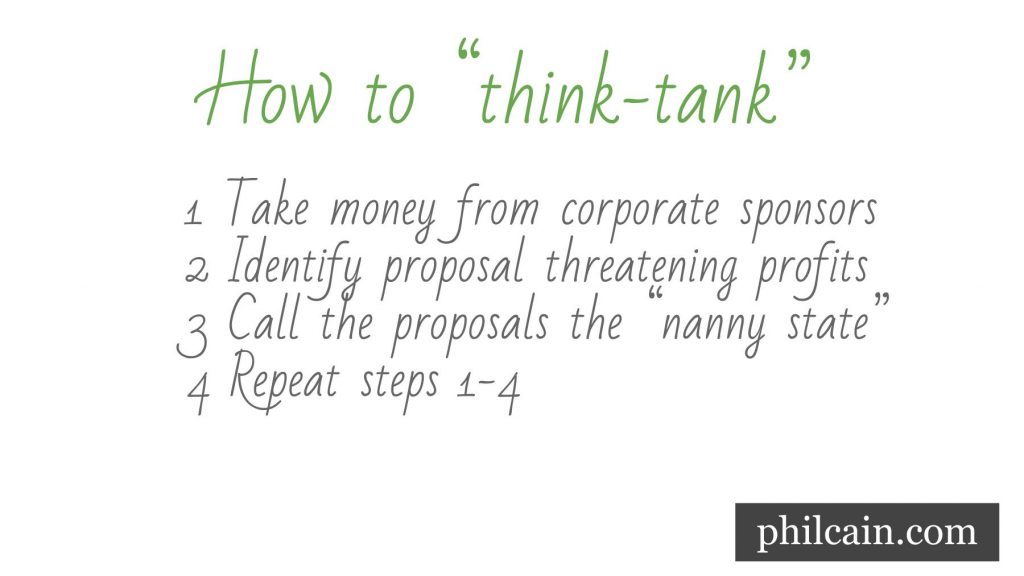
How to think-tank

January 10, 2024

Massive public support for alcohol labelling

January 10, 2024

The UK public overwhelmingly supports experts’ calls for consumers to be given nutritional information, alcohol content and the official low-risk guidelines on alcoholic drinks.

“Why should alcohol continue to be exempt?” asks Sir Ian Gilmore, head of the Alcohol Health Alliance (AHA), pointing out that all other forms of food and drink must offer consumers such basic information.

Three-quarters of Brits want to be told the number of units in a product, something they currently have to work out, says a Yougov survey for the AHA. Two-thirds want calorie information and half sugar levels.

Three-quarters of people also want to be told the official low-risk guidelines of 14 units (140ml) a week, according to a regional survey by AHA member Balance North East.

The alcohol industry’s marketing body Portman Group abruptly dropped the UK’s official low risk guidelines from its labelling standards in 2017. Its promises to return them to all labels have not been fulfilled

The public also said being told the official low-risk guidelines was essential if unit information is given in a Royal Society for Public Health survey in 2018. And 86% said they used labels.

The new survey forms the backbone of a letter co-signed by 94 health experts calling for better alcohol labelling. Its intended recipient is Health Secretary Matt Hancock who took over the role 2018.

The letter also points out that than only one-in-five people in the UK know the five-year-old official drinking guidelines, and only one in ten yet identify cancer as a health consequence of alcohol. ■

Alcohol shows ways we can improve

January 10, 2024

I started writing about alcohol nearly seven years ago now. Little did I imagine I would still be hard at it today. “Why are you?” you may well ask.

Well, for one, alcohol problems still kill 3m a year globally, playing a role in the untimely demise of one-in-ten people under 50, and bring misery to many millions more. 

That’s a story, even if few seem to care. But, for two, just as important, is that tackling alcohol problems hints at routes to wider renewal when we seem short of ideas.

Alcohol problems arise from an interplay of individuals, social groups, business and regulation. An effort to minimise alcohol harm allows us to imagine ways to improve all four.

As individuals we can learn to make better sense of the misleading first-hand impressions alcohol gives and to identify the half-truths passed to us by word-of-mouth and media.

Alcohol sellers employ populist methods: dubious science, misleading propaganda, uncritical coverage, denying consumers information and opportunistic advertising.

Not being duped can reduce our risk of harm, reduce the chances we harm others, slash our overheads, improve our critical thinking, and find upsides typically ascribed to alcohol elsewhere.

Our social groups, meanwhile, are improved by becoming more accepting of differences on this choice. This requires us to develop tolerance and respect to replace of a herd mentality.

On the bigger scale, it means holding elected politicians and nobody else is responsible for alcohol regulation. They cannot be allowed to evade blame for what is their indivisible responsibility.

Fixing the institutional flaws, influence peddling and muddled thinking which allows persistent regulatory failure could form part of a programme of democratic renewal.

The type of principles, laws and institutions which prevent undue commercial influence on alcohol regulation could be applied other vexed areas of government decision-making. 

Alcohol offers a window onto our vulnerabilities as individuals and as societies, and should provide our political leaders with plenty of ideas and inspiration for how to improve lives. 

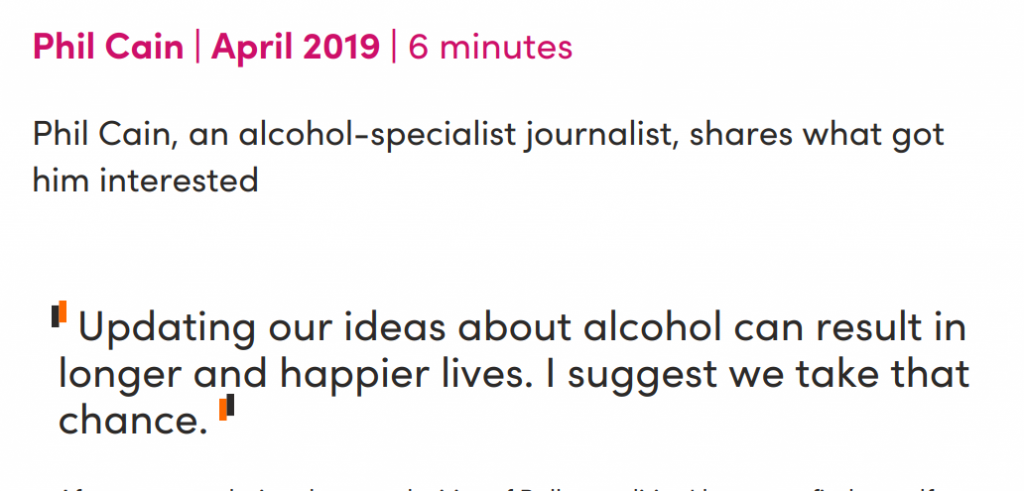
This is why I think it remains important to write about alcohol. It is unglamorous, awkward and woefully ignored, but it is also a rich source of untapped ideas on how to improve at a time when we badly need them. ■

  • « Go to Previous Page
  • Page 1
  • Interim pages omitted …
  • Page 28
  • Page 29
  • Page 30
  • Page 31
  • Page 32
  • Interim pages omitted …
  • Page 50
  • Go to Next Page »

Copyright © 2026 · Phil Cain Impressum