• Skip to main content

Alcohol Review

Alcohol understanding for all

  • Highlights
  • AR2026
    • AR2025
    • Earlier events
  • Register
  • About
    • Organisers
    • Contact
  • Log In

philcain

Alcohol shows ways we can improve

January 10, 2024

I started writing about alcohol nearly seven years ago now. Little did I imagine I would still be hard at it today. “Why are you?” you may well ask.

Well, for one, alcohol problems still kill 3m a year globally, playing a role in the untimely demise of one-in-ten people under 50, and bring misery to many millions more. 

That’s a story, even if few seem to care. But, for two, just as important, is that tackling alcohol problems hints at routes to wider renewal when we seem short of ideas.

Alcohol problems arise from an interplay of individuals, social groups, business and regulation. An effort to minimise alcohol harm allows us to imagine ways to improve all four.

As individuals we can learn to make better sense of the misleading first-hand impressions alcohol gives and to identify the half-truths passed to us by word-of-mouth and media.

Alcohol sellers employ populist methods: dubious science, misleading propaganda, uncritical coverage, denying consumers information and opportunistic advertising.

Not being duped can reduce our risk of harm, reduce the chances we harm others, slash our overheads, improve our critical thinking, and find upsides typically ascribed to alcohol elsewhere.

Our social groups, meanwhile, are improved by becoming more accepting of differences on this choice. This requires us to develop tolerance and respect to replace of a herd mentality.

On the bigger scale, it means holding elected politicians and nobody else is responsible for alcohol regulation. They cannot be allowed to evade blame for what is their indivisible responsibility.

Fixing the institutional flaws, influence peddling and muddled thinking which allows persistent regulatory failure could form part of a programme of democratic renewal.

The type of principles, laws and institutions which prevent undue commercial influence on alcohol regulation could be applied other vexed areas of government decision-making. 

Alcohol offers a window onto our vulnerabilities as individuals and as societies, and should provide our political leaders with plenty of ideas and inspiration for how to improve lives. 

This is why I think it remains important to write about alcohol. It is unglamorous, awkward and woefully ignored, but it is also a rich source of untapped ideas on how to improve at a time when we badly need them. ■
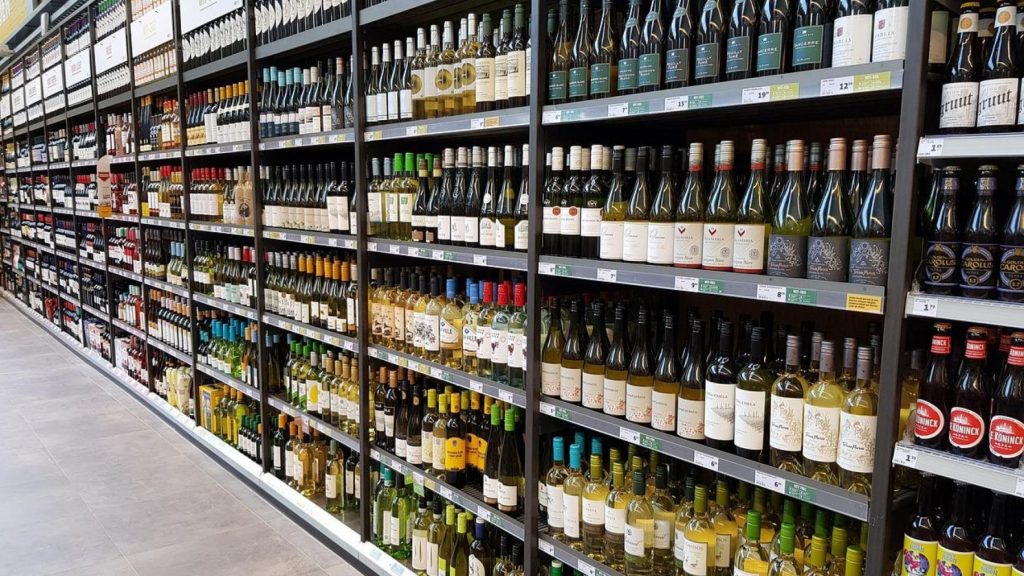
Massive public support for alcohol labelling

January 10, 2024

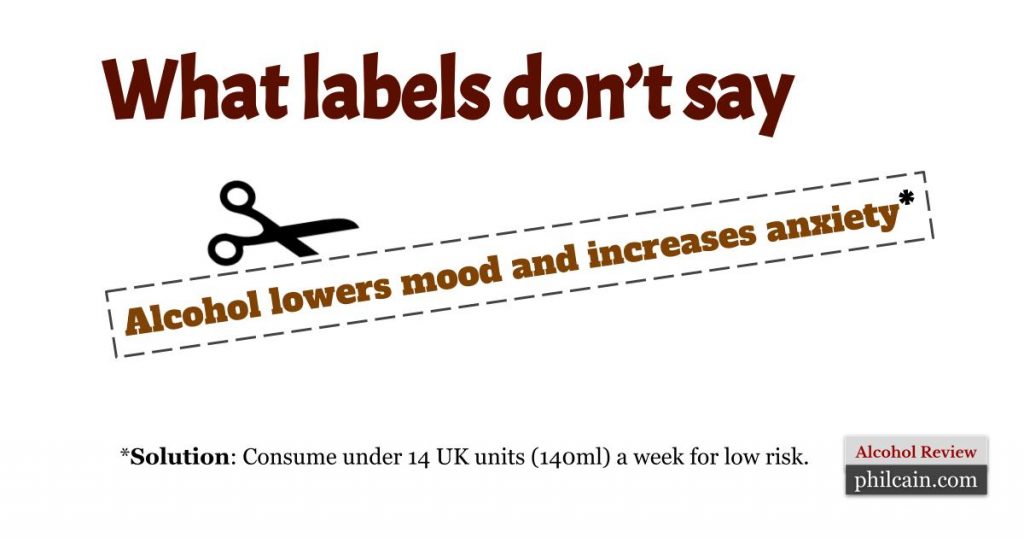
The UK public overwhelmingly supports experts’ calls for consumers to be given nutritional information, alcohol content and the official low-risk guidelines on alcoholic drinks.

“Why should alcohol continue to be exempt?” asks Sir Ian Gilmore, head of the Alcohol Health Alliance (AHA), pointing out that all other forms of food and drink must offer consumers such basic information.

Three-quarters of Brits want to be told the number of units in a product, something they currently have to work out, says a Yougov survey for the AHA. Two-thirds want calorie information and half sugar levels.

Three-quarters of people also want to be told the official low-risk guidelines of 14 units (140ml) a week, according to a regional survey by AHA member Balance North East.

The alcohol industry’s marketing body Portman Group abruptly dropped the UK’s official low risk guidelines from its labelling standards in 2017. Its promises to return them to all labels have not been fulfilled

The public also said being told the official low-risk guidelines was essential if unit information is given in a Royal Society for Public Health survey in 2018. And 86% said they used labels.

The new survey forms the backbone of a letter co-signed by 94 health experts calling for better alcohol labelling. Its intended recipient is Health Secretary Matt Hancock who took over the role 2018.

The letter also points out that than only one-in-five people in the UK know the five-year-old official drinking guidelines, and only one in ten yet identify cancer as a health consequence of alcohol. ■

DIY alcohol label idea

January 10, 2024

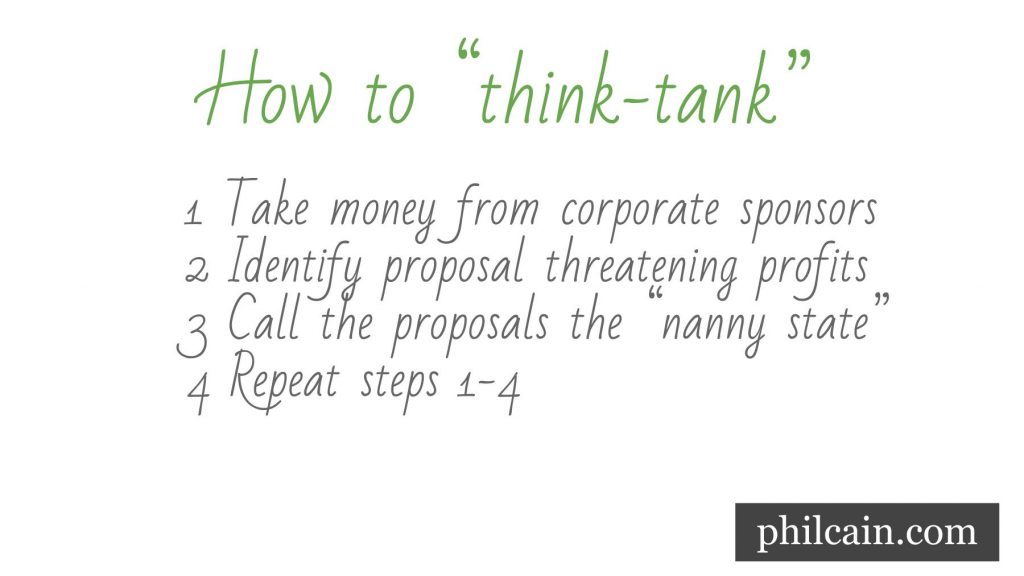
How to think-tank

January 10, 2024

Alcohol worsens disadvantages

January 10, 2024

With a welcome spotlight being shone on rising inequality this week it is worth noting that alcohol makes it harder for poorer people to succeed in a game already heavily weighted against them.

This fact is not as widely acknowledged as it should be. A large charity told me to call elsewhere because it focuses on poverty not alcohol. Of course, specialism is necessary, but not when it means neglecting clear links. Luckily it seems they will not be ignored much longer.

On the radar
“One cause for concern is a rise in ‘deaths of despair’” said the IFS Deaton Review, launched in the UK this week, referring to deaths from suicide, drug and alcohol overdose and alcohol-related liver disease. They have overtaken deaths from heart disease in recent years (see chart).

Of course death is the most stark outcome. With luck, the review’s army of sociologists, demographers and epidemiologists will also shed light on a myriad more nuanced inequalities to which alcohol contributes. As the Alcohol Change UK campaign pointed out alcohol harms poorer people more in many other ways.

Poorer people tend to live with fewer healthcare facilities, more crime, more stress and higher levels of alcohol availability, so slipping more easily into heavy drinking. The middle classes have their difficulties, but generally nothing to compare with the perils faced by people struggling to get by.

A dicey game
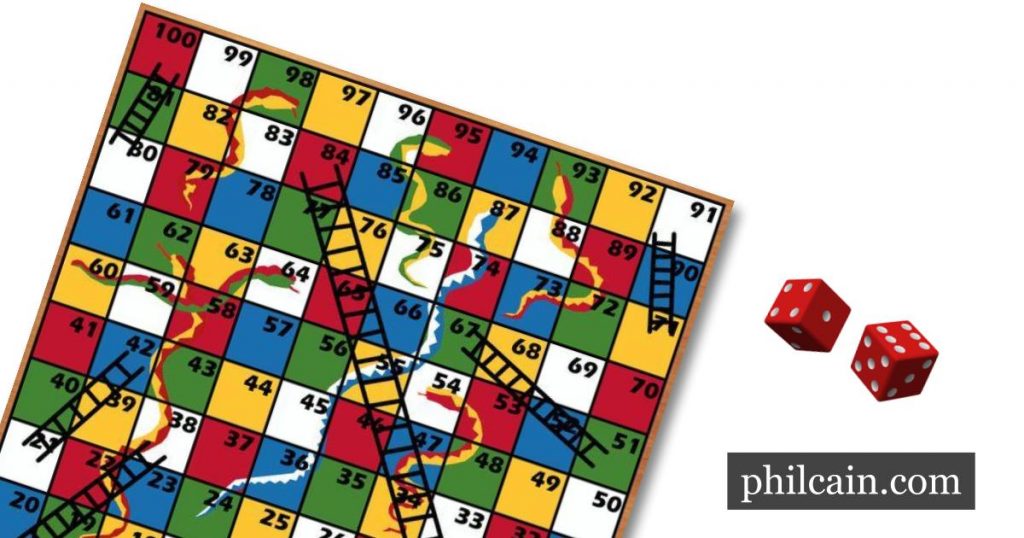
The board game snakes and ladders, or chutes and ladders in the US, can help picture how circumstances alter our chances of success or mishap. Each player moves along the board and when landing on a ladder takes a big step up and when they land on a snake they slip a long way down.

But, crucially, we do not all play on the same board. Poorer people start further away from the giddy heights of their terrain. And, to reflect their less fortunate circumstances, they face more penalties and fewer bonuses, so fewer and shorter ladders, and more, longer snakes. Consequently a smaller percentage of poorer people make as much progress.

To make it more realistic we should test a skill to decide whether we necessarily slide down a snake or climb a ladder. Maybe we have to answer an exam question or, something silly like catch a ball in a cup, anything really to mimic a real life test. Adding this extra obstacle simply multiplies the extra difficulties faced by poorer people.

Now, finally, we can add another level of realism to the model, alcohol. Consuming alcohol impairs our skills, judgement and planning, so meaning we fall down even more snakes and can take advantage fewer lucky breaks. Adding alcohol to the equation tips the balance of an unfair game even further against poorer people.

At the same time advertising relentless associates alcohol with success and winning, deliberately obscuring the fact that it is far more likely to increase our chances of losing.

Clear, not less subtle
The “alcohol paradox”, the name often given to the way alcohol disproportionately harms poorer people is unhelpful, adding intrigue to something which is not mysterious. It is not paradoxical that poorer people are harmed more It is simply a testament to the combined effect of more challenging circumstances and substance blunting our abilities.

It is, of course, vital for the review unveiled this week to go beyond this simplistic model and to shed light on the details. But, as a starting point, the reason alcohol tends to compound inequality can be an unfortunate effect everyone can readily understand and find ways to avoid. With luck, more policies will emerge to make it easier. ■

Alcohol: Why not all use millilitres?

January 10, 2024

We could make alcohol health guidelines easier to picture, calculate and compare internationally by giving them all in millilitres.

We measure oil, water and every other liquid in metric units, so why use 20-odd different units for alcohol?

It is like a throwback to the bygone days in which Europe operated on a bewildering array of measurement systems.

An account of a medieval journey might mean converting the Finnish virsta (Russian or Swedish) to the Rheinland miele. 

This week’s new proposed weekly guideline of saw us scrabbling for the definition of the “Australian standard drink”.

Once converted to 125ml it could be compared easily to the UK one of 140ml, itself normally given in local units.

Offering it to begin with in millilitres would avoid this process, allowing consumers and nerds a ready-made comparison.

It would make recommendations more intuitive too. We can imagine 100ml far more easily than a bespoke unit.

The volume of alcohol is a good guide too, giving a direct picture of the number of molecules it contains, so its effects.

Using millilitres as a standard means only needing to do a one-step calculation to work out a dose, not two or three.

The alcohol present in a drink is just a drink’s alcohol percentage by volume multiplied by its volume. That’s it.

So, for example, in 500ml of 5% beer there is 0.05x500ml of alcohol, or 25ml. 

One large continental lager is, then, a fifth of the Australian weekly low-risk guideline total of 125ml.

Using alcohol specific units, by comparison, we might have two more stages, perhaps converting to mass on route.

We need not drop local units, which some may find helpful, but we could easily add the equivalent amount in millilitres in brackets.

This would be a simple way to reduce barriers in a field in which international cooperation is essential. ■

  • « Go to Previous Page
  • Page 1
  • Interim pages omitted …
  • Page 30
  • Page 31
  • Page 32
  • Page 33
  • Page 34
  • Interim pages omitted …
  • Page 50
  • Go to Next Page »

Copyright © 2026 · Phil Cain Impressum