• Skip to main content
  • Skip to primary sidebar

Alcohol Review

Alcohol understanding for all

  • Highlights
    • Messages
    • Newsletters
    • AR Live
  • Events
    • AR2026
    • AR2025
    • Next year’s event
    • Earlier events
  • Join
  • About
    • Organisers
    • Contact
  • Log In

philcain

The personal story conundrum

January 10, 2024

As someone writing about alcohol I am often asked to tell my own story. I find it very difficult to know how to respond.

It is not that I don’t have one. I do. I even wrote it down once. But it is never the right moment to tell it.

Lived experiences make a huge contribution to the discussion around alcohol, giving us the insider perspectives we need.

The openness of Labour MPs Jonathan Ashcroft, Liam Byrne and Caroline Flint has had an enormous positive impact.

At the same time adding one’s own tale into the mix can, in some circumstances, have significant drawbacks.

Not being the story
Journalists of all kinds typically avoid talking about themselves because it obscures the broader stories they try to tell.

We would hardly tolerate a political journalist book-ending each piece with an update on which way they were leaning.

Like them, I typically cover stories involving many thousands of other people, not just me. I am just a tiny drop in this ocean.

Alcohol is odd too. There is no perfect amount of personal experience of it that make us more credible when talking about it.

Too much and some will think we are probably shaped by it. Too little and they will wonder if we can possibly know the subject.

Suffice it to say, I hope, I am somewhere in the middle, like most people, neither unaffected nor the most affected.

Researching my book shed new light my experiences, making me see them afresh, and of myself as part of a vast continuum.

This motivates me to listen to other people, and try to explore the research with imagination, empathy and critical thought.

Striking a balance
Hearing stories and ideas beyond our own experiences is a vital part in assembling the jigsaw puzzle of alcohol understanding.

That said, we can also often have good reason to keep our own experiences to ourselves. And we have every right to.

We all share things in some circumstances and not others, and the same is true here. It is up to us.

It was a decision I agonised over. While I could see some positives, I could also see downsides. Would it add or subtract value?

I concluded that telling my own story comes second to uncovering and telling stories beyond myself.

Journalists are by no means the only ones with circumstances not always wholly suited to telling their own stories.

So, if there is a story I would tell about my own alcohol experience in the hope it helps others, it is this one. ■

Alcohol Review – issue 104, June 29th 2024

January 10, 2024

Find this service useful?
Please join the Alcohol Review‘s supporters who make it possible

In this issue: UK alcohol health policy door open; Annual alcohol deaths globally; Labels work; Indian widowhood often linked to alcohol; Ghana’s celeb ad ban upheld.
Opinion England’s absurd official beer ad brings home the need for regulation, argues Alcohol Review’s editor.
Alcohol messages
A few recent shareable posts highlighting some key alcohol information.

Invitation: Alcohol Review’s first annual conference will be online on Thursday November 14th. Early-bird discounts available

News
UK alcohol health policy door open: None of the UK election manifestos made specific mention of alcohol health policy but Labour, the likely winner of the July 4th election, leaves the door open to taking action. It pledges to take “preventative public health measures” to tackle the“biggest killers” when UK alcohol deaths remain at near record levels. 

Annual alcohol deaths globally: There are 2.6m deaths a year worldwide attributable to alcohol consumption, with three-quarters of the dead being men, says a new WHO report. Nearly two-thirds of these alcohol deaths are from noncommunicable diseases, with 18% of the total from cardiovascular disease and 15% from cancer. 

Labels work: Well designed labels carrying rotating messages on alcohol’s adverse health effects are likely to be “particularly effective” in changing consumption behaviour, found a new comprehensive research review.

Indian widowhood often linked to alcohol: Nearly 40% of widows in Tamil Nadu linked their widowhood to the alcohol addiction of their deceased spouse, said a report from the Indian state’s Widows and Destitute Women Welfare Association.

Ghana’s celeb ad ban upheld: Ghana’s Supreme Court this month dismissed a challenge to a law banning celebrities from advertising alcohol.

Feature
England’s absurd beer ad brings home need for regulation
The wisdom of making Euro 2024 a beer marketing bonanza should surely be questioned when alcohol deaths are still 30% above pre-pandemic levels in the UK and elsewhere, argues Alcohol Review’s editor Phil Cain.

Alcohol messages
A few recent shareable posts highlighting some key alcohol information
NEW: Less alcohol means fewer mistakes #2
NEW: QR codes hide alcohol information
NEW: Alcohol kills twice as many men as women
NEW: Drinking less alcohol means fewer mistakes #1
Archive: Full list of alcohol messages 

Find this service useful?
Please join the Alcohol Review‘s supporters who make it possible

Tepid reception for industry alcohol labelling pledge

January 10, 2024

News the biggest players in the UK’s alcohol industry have agreed to put weekly drinking guidelines on their labels, a month before a government deadline to do so, has prompted little jubilation among health advocates.

The Portman Group, an alcohol industry mouthpiece, dribbled out the news in a piece in the Daily Mail, couching its promise with a caveat about it being subject to “feasibility”. Jubilation was muted, with the UK’s trust-based system taking some 1,300 days to get this far.

The government agreed to let the alcohol industry have a “grace period” until September 1st to comply in March 2017, only making the agreement widely known in January this year. The terms of any new arrangement underlying today’s statement are unknown.

“This half-hearted pledge, by some parts of the alcohol industry, is a strong indicator that the UK deserves a fair system that sets a level playing field for all food and drinks producers,” the Alcohol Health Alliance told Alcohol Companion.”

“All alcohol products must advise drinkers about both the contents and consequences of consumption to empower consumers to make fully- informed choices about their health.”

“While this marks a half-step forward, it shows that the current system of alcohol industry self-regulation is failing consumers,” said Katherine Severi, head of the Institute of Alcohol Studies, which provides a health slant on alcohol policy

It remains to be seen what effect the Portman Group agreement will have, if any. It could prove to be mostly about refreshing the label for a period of inaction from “grace period” to “feasibility period”. ■

Alcohol safety labelling may be about to get worse

January 10, 2024

An apparent forward step on alcohol safety labelling last week may, in fact, signal that it is about to get worse.

The alcohol industry Portman Group (PG) says it agreed with the health department “for the removal of out-of-date information” by September 1st. But it does not mention adding current low-risk guideline amounts.

Adding the weekly guidelines is not among the minimum “best practice options”. Instead, PG offers advice on how to “reflect” weekly consumption guidelines it refers to as “revised” though current since January 2016.

PG emphasises it offers advice while ignoring the fact that none of its members are committed to follow it. So years of foot-dragging on safety labelling may yet morph into a full-blown reverse.

The health department agreed a September 1st deadline for the alcohol industry action in March 2017. The existence of the “grace period” was unknown until a speech by then junior minister Steven Brine in January.

Few may yet realise it, but the grace period may have just been quietly extended and also expanded to green-light alcohol suppliers to offer no weekly consumption guidelines at all. ■

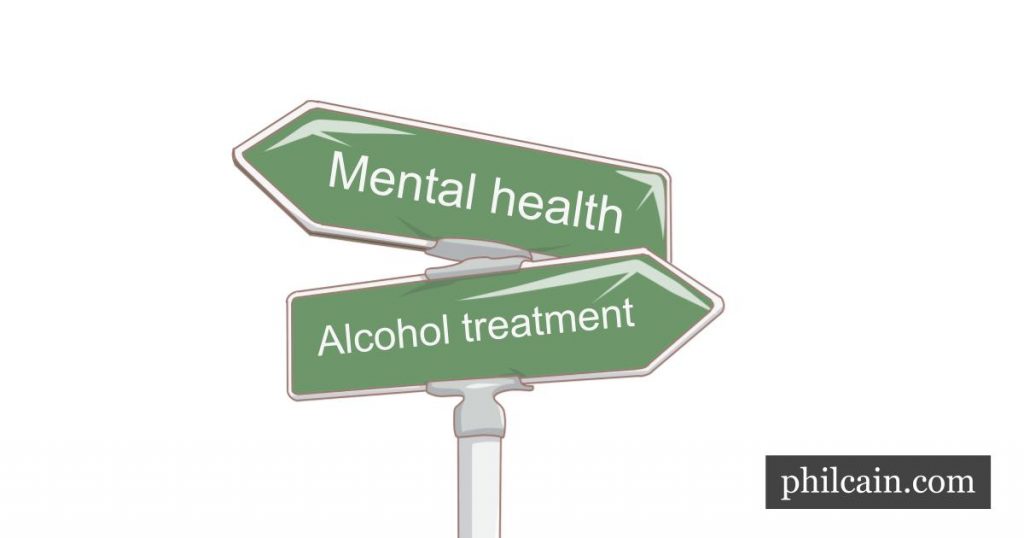
Discussion: The international problem tackling mental health and alcohol issues together

January 10, 2024

A recent piece highlighting the difficulty of getting help when we have both mental health and alcohol or other substance use problems attracted insight with sources spanning from Glasgow to Tauranga. Below is a lightly-edited selection.

“I’d say this isn’t ‘becoming’ the norm, I heard this in the field ten years ago regularly and it has never changed,” Michael Pearson, counsellor at Bristol University, UK.

“This article raises a very real problem and one that I did not realise was an international problem. It is things like this that cause my team and I to want to be identified as alcohol and drug workers rather than anything else. People need Hope and that is what we try to provide,” Darryl Wesley, The Salvation Army, Bridge & Oasis, Tauranga, New Zealand.

“All the evidence suggests that the best approach is to treat both in parallel. The fact that it’s so difficult for service users to get the help they need borders on criminal.” Norman Beecher, Kensington and Chelsea Recovery Care, London, UK.

“I come across this all too much in my work! While I understand that sometimes you have to remove substances to find out if certain mental health is triggered by these, what I know works from experience, is a joined up approach to mental health and substance use. It has far better lasting outcomes for people I’ve worked with,” Nicole Cooper,

a recovery facilitator at Bracknell Forest Council, UK

“A lot of services unwittingly provide care, treatment and support to people with a dual diagnosis, because it wasn’t identified as an issue. The problem comes when it is identified as an issue that clinicians lose confidence in their ability to provide care, treatment and support to a person who needs assistance,” Stephen Mihaly, director of nursing at The Endoscopy Centre, Melbourne, Australia.

“This has been an issue for my entire career in community services of over 20 years. Every conference I go to will have a well researched piece on why holistic no-wrong-door treatment services are what’s needed – yet still it doesn’t happen,” Xenia Girdler, working in education and training at Welways, Melbourne, Australia.


“With all the money and focus that was done some 11 years ago with Dual Diagnosis and State and Fed initiatives—this seems to now have gone backward. It is so disappointing.” Renee Hayden, CEO of HealthCare, Melbourne Australia.

“This is a very, very big issue. A new set of recruits with knowledge of both would really help. The amount of people pushed from pillar to post because they have both mental health and dependency issues. We have had dual diagnosis’s workers that seemed to have achieved nothing. It either gets dismissed as the dependency or the dependency needs to be dealt with first before we can do anything. And, when people get frustrated, upset and exhibit any anger they are often told to leave, ‘we will not tolerate that behaviour’ Despite the person clearly being unwell and desperate for help.” Mark Masterson, carer, UK.

“As someone with lived experience I lived with the problem of not qualifying for mental health support because of my addiction. The addiction services I did go to actively discouraging me from going to mental health services, despite clearly having both issues. There used to be a very strong division between the types of services which led to people like me falling between the cracks. I did end up focusing on abstinence from my addiction first and years of therapy through those services. I did truly believe that the symptoms I was experiencing (that I later realised were mental health related) to stop once I was abstinent. Of course that didn’t happen and I walked an exceptionally risky path and ultimately ended up in mental health clinical services anyway

There has been a lot of work in New Zealand to work towards that and in the clinical mental health and alcohol and other drug (AOD) clinicians work closely together. I was fortunate to work together with mental health teams which had AOD clinicians as part of their multi-disciplinary team  All clinicians were expected to be able to work with people with both mental health and/or addiction problems. In many ways that worked well especially when it came to sharing experience and knowledge of either area of speciality. So that was real progress in the teams, however, one other concern I had was the division of the people themselves who would really benefit from having both issues looked at, who really didn’t want that. Shame and stigma have a lot to do with that and historical cultures of being labelled as having one or the other issue and often people didn’t think kindly of people in the other group. A lot of stigma and discrimination. It’s changing, slowly. So there is hope of change,” Louise Windleborn, consumer and peer advisor, Wellington, New Zealand.

“I hate the fact this happens. I’m currently working in mental health and am told all the time by my bosses that if there is any hint that a person is using substances we have to signpost them out because ‘we don’t work with people who drink/use drugs’. It frustrates me so much; I’ve worked in a rehab centre where we did treat both the substance use and the underlying mental health issues that were frequently present and I just don’t see why we can’t have more joined up working in order to actually help people,” said a psychological wellbeing practitioner in the UK’s NHS.

“I can understand why stretched mental health services retreat behind this sequenced assessment of need. But then it’s more than a big ask for people who by definition can’t always organise their own wellbeing to fit themselves into service criteria for treatment. Arguably, service design provokes crisis level needs that can’t then be deferred. The treatment gap also shifts the cost of unmet needs onto emergency and criminal justice services. That’s not exactly a cost saving or a social investment either. Sad for the lives and communities in the middle of this,” Dave Chung, a social worker in Doncaster, UK.

“Important but so sad that we’re still where we are. When I was managing the Angel Drug Project in the late 1990s we almost never had a client we couldn’t work with and hopefully help. For me,  the term ‘dual diagnosis’ often told more about how services were configured and the inadequacy of that for all people who were having substance use problems than anything else,” Eric Carlin, a public health and alcohol policy expert currently working at the WHO, based in Glasgow, Scotland. ■

The astonishing usefulness of alcohol-free beer

January 10, 2024

Alcohol-free beer offers a harmless way to transform our mistaken beliefs about alcoholic drinks into something positive, so we should welcome its increasing availability.

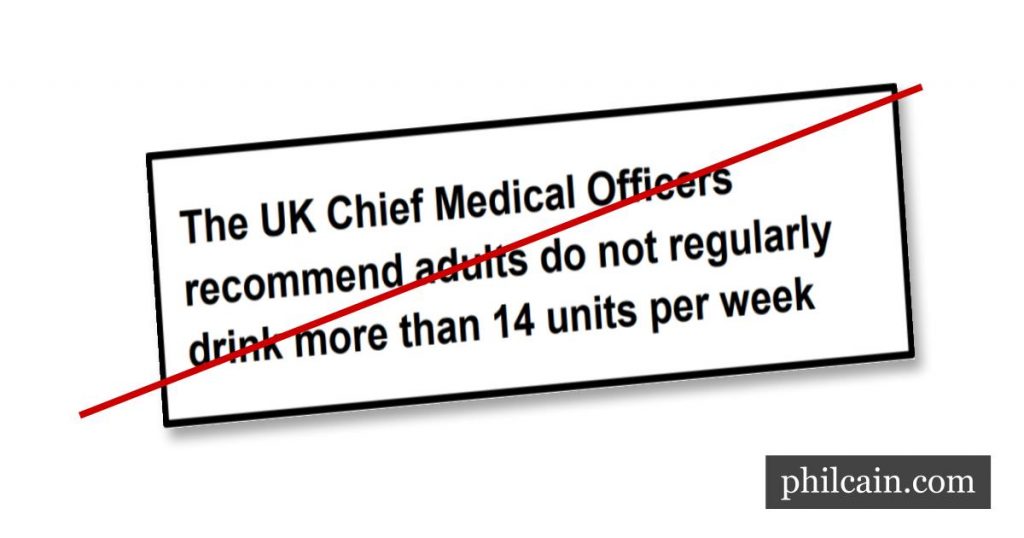
Alcohol is the opposite of the joyful, relaxing “social lubricant” we are led to think it is. Drinking more than a small amount—the UK guideline maximum being around 14 units (140ml) a week—is liable to making us grumpier, tenser, more socially clumsy and sleep less soundly. 

Alcohol-free beer, by contrast, helps us fulfil many of the hopes we have of alcohol without suffering any downsides. Experiments show placebos like it make us more prosocial and at ease with each other, while leaving our brain function intact giving us no nasty side-effects.

This is partly because alcohol-free beer does a convincing impression of alcoholic beer, making us imagine some of the effects we want from its alcoholic brethren. Having a beer in hand also gives others the unmistakable signal we are up for some fun and laughter.

This amazing psychological freebie is growing ever more popular. Sales are spiking. Sainsbury’s said recently it is opening an alcohol-free pop-up pub to showcase its range of faux tipples. Heineken 0.0 launched in the US this year and alcohol-free Guinness is on Diageo’s drawing board.

Too good to be true?
The involvement of such corporate giants in the alcohol-free area raises understandable concerns. Surely they are using alcohol-free drinks as a trojan horse to turn consumers towards their alcoholic offerings? Surely they hope to gain the brand loyalty of our children?

Some liken selling alcohol free beer to minors to selling children candy cigarettes. We might be encouraged to get interested in Heineken 0.0 in our childhood to prime us for the real thing at 18. So it is that age restrictions for alcohol-free beer get the thumbs-up from many health advocates. 

The concern is not any harmful substance within, but that the crossover branding may smooth a psychological pathway to heavy alcohol drinking. The concern is understandable, but it is unclear whether it is justified or if alcohol-free beer sales-restrictions help?

Habits picked up in our teenage years are likely to be sustained later in life. Earlier alcohol drinking, as we know, significantly increases the chances of problem drinking later. This is one reason it seems wrong to bar teenagers from buying alcohol-free beer, by far the better choice.

As teenagers we experiment with being grown up, finding problems and solutions in the process, depending on which experiments we select. How can we sensibly deny a low risk product many adults find helpful? I was boggled by this anomaly as a teenager already drinking alcohol.

And the branding-blur that causes worries can is also part of the value of alcohol-free products. The confusion it causes allows us to drink socially sans alcohol without being singled out as oddballs, as we almost certainly would if we were, say, sipping a cup of tea.

It pays to be wary, of course, but stymying alcohol companies’ for the sake of it may not always be the best strategy. Co-branding does expose non-drinkers to an alcohol brand, but the reverse is also true: a popular alcohol brand is broadened to embrace a non-alcoholic alternative.

There might also be resistance from retailers concerned that some might think they are wrongly thought to be selling alcohol to minors. Some kind of solution could surely be found to minimise the risk of this happening. Perhaps they could use a “not alcohol” bag or sticker?

And others arguing for maintaining age restrictions may have less charitable motives. Keeping age restrictions hinders access to a harm-free alternative to their addictive product. I, for one, would have been better off for being allowed to discover alcohol-free beer’s potential earlier.

Staying open to solutions
This debate clearly needs to be informed by more research. We need to know how alcohol-free beer is used and seen by different age-groups. We also need to discover the real effects of alcohol-free/alcoholic co-branding rather than simply speculating.

There are some untoward effects we should investigate. People trying to curb their drinking sometimes complain that alcohol-free beer can trigger craving. This is not surprising when images of alcoholic drinks are enough to do this. And relying too much on alcohol-free beer could mean we enter social drinking situations where relapse is more likely.

But, while accepting these potential downsides, it seems alcohol-free beer does also help many adults in their bid to reduce their alcohol consumption. And it may well also help teenagers practice the key skills needed to establish a low-risk drinking habit from the off. It may prove to be a help overall, rather than a first step on a slippery slope to problem drinking. 

Alcohol-free beer has some profound lessons for us. It opens our eyes to the fact that having positive expectations and beliefs, coupled with an accepting social environment, can have uplifting effects. This part of our nature we would do well to recognise and harness early. 

Anyone involved in the discussion around alcohol can be forgiven for developing a cynical streak, but we must also be ready to make the most of solutions whenever they appear. ■

  • « Go to Previous Page
  • Page 1
  • Interim pages omitted …
  • Page 32
  • Page 33
  • Page 34
  • Page 35
  • Page 36
  • Interim pages omitted …
  • Page 57
  • Go to Next Page »

Primary Sidebar

  • Bluesky
  • Instagram
  • LinkedIn
  • Twitter
  • WhatsApp

Copyright © 2026 · Phil Cain Impressum

Manage Consent
To provide the best experiences, we use technologies like cookies to store and/or access device information. Consenting to these technologies will allow us to process data such as browsing behaviour or unique IDs on this site. Not consenting or withdrawing consent, may adversely affect certain features and functions.
Functional Always active
The technical storage or access is strictly necessary for the legitimate purpose of enabling the use of a specific service explicitly requested by the subscriber or user, or for the sole purpose of carrying out the transmission of a communication over an electronic communications network.
Preferences
The technical storage or access is necessary for the legitimate purpose of storing preferences that are not requested by the subscriber or user.
Statistics
The technical storage or access that is used exclusively for statistical purposes. The technical storage or access that is used exclusively for anonymous statistical purposes. Without a subpoena, voluntary compliance on the part of your Internet Service Provider, or additional records from a third party, information stored or retrieved for this purpose alone cannot usually be used to identify you.
Marketing
The technical storage or access is required to create user profiles to send advertising, or to track the user on a website or across several websites for similar marketing purposes.
  • Manage options
  • Manage services
  • Manage {vendor_count} vendors
  • Read more about these purposes
View preferences
  • {title}
  • {title}
  • {title}
Loading Comments...