Some young Nigerians say heavy drinking is fun: controls must keep pace with culture
by Emeka Dumbili, Lecturer, Nnamdi Azikiwe University
Alcohol consumption has a long history in Nigeria, especially in the southern region, where it was not forbidden by religion. In the past, only adult men were culturally allowed to drink. It was taboo for young people to drink alcohol because it was generally believed that “drinking was a sign of being an elder”.
Alcohol served multiple societal functions in the past. It flowed during celebrations and significant events. These included chieftaincy enthronements, new yam festivals, child naming ceremonies, and even funerals. Although drinking was central to almost every social gathering, intoxication was forbidden. Intoxicated drinkers were punished by the community elders, as a deterrent to others.
With help from the British colonial government, Nigeria’s drinking culture changed, ditching abstinence and moderation. The British colonial government relied heavily on revenue from alcohol taxes and levies. To increase their cash-flow, the British encouraged the availability and heavy drinking of imported alcoholic beverages. When Heineken-owned Nigerian Breweries and Guinness Nigeria were established in 1946 and 1962, their marketing targeted women and young people. Their marketing departments drove sales by associating alcohol consumption with modernity and sexual enhancement.
Nigeria is a key market for competing multinational alcohol companies. To gain market share, these companies have developed sophisticated and aggressive marketing methods targeting young people, including adolescents. Alcohol availability has tripled, and so has the number of heavy drinkers. Consequently, alcohol-related problems are also rising. Alcohol is associated with problems such as cancer, violence, sexually transmitted infections and truancy.
Nigeria lacks alcohol control policies. Alcohol production and marketing are largely unregulated. Multinational alcohol producers often employed marketing strategies outlawed in their countries of origin, to sell their brands in Nigeria. The results are evident. Research has shown that abstinence and moderate drinking are now uncool, and heavy drinking and intoxication make good badges of honour in Nigeria.

Stefan Heunis/AFP/Getty
In my recent research, I examined why adolescents and young adults in Nigeria drink heavily, and why they consider it a source of fun or pleasure. I also recorded whether they saw heavy drinking as rebellion against traditionalist values. My research is important because it shows treating alcohol use as pathological, and denying pleasure-seeking as a motive for drinking, is no longer tenable in contemporary Nigeria. The study also shows that understanding these changing motives for drinking could inform interventions that target harmful drinking practices.
Deliberate intoxication for fun and pleasure
I interviewed 72 young people aged 18-24 years, who live in Benin City, Nigeria, to understand their perspectives. Most of the participants were students. They all agreed that drinking alcohol was fashionable in communities of young people. Sobriety was considered obsolete, and deliberate over-consumption of alcohol was common. The reason they gave was that young people just want to feel drunk.
According to my study, fun and excitement – directly and indirectly – were acceptable reasons for heavy drinking and intoxication. Individuals didn’t consider the associated reduced mental control a big deal.
I took whisky; I wanted to drink to stupor. I wanted to see how it felt like to be really drunk and misbehaving; that was my aim of drinking that way. So I drank and drank and drank until (I became drunk).
Another added:
There was a day I took one full glass of (Johnnie Walker) Red Label (40% alcohol by volume), and in less than 10–15 min, I couldn’t feel myself again. I could barely walk, my friend took me home … To me, it was fun. I felt the way I have never felt before, so that is fun … it was exciting because friends will now remind you that this was what you did and you cannot remember.
There are also gender aspects to youth drinking culture. Female participants who were filmed while drunk considered the clips hilarious. Male participants said they took turns in providing alcohol for members of their friendship networks. This practice is generally believed to strengthen friendship bonds. Although providing alcohol may in part be a means of reenacting the male-dominated traditional drinking practice in contemporary Nigeria, it also led to heavy drinking and intoxication.
Surprisingly, these youths believed they had not breached any social norms by drinking to intoxication. But they did admit it all came at a cost. Some had experienced negative events like hangovers, injuries, violence, and missing key academic tests while passed out from alcohol consumption.
Solution to drinking problems
The current lack of alcohol policies in Nigeria only serves the interests of alcohol producers to the detriment of public health. Even though alcohol is a legal drug, increasing evidence has shown that no amount is risk-free.
Policymakers should focus on providing information on low-risk drinking measures for legal drinkers. Tailored, evidence-based interventions that discourage heavy drinking and support safe drinking norms or abstinence should be developed in Nigeria.
Interventions should draw from the elements of local drinking cultures that prohibit heavy drinking and intoxication. Given the prominent role of friendship networks, policymakers should develop interventions using such platforms to promote safe consuming cultures and other pleasurable activities with zero or low risk.
The World Health Organisation has also developed effective strategies called SAFER to reduce alcohol abuse and related harm. Nigeria could also adopt similar measures. ■
■
This article is republished from The Conversation under a Creative Commons license.
On seven years working on alcohol-freedom
It was seven years ago when I first stopped drinking alcohol as background for a book, a project which significantly changed my life and my ideas.
I never intended to make my own experiences central to my work on the topic and this has not changed. I will only ever be a single data point in a story involving millions.
But I do think having first-hand experience from both “sides” is crucial to the journalistic task. They allow us to understand and describe things better.
Like many my alcohol habits have had phases at the riskier end of the spectrum. It was mostly the classic British weekly session, or two, and the odd drink dotted through the week.
I had started drinking in what I considered a “mature” way in my 30s, as many do, pouring a loosener at the end of a day at work. It might be two or three if it was a hard one.
But having an unexceptional drinking pattern does not mean change comes easily. I used alcohol as both a stressbuster and mood booster. Life was going to be rougher without it.
Each situation and hangup had to be dealt with head on as it arose, rather than being conveniently smoothed over with the silky-smooth plaster of a pint or three.
A great number of things had been summarily dealt with using alcohol. Going alcohol-free meant dealing with this backlog on top of the flow of new challenges.
Luckily for me I saw this as a work assignment, so I was okay with it not being a barrel of laughs. And my research was, thankfully, showing it should get easier in time.
In the short term I found it best to simply avoid challenging situations. Alcohol-free drinks are good cover for mingling without an interrogation from evangelistic drinkers.
But also crucial to the exercise was exploring activities beyond alcohol drinking situations. After a certain point they are, sadly, often less entertaining when experienced sober.
This resulted in no end of experiments, including cold showers, improv, leaf tea, swimming, psychogeography, VR and simulators. Alcohol was replaced by chronic dilettantism.
I noticed that my long distance running and cycling actually contributed to stress and pain I might seek alcohol to relieve. So I turned down the intensity of my sessions.
So over years my counterproductive stress-drinking has been replaced by an eclectic mix. Negative stress is now gone quicker and the buzz of occasional success is felt longer.
A few of life’s trials have come along in the interim. None of them have led me to drink alcohol again. And giving up tobacco was not a big deal without alcohol there to derail me.
The book was finished in summer 2016 after just under two years. I no longer felt obliged to continue with not drinking, but I wanted to.
I had made so much effort learning to live free of alcohol, which I’d also learned was counterproductive. It would be a massive waste to return to drinking, so I didn’t.
Another three years or so passed and I did not touch a drop. I simply did not want to. But then I got interested in the taste, so had the odd tiny alcoholic drink.
And that’s more or less where I am. Once or twice I have had a strong craft beer and felt a mild psychoactive effect. To my surprise I found I disliked it.
Something I once saw as a universal balm for my worries now makes me feel like I am coming down with a cold and aware I am talking too much. And I feel annoyingly agitated.
So there is no epic struggle needed to resist drinking more. I drink a tiny measure to taste it and leave it at that. I stay well away from the unwanted effects.
No doubt I am shaped by years of covering the subject. So, I would not recommend this very low-level dabbling as an objective for anyone.
And it helps to rethink freedom too. It now does not involve disabling my brain, harming myself in obedience to social convention, or relying on a sedative to quash stress.
If there is a health objective which might be more universal, it is to look after our brains as best we can. It is our biggest asset. This, for me, means no alcohol bingeing at all.
If I feel like I might go against this objective, I will simply go back to drinking nothing at all. It would, in comparison, be no big loss.
There have been challenges, of course, but my choices were the ones that were easiest and most enjoyable on aggregate for me. The only real difficulty was ensuring they were not overlooked. ■
Brits back youth alcohol ad ban amid record deaths
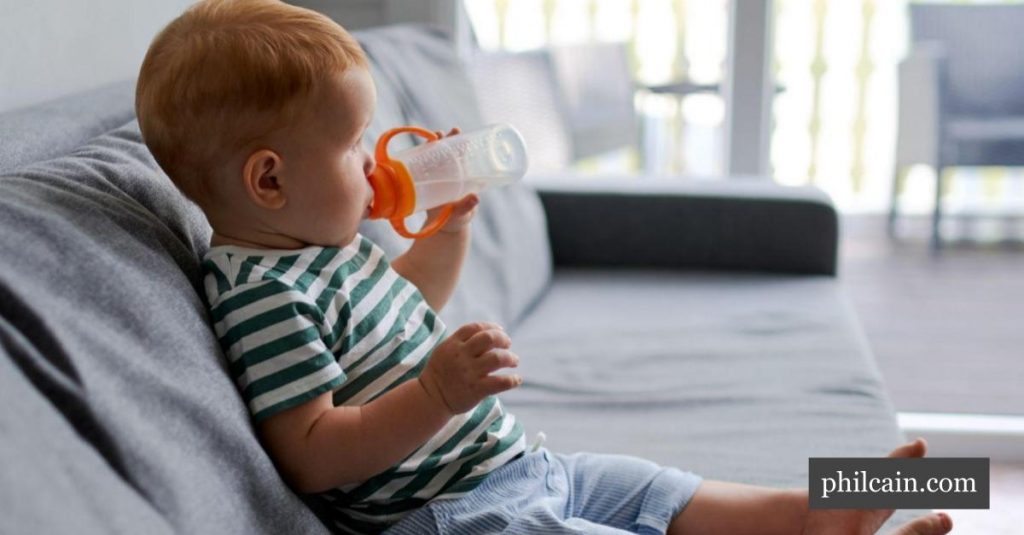
Over three-quarters of Brits want laws to limit the exposure of children and young people to alcohol advertising amid record alcohol deaths across the country.
The alcohol death toll is highest among older, heavier drinkers whose intake increased under the strain of the covid-19 crisis. Stopping alcohol marketing to under-18s could help curb future problems.
Alcohol is not part of the government’s plans to stop junk food advertising online and stop TV ads for it before 9pm in 2023, despite killing record numbers of British people in 2020.
“If alcohol is not included in the plans, we risk alcohol advertising filling the void that is left behind,” said Professor Sir Ian Gilmore, head of the Alcohol Health Alliance, of the survey done by YouGov for Action on Smoking and Health.
The survey found 77% support a ban on advertising alcohol to children and young people, with 70% supporting a ban on TV ads before 9pm, and 72% a ban on cinema ads for films for under 18s, the legal drinking age.
Another 57% of the 12,000 surveyed support a ban on alcohol advertising in public spaces such as streets, parks and on public transport. Parents have little control of the messages their children see outside the house.
Advertising is done to make products as desirable as possible to maximise sales. Consequently alcohol advertising is causally linked to earlier and riskier alcohol use among young people, with the vast majority seeing it.
Alcohol marketing in the UK is informally overseen by the alcohol and advertising industries themselves, and in special cases Ofcom, a government body. The alcohol industry says genuine regulation is unnecessary.
Others disagree. “Limits on the marketing can help prevent young people’s relationship with alcohol being influenced by advertising,” said Richard McVey of Aquarius, which helps young people with alcohol and other drug problems.
“We need comprehensive restrictions on alcohol advertising across multiple media, including restrictions on sponsorships and activities targeting young people,” said the Alcohol Health Alliance.
The placement of alcohol brands in nominally non-commercial content of TV and films raises yet more complex issues. This may lie beyond the scope of even a legally-empowered advertising regulator. ■
Note: You can explore this topic through the Alcohol in the Media event, with expert presentations from researchers Alex Barker and Amanda Atkinson, and Alison Douglas, head of the charity Alcohol Focus Scotland.
Record alcohol deaths follow service cuts

Services for people with alcohol and other drug problems in England and Wales saw budgets cut 15% in the three years to last year, when associated deaths hit record numbers.
A record 7,423 people in England and Wales died from alcohol-specific causes and 4,561 people died from causes related to drug poisoning, another record.
“It is unacceptable public health services that tackle alcohol and drug addiction are left so weakened because of deep cuts when we know that they can cause huge harm and death,” said Jonathan Ashworth MP, Labour’s Shadow Health Secretary.
Council spending on services to prevent them, meanwhile, fell to £690m from £762m in 2017, 15% after inflation, says analysis by the House of Commons Library for the Labour Party.
Four councils saw real-terms cuts in alcohol and drug services of over 40%, namely Medway, namely South Tyneside, Staffordshire and Wiltshire. Only ten saw a spending rise on these services.
“Treatment is essential to help those with alcohol dependence towards recovery but has long been underfunded and inaccessible to many,” said Professor Sir Ian Gilmore, Chair of the Alcohol Health Alliance UK. ■
Not drinking is pure hedonism
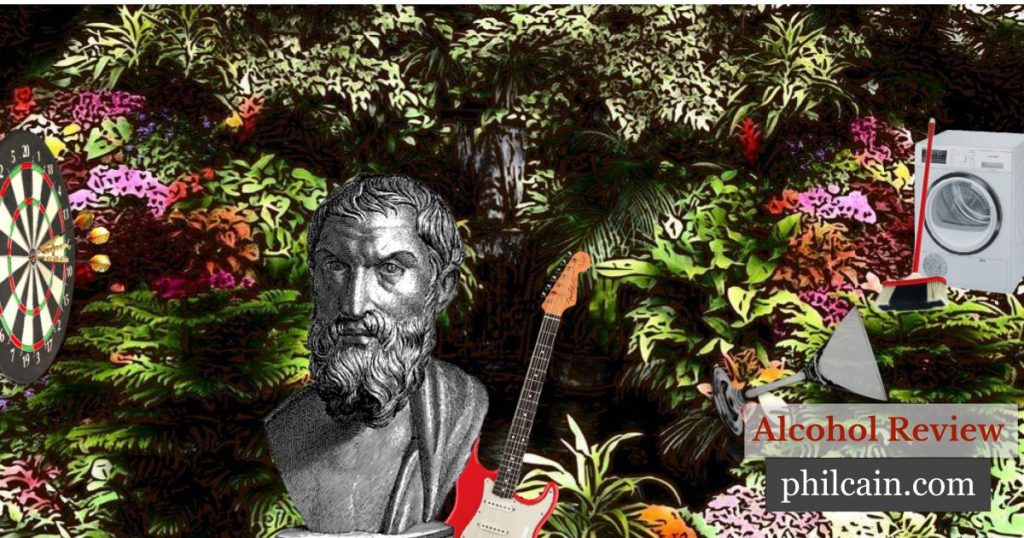
Taking an alcohol break, as many are doing now, can be seen as a step towards a purposeful pursuit of pure pleasure, or hedonism, instead of a spartan act of self-denial.
Maximising pleasure is more than giving ourselves a series of nice feelings. Otherwise we might simply lie around all the time gorging ourselves on delicious snacks and, er, tickling ourselves.
Some pleasures we discover are transient and not connected to anything else. So, over time, we learn not to invest excessive amounts of time in pleasures which do not pay off, or which bring downsides.
Thankfully, however, as uniquely sophisticated, conscious mammals capable of reasoning, our range of pleasures are uniquely wide, varied and adaptable. It is no coincidence they take in activities which help us thrive.
We typically get great pleasure from learning, practising and succeeding, getting a buzz from passing exams and triple-twenties in darts. And we enjoy work, music, movement, socialising, sights, sounds and sensations.
And we can even conjure joy from outwardly tedious activities which pay off. Some of us can, for instance, with the right mind-games, elicit unlikely gratification from catching up with paperwork or sweeping behind the tumble dryer.
Epicurus, a Greek hedonist from 2,300 year ago (pictured), plumped for chilling in a communal garden talking with mates about philosophy. He rejected the idea that drinking a lot of alcohol as the best route to pleasure.
Alcohol, a psychoactive, gives us an out-sized impression of its reward. This can mean we invest more time and energy in alcohol than it deserves. Our human relish for persistence in the face of hardship does us no favours here.
We can persist in drinking alcohol even though it brings scant pleasure and is causing us grief. We can want alcohol without liking it, with its pleasures and rewards long outweighed by hangovers, crappy sleep and low mood.
Not drinking for a month or longer is a good way for us to weigh up the pleasures and downsides of alcohol. What things positive and negative do we correctly attribute to it? And what downsides does it have we did not notice?
It can take us from three months to a year to be free of side-effects that heavier alcohol drinking can bring, like anxiety and low or changeable mood. If we make one month it can be worth banking the investment and carrying on.
Taking time without alcohol is a route to finding more pleasure in life. And it can also be the beginning of a life devoted to pursuing of long lasting pleasures without serious downsides. This is a pure form of hedonism.
Stopping alcohol for any length of time we choose is not a hair-shirt exercise. It is time we can use to rid ourselves of any illusions conjured up by alcohol and to focus on greater pleasures. ■