• Skip to main content

Alcohol Review

Alcohol understanding for all

  • Highlights
  • AR2026
    • AR2025
    • Earlier events
  • Register
  • About
    • Organisers
    • Contact
  • Log In

story

How glam, wellness, empowerment and escapism associations sell alcohol to women

March 11, 2026

By Kristen Foley, Belinda Lunnay  and Paul Ward, including photos*

Ellidy pops into the bottle shop on her way out to dinner with friends.

She’s faced with rows of evocative labels – using artwork, imagery and symbols to help portray the essence and style of the alcohol on sale.

She narrows it down by wine variety, something local and in her price range. She chooses between two eye-catching labels: one with vivid pink flowers and another with a young woman’s face on the label, hidden by clouds.

She grabs one she thinks will mean something to the group of people she’s going to see.

Ellidy is a fictional shopper. But the labels she’s faced with are real examples from our research on how alcohol labels are designed to appeal to women.

This includes pink labels, and those featuring women’s body parts, high heels or needlework.

Here’s what else our research, published in the International Journal of Drug Policy, found.

We analysed 473 products – including wine, spirits and ready-to-drink products – and spotted five themes.

1. Pink, purple and glitter
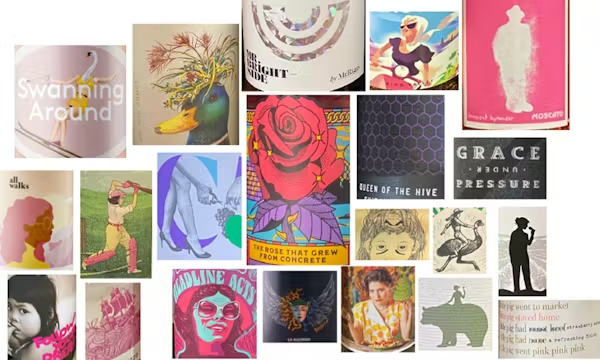
Companies used pink, purple, petals and glitz, such as glitter, embossed glass, sparkles, and images of diamonds, in the product design and labe (pictured top).

This “pinkwashing” appeals to some women. But it perpetuates the stereotype of the pink, hyper-feminine consumer.

2. Names, bodies and body parts
Labels featured stereotypical and sexualised versions of women’s names, bodies and body parts. Examples included names such as “la femme” and “madame sass”, and images depicting breasts and an orgy (pictured).

Australia’s alcohol advertising code prohibits advertising that suggests social, sexual or other success.

3. Wellness
Our analysis found labels suggested alcohol was a form of wellness, balance and connection (pictured).

This included a wine called “Mother’s Milk”. This suggests alcohol may provide replenishment in a woman’s life and care for her as she cares for others.

Another was “One Lovely Day”, which featured young women holding hands in a forest.
4. Strong women
Alcohol promoted women’s strength, resilience and confidence. For instance, it showed them in positions traditionally associated with men, playing cricket, owning a vineyard, or exercising choice and power (pictured).

These depictions are typical of postfeminism, sometimes called “backlash” feminism, which focuses on individual women who succeed in the face of gendered adversity. This may be “doing it all” while keeping a happy, confident and “feminine” disposition.

Their success is then used to downplay the structural forces that disadvantage women. This includes sexism and misogyny, as well as gendered expectations around unpaid care and emotional labour.

Examples in this category included wines featured children with shiny purple and pink text saying “follow your dreams” or “chin up”.

5. Escaping reality
This group of products promoted the dissipation and disassociation alcohol can enable. This includes the wine label Ellidy looked at with clouds drifting over a woman’s face (pictured).

These kinds of marketing suggest alcohol can provide psychological distance from life’s pressures, somewhat like anaesthetic.

We found products that referenced mental health states such as “muddled up moscato” or “better days”. Others reflected desires for freedom, revelry or rest, such as “freebird”, “tail spin” or “silence”.

Reinforcing stereotypes
Marketing alcohol this way can reproduce harmful gendered stereotypes.

Such “femmewashing” can also be confusing for women. Alcohol may be marketed as sexy, empowering and offering escapism. Yet there’s a growing understanding of the health risks of drinking alcohol, including breast cancer.

And while it is laudable for companies to recognise women and celebrate their strengths and talents, not everyone’s a fan of this type of gendered marketing. Some feel powerless to stop it.

In other research, Australian women told us it communicates that women need to be hyper-feminine, sexy and happy if they want to succeed.

As part of Kristen’s PhD research, one woman said:

I think that there should be regulation of it […] it’s very cynical and destructive, I totally see that.

Another participant said women were conscious they were being targeted to prop up industry profits:

Large companies clearly prey on exhausted, time-poor women tempting them to find their ‘me time’ in a glass or several of wine.

Is this legal?
Our research with women shows they can often see through this marketing spin. However, it can also work in the background to reinforce harmful gendered norms, and associate drinking with femininity.

In Australia, there is no current regulatory mechanism to restrict gendered alcohol marketing, but this is needed for a number of reasons. For a start, it would bring Australia into line with World Health Organization advice to reduce gender stereotypes in alcohol control policies.

We also need to be cautious of repurposing feminism as a cheap gimmick to market empowerment as a commodity.

Some suggest commoditising feminism ironically worsens gender inequality by hiding its social and political drivers. It gives the impression that merely buying the right products will enable you to succeed as a woman. ■

*Note: All of Torrens University Australia. This article is republished from The Conversation under a Creative Commons license.
US alcohol deaths down but still elevated

March 2, 2026

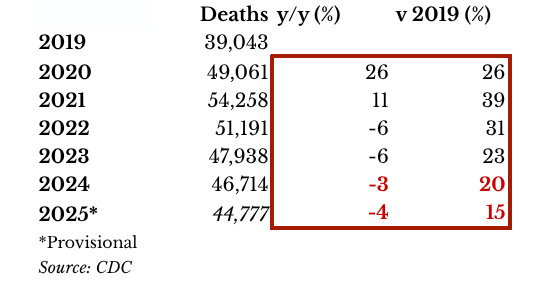
US alcohol specific deaths fell by 4% last year compared to the year before while remaining 15% above pre-pandemic levels, according to early provisional full-year figures from the CDC. The total is likely to rise by a few percentage points over the coming months before a final figure is published early next year. The early provisional total for 2024 rose by around a thousand from the early provisional figure. ■

Crossing paths with Lucy Rocca

February 27, 2026

Sober coach Lucy Rocca has been at the forefront of efforts to deal with a wide spectrum alcohol drinking problems since 2011, when she began to remake an alcohol relationship shaped in boozy 90s Britain. The effort led her to create Soberistas, a large online community that has since supported many thousands. She explores some of her own difficulties and worries that are more often faced by women, as well as policies which might improve the situation. We end by asking if the personal touch will still matter as we move into the age of AI? ■

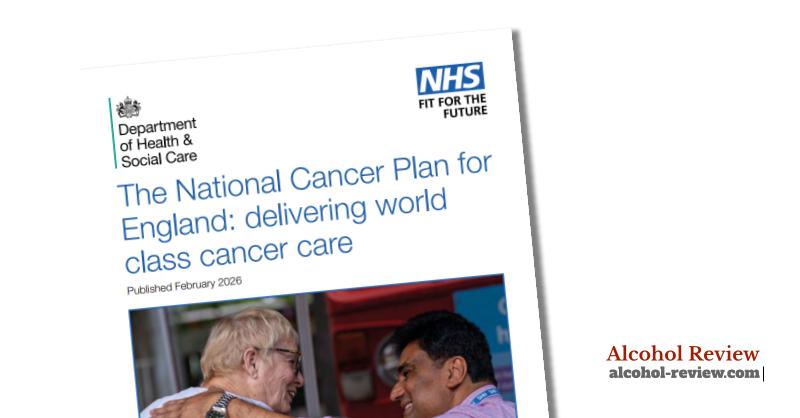
England’s cancer plan short on evidence-based policies

February 6, 2026

Experts welcomed a re-commitment to alcohol health warning labels in a new cancer plan for England this week, but highlighted the absence of evidence-based policies. Instead the plan looks to the unproven merits of lo-no drinks.

The government said it would “tackle harmful alcohol consumption by introducing new mandatory health warnings and nutritional information on alcohol labels” in a cancer plan for England on Wednesday.

“The government’s re-commitment to cancer warnings on alcohol labels is the first step needed address this. But labelling alone will not go far enough,” said Professor Sir Ian Gilmore, Chair of the Alcohol Health Alliance UK.

The alliance said the government should also look to introduce evidence-based measures to reduce alcohol consumption which increase the price of alcohol and reduce its availability and marketing.

The plan does not mention these policies, instead saying the government will “explore options to encourage consumers to reduce their alcohol intake with no- and low- alcohol alternative”.

A group of influential experts said last month that there is currently no firm evidence that alcohol-free drinks reduce alcohol consumption. ■

Alcohol plans weakened after intense industry lobbying

January 29, 2026

A new trove of documents obtained under the UK’s freedom of information act show how the alcohol industry aggressively campaigned for the government to drop alcohol marketing restrictions from its flagship health plan last year, as it did.

The government’s NHS ten year plan caused consternation among health experts when it did not mention alcohol marketing restrictions that had been widely trailed in the runup to its launch. Such restrictions are among the WHO’s top recommendations for reducing alcohol harm.

The documents show alcohol companies and alcohol trade groups wrote to the health secretary, chancellor and business secretary pleading for them to help water down the government’s health plan, according to a new report from the Institute of Alcohol Studies (IAS).

The NGO, which works to improve UK alcohol policy, said it obtained a total of 47 documents showing alcohol companies and alcohol industry funded organisations using “strikingly similar arguments, shared language, and coordinated timing” to push for a weakened health agenda.  Their contents are misleading, according to the IAS.

“This is a textbook example of why the alcohol industry should have no role in shaping health policy. Their business model depends on increasing consumption, while public health depends on reducing it,” said Alice Wiseman, vice president at the Association of Directors of Public Health. ■

Alcohol market forecast to continue to dwarf alcohol-free alternatives

January 23, 2026

A new alcohol industry forecast shows there is little chance of alcohol-free drinks reducing global alcohol consumption, which is an order of magnitude bigger with little evidence of erosion from alcohol-frees.

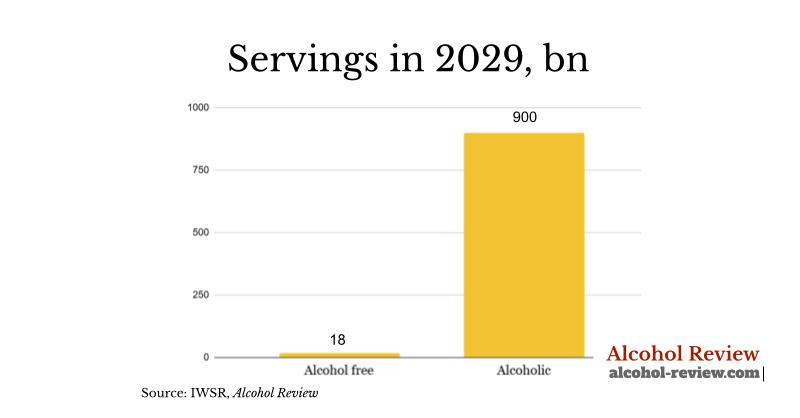
Alcohol industry analyst IWSR said yesterday the global volume of “no-alcohol analogues”—alcohol-free beer, wine and spirits—would grow 36% by volume between 2024 and 2029, reaching over “18bn servings” globally.

This would bring alcohol-frees up to just 2% of the 900bn servings a year of alcoholic versions.* There is also currently no reliable evidence to suggest that alcohol-free drinks replace alcoholic drinks rather than soft drinks.

Last month a group of experts warned that public health “should not take market-led solutions to public health problems at face value” in regard to alcohol-free analogues.

AR has also been recommending scepticism about the potential of alcohol-free drinks as a solution to alcohol harm for a while. They divert valuable attention from measures shown to reduce harm.

*Note: The world consumes around 450bn litres of alcoholic drinks a year, mostly beer, which would translate into upwards of 900bn servings, if every serving were a half-litre. ■

  • Page 1
  • Page 2
  • Page 3
  • Interim pages omitted …
  • Page 43
  • Go to Next Page »

Copyright © 2026 · Phil Cain Impressum