• Skip to main content

Alcohol Review

Alcohol understanding for all

  • Highlights
  • AR2026
    • AR2025
    • Earlier events
  • Register
  • About
    • Organisers
    • Contact
  • Log In

story

Gain freedom: How to escape your Facebook feed

January 10, 2024

Processing the jumbled deluge of content on the typical Facebook feed can cause distraction, cognitive overload and intermittent alarm from its cack-handed delivery of serious news. But this formidable mental challenge is made tricky to escape.

Social media’s commercial goal is to gain and hold our attention for long periods rather than efficiently inform, a role it is unable to perform. The Facebook feed is the crowning achievement of the sector, being the most effective technique ever for distracting nosy animals like us.

We find it almost impossible to stop looking at it, just as we find it hard to resist looking through an open doorway as we pass.

Facebook’s master stroke was to pump-prime our feeds by making it the default to follow people at the same time as we add them. This means it is time-consuming and (superficially) socially awkward for us to reverse the compliment, so we tend not to bother.

People even abandon Facebook as a way to avoid the dilemma, but jumping ship carries a cost because Facebook is a useful personal address book, directory and messaging service. The most targeted way to cure Facebook-feed overload is to disable the feed alone, not to desert the platform.

Thankfully, it is possible to completely disable the Facebook feed and any ill-feeling for doing so is misplaced. Outside Facebookland it has long been accepted people should opt-in for updates rather opt out of them. Facebook should be no exception.

It could take a while to readjust to a feed-free life, but Facebook is not nearly as much of a time-sponge without it. And unhooked from the feed you can also choose when to consume serious news, rather than leaving yourself open to unsettling updates from across the planet at any second.

You are not left “out in the cold” this way either. You can still visit contacts’ Facebook pages, and send and receive personal messages. Disabling your Facebook feed transforms the site from chaotic information maelstrom to convivial blog community, message service and directory.

Of course, there are billions of people who are perfectly happy with their Facebook feeds as they are and I do not begrudge them a moment of enjoyment. I had many laughs and learned a lot from mine — not least my limits — before finally finding a way to turn it off.

Instant relief
You can now instantly block the feed on a PC: in Chrome install the News Feed Eradicator or the Safari equivalent; Firefox, meanwhile, has Kill FB Feed.

On mobile phones uninstalling the app and not visiting the site seems to be the only way.

Feed freedom
Facebook makes it difficult to leave the feed more permanently, but it is possible:
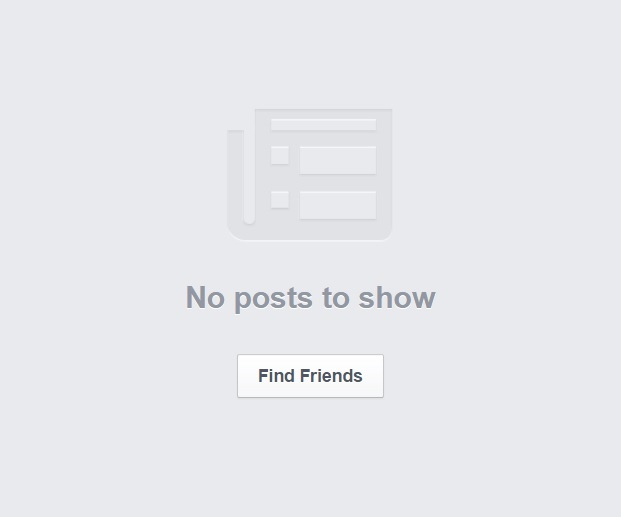
The empty stream

(1) Unfollow contacts: You can do this in one go using this app, being careful to unfollow rather than to unfriend.

(2) Unlike pages: This is more painstaking and has to be done one like at a time. Visit your homepage and click “View activity log” at the bottom right of your cover picture and on the left-hand-side click “Likes” and go through them.

(3) Regulate groups: Some groups can be very rewarding, others less so. For the latter go to “Home”, click on “Groups” on the left-hand-side and click “Edit notification settings” or “Leave group” accordingly.

After a lot of arduous clicking, the end result should be as below, saying simply “No posts to show. Find Friends.” One last type of notification remains, most stubbornly on mobile: people’s birthdays. ■

You may also like:

Alcohol, our faulty Facebook

Social media and the brain

Social media’s serious news problem

Embracing imperfection

Weaving happiness into journalism

In praise of politeness

[summary] Realising realistic medicine | Chief Medical Officer for Scotland

January 10, 2024

Key points on alcohol in Realising realistic medicine, the annual report of Scotland’s Chief Medical Officer Dr Catherine Calderwood:

  • Alcohol sales in Scotland are around 20% higher than in England and Wales
  • Sales have increased in Scotland over the last two years, after a fall between 2009 and 2013
  • 10.8 litres of pure alcohol was sold, an average of 20.8 units a week, compared to the 14 unit guideline maximum
  • 74% of alcohol was sold in supermarkets and off-licences, a record high
  • There are around 22 deaths a week attributable to alcohol misuse, and an average of 674 hospital admissions
  • Both deaths and hospital admissions remain many times higher than in the 1980s

Source: http://www.gov.scot/Resource/0051/00514513.pdf

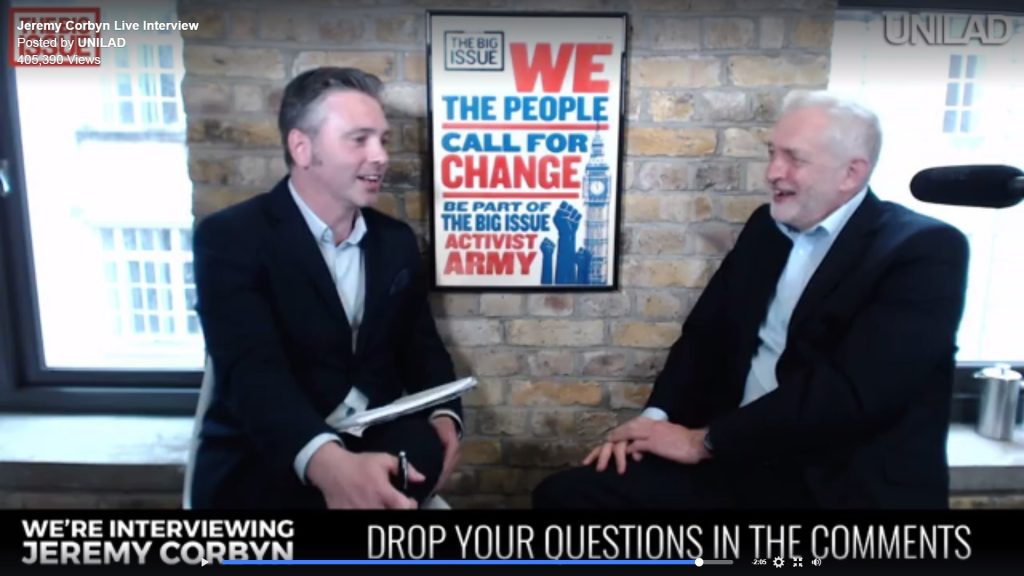
[news] Jeremy Corbyn: ‘I don’t drink’. My secret is tea, apple juice and coconut water | philcain.com

January 10, 2024

Q: Home brew or [Carlsberg] Special Brew?
A: I don’t drink. I’m really boring. I’m not saying I’ve never drunk, I have, never a lot. I don’t drink anything at all. … I enjoy a cup of tea. Do you know what my secret is? Apple juice or coconut water.
—
Jeremy Corbyn, Labour leader

Source: http://www.bigissue.com/news/big-issue-interviews-jeremy-corbyn-live-facebook/ (@27m56s)


Note: A list of manifesto pledges on alcohol can be found here. ■

Celebrating World Mental Health Day 2017 #WMHD2017

January 10, 2024

Guest post: Do different drinks make you different drunk? | Nicole Lee, Curtin University

January 10, 2024

[Some detail exploring the underpinnings of this brief blog post.]

by Nicole Lee, Curtin University

 Reports of a study linking different kinds of alcoholic drinks with different mood states were making the rounds recently. The research used 30,000 survey responses from the Global Drug Survey and found that people attached different emotions to different alcoholic drinks.

For instance, more respondents reported feeling aggressive when drinking spirits than when drinking wine.

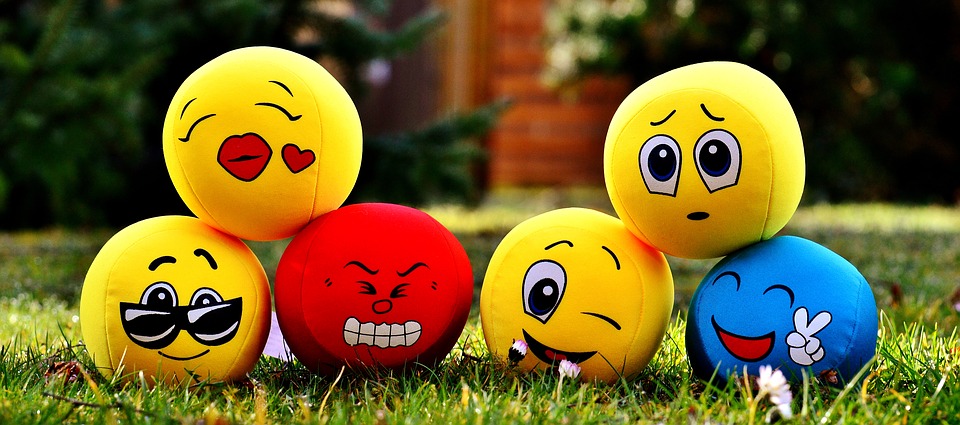
We all have friends who swear they feel differently when drinking different types of alcohol. But can different drinks really influence your mood in different ways?

Alcohol is alcohol
Let’s cut to the chase. No matter what the drink, the active ingredient is the same: ethanol.

When you have a drink, ethanol enters the bloodstream through the stomach and small intestine and is then processed in the liver. The liver can process only a limited amount of alcohol at a time so any excess remains in the blood and travels to other organs, including your brain where mood is regulated.

The direct effects of alcohol are the same whether you drink wine, beer or spirits. There’s no evidence that different types of alcohol cause different mood states. People aren’t even very good at recognising their mood states when they have been drinking.

So where does the myth come from?

Grape expectations
Scientists have studied specific alcohol-related beliefs called “expectancies”. If you believe a particular type of drink makes you angry, sad or sexed up, then it is more likely to.

We develop expectancies from a number of sources, including our own and others’ experiences. If wine makes you relaxed, it’s probably because you usually sip it slowly in a calm and relaxed atmosphere. If tequila makes you crazy, maybe it’s because you usually drink it in shots, which is bound to be on a wild night out.

Or if you regularly saw your parents sitting around on a Sunday afternoon with their friends and a few beers, you might expect beer to make you more sociable. Kids as young as six have been found to have expectancies about alcohol, well before any experience of drinking.

We build conscious and unconscious associations between alcohol and our emotions every time we drink or see someone else drinking.

We could even be influenced by music and art. “Tequila makes me crazy” is a common belief, which also happens to be a line in a Kenny Chesney song, and Billy Joel’s Piano Man might reinforce the idea that gin makes you melancholy.

It’s the ‘how’ more than the ‘what’
Other chemicals, called congeners, can be produced in the process of making alcohol. Different drinks produce different congeners. Some argue these could have different effects on mood, but the only real effect of these chemicals is on the taste and smell of a beverage. They can also contribute to a cracker of a hangover.

But there is no evidence that these congeners produce specific mood or behavioural effects while you are drinking.

The critical factor in the physical and psychological effects you experience when drinking really comes down to how you drink rather than what you drink. Different drinks have different alcohol content and the more alcohol you ingest—and the faster you ingest it—the stronger the effects.

Spirits have a higher concentration of alcohol (40%) than beer (5%) or wine (12%) and are often downed quickly, either in shots or with a sweet mixer. This rapidly increases blood alcohol concentration, and therefore alcohol’s effects, including changes in mood.
The same goes for mixing drinks. You might have heard the saying “Beer before liquor, never been sicker; liquor before beer, you’re in the clear”, but again it’s the amount of alcohol that might get you into trouble rather than mixing different types.

Mixing a stimulant (like an energy drink) with alcohol can also mask how intoxicated you feel, allowing you to drink more.

You can reduce the risk of extreme mood changes by drinking slowly, eating food before and while you drink, and spacing alcoholic drinks with water, juice or soft drink. Stick to drinking within the Australian alcohol guidelines of no more than four standard drinks on a single occasion.

Party animals and bad eggs
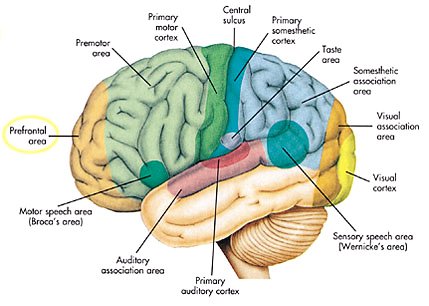
Alcohol is a central nervous system depressant, which means it slows the brain’s functioning. Alcohol’s effects include reducing activity in the part of the brain that regulates thinking, reasoning and decision-making, known as the prefrontal cortex. Alcohol also decreases inhibitions and our ability to regulate emotions.

“In vino veritas” (in wine there is truth) is a saying that suggests that when drinking we are more likely to reveal our true selves. While that’s not completely accurate, the changes in mood when someone is drinking often reflect underlying personal styles that become less regulated with alcohol on board.

Studies of aggression and alcohol, for example, show that people who are normally irritable, cranky or low in empathy when they are not drinking are more likely to be aggressive when their inhibitions are lowered while drinking.

As with all drugs, the effect alcohol has on your mood is a combination of the alcohol itself, where you are drinking it and how you’re feeling at the time.

So does alcohol make you crazy, mean or sad? If it does, you were probably a bit that way inclined already, and if you believe it enough it may just come true. ■

Nicole Lee, Professor at the National Drug Research Institute, Curtin University.

This article was originally published on The Conversation.

Cognition decline again linked to drinking alcohol above low level

January 10, 2024

Drinking more than a small amount of alcohol can cause cognitive decline in middle and old age a new study has confirmed.
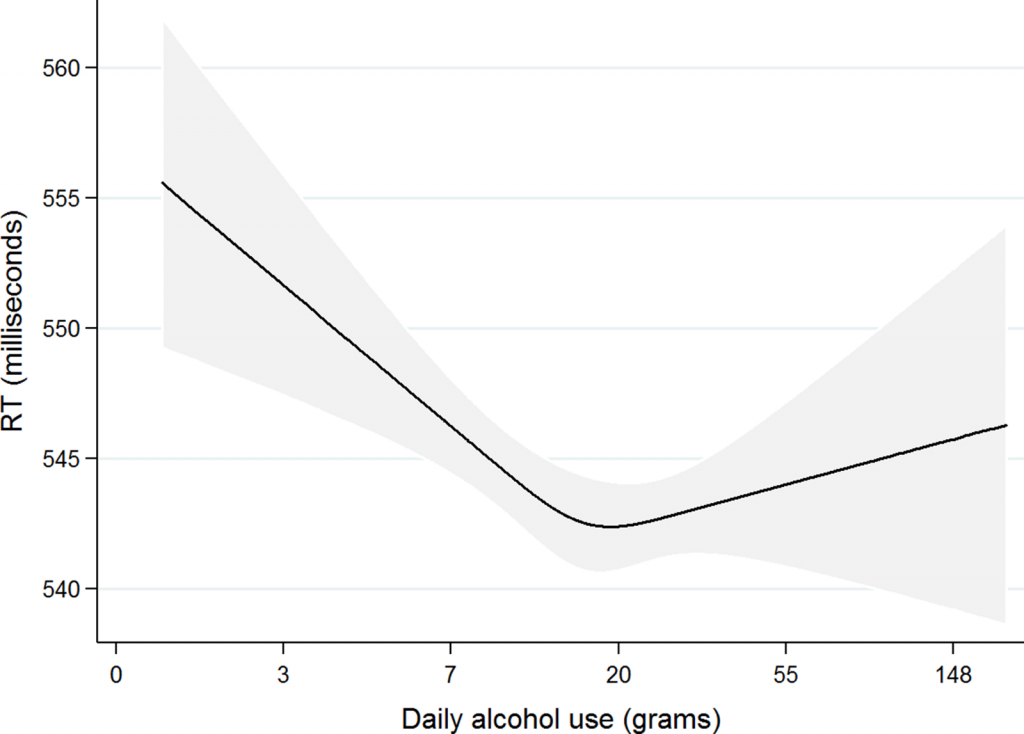
The decline increases with the amount of alcohol we drink above a low threshold and rises with age. The UK guidelines suggest no more than 14 units (140ml) of alcohol a week.

The new study, however, caused a stir because it found the negative effects begin above 9 units a week, five units below the current guidelines.

Professor David Spiegelhalter, a statistician and communicator at Cambridge University says a graph in the study simply confirms 14 units a week, or 16g a day, is where decline is least (see chart). 

“It’s not as straightforward as looking at the graph,” says Professor Simon Moore, one of the study’s authors, who says its lower threshold comes from the calculation involved in fitting the curve to the data.

The debate was fueled by Sun newspaper coverage of the study which came under a headline saying a pint a day might increase our risk of dementia. It seems to be correct:

A daily pint of 5% lager comes to a total of 16 units of alcohol a week, above both the official low-risk limit as well as the lower one suggested by the new study. ■

  • « Go to Previous Page
  • Page 1
  • Interim pages omitted …
  • Page 27
  • Page 28
  • Page 29
  • Page 30
  • Page 31
  • Interim pages omitted …
  • Page 44
  • Go to Next Page »

Copyright © 2026 · Phil Cain Impressum