 ‘
‘
story
Austrian Jakobsgold alcohol-free organic enters pop chart
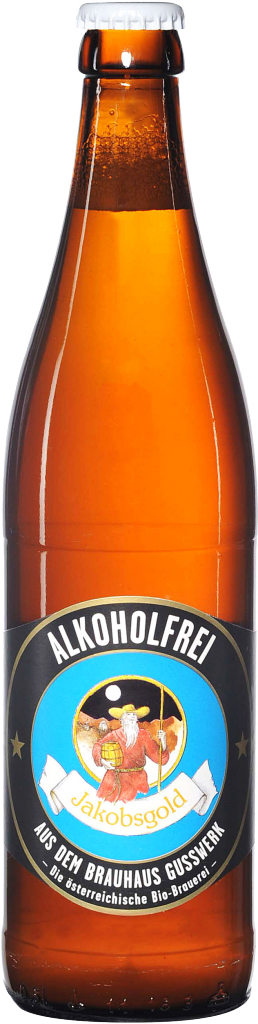 Your holidaying correspondent, though no connoisseur, could not help thinking this Austrian organic alcohol free beer has something a bit extra to it. And people with far more refined palates seem to agree, so it has been added to Alcohol Companion’s Top of the Pops, a highly unscientific list of drinkable alcohol free beers, wines and spirits. It does not seem to be available outside Austria at the moment, although perhaps it is in Japan. ■
[summary] Calling time: Addressing ageism in alcohol services and research | Drink Wise Age Well
Key points
 “The only age group [in the UK] where drinking has increased is among 65-74 year-olds. So our consideration, and prevention of problem drinking has to turn to the retired, or those who’ll approach it over the coming years.”—Baroness Dianne Hayter
- Despite it being a growing concern there are significant barriers for older people when trying to access alcohol services, while statistics and research often misses them out
- Barriers to services include:
– Arbitrary age limits which prevent older adults accessing alcohol rehabs, younger clients being prioritised over older adults for alcohol treatment, older adults not being offered alcohol treatment because of their age
– Older adults being excluded without good reason from studies on alcohol
– Alcohol services unable or unwilling to carry out home visits for older adults unable to attend the service and alcohol service premises or rooms within the premises inaccessible to older adults with limited mobility - Age discrimination in alcohol services is likely to be the result of pervasive misconceptions, for example the false belief that older people are incapable of change or alcohol problems predominantly affect young people
Recommendations include
- Consulting with older adults with ‘lived experience’, their families and carers, via relevant advocacy groups
- Informing alcohol services of their legal obligation to provide equitable care and take action if services are consistently discriminating against older adults
- Ensuring national prevalence studies which collect data on alcohol include older adults and report key data by multiple categories, for example young old (65-74 years) middle old (75-84 years) and old old (85 years and over)
- Removing arbitrary age limits for alcohol services. Specialist alcohol services for young or old people who have specific age-related needs are acceptable because they are considered to be fair and reasonable
- Ensuring that older adults are included in clinical trials and research studies unless there is good justification for not doing so in which case the justification should be stated in all study outputs
- Research funders should consider issuing themed calls for research into alcohol problems in older adults
- “At a personal level, this may mean replacing the bottle of booze as a Christmas present to our older friends and relatives”—Baroness Hayter
Source: https://www.drinkwiseagewell.org.uk/wp-content/uploads/2017/11/DWAW_Yr3_Report-FOR-WEB4.pdf
Experts query minimum alcohol price concerns
 Minimum alcohol unit price advocates cast doubt on recent warnings that low-level drinkers would bear the brunt of Scotland’s plan to introduce the scheme next May.
The Institute for Fiscal Studies (IFS) said last week it may be “better to reform duties and not have a minimum price at all”. It estimated a 50p minimum would increase the price of around 70% of off-trade alcohol units purchased, unfairly impacting low-level drinkers.
But these calculations have some shortcomings, says John Holmes of the Sheffield Alcohol Research Group, which forecast the impact of Scotland’s scheme. These mean the IFS has over-estimated the cost to people who do not overdo it.
Most importantly the IFS figures to not recognise alcohol consumption is heavily skewed towards heavy drinkers, says Holmes. The one-in-four people in Scotland who exceed the old, looser guidelines together drink around three-quarters of the alcohol.
This top-loaded consumption pattern means it is heavy drinkers who purchase the vast majority of units, and an even greater proportion of units bought for under 50p. This means it is heavy drinkers who will feel the pinch as the result of heavy consumption under minimum pricing, as the scheme intends.
And, to add to this, the number of units bought in Scotland for under 50p is probably not the 70% of the total the IFS estimates, but more like 50%, Holmes says. This “more robust”percentage comes from sales data rather than the self-reports relied on by the IFS statistic.
Another point worth considering, according to another commentator, is that raising taxes on some categories of alcoholic drinks favoured by heavy drinkers instead, as recommended by IFS, would also have an unwelcome impact on some low-level drinkers. ■
Minimal alcohol drinking linked to longer life
Our life expectancy is lower if we drink more than 125ml of alcohol a week, according to new research.
“Drinking alcohol at levels which were believed to be safe is actually linked with lower life expectancy and several adverse health outcomes,” says Dr Dan Blazer from Duke University, a co-author of the Lancet study.
The decline in life expectancy was found to start slightly below the UK’s guideline maximum amount of 140ml, or 14 UK units, a week. Guideline maximums in Italy, Portugal and Spain are almost 50% higher, while the US one for men is nearly double.
The lives of those who drank 125-250ml a week were shorter by around six months over the age of 40. Those who drank 250-438ml lived between one and two years less, while drinking beyond the top end of the range typically cut lifetimes by between four and five years.
It strengthens evidence, the authors say, that “total cardiovascular disease risk is actually comprised of several distinct and opposite dose–response curves rather than a single J-shaped association”.
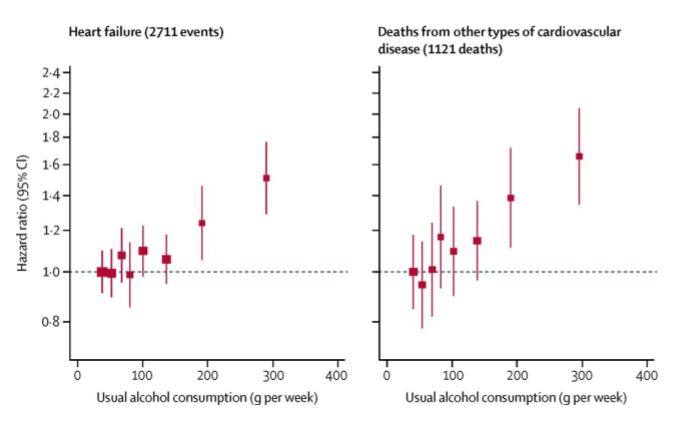 Higher alcohol consumption was associated with a higher risk of stroke, heart failure, fatal hypertensive disease, and fatal aortic aneurysm, with no thresholds below which lower alcohol consumption stopped reducing risk (see chart).
But higher consumption was also associated with a lower risk of non-fatal heart attacks, or “myocardial infarctions”. The authors say, however, that the increased risk of having fatal heart problems means we are likely to lose years of life if we were to drink alcohol to ward off non-fatal problems.
“The key message of this research for public health is that, if you already drink alcohol, drinking less may help you live longer and lower your risk of several cardiovascular conditions,” said Dr Angela Wood, lead author of the study from Cambridge University.
Non-drinkers were excluded from the study, because we often stop drinking when we develop health problems, so skewing the numbers. The study also excluded people with pre-existing heart conditions. ■
Alcohol Companion, GPS for drinking