• Skip to main content

Alcohol Review

Alcohol understanding for all

  • Highlights
  • AR2026
    • AR2025
    • Earlier events
  • Register
  • About
    • Organisers
    • Contact
  • Log In

story

CAMRA leaders to discuss minimum alcohol pricing

January 10, 2024

The leaders of a traditional pub campaign group are set to discuss a call for it to support the “urgent introduction” of minimum alcohol pricing in England later this month.

The move comes in response to a motion passed at the Campaign for Real Ale (CAMRA) annual conference in Dundee earlier this month, which saw the arrival of a new chairman Nik Antona.

Alcohol has retailed for more than 50p ($0.66) per 10ml UK unit in Scotland since May last year. Supporters hope it will curtail the drinking of very heavy drinkers who gravitate towards cheap sources of alcohol. In England the price per unit starts at 16p.

The price of beer sold in pubs is unaffected by minimum pricing, typically being more than three times the 50p minimum price. Supporters within CAMRA argue minimum pricing may help counter the decline of British pubs by narrowing the price gap with supermarkets.

Others do not see it this way, saying on social media the pro-minimum price motion panders to “anti-alcohol” forces, threatening to cancel their CAMRA memberships. Some, however, wonder if an appreciation of untainted liberal economics is a necessary part of appreciating traditional beer.

The tension is not new. CAMRA’s former chairman Colin Valentine, who stood down last year, is said to have spoken in support of the minimum price motion. Yet, under Valentine’s chairmanship, CAMRA also echoed alcohol industry opposition to it.

Help may be at hand. An initial evaluation of the short-term economic impact of minimum pricing in Scotland is due later this year. And some insight into its effectiveness in achieving its goal of reducing harmful drinking is expected next year. ■

[proposal/comment] Brexit allows “rational” alcohol unit tax, says freemarket think-tank | IEA

January 10, 2024

A 9p/unit tax would ensure that alcohol duty is a tax on alcohol, not an arbitrary tax on fluids. EU regulation currently prohibits this system of alcohol taxation. Outside of the EU, Britain will no longer be constrained—Institute of Economic Affairs
Source: iea.org.uk/publications/a-rational-approach-to-alcohol-taxation/


Note: The simplicity of the system is attractive, as is the idea of taxing the potentially harmful element of alcoholic drinks alone. It is interesting, however, to imagine how it might look in the real world. Strong white cider, widely condemned for fueling abuse because it is so cheap, is curently taxed at 7.3p a unit. So increasing the tax to 9p a unit might be expected to raise its price by 1.7p for each unit. This would mean a 3 litre bottle of 7.5% cider, which contains 22.5 units, might go up from £3.99 to £4.37. Would this be enough to deter cash-strapped drinkers? It seems unlikely. An admirably fair and rational tax may be ineffective in curbing inherently irrational patterns of consumption. ■

[statsbook] Alcohol related pages of the World Health Statistics 2017 | World Health Organisation

January 10, 2024

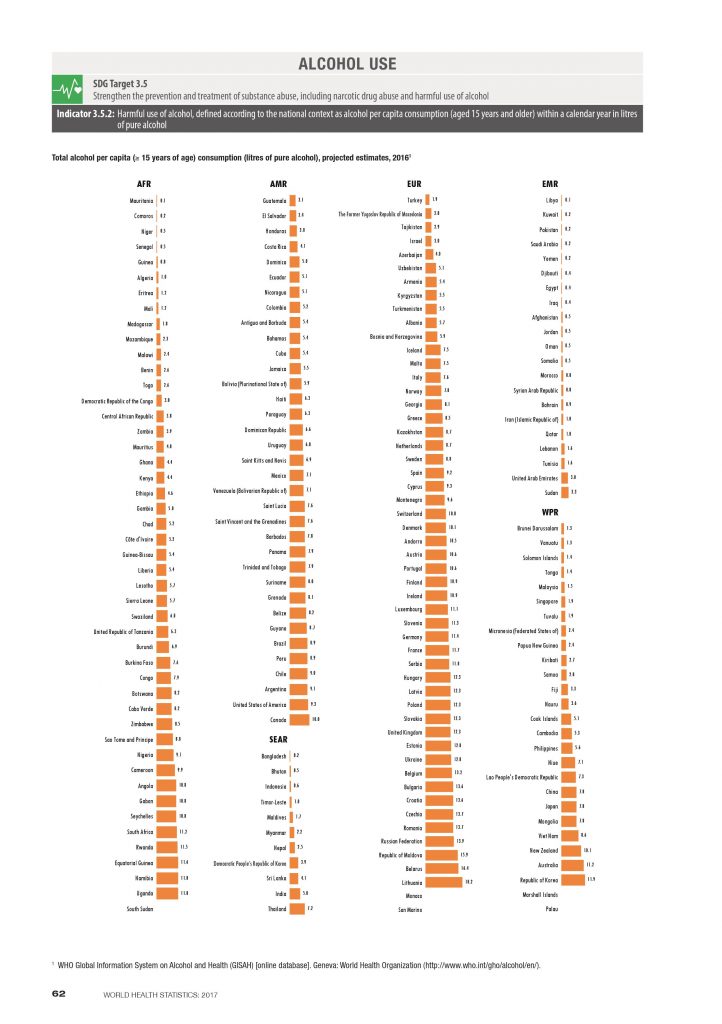
There is a case study on preventing early deaths from alcohol us in the Russian Federation on page 44 and global alcohol use statistics on page 62 (pictured). The accuracy and comparability of alcohol statistics is often open to question.

Source: www.who.int/gho/publications/world_health_statistics/2017/en/

Festival adds eleven entries to Top of the Pops drinks chart

January 10, 2024

There are no fewer than eleven new additions to Alcohol Companion‘s Top of the Pops, a light-hearted shortlist of enjoyable alcohol-free drinks.
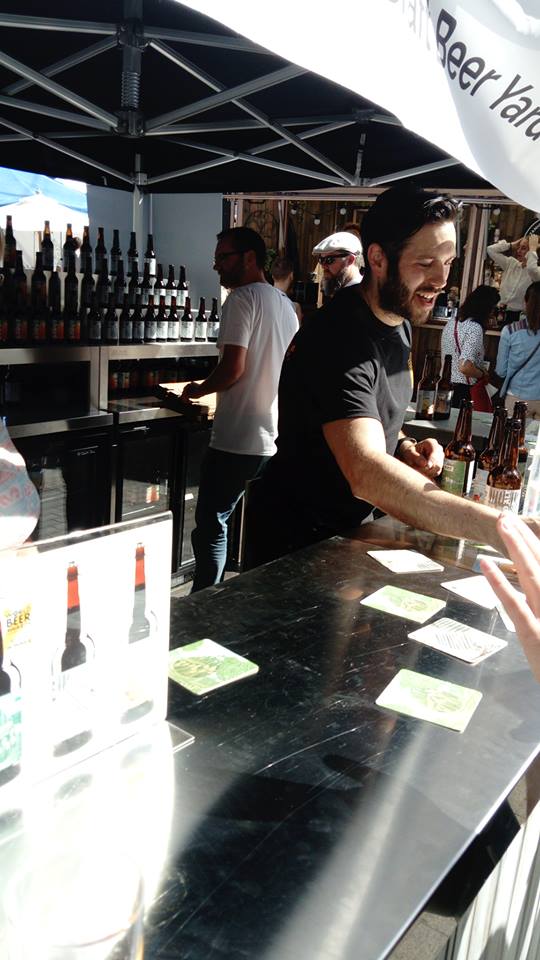
These come thanks to the enormous range of samples available at London’s first Mindful Drinking Festival on August 13th, the work of the Club Soda movement for mindful drinkers. 

The motherlode of new chart entries includes two wines: Bees Knees white and rose, brewed using bacterial rather than yeast fermentation; and Woodstar made from acia palm berries, botanicals and cocoa.

Beers make a strong showing too, with eight entries: Big Drop’s lactose-enhanced stout, pale ale, lager and spiced ale; Nirvana’s Karma pale ale, Kosmic stout and Tantra pale ale; and FitBeer, a low-calorie Bavarian-style lager.  

And there is one hard-to-categorise-drink: Botonique, a botanically-based soft drink for wine lovers. There were also many superior soft drinks and teas happy to be a drinking experiences all of their own.

Existing chart entries present included Eisberg’s wine, Heineken’s 0.0 lager; Seedlip alcohol-free spirit and St Peter’s craft ale. Doubtless there were other extraordinary liquid taste experiments unwittingly missed. ■

[summary/comment] Do emotions related to alcohol consumption differ by alcohol type? | BMJ Open

January 10, 2024

Among 18-34s in 21 countries

  • Nearly 30% respondents reported a relationship between spirits and aggression, significantly higher than other types of alcoholic drink

  • Dependent drinkers rely on alcohol to obtain the positive emotions they associated with drinking, being five times more likely to feel energised compared with low risk drinkers
  • Heavier drinkers also reported negative emotions more frequently with respondents being just over six times more likely to report feelings of aggression

Source: http://bmjopen.bmj.com/content/7/10/e016089


Note: This topic is crucial to understanding why we drink alcohol which is both fascinating and useful to know about. This study is potentially confusing, however, not helped by some misleading media coverage. The study refers to “different types of alcohol” which could be misunderstood, because there is only one type of drinkable alcohol, ethanol (C2H6O). Alcoholic drinks rarely contain other psychoactives of comparable strength, although the hops in beer are a mild sedative and the caffeine in Coke a mild stimulant. Alcohol dosage is likely to underlie some of the associations. Stronger drinks make it easier to drink more alcohol when we might, for instance, be more likely to be aggressive. But we should not ignore the other powerful ingredient in our drinks: imagination. Alcohol is not needed for it to work. We will, for instance, show signs of inebriation when given a placebo drink containing no alcohol. This effect can be both helpful and unhelpful to us. We can experience both positive and negative emotional effects from our imaginative leap, like feeling happy or feeling sad. And the thing we use to trigger our imaginations and moods can be completely harmless, like a sugar pill, our surroundings or a painting, or potentially counterproductive, like alcohol. ■

A third of Brits to skip alcohol over Christmas

January 10, 2024

More than a third of Brits say they will not drink alcohol at four or more social occasions this Christmas, while almost one-in-six 25-34s say they will not drink alcohol at all.

Almost a third also said they are more likely to lay off alcohol this Christmas than last year,  with younger groups even more open to the idea, according to figures gathered as part of Coca-Cola’s Designated Driver campaign.

It is part of a bigger trend, with 40% of people saying they avoided alcohol at parties in the last month. Their prime reasons were to avoid hangovers, to drive or to be safer. Toning down the alcohol is not for everyone, however, with over 40% of over-65s having no plans to lay off alcohol during the festivities.

The real sober enthusiasts are the 18-24 year-olds, 57% of whom said they had chosen not to drink in the last month. They mainly aimed to save money, to protect their health or to enjoy more interesting non-alcoholic drinks.

Around a third of interviewees said they tend to assume someone is not drinking at a Christmas do because they are driving, while 35% now assume someone does not feel a need to drink to have fun.

Coca-Cola is rewarding alcohol-free Christmas drivers with a buy-one-get-one-free offer at participating pubs. ■


  • « Go to Previous Page
  • Page 1
  • Interim pages omitted …
  • Page 32
  • Page 33
  • Page 34
  • Page 35
  • Page 36
  • Interim pages omitted …
  • Page 44
  • Go to Next Page »

Copyright © 2026 · Phil Cain Impressum