• Skip to main content

Alcohol Review

Alcohol understanding for all

  • Highlights
  • AR2026
    • AR2025
    • Earlier events
  • Register
  • About
    • Organisers
    • Contact
  • Log In

alcohol

England’s absurd beer ad brings home need for regulation

January 10, 2024

The wisdom of making Euro 2024 a beer marketing bonanza should surely be questioned when alcohol deaths are still 30% above pre-pandemic levels in the UK and elsewhere.

Imagine a national football hero wreathed in heavenly light, carrying a holy relic to bless long ranks of beer cans as they emerge from a production line. “Bring it home!” our hero commands as the cans wheel past in obedient legions. 

The message is clear for anybody witnessing this unlikely tableau. Any true admirer of this man and supporter of the national team with which he played must procure some of these magical cans and imbibe their contents.

It is satire gone too far, surely? It would require a world in which quasi-religious imagery was used to manipulate people into consuming a health-harming psychoactive product while watching sportspeople in their prime.

Well, absurd yes, but it is 2024 when the bedrock of satire is what underpins reality. This is the storyline of the all-too-real Budweiser ad for Euro 2024 featuring Geoff Hurst, sole survivor of England’s 1966 World Cup winning team.

England may not get far in the tournament, but they can come home safe in the knowledge they are forever a team with one of the most ludicrous alcohol ads of 2024, bending England’s national football folklore into a commercial goal.

https://www.youtube.com/watch?v=fZf5KtPWaJ0
Budweiser’s quasi-religious beer ad

Sports watching is an alcohol marketing dream. The phases of boredom, anxiety, depression, frustration, sociability and euphoria it induces are all powerful cues for alcohol drinking. It may even help train us to feel we need alcohol to cope with emotions at other times.

Not walking alone
This is, of course, not the only alcohol ad doing the rounds during Euro 2023. TV viewers young and old are continually persuaded in any number of cunning ways to believe a few beers are an essential accessory to proper football viewing.

The alcohol industry boilerplate counter-message “drinking responsibly” does not stop the constant association building. And the example set by “real fans” at the matches does not help either, with some so assured of beer’s pivotal role in the football story they launch half-full beer cups at the players.

Euro 2024 is a beer industry bonanza, like all football tournaments. Advertising is a way of capitalising on the enormous buzz of activity around it, fuelling demand from existing beer drinkers and imprinting on new potential customers, like children and young people.

The idea alcohol companies might now or ever curtail their ads voluntarily is laughable. Alcohol companies are obliged to do what is allowed to enrich shareholders. The only way to curb a vector of incentivised harm is to have effective ad regulations. These are currently absent in most countries.

And ad regulation needs to cover alcohol-free brews which share their brand with an alcoholic beer. These are widely used to crowbar alcohol brands into sports coverage, like the upcoming Olympics. The subterfuge is obvious given the tiny share of alcohol-free sales.

Individual approach
No one of us is able to make these legal changes, which will take time. So all we can do in the meantime is protect ourselves and those around us as best we can. 

One way is to avoid being in alcohol soaked environments including our homes. Alcohol is simply not an essential part of playing sport, nor an essential part of watching it either. Alcohol, of course, played no part in Geoff Hurst’s hat trick of goals in 1966. There would have been no beer ads for TV viewers and lager would have been, perhaps, 1% of the beer market.

We might remind ourselves that one of the greatest players of the same era, Sir Stanley Matthews (pictured), didn’t drink. Meanwhile a crop of football stars including France’s Kylian Mbappé oppose alcohol promotions. Opting out is not easy and not currently possible if someone does not offer a religious reason, even though there are plenty of secular reasons.

We might also remind ourselves that alcohol blighted the lives of many of the best football players, like Diego Maradona, George Best and Paul Gascoigne, to name just three known to this very occasional football viewer. Did people watching the 1966 England match need beer to appreciate it. Would that not have dulled the experience rather than enhance it. 

We might also imagine that avoiding alcohol when watching football might be positive training for us. We can use it as a way to learn to ride a roller coaster of emotions without turning to alcohol to cope. Or we can at least see it as a way of reducing the risk of developing this common problem. 

And finally, perhaps, we might ask ourselves something: If we are unable to enjoy watching football without consuming alcohol then maybe we do not like the game? ■ 
Find this story on X
Find this story on LinkedIn
Want to see more? Join the supporters
Investors favour alcohol

January 10, 2024

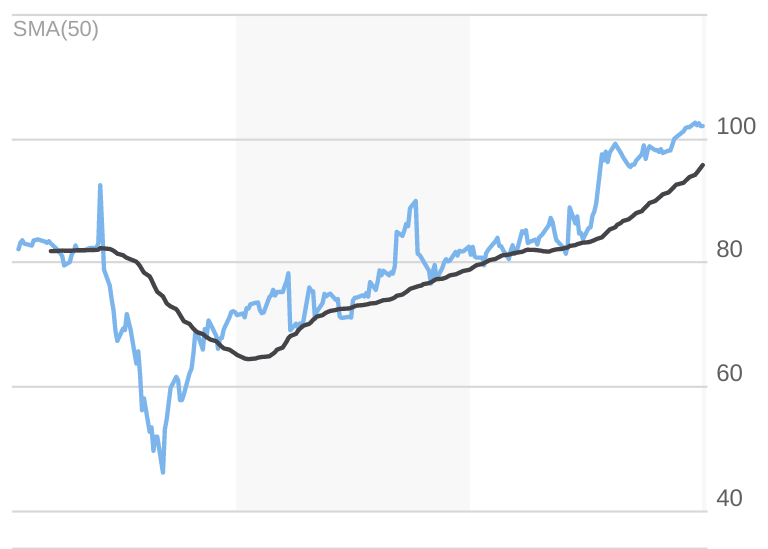
Alcohol share prices in the US are far stronger than before the covid-19 slump struck with the US Alcoholic Beverages/Drinks Index up a fifth over the full year, having almost halved in February (see chart).

A share price rise needn’t necessarily indicate an expectation of higher profits or revenue. It could be a “flight to safety”, where people make more reliable bets in crises, which is why gold prices go up.

Interpreting share movements is a matter of speculation. This interpretation would indicate the US financial market expects alcohol to fair relatively well and is willing to bank on it. ■

Deadly lockdown drinking polarisation quantified

January 10, 2024

The heaviest drinking households bought 17 times more alcohol than the lightest drinking ones at the start of the covid pandemic, a study says, helping to explain record high levels of alcohol-induced death.

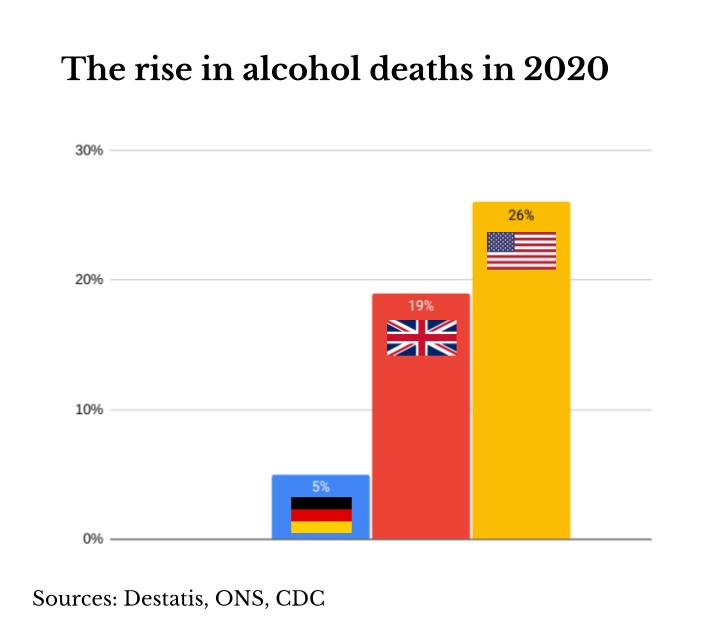
The polarisation of alcohol consumption found between the top and bottom fifth of households in the UK is likely one reason why there was a 19% rise in alcohol-specific deaths in 2020, reaching the highest level for 20 years.

The US saw an even bigger alcohol-induced death surge in 2020 Alcohol Review revealed last month (see chart). The CDC has since confirmed the 26% rise that year and now also estimates a similarly high level for last year.

The increase in US deaths has so far attracted scant public attention or research. But it is likely the lifestyle changes and stress of the covid crisis saw heavier drinkers in both sides of the Atlantic increase their intake to deadly levels, just as this research suggests they did in the opening phase of the covid crisis in the UK.

Late last year around 30% more people in England said they drank more than the official low risk guidelines of 14 units (140ml) a week compared to before the covid crisis, said a Office for Health Improvement and Disparities survey.

“It is also likely that reduced access to care and treatment during covid contributed to an increase in alcohol-related deaths,” said lead author Professor Peter Anderson of Newcastle University when asked if other factors played a part in the UK. 

Households in the more socially disadvantaged locations of northern England bought more alcohol. The pattern in Scotland and Wales was “less pronounced”, possibly because they have minimum alcohol pricing policies, the study says. 

 “This suggests that a focus on policies to reduce high levels of drinking are even more important in extraordinary times, such as those we’ve seen since March 2020,” said Professor Anderson from Newcastle University.

“By failing to implement minimum unit pricing as part of its plans for public health, England is now falling further behind the rest of the UK in the race to tackle alcohol harm,” said Professor Sir Ian Gilmore of the Alcohol Health Alliance.

The research is a joint project between Newcastle University and the National Institute for Health Research (NIHR) Applied Research Collaboration (ARC) North East and North Cumbria. 

The study used retail data from Kantar WorldPanel for 30,000 UK homes for six years to 2020. ■

A health conscious life can be more carefree

January 10, 2024

Being health conscious–by minimising alcohol, for instance–dramatically reduces our reasons for worry, but an unhelpful level of perfectionism can make us less carefree than health risk denier.

This piece continues for logged in supporters from any platform. You can retrieve your password using the form below. The story is also on Substack.

Supporter login

Lost Password?

Forgot password?

Please enter your email. The password reset link will be provided in your email.

Supporter content
Taking steps to reduce health risks does not mean we need to dedicate every second to being a super-chilled, rippling quasi-Olympian with a top notch social circle. The vast majority of the health benefits we can get from lifestyle come long before this.

Simply paying heed to a handful of achievable lifestyle guidelines has been shown to add a decade or two to our lives, cutting the chance we have health problems in the near future. It is a short list of achievable goals, not a relentless regime.

A typical to-do list might include seven factors: never smoking; drinking little or no alcohol; having a balanced, vegetable-biased diet; do regular moderate exercise; have regular social connection; get adequate sleep; and manage stress. 

The trickier ones for many are likely to involve addictive drugs like tobacco and alcohol, which are often woven into our lives. We may need to compromise and acknowledge drinking no alcohol is more achievable than trying to drink just a little. Meanwhile we might struggle to say what is an adequate level of social connection, sleep or stress. But okay is enough, we do not need to look for perfection.

Routinely ticking off many or all of the items on the shortlist will significantly reduce our health risks. That is something to bank, not worry about. Slip-ups are not ideal, but not the end of the world either. Consistently achieving all the items on the list is doable one day.

No health recommendations can ever avert our deaths. But a significant delay is a reasonable expectation for following a few lifestyle recommendations. This is extra time to appreciate being alive which need not involve fine-tuning a health regime. ■

UPDATE: Men’s wellbeing charity defends controversial alcohol partnership

January 10, 2024

Updated 28.8.2024 to include response from Men’s Sheds.

The UK Men’s Sheds Association acknowledged concerns from health experts and shed users about its partnership with alcohol giant Diageo, while highlighting the benefits of the controversial deal.

“It is genuinely a response to harmful drinking especially in the 50-70 age group,” Men’s Shed chief executive Charlie Bethel told Alcohol Review. The 18-month pilot of the DrinkIQ-branded co-created product will allow the charity to assess its impact. One shed which closed now meets at a Wetherspoons, Bethel noted.

Bethel said some shed users have objected to the deal, but he said it is comparable to other charities taking money from National Lottery scratch cards. He said he could not speak for Diageo’s motives, but noted the success of its alcohol free beers. There is currently no evidence alcohol-free beer cuts harm.

“It’s prob too late but worth having a read of the evidence on partnerships with harmful product industries They don’t have men’s health–or women’s, for that matter–as a strategic aim,” said Greg Fell, President of the The Association Of Directors of Public Health (UK), on X at the time of the announcement in late July.

“There are other places to get your information about alcohol harm to help with recovery, addiction and mental health regarding alcohol than those that make it profit from it,” commented alcohol harm reduction campaigner Mick Unwin.

“This is a very unfortunate move by UK Men’s Sheds,” said Sheila Gilheany head of Alcohol Action Ireland, echoing the similar concerns about the expertise an alcohol company might have in offering information on alcohol harm.

“Very sad to see this corporate capture of Men’s Sheds,” said another commenter who sits on the board of a harm reduction charity. ■

How to filter unhelpful online ads

January 10, 2024

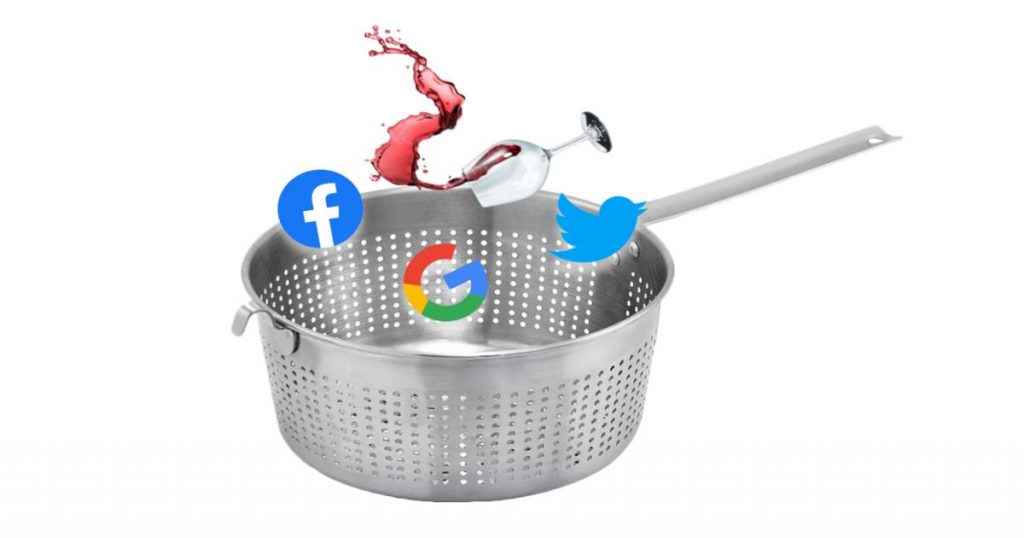
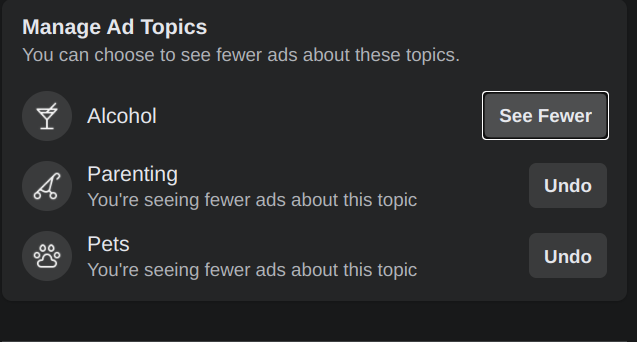
Tweaking Google, Facebook and Twitter’s ad settings can make it easier to change unwelcome habits. Here’s how.

Advertising reinforces products’ attractive associations, so making their consumption seem more desirable.

Google said last month it will make alcohol and gambling ad filtering easier, with a roll out already begun in the US.

But there are already steps we can take. All three big online ad networks already offer significant control.

Filtering on Facebook
  • Google’s ad personalisation page allows users to turn off ads from individual companies, ads by category, and turn off ad personalisation entirely.
  • Facebook’s equivalent (pictured) allows us to disable ads by company, by topic and stop it using other targeting criteria too. The three areas we can control are on the left.
  • And Twitter has a similar page. This allows us to turn off personalised ads at the top level or untick whatever categories we wish to filter in the list of interests.

We can only reduce our exposure to ads we don’t want to see not eliminate it. We have no control over broadcast media or in-content promotion.

An event last year explored how alcohol promotions, in particular, find their way into media. ◼

  • « Go to Previous Page
  • Page 1
  • Interim pages omitted …
  • Page 5
  • Page 6
  • Page 7
  • Page 8
  • Page 9
  • Interim pages omitted …
  • Page 22
  • Go to Next Page »

Copyright © 2026 · Phil Cain Impressum