• Skip to main content

Alcohol Review

Alcohol understanding for all

  • Highlights
  • AR2026
    • AR2025
    • Earlier events
  • Register
  • About
    • Organisers
    • Contact
  • Log In

philcain

Grey-area drinking: pandemic’s heavy drinkers are ignoring the health risks

January 10, 2024

by Ian Hamilton, University of York
Increased drinking during the pandemic has created a group of people who don’t see themselves as alcoholics but have difficulty abstaining from alcohol for any length of time. This group, starting to be called grey-area drinkers, are at risk of alcohol-related health problems.

The relatively new term “grey-area drinking” describes people who consume more than a moderate amount of alcohol but don’t meet the criteria for dependence. Although they might not drink every day or have a drink first thing in the morning (the widely held view of an alcoholic) they are likely to be preoccupied with alcohol and have difficulty giving up. Many of these people don’t view themselves as in need of help.

Any widespread increase in levels of alcohol consumption matters. While most people are familiar with the risk of dependence there are a range of severe physical health problems associated with increased alcohol consumption that they are not so aware of. These include heart disease and a range of cancers, including bowel and breast.

Litres of alcohol bought in shops from April 2018 to 1 March 2021
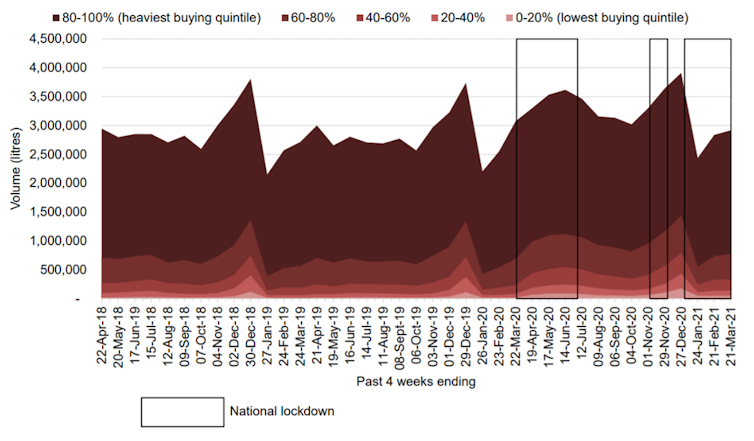
Source: Public Health England

Although overall consumption of alcohol has been slowly declining in recent years there is emerging evidence that some people have increased their consumption. The heaviest-buying segment of the population increased their purchasing by 5.3 million litres of alcohol (+14.3%) from 2019 to 2021. At the same time physical harm from alcohol has been increasing, with a significant rise in hospital admissions and alcohol-related deaths.

Public Health England collated the results of 18 surveys of self-reported alcohol consumption during the pandemic. Between 11% and 37% reported drinking less but between 14% and 26% of people reported drinking more than usual. This is especially concerning given that we know most people underestimate how much they drink by up to 40% in these surveys.

Pubs were closed during the pandemic, so drinking at home increased. This may have encouraged drinking in large quantities as people tend to pour larger measures of alcohol when drinking at home compared to the measures they are given in bars.

Evidence found that those who experienced stress during the pandemic increased the amount of alcohol they drank and how often. One international study exploring alcohol consumption during periods of self-isolation found that it was British drinkers who were most likely to increase the amount of alcohol they consumed – which they say was due to elevated levels of COVID-related stress.

These surveys found a noticeable increase in consumption for some once the pandemic began. Those who were drinking below the governments recommended weekly limits, continued to stay within these limits. However those who were already drinking above the 14 units a week increased their consumption.

Current UK guidance suggests no more than 14 units of alcohol should be consumed in a week (see illustration).
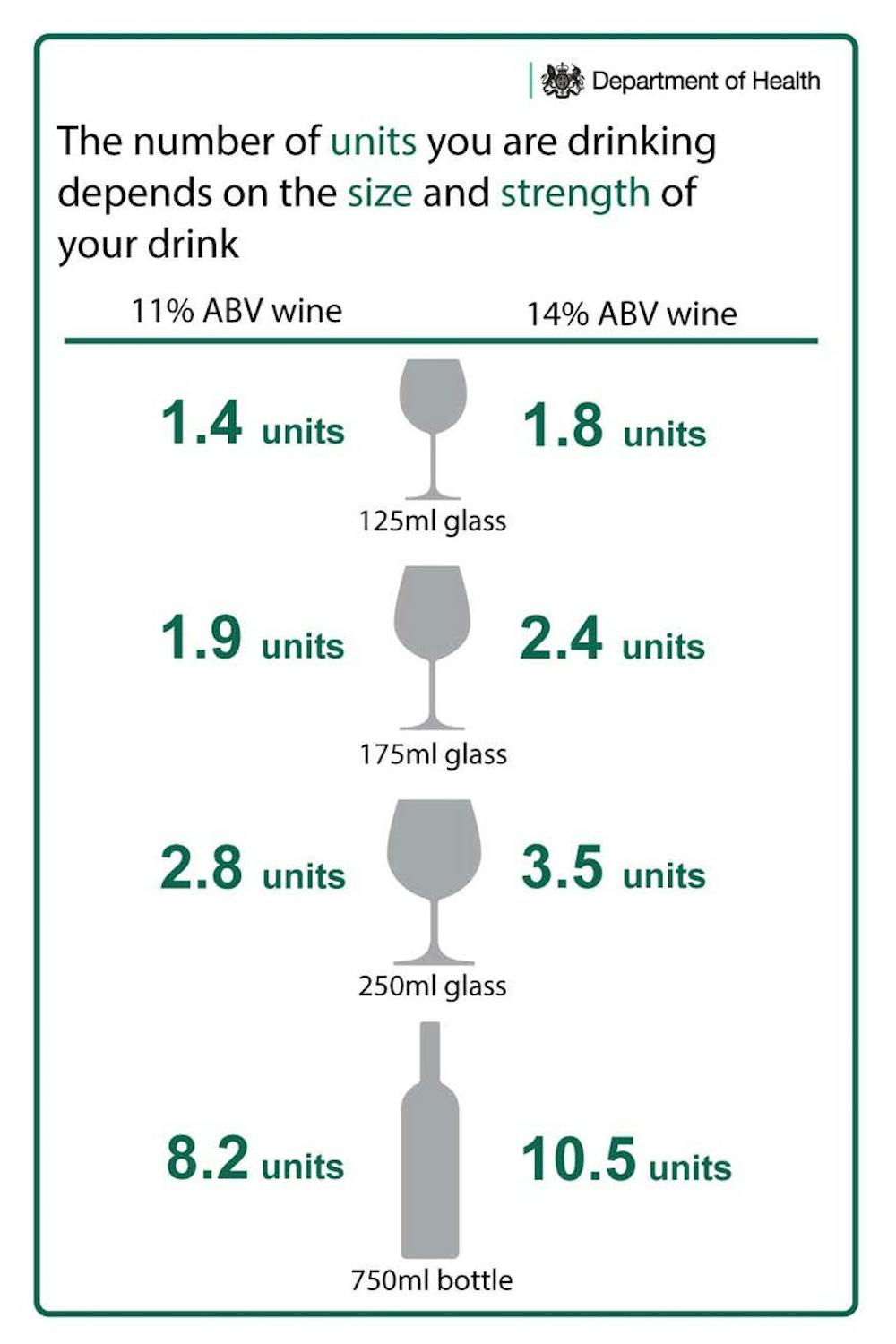
UK guidance on alcohol units.
Department of Health

Levels of hazardous drinking are considered to be more than 50 units a week for men and 35 units for women. Evidence suggests that there was a 59% increase in those reporting drinking at these levels compared to before the pandemic.

Some argue that the alcohol industry embraces the perception that the majority of people drink responsibly. This has been one of the industry’s main arguments for resisting greater regulation. The industry points to the need for personal responsibility rather than corporate responsibility, although they fail to define what responsible drinking is. This shifts the onus onto the individual to make a change to their drinking habits rather than requiring the industry to make changes to its marketing or promotion techniques.

At a time when there is a clear need to tackle increased alcohol consumption, funding for specialist treatment and support has been withering. Some sections of the alcohol industry were encouraged to increase marketing spend as it would be more effective than ever. Some analysis shows that alcohol companies have also used lockdown for targeted social media activity. And the alcohol industry’s multi-million pound spend on marketing is huge, compared with the budget for public health messages, a truly David and Goliath struggle.

There has been little mention of alcohol or our unhealthy relationship with it during the pandemic by the government. For instance, off-licences were deemed to be essential services and stayed open during lockdown. The alcohol industry has proved to be adept at influencing government policy in its favour.

As treatment budgets are cut industry marketing increases and there is nothing to suggest that there will be any reduction in demand for hospital treatment due to alcohol or, sadly, coroners recording yet more alcohol-related deaths.The Conversation ■

Ian Hamilton, Associate Professor of Addiction, University of York This article is republished from The Conversation under a Creative Commons license.


Four percent of cancers linked to alcohol

January 10, 2024

One in 25 cancers is linked to alcohol consumption, with men accounting for three quarters of cases, according to a global study in Lancet Oncology.

“Public health strategies, such as reduced alcohol availability, labelling alcohol products with a health warning, and marketing bans could reduce rates of alcohol-driven cancer,” says Harriet Rumgay of the International Agency for Research on Cancer, also recommending higher taxes and minimum pricing.

The estimates would mean 740,000 cancer cases globally were linked to alcohol last year, with heavy drinkers contributing bar far the most. But there is no risk-free level of alcohol drinking and cancer. Low-level drinkers were one-in-seven of alcohol-linked cancer cases.

“It is safest not to drink alcohol, but if you do, you should stick to the UK Chief Medical Officers’ low-risk guidelines which is to drink no more than 14 units a week [or 140ml of alcohol] on a regular basis,” said Professor Sir Ian Gilmore, Chair of the UK’s Alcohol Health Alliance.

Cancers of the oesophagus, liver, and breast accounted for most of the cases. Alcohol damages DNA and affects hormone production, which can contribute to cancer development, as well as worsen the cancer-causing effects of substances like tobacco.

In the UK the alcohol-lined cancer rate was the global average of 4%, with 16,800 cases; The US, 3%, with 52,700 cases; China 6%, 282,300; Germany 4%, 21,500 cases; and France 5%, 20,000 cases. The percentage of alcohol-linked cancer cases were reckoned to be highest in Mongolia, at 10%, from 560 cases, and lowest in Kuwait, where it was 0%, with just a few cases.

The study made its estimate by looking at alcohol intake in 2010 and the number of cases of cancers known to be linked to alcohol last year. Some suspect the research may underestimate alcohol’s contribution to cancer cases, because a quarter of alcohol purchases are not captured by government figures. ■

The alcohol “unlearning curve”

January 10, 2024

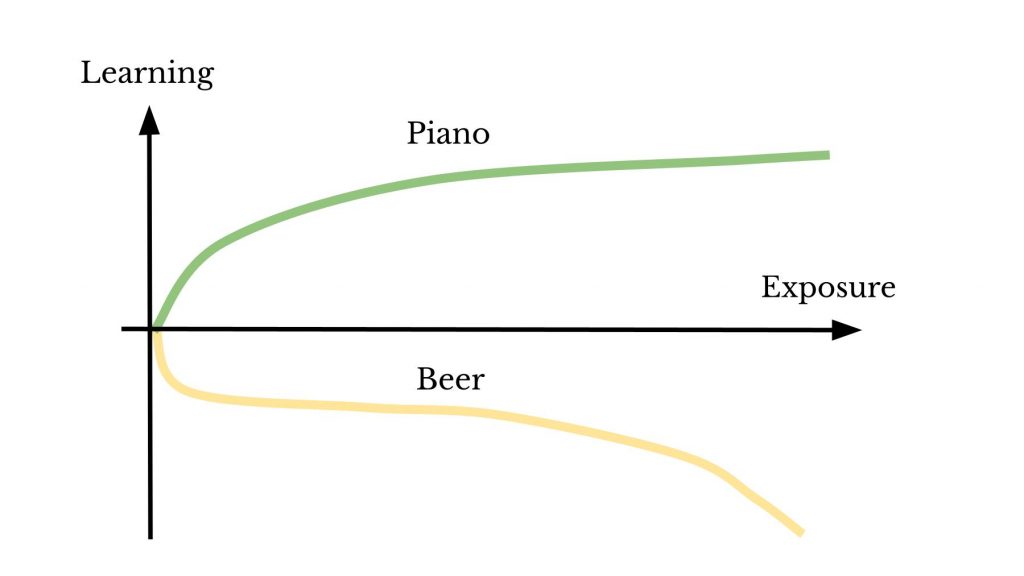
Alcohol has a reverse learning curve in which greater exposure tends to lessen our intuitive understanding of it rather than improving it. Alcohol Companion and Alcohol for Nerds were written to help rectify this unlearning process. ◼️

Alcohol unlearning curve

January 10, 2024

Increasing our exposure to an activity, like say playing piano, typically increases our skills in that activity, but the opposite is the case with alcohol drinking because it is an addictive psychoactive. The negative effects of exposure are greatest when we are still young and our brains are still forming. Find out more. ■

Alcohol Review – issue 102, April 30th 2024

January 10, 2024

Find this service useful?
Please join the Alcohol Review‘s supporters who make it possible

In this issue

News: Industry education opposed; UK deaths surged on; Youth drinking survey; Alcohol-free beer goes country…
Feature: A health conscious life should be more carefree, argues editor Phil Cain
Memes: Some serious points made digestible

This newsletter continues for logged in supporters from any platform. You can retrieve your password using the form below. It is also on Substack.

Supporter login

Lost Password?

Forgot password?

Please enter your email. The password reset link will be provided in your email.

News

Industry opposed: Health advocates are urging universities and schools to join a movement to drive the alcohol industry from any influence on public health advice on drinking. The i-Mark scheme has already had success in Ireland.

UK deaths surge on: The number of alcohol-specific deaths in the UK rose by 4% in 2022 to ten thousand, the highest on record. This was 33% above the level seen in the last year before the pandemic. Australia and the US are similar.

Youth drinking: Most 15-year-olds in Europe, central Asia and Canada had experimented with alcohol, a WHO survey found, with Denmark the highest. England performed the worst among 11 and 13-year olds.

Country road: US craft brewing company Athletic Brewing has partnered with country singer-songwriter Walker Hayes to promote its new non-alcoholic beer much as other producers do with alcoholic products.

MUP uprated: Scottish parliament backed a plan to increase minimum unit price from 50p to 65p to take account of inflation since it was first devised. Scotland’s alcohol death rates are now closer to those of  England.

Uganda hike:Public health advocates in Uganda are pressing for a 35% increase in alcohol tax, citing the positive results seen after a quantum leap in alcohol taxes in Lithuania in 2017.

Aged fast: The Ontario Chief Medical Officer’s call for the province to explore increasing the legal drinking age from 19 to 21 was immediately quashed by Premier Doug Ford, who once campaigned on the slogan “buck-a-beer”.

Feature A health conscious life should be more carefree

Being health conscious–by minimising alcohol, for instance–dramatically reduces our reasons for worry, but an unhelpful level of perfectionism can make us less carefree than health risk deniers.

Meme stocks: Some serious points put in digestible form 

The ”great pyramid illusion”  and the invisi-fish made a mockery of absurd arguments about advertising loopholes. And, reviving a mock lable theme first used in 2018, alcohol is useless, and do not drink alcohol for health point out alcohol’s lack of utility value.

Just one in five Brits know alcohol basics

January 10, 2024

Alcohol calories similar to cooking oil

Just one in five Brits know how many calories are in wine or beer or know the official low-risk drinking guidelines, according to a Yougov survey from campaigners calling for labelling to inform them.

“It is absolutely unacceptable that the alcohol industry is able to get away with not providing full information on its packaging,” said Holly Gabriel from Action on Sugar, a view echoed by campaign partners Alcohol Health Alliance.

Alcohol is a carcinogenic drug of dependence with a calorie density comparable to cooking oil, causing a wide range of common physical and mental health problems and mistakes ranging from the deadly to the embarrassing.

But a legal loophole means alcoholic drinks labels need to contain less nutritional information than orange juice. Alcohol suppliers compound the problem by omitting low-risk drinking advice to protect shareholder profits. 

Labels provide crucial information to consumers, but alcoholic drinks labels need only show alcohol content, allergens and container size. Campaigners see an upcoming consultation as a way to put this right.

Our individual decision making has major limitations in curbing harm from an addictive drug, but denying us basic pieces information is not a solution. ■

  • « Go to Previous Page
  • Page 1
  • Interim pages omitted …
  • Page 15
  • Page 16
  • Page 17
  • Page 18
  • Page 19
  • Interim pages omitted …
  • Page 50
  • Go to Next Page »

Copyright © 2026 · Phil Cain Impressum