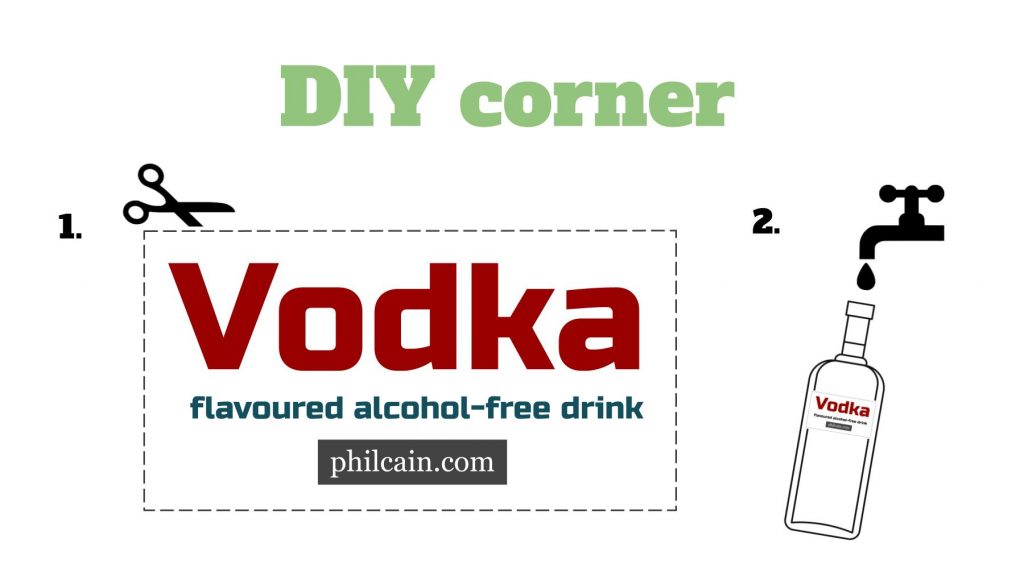
Make your own: Alcohol-free vodka
Alcohol understanding for all
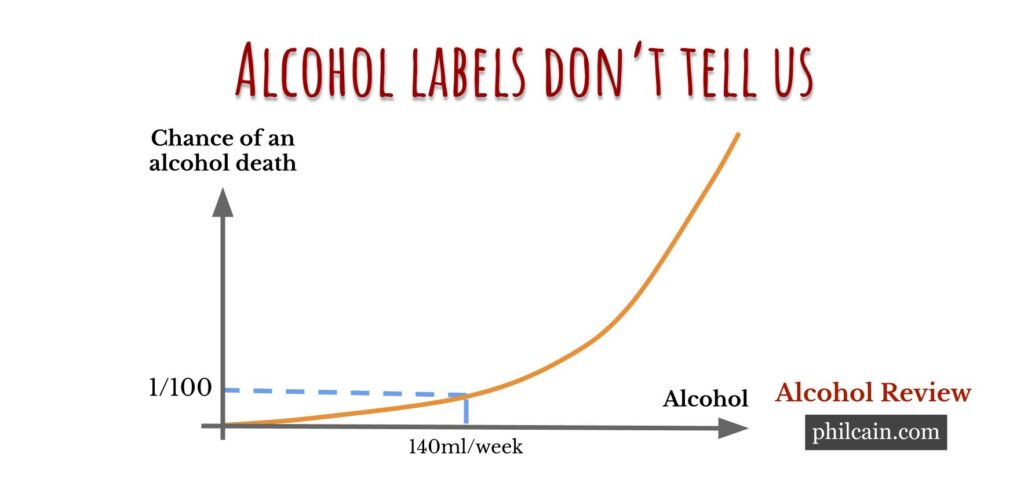
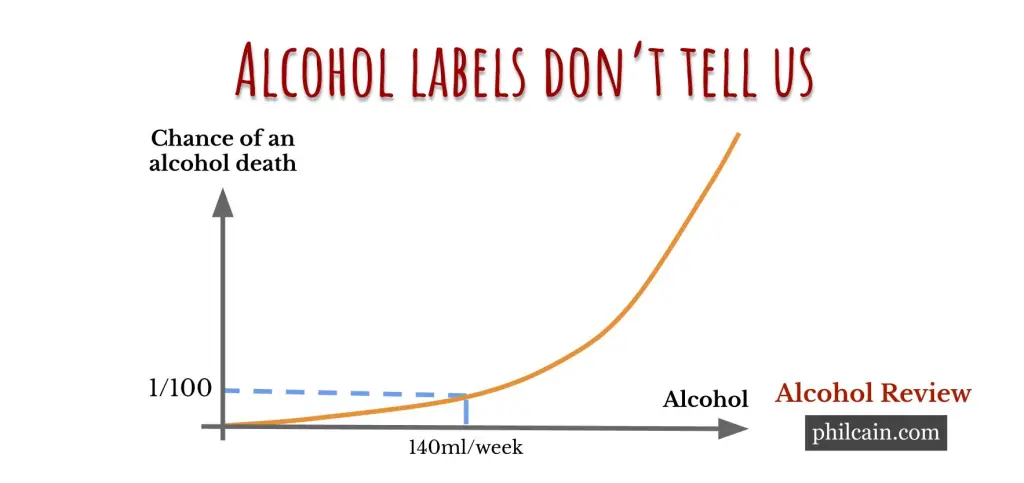
The chance that alcohol causes our death increases rapidly with the amount consumed. Drinking under 140ml a week is estimated to keep the chances of an alcohol death below 1/100. The only way to make the risk zero risk is to not drink any. ■
This is one of a collection of shareable alcohol messages. If you think more people should know, please share and join the supporters.
This is one of a collection of shareable alcohol messages. If you think more people should know, please share and join the supporters.
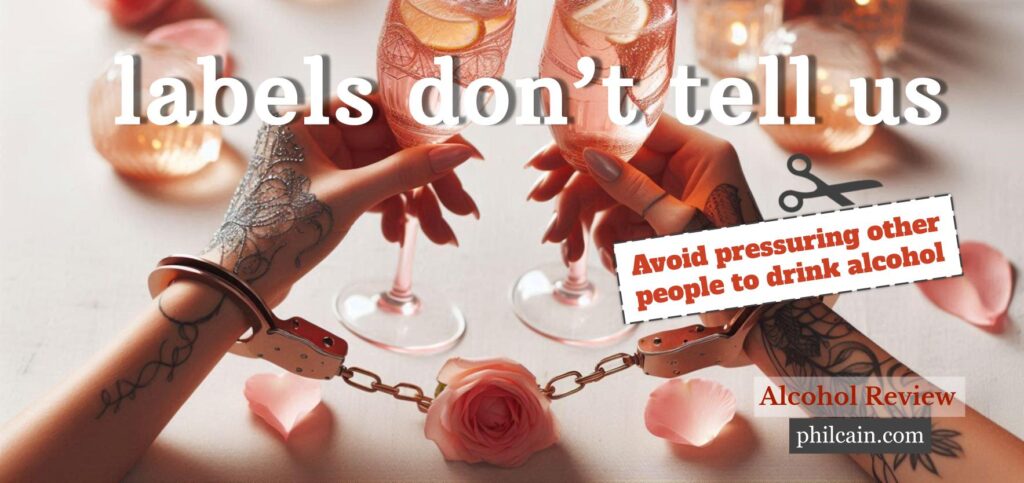
Labels don’t tell us to avoid pressuring other people to drink alcohol. But there are many good reasons to avoid alcohol, not least avoiding harm to our physical and mental health. ■
Adam Bertscher, University of Bath and Leslie London, University of Cape Town
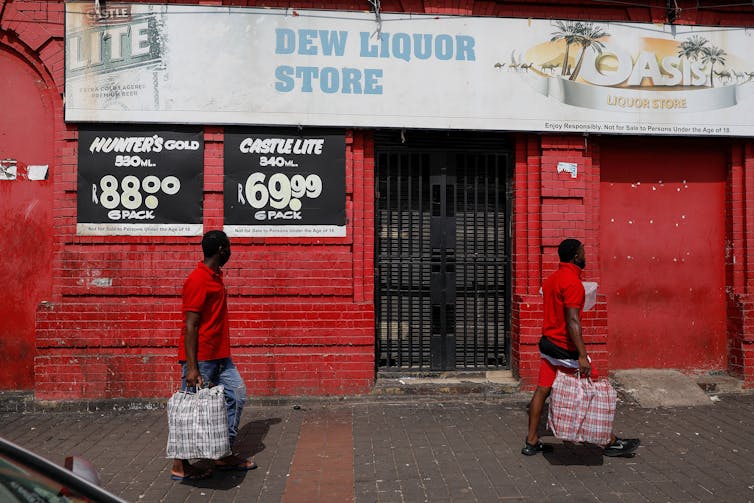
The lockdown restrictions introduced in South Africa to curb the initial spread of COVID-19 in March 2020 were the tightest in the world. They included a ban on alcohol sales. This, the government said, was to reduce the pressure on hospitals caused by drinking-related trauma, and to discourage social gatherings.
This restriction exposed the huge public health and social impact of alcohol in South Africa. Dramatic decreases in violence, injuries and trauma-related hospital admissions were reported following the ban on alcohol sales.
The country has some of the heaviest drinkers in the world. Excessive drinking is a major contributor to the health burden. Children are especially vulnerable.
In South Africa 12% of adolescents consumed their first alcoholic beverage before the age of 13 years. In 2016, of the young people between 15 and 19 years old who consumed alcohol, 65% reported binge drinking.
Alcohol abuse is also linked to many societal problems. These include domestic violence, foetal alcohol syndrome, child abuse, injuries, and risky sexual behaviours.
In 2012, the South African government drafted the Control of Marketing of Alcoholic Beverages Bill. The Bill sought to restrict advertising, marketing, sponsorship, or promotion of alcoholic beverages except at the point of sale. It was drafted specifically to protect children from alcohol advertising. This intervention is consistent with World Health Organisation recommendations to control alcohol-related harm.
The Bill underwent three regulatory and socio-economic impact assessments. It was meant to be published for public comment in 2013 but was never made public. Our previous research found that the alcohol and allied industries lobbied heavily against the draft Bill.
One argument made by opponents to the draft Bill was that it would unjustifiably violate human rights. These include freedom of expression, and consumers’ rights to information.
In a recent paper we analysed these claims using the Siracusa Principles, which guide the circumstances under which it is justifiable to restrict some rights.
Human rights are a well-recognised framework based on ethics and embedded in international law. They can be used to find a balance between competing societal goals.
The Siracusa Principles emerged from a meeting of experts in international law in 1984. They were concerned that limitations on rights in the International Covenant on Civil and Political Rights might be abused for national security or in a public emergency. They then provided principles for when limitations were permitted, according to international law.
The Siracusa Principles have five criteria that should be met to permit a restriction on human rights. The restriction must be:
We used this framework in our research to answer the question: is restricting alcohol advertising, in the interest of public health, a justifiable limitation on the right to freedom of expression?
We concluded that restricting alcohol advertising to protect children’s rights and the right to health is justifiable, for several reasons.
Firstly, is it doubtful that corporations can claim human rights. Human rights are intended for natural persons and not legal entities like corporations. But even if rights apply to legal entities, it’s still possible that a limit on freedom of expression could be justified.
Secondly, public health reasons may be acceptable grounds for restricting freedom of expression according to the International Covenant on Civil and Political Rights. This is because there is strong evidence of the negative impact of alcohol consumption on children. And alcohol advertising is linked to earlier initiation of drinking. This suggests that South Africa’s draft Bill would be effective in reducing drinking in young people.
Thirdly, many international human rights laws support this restriction. For example, article 24 of the United Nations Convention on the Rights of the Child supports children’s right to survival and development, and their right to health.
Article 17(e) of the Convention obliges governments to protect children from harmful information. Alcohol advertising would be information that is harmful for children.
Moreover, article 12 of the International Covenant on Economic, Social and Cultural Rights obliges governments to protect people’s rights from violations by non-state actors – such as the alcohol industry. Government failure to regulate the activities of corporations that market harmful substances may amount to a violation of the right to health.
Lastly, there are no less intrusive and restrictive methods available other than restricting alcohol advertising. Given the scale of the problem, other kinds of interventions targeting high risk drinkers are either ineffective or pose insurmountable logistical challenges, such as the notion of identifying and targeting problem drinkers.
And self-regulation does not work. These industry-preferred interventions put the responsibility on individuals without recognising the responsibility of the alcohol industry in influencing drinking behaviours.
Introducing regulation to reduce alcohol-related harm is fully consistent with human rights protection, particularly for children. Such regulation could include restricting alcohol advertising, marketing, sponsorship, or promotion.
The international treaty on transnational corporations, business enterprises and human rights is a new draft international law that could substantially strengthen public health goals. This treaty would place obligations on non-state actors, similar to those on governments, and help to make commercial actors accountable for their business practices.
Adam Bertscher, PhD candidate, University of Bath and Leslie London, Head of the Division of Public Health Medicine in the School of Public Health and Family Medicine, University of Cape Town
This article is republished from The Conversation under a Creative Commons license. Read the original article.

I have dedicated the back end of the week to getting out my head. My goal was achieved, but without alcohol, thanks to a first dip in virtual reality.
I have been lucky so far this pandemic, but like many I have found the pleasures of homelife have begun to wear thin. It is not bad, far from it. I quite like the routine.
The problem is that the routine has barely changed for almost a year. There is really not much to distinguish one day from the next.
This is not fertile ground for fresh thoughts. The very same thoughts, positive and negative, tend to come round in and endless unchanging carousell.
I don’t actually need to find new thoughts. As a journalist I can rely on other people having these, but some variety is welcome, like a fresh coat of paint.
This is where experiences normally come in. If social life was a goer it might be a big night out or weekend away. And, if travel were possible, I might go somewhere.
But the immersion of travel or, indeed, social events is missing. There is no way around it, or so I thought until I had a brainwave while taking in the majesty of a potato peeler.
I will take a trip into virtual reality instead. It combines adventure, an office upgrade, research and a holiday, exactly the unhealthy mix of work and play I thrive on.
The chosen headset—a refurbed Oculus Rift S—duly arrived. It was easy enough to set up, though with cold sweats as I checked if my machine is up to the job.
It is. And I have already been stunned by its fidelity and believability. I am as bewildered and awed as any of those Victorians who took fright at an early attempt at cinema. This alone is a good thing.
I have not ventured very far into it and, quite typically, my first instinct was to look into exciting things like virtual ways in which to access my work desktop and to access a word processor.
But I have flown over Manhattan on Google Earth and, due to a mistake, Sofia and had many more other-worldly experiences. It has opened a mental door even when a my real door has to remain closed. ■
In this issue: Poland to tighten marketing laws; EU health commissioner vetting imminent; UK alcohol prices fall; Voluntary labels fail; Industry apps misinform, and more. Plus annual event discount and shareable messages.

Invitation: Alcohol Review’s first annual conference will be online on Thursday November 14th. Subscribe to secure your early-bird discount
Find this service useful?
Please leave a testimonial and consider joining Alcohol Review‘s supporters
News:
Poland to tighten marketing laws: The Polish government plans to tighten regulations on marketing products. It is expected to make it compulsory to check documents to verify customers’ age and ban the sale of alcohol between 10pm and 6am at petrol stations. The move came after a furore over vodka drinks packaged in colourful sachets similar to those used for children’s fruit mousses. They have since been withdrawn. Prime Minister Donald Tusk said such products would be banned. In lightly markets like the UK producers use outrage at provocative packaging to generate publicity, knowing there will be no meaningful consequences.
EU health commissioner vetting imminent: EU parliament members will grill the health and animal welfare commissioner-designate, Oliver Varhelyi, on the evening of November 6th. European Commission president Ursula von der Leyen said in her nomination letter that Verhelyi will have to: take a “comprehensive approach to health promotion and disease prevention” to reduce the burden on healthcare systems; and “ensure the implementation of the European Beating Cancer Plan”, which is behind the EU’s stalled alcohol labelling efforts. Some see Varhelyi’s appointment as a blow to the health portfolio. His native Hungary is a loose cannon within the EU. Varhelyi also has no track record in health and gained a reputation for combative behaviour during his stint as enlargement commissioner.
UK alcohol prices fall: The prices of beer, wine and spirits have fallen in real terms during the cost-of-living crisis that started in 2021, according to analysis by alcohol expert Colin Angus.
Voluntary labels fail: One-in-six alcohol product labels in the UK fail to give the official 140ml per week low risk drinking guidelines eight years after their introduction, according to the alcohol industry’s own figures. Half fail to give calorie information. There is a shareable message on this.
Research focus:
Industry apps misinform: Alcohol industry funded mobile apps misinform users about their alcohol consumption and could ‘nudge’ them towards increasing their intake, says a new study.
Calorie labelling may cut consumption: A sizeable proportion of hazardous drinkers indicated] they would change their consumption practices if mandatory calorie labelling was introduced, says a new study.
Alcohol-free drinks could cut consumption: Heavier alcohol drinkers may experience a reduced benefit from a non-alcoholic drink intervention in terms of alcohol consumption reduction, according to a Japanese study.
Teenage IQ predicts midlife alcohol intake: People with higher IQ scores as teenagers were significantly more likely to be moderate or heavy drinkers in mid-life compared to abstaining.
Prenatal DNA damage: The harmful effects of alcohol on foetal development are not directly attributable to placental abnormalities, says a new paper. Molecular changes could play an important role, particularly gene expression due to changes in DNA methylation profiles.
Find this service informative?
Please leave a testimonial and consider joining Alcohol Review‘s supporters
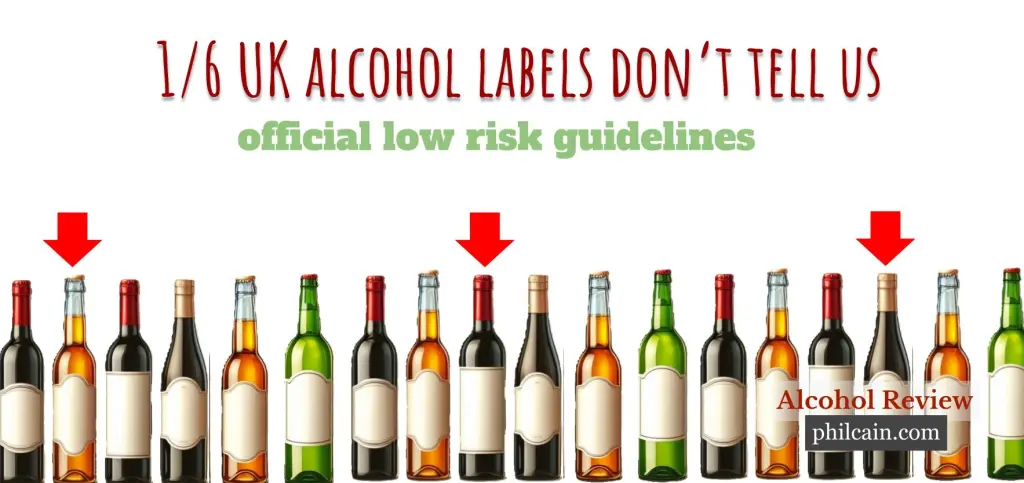
Chronic labelling failure: Around one-in-six alcohol labels in the UK fail to give the official 140ml per week low risk drinking guidelines eight years after their introduction, according to the alcohol industry’s own figures.
Alcohol risk made simple: The chance that alcohol causes our death increases rapidly with the amount consumed. Drinking under 140ml a week is estimated to keep the chances of an alcohol death below 1/100. The only way to make the risk zero risk is to not drink any.
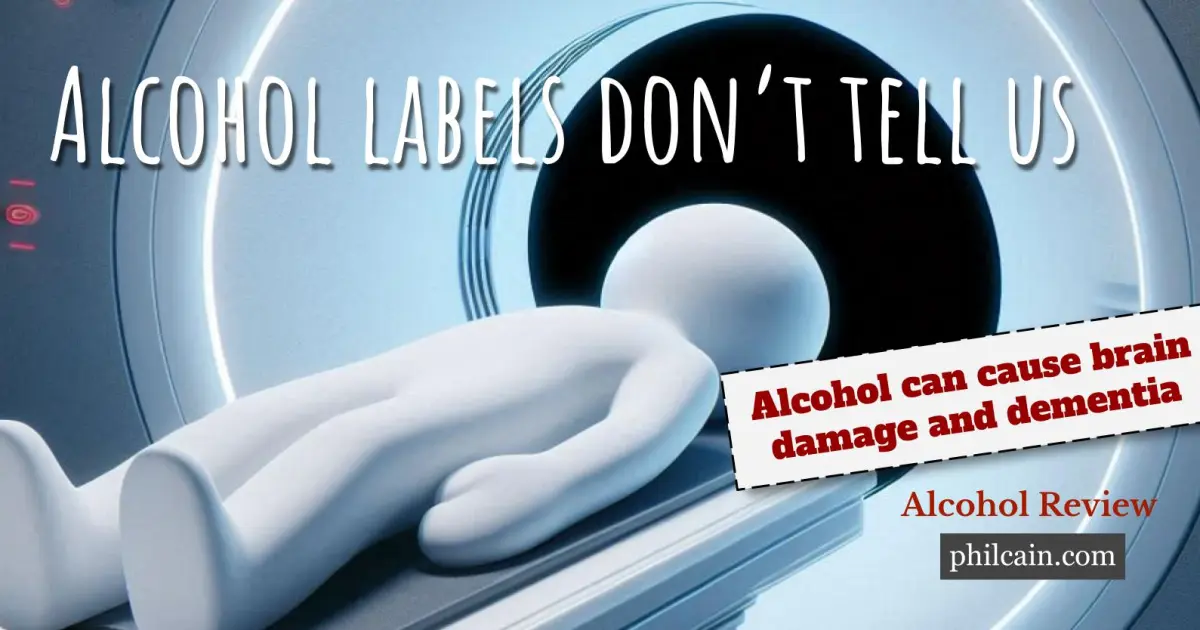
Alcohol can cause brain damage and dementia: Drinking more than a small amount of alcohol increases the risk of developing dementia in later life and can cause early-onset dementia and brain damage.
Full list of shareable alcohol messages…
Find this service valuable?
Please leave a testimonial and consider joining Alcohol Review‘s supporters ■