“If you are trying to change your approach alcohol and feel a bit out of place in the world, little wonder. It isn’t just you. This is alcohol’s unique challenge, which is not matched by other drugs, which do not stir such near-universal affection.”
Guest post: Most US women don’t know alcohol’s health risks
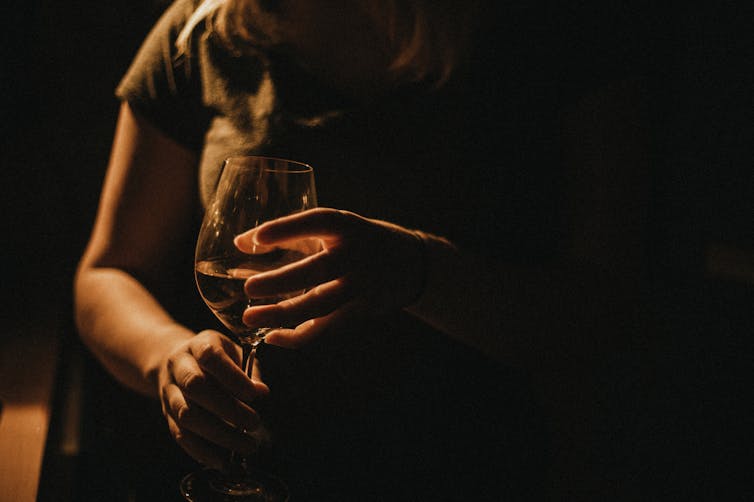
Lisa Schaetzle/Moment via Getty Images
By Monica Swahn, Kennesaw State University and Ritu Aneja, University of Alabama at Birmingham
Did you know that casual drinks with friends or having a “wine mom” moment to unwind could actually be nudging up your risk for breast cancer? It sounds like a buzzkill. But it’s a truth that many might not know: Alcohol actually causes breast cancer.
The World Health Organization and the National Institute on Alcohol Abuse and Alcoholism lay it out pretty clearly: Compared to those who don’t drink, just one drink a day can bump up your breast cancer risk by 5% to 9%.
As alcohol and cancer researchers, we wanted to learn more about what women actually know about the connection between alcohol and breast cancer, especially since alcohol use has been increasing among women.
Explaining the knowledge gap
For our recently published research, we asked more than 5,000 women ages 18 and older across the US in 2021 about whether they were aware of the link between alcohol consumption and breast cancer. We also asked them about their drinking habits and other health and background factors.
We were surprised to find that only one in four of these women knew that alcohol is a risk factor for breast cancer. Even more concerning, 35% didn’t think there’s any link at all. Another 40% were sitting on the fence about it.

aire images/Moment via Getty Images
We also saw a knowledge gap based on age, education and race.
Younger, more educated women and those facing alcohol-related issues were more in the know about the link between alcohol and breast cancer risk than older, less educated women and those who have not drank in the past year. Black women were also less aware of the risk between alcohol and breast cancer compared to white women.
Drinking less lowers breast cancer risk
Despite the attempts of alcohol researchers, health officials and advocates to inform women about alcohol’s risks and its connection to breast cancer, our findings show that this message isn’t getting across to most people.
There are also pervasive myths about the benefits of alcohol use because some people don’t want to know that drinking can cause harm and don’t want to talk about it. As a result, many women simply don’t know or are uncertain of the health harms alcohol causes.
A comprehensive communication approach to increase awareness of alcohol’s harms and its link to cancer can help support and encourage women to make healthier choices regarding alcohol use.
Educational campaigns can help inform people from diverse backgrounds about alcohol and breast cancer risk.
Policy changes with respect to alcohol marketing, access and availability can also make a difference in people’s drinking patterns.
These policies may also address the “feminization” of alcohol marketing, which intentionally entices women to drink and purchase alcohol by normalizing or glamorizing heavy alcohol use and ignoring the health risks and harm caused. The World Health Organization recommends stricter rules on alcohol advertising and marketing along with higher taxes on alcohol to reduce alcohol-related harm.
Today’s culture may normalize dealing with life’s stresses by popping the cork.
But cutting down on alcohol is something that can make a difference in breast cancer risk. Stepping back and thinking about alcohol’s effects on your health can help you make informed choices about whether to drink or not. ■
■
Monica Swahn, Dean of the Wellstar College of Health and Human Services, Kennesaw State University and Ritu Aneja, Professor of Clinical and Diagnostic Sciences, Associate Dean of Research and Innovation in the School of Health Professions, University of Alabama at Birmingham. This article is republished from The Conversation under a Creative Commons license. Read the original article.
Get off the beaten path

A rewarding experience need not be about being in an awesome location. It can be about connecting to where we are, wherever it might be.
Seen in the right way, stumbling along the bank of a stream behind the local supermarket can rival the Inca trail to Machu Picchu.
This is the promise of “drifting”, where we enrich our experience by connecting more fully to our environment through adventurous acts of walking.
It is a practice championed by psychogeographers, who include writers Peter Akroyd, Will Self, Iain Sinclair, and writer and filmmaker John Rogers.
Walking has an enormous power to stir memories of old haunts, as well as trigger new thoughts, feelings, narratives and meanings.
Go your own way
True to its avant-garde roots there are no rules. One early proponent reportedly walked through part of Germany guided by a map of London.
I improvised my own drift on the way to write this by tossing a coin to decide between possible turnings.
But we often don’t need an external input to get ourselves pleasantly lost. We can just go whichever way we are drawn.
Eventually we may start salivating at the path yet to be taken, or cooing over the rusty remains of a Victorian lamppost.
Reading about the areas we walk through can also help send us off in new directions and shed new significance on what we see.

Deepening connection
Drifting grew out of left-wing thought, and a desire to question our relationship with a capital-driven urban environment.
But its psychological effects do not rely on our having specific political outlook. It puts us in the moment, focusing on our our journey not our destination.
And setting out with the attitude that everything is interesting, means we can never be disappointed.
This can all help enrich our relationship with the world outside our door, through our curiosity, interaction and feelings.
My own wandering has has been enhanced by acknowledging it as “a thing” which others do, and have done for generations.
Drifting may never spark a revolution, but it can deliver a reminder that valuable experiences are available to us for nothing. ■
The latest in a series exploring uplifting things to do alcohol-free for no money, having previously looked at improv and cold showers.
UK alcohol deaths
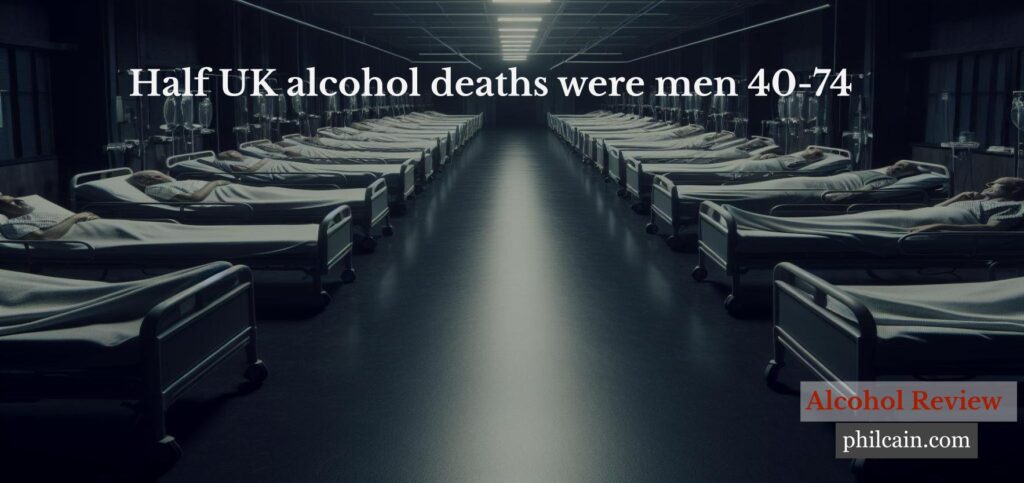
Men aged 40-74 accounted for 56% of the UK’s record ten thousand alcohol deaths in 2022, while Women in the same age bracket made up another 30% of the total.* Join the supporters to find out more. ■