• Skip to main content

Alcohol Review

Alcohol understanding for all

  • Highlights
  • AR2026
    • AR2025
    • Earlier events
  • Register
  • About
    • Organisers
    • Contact
  • Log In

philcain

Banned ad distribution “helpful” says ad regulator

August 7, 2025

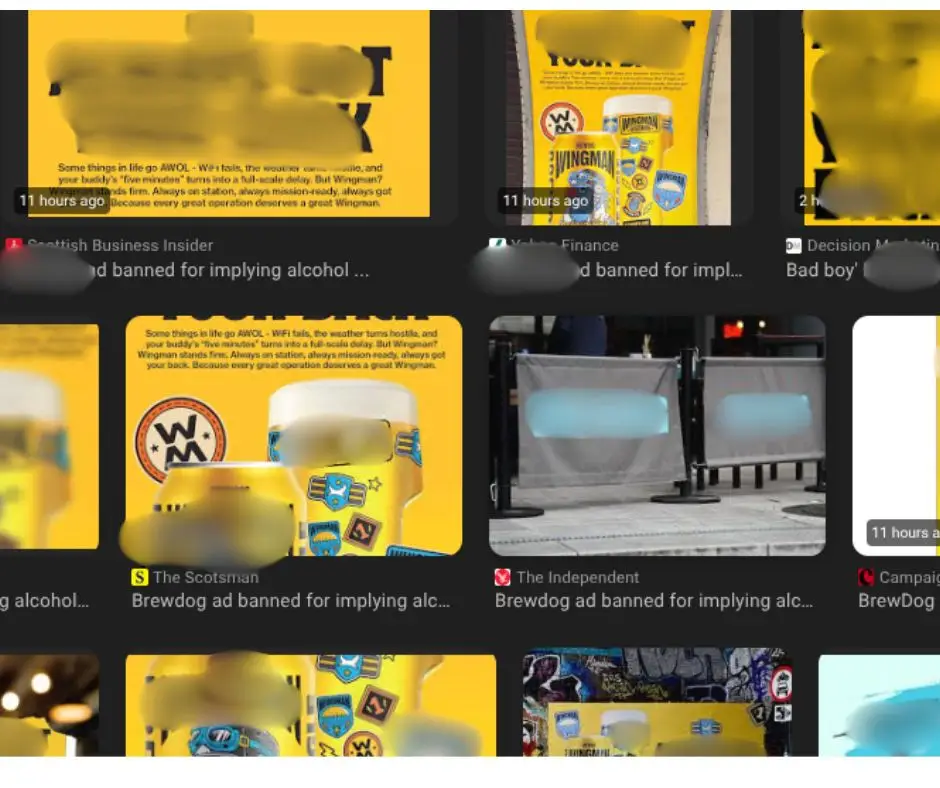
The UK’s advertising self-regulator is in favour of the distribution of alcohol ads it banned, Alcohol Review was told, after millions were exposed to a banned ad this week. 

“We think an ad being used in media reports for illustrative purposes is helpful and in the public interest in providing context for the reader or viewer to find out more about our decision,” the ASA said.

A story on a banned ad from Brewdog first appeared on the PA newswire and was picked up by the BBC, Daily Mail, Scottish TV, various regional newspapers, as well as the marketing, advertising and food trade press. Together their potential reach was in the millions.

“It is not our role to advise media on how they report on our decisions,” the ASA said when asked if its decisions should be reported in a way which does not provide free exposure to an ad it had ruled against. It says viewers and readers “sought out” such ad exposure.

The ASA said that being reported to have broken the advertising rules deters companies from doing it again. Brewdog has yet to get the message. It had six ASA rulings go against it in the last five years. Rival giants like AB Inbev, Carlberg, Diageo and Heineken had one or none at all.

Critics say reporting on banned ads is a big win for Brewdog, with the brand partly defined by its penchant for rule-breaking and ad illustrations used in the reporting provide it with advertising impacts indistinguishable from those of a paid ad.

Meanwhile editors and algorithms choose which stories an audience sees, not the audience members themselves. ■
UPDATED: Ireland delays alcohol health labels

July 25, 2025

The Irish government delayed alcohol health labelling from May next year unit until 2028 at a cabinet meeting on Monday, disappointing health advocates.

Some in the government have been convinced the labels may undermine ongoing EU-US trade negotiations if they were seen as a barrier to trade. Health advocates dispute this assessment. Health ministerJennifer Carroll MacNeill said she was “not pleased”.

The Irish Medical Organisation went further calling the delay a “serious threat to public health” with “health being ignored in favour of corporate interests”. “The longer this Government delays, the more irreversible damage is done,” said the organisation’s president Dr Anne Dee.

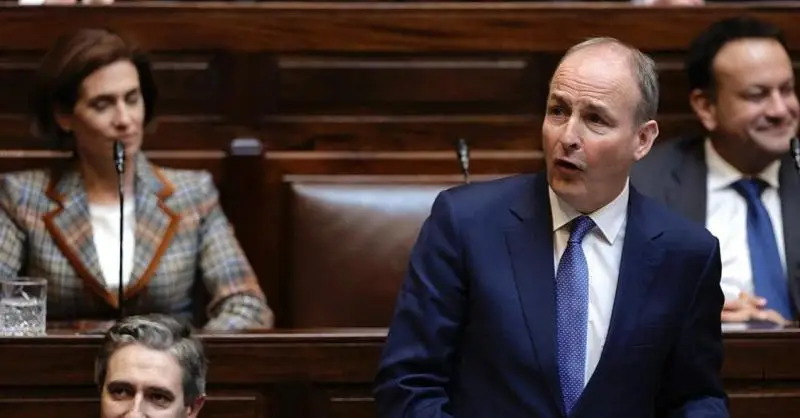
Taoiseach Micheál Martin 2024, source

“To say that this delay is a blow for public health in Ireland is an understatement. It is a failure of leadership and of democracy,” said Sheila Gilheany CEO of the NGO Alcohol Action Ireland. And many alcohol products in Ireland already carry the labels, making any delay “farcical if not so serious”.

“Re-examining the policy at this stage, under pressure from commercial interests, would not only weaken Ireland’s credibility but risk setting a damaging precedent across Europe,” said the newly-formed European Health Alliance on Alcohol in a letter to the Irish government last week.

The weeks leading up to the decision were filled with selective leaks about a likely delay until 2029. Coverage of the decision–which still has not been fomally announced–looks likely to be out-done that of a larger spending announcement and the summer recess.

AR This may offer a salutory tale for the UK where the government earlier this month initiated a bid to introduce alcohol health labels. At the same time it bowed to industry pressure to drop all the most effective alcohol health policies from its plans. The road ahead is not easy. ■

Alcohol Review – Issue 115, July 21nd 2025

July 21, 2025

Please subscribe to get more

In this issue: Starmer fumbles prevention promise; Kenya moves forward; WHO sets tax target. Starmer should showcase change with effective labelling; The beer gardens of Bulawayo. Public health double-think

Alcohol Review 2025: Learn to push back against the alcohol industry at the local and international levels. Full event recordings available with a subscription, as well as extra content and entry to next year’s event.

News

Starmer fumbles prevention promise: The UK government infuriated alcohol harm advocates by omitting the strongest evidence-based policies from its plans amid an ongoing alcohol harm crisis. Campaigners continued their calls for minimum pricing in England, among the ignored measures. Delivering effective mandatory alcohol health labelling–which miraculously survived the alcohol policy cull–would be a good way to come good on cleaning up government, argues Alcohol Review.

Fourth biggest cause: Alcohol-specific disorders and poisonings was the fourth biggest preventable cause of death in the EU in 2022, after lung cancer, heart disease and covid, according to Eurostat figures.

Kenya moves forward: The Kenyan cabinet signed a national alcohol strategy, including plans to raise the legal drinking age from 18 to 21, ban online alcohol sales and ban celebrity alcohol endorsements. It was a “big milestone”, head of the Nairobi-based NGO International Institute for Legislative Affairs Celine Awuor told Alcohol Review. 

WHO sets tax target: The WHO launched the “3 by 35” initiative to persuade countries to use taxes to increase the price of alcohol, tobacco and sugary drinks by 50% by 2035, cutting health harm and raising $1trn in tax revenue.

Features

Opinion: Labour should showcase change with labelling: Sir Keir Starmer’s government could find much-needed focus by committing to policymaking process reform, with the delivery of effective mandatory alcohol health labels being an excellent place to start.

The beer gardens of Bulawayo
Many of the western suburbs of Bulawayo contain an  intriguing industrial-era institution, the beer garden. Development researcher Maurice Hutton explores their century-long history of pursuing the conflicting aims.


Public health double-think

Please subscribe to get more ■

Public health double-think

July 18, 2025

The beer gardens of Bulawayo

July 9, 2025

By Maurice Hutton

Kontuthu Ziyathunqa – Smoke Rising – was what they used to call Bulawayo when the city was the industrial powerhouse of Zimbabwe. Now, many of its factories lie dormant or derelict. The daily torrent of workers flowing eastward at dawn, and back out to the high-density western suburbs at dusk, has diminished to a trickle.

But there is an intriguing industrial-era institution that lives on in most of the older western suburbs (formerly called townships). It is the municipal beer hall or beer garden, built in the colonial days for the racially segregated African worker communities. There are dozens of these halls and garden complexes, still serving customers and emitting muffled sounds of merriment to this day.

Like other urban areas in Rhodesia (colonial Zimbabwe), Bulawayo was informally segregated from its inception, and more formally segregated after the second world war. Under British rule (1893-1965) and then independent white minority rule (1965-1980), municipal drinking amenities were built in the townships to maintain control of African drinking and sociality. At the same time, they raised much-needed revenue for township welfare and recreational services.

I researched the history of these beer halls and gardens as part of my PhD project on the development of the segregated African townships in late colonial Bulawayo. As my historical account shows, they played a key role in the contested township development process.

From beer halls to beer gardens
Bulawayo’s oldest and most famous beer hall, MaKhumalo, also known as Big Bhawa, was built more than a century ago, in 1913. It still stands at the heart of the historic Makokoba neighbourhood. It’s enormous, but austere, and in the early days it was oppressively managed. Drinkers would describe feeling like prisoners there.

The more picturesque beer gardens began to emerge in the 1950s, reflecting the developmental idealism of Hugh Ashton. The Lesotho-born anthropologist was educated at the Universities of Oxford, London and Cape Town, and took up the new directorship of African administration in Bulawayo in 1949.

He was tuned into new anthropological ideas about social change, as well as developmental ideas spreading through postwar colonial administrations – about “stabilising” and “detribalising” African workers to create a more passive and productive urban working class. He saw a reformed municipal beer system as a key tool for achieving these goals.

Ashton wanted to make the beer system more legitimate and the venues more community-building. He proposed constructing beer garden complexes with trees, rocks, games facilities, food stalls and events like “traditional dancing”. So the atmosphere would be convivial and respectable, but also controllable, enticing all classes and boosting profits to fund better social services. As we shall see, this strategy was full of contradiction.

Industrial beer brewing
MaKhumalo, MaMkhwananzi, MaNdlovu, MaSilela. These beer garden names, emblazoned on the beer dispensaries that stick up above the ramparts of each garden complex, referenced the role that women traditionally played in beer brewing in southern Africa. This helped authenticate the council’s “home brew”.

But the reality was that the beer was now produced in a massive industrial brewery managed by a Polish man. It was delivered in trucks and stored in steel tanks at the tops of the dispensary buildings, to be piped down into the plastic mugs of thirsty punters at small bar windows below. (It was also sold in plastic calabashes and cardboard cartons.)

And the beer garden bureaucracy, which offered a rare opportunity for African men to attain higher-grade public sector jobs, became increasingly complex and strictly audited.

As the townships rapidly expanded, with beer gardens dotted about them, sales of the council’s “traditional” beer – the quality of which Ashton and his staff obsessed over – went up and up.

Extensive beer advertising in the council’s free magazine mixed symbols of tradition (beer as food) with symbols of modern middle-classness.

Beer monopoly system
The system’s success relied on the Bulawayo council having a monopoly on the sale of so-called “native beer”. This traditional brew is typically made by malting, mashing, boiling and then fermenting sorghum, millet or maize grains. Racialised Rhodesian liquor laws restricted African access to “European” beers, wines and spirits (although restrictions eased from the late 1950s).

So, the beer hall or garden was the only public venue where Africans could legally drink (apart from a tiny elite, for whom a few exclusive “cocktail lounges” were built). The council cracked down harshly on “liquor offences” like home brewing.

This beer monopoly system was quite prevalent in southern and eastern Africa, though rarely at the scale to which it grew in Bulawayo. Nearly everywhere, the system caused resentment among African townspeople, and so it became politically charged.

In several colonies, beer halls became sites of protest, or were boycotted (most famously in South Africa). And they usually faced stiff competition from illicit drinking dens known as shebeens.

In Bulawayo, the more the city council “improved” its beer system after the second world war, the more contradictory the system became. It actively encouraged mass consumption of “traditional” beer, so that funds could be raised for “modern” health, housing and welfare services in the townships. Ashton himself was painfully aware of the contradictions.

In his guest introduction to a 1974 ethnographic monograph on Bulawayo’s beer gardens, he wrote:

The ambivalence of my position is obvious. How can one maintain a healthy community and a healthy profit at one and the same time? I can almost hear the critical reader questioning my morality and even my sanity. And why not? I have often done so myself.

Many citizen groups – both African and European – questioned the system too. They called it illogical, if not immoral; even some government ministers said it had gone too far. And when some beer gardens were constructed close to European residential areas, to cater for African domestic workers, many Europeans reacted with fear and fury.

As Zimbabweans’ struggle for independence took off in the 1960s, African residents increasingly associated the beer halls and gardens with state neglect, repression, or pacification. They periodically boycotted or vandalised them. Nevertheless, with few alternative options, attendance rates remained high: MaKhumalo recorded 50,000 visitors on one Sunday in 1970.

After independence
After Zimbabwe gained independence in 1980, the township beer gardens remained in municipal hands. They continued to be popular, even though racial desegregation had finally given township residents access to other social spaces across the city.

The colonial-era municipal beers continued to be produced, with Ngwebu (“The Royal Brew”) becoming a patriotic beverage for the Ndebele – the city’s majority ethnic group.

But with the deindustrialisation of Bulawayo since the late 1990s, tens of thousands of blue collar workers have moved to greener pastures, mostly South Africa. The old drinking rhythm of the city’s workforce has changed, and for the young, the beer gardens hold little allure. Increasingly, they have been leased out to private individuals to run.

Nevertheless, there is always a daily trickle of regulars to the beer gardens, where mugs and calabashes are passed around among friends or burial society members. Some punters play darts or pool. And there are always some who sit alone, ruminating – perhaps in the company of ghosts from the past.
The beer gardens of Bulawayo embody the moral and practical contradictions of late colonial development – and the ways in which such systems and infrastructures may live on, but change meaning, in the post-colony. The Conversation

Maurice Hutton is Honorary Research Fellow, Global Development Institute, University of Manchester .It is republished from The Conversation under a Creative Commons license. ■

Opinion: Sir Keir Starmer should showcase change with labelling

July 7, 2025

By Phil Cain

Sir Keir Starmer’s government could find much-needed focus by committing to policymaking process reform, with the delivery of effective mandatory alcohol health labels being an excellent place to start.

If Sir Keir is more about processes than vision, as pundits say, then why not play to his strengths? A rigorous policy process which successfully delivered impactful health labels would be good in itself. We have a right to know about what we consume. But it could also show the way in other areas.

It could help win votes too. Showing that policies affecting millions of lives are not the result of backstairs arm-twisting or bungs would tick populist boxes left, right and centre. It would, to borrow a phrase or two, deliver change, be for the many not the few, level up and be the reform Britain needs.

Major omissions
The government fell far short of meeting such aspirations last week with its ten-year plan for health in England, which left health experts fretting about delivery.

On alcohol harm it mentioned none of the three most effective evidence-based alcohol policies, despite illness prevention being top priority in its manifesto. Their absence drew stinging criticism from expert bodies working to reduce still soaring rates of alcohol harm.

The leadup to the plan’s launch saw the media and alcohol industry subject the government to a humiliating public hazing for even considering policies counter to alcohol interests. The government’s plan quelled the assault, but it came at the price of the health and finances of tens of millions.

It was  a “dereliction of duty”, said Professor Sir Ian Gilmore, Chair of the Alcohol Health Alliance. “Alcohol-specific deaths have risen by 42% in recent years—an increase that would not be tolerated if it were any other health condition.” It is hard to separate the Punch and Judy show of last minute revisions only fuelled suspicions.

It is inevitable effective health policies will be omitted if alcohol interests are given sway. The answer is to ensure interests running counter to health policy play no part in the process of forming health policy, with transparency mechanisms put in place to ensure it.

Labelling go-ahead 
There was one significant crumb of comfort left in the plan for alcohol health advocates, despite it being a letdown overall. The government said it would “introduce mandatory nutritional information and health warning messages”. 

Even done at their best these messages would likely save precious few lives near term, but they would boost awareness. Labels are taken to tell the truth. Wider and deeper awareness of alcohol health harms would make it easier to take effective policy action in future. For the same reason the alcohol industry will fight effective labels tooth-and-nail.

Standing up to alcohol interests on labels offers an immediate chance for the government to redeem itself. It would narrowly avoid disappointing those who believed its manifesto promise to prioritise prevention. And every alcohol health label would show the benefits of a more robust policy formation process.

An impactful health alcohol label would be a highly-visible legacy. Some might even begin to see a versatile new way of forming robust, effective policy as visionary. ■

  • « Go to Previous Page
  • Page 1
  • Interim pages omitted …
  • Page 4
  • Page 5
  • Page 6
  • Page 7
  • Page 8
  • Interim pages omitted …
  • Page 50
  • Go to Next Page »

Copyright © 2026 · Phil Cain Impressum