• Skip to main content

Alcohol Review

Alcohol understanding for all

  • Highlights
  • AR2026
    • AR2025
    • Earlier events
  • Register
  • About
    • Organisers
    • Contact
  • Log In

newsletter

Alcohol Review – Issue 121, February 26th 2026

February 26, 2026

Join the full newsletter, present and discuss live at AR2026

In this issue: Effective policy absent from cancer plan; Industry data shows no-los dwarfed; Ghana bans alcohol-stimulant mixers; South African taxes frozen; LGB+ at higher harm risk; Influencers influence, and more
AR2026: Share your work and join the live discussion
Register now to take advantage of a uniquely sustainable, accessible and efficient global engagement platform live. Take part in an exciting online discussion on alcohol harm and artificial intelligence on March 26th; and disseminate your work to a highly-engaged global audience. Please, check out last year’s event and secure your place.

News

Cancer plan critique: Experts welcomed a re-commitment to alcohol health warning labels in a new cancer plan for England this week, but highlighted the absence of evidence-based policies. Instead the plan looks to the unproven merits of lo-no drinks. [Comment/share]
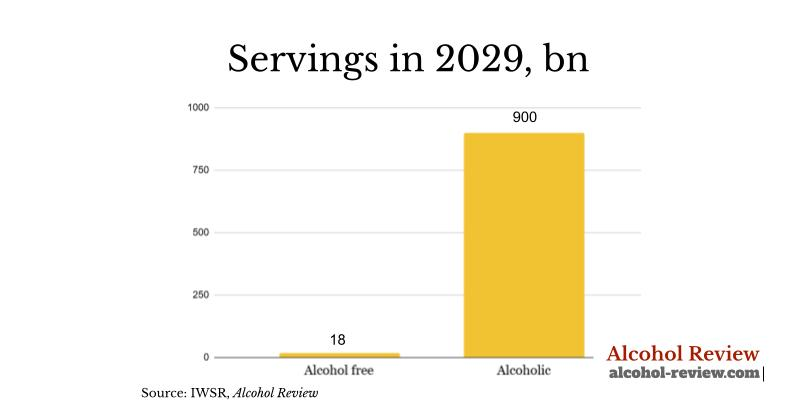
No-los dwarfed: A new alcohol industry forecast shows there is little chance of alcohol-free drinks reducing global alcohol consumption, which is an order of magnitude bigger with little evidence of erosion from alcohol-frees (see chart). [Comment/share]

Stimulant mixer ban: Ghana’s Food and Drugs Authority this week ordered the immediate removal of drinks containing a mix of alcohol and stimulants, like caffeine, ginseng and guarana from the Ghanaian market, citing growing public health concerns. [Comment/share]

Sachet clarification: Nigeria’s federal health ministry told the High Court that the National Agency for Food and Drug Administration and Control is fully empowered by law to enforce the ban on the production and sale of alcohol sachets. The statement follows a month of confusion and protest over the introduction of the long delayed ban. [Comment/share]

South African tax: South Africa’s Budget this week proposed increasing the tax in line with alcohol, meaning it is the same in real terms. The alcohol industry was relieved having feared there might be a genuine increase. [Comment/share] 

LGB+ risk: The risk of death directly attributable to alcohol among people identifying as lesbian, gay or bisexual was 1.8 times higher than among straight or heterosexual people, according to UK government statistics. [Comment/share]

Influencers influence: Exposure to alcohol-promoting social media content was associated with a desire to drink among young people, leading researchers to conclude “influencers may contribute to normalisation of alcohol consumption among young people”. [Comment/share] Another study found alcohol ads shape young people’s attitudes. [Comment/share]

Brands extended: Teenagers are unable to distinguish between non-alcoholic products and traditional alcoholic beverages when these are promoted through sports sponsorship, found a new study. [Comment/share]

Youth protection call: “Alcohol marketing ending up on under-18s’ screens via influencers and social media sponsorship is notably absent from the agenda,” said the Scottish Health Action on Alcohol Problems in response to the UK government’s plans to protect children online. [Comment/share]

Lobbying revealed: A new trove of documents revealed late last month showed how the alcohol industry aggressively campaigned for the UK government to drop alcohol marketing restrictions from its flagship health plan last year, as it did. [Comment/share]
Join the full newsletter, present and discuss live at AR2026 ■
Alcohol Review – Issue 120, January 16th 2026

January 16, 2026

Read original

Join newsletter and events directly or on Substack

In this issue: Scant affordability progress; US deaths surge on; Guidelines skip specifics; No-lo scrutiny call; Alcohol-free access; UK impact honours; Alcohol-free health minister. Opinion: Put alternative activities above alternative drinks

Join AR2026: Register now to participate in a unique event to underpin global efforts to reduce alcohol harm. Live online sessions on March 26th will look at Alcohol and artificial intelligence, while impactful video sessions spotlight all kinds of cutting-edge research, advocacy, ideas and innovations. Check out last year’s event, preview this year’s, and secure your place to discuss and present.

News

Scant affordability progress: Alcohol products were as affordable or became more affordable in most countries over the last few years, when evidence shows that reducing affordability is a crucial step to curbing alcohol harm, found a WHO report released yesterday. Share and discuss

US deaths surge on: US deaths directly attributable to alcohol are likely to have been at least 11% above the pre-pandemic level last year, extrapolating provisional figures from the CDC. Provisional totals tend to increase over time. Share and discuss

Specifics skipped: The Trump administration last week advised Americans to “consume less alcohol for better overall health” while dropping specific low-risk amounts from its guidance after 35 years. Alcohol harm experts had recommended the low-risk amount should be halved for men. Share and discuss

No-lo scrutiny call: “We should not take market-led solutions to public health problems at face value,” wrote a group of prominent alcohol harm researchers this week. And we should discount no-los as a solution until there’s evidence, argues AR. Share and discuss

Alcohol-free access: Separately the UK government said it will “explore measures to regulate access to no- and low-alcohol products in line with other alcoholic beverages”. This may include prohibiting sales to under-18s. Share and discuss

UK impact honours:The UK’s New Year’s Honours list today recognised six people working to reduce the impact of alcohol harm, a former frontbench Labour MP, a family judge and four public health directors. Share and discuss

Alcohol free health minister: Luxembourg’s health minister defended the government’s endorsement of the Dry January, having given up alcohol on taking the job. Share and discuss


Feature

Cutting down? Put alternative activities above alternative drinks

Alcohol-free drinks will not fill the gap left by omitting alcohol, so we should look to alternative activities instead. Share and discuss

Join newsletter and events directly or on Substack ■

Alcohol Review – Issue 119, December 27th 2025

December 27, 2025

Read original

Join newsletter and events directlyor on Substack

In this issue: Heart NGO calls for prevention; Nigeria u-turn; Polish tax veto; England deaths high; Alcohol’s injury toll; Minimum age rise benefits; Breast cancer contradiction; 0.0 rules: New highlights from AR2025

Join AR2026. Register now to participate in a unique event to underpin global efforts to reduce alcohol harm. Live online sessions on March 26th will look at Alcohol and artificial intelligence, while impactful video sessions spotlight all kins of cutting-edge research, advocacy, ideas and innovations. Check out last year’s event, preview this year’s, and secure your place.

Sizing up the AI wave
The global effort to curb alcohol harm will see a wave of change from the rollout of artificial intelligence, but how big will it be?

Sizing up the AI wave: The global effort to curb alcohol harm will see a wave of change from the rollout of artificial intelligence (AI), but how big will it be? Will it be a ripple, crashing breaker, tidal surge or shattering tsunami? 

News

Heart NGO calls for prevention: The EU should “shift from harm reduction toward a clear alcohol prevention approach, combining awareness, regulation and fiscal action”, the European Heart Network this month. 

“Any level of alcohol consumption carries cardiovascular risk; there is no risk-free threshold,” said the Brussels not-for-profit, justifying the need for this prevention-centred approach in a new position paper.

The paper calls for: mandatory energy and health warnings on all alcohol products; establish minimum taxes; restrict alcohol marketing and sponsorship, especially when they reach young people; the elimination of EU alcohol product subsidies; and raise public awareness of the cardiovascular risks. [Comment]

Nigeria’s sachet u-turn: Nigeria’s federal government this month ordered the immediate suspension of all enforcement activities related to the ban on sachet alcohol, which the Senate last month ordered to be enforced from December 31st. The  Socio-Economic Rights and Accountability Project NGO took legal action to prevent the federal government from blocking enforcement. [Comment]

Polish veto: Poland’s right-wing populist president President Karol Nawrocki vetoed a government bill which would have raised taxes on alcoholic drinks. [Comment]

England’s deaths remain high: Alcohol deaths in England were 32% above pre-pandemic levels in 2024, despite a 7% fall from the post-pandemic peak the year before. Over 9,000 more people died from causes directly linked to alcohol since the pandemic than if deaths were at 2019 levels. [Comment]

Alcohol’s high injury toll: Alcohol caused nearly a third of the 460,000 injury deaths in Europe in 2019, says a new WHO Regional Office for Europe report. Alcohol attributable self-harm was the biggest contributor, at just under a third of cases, followed by road injuries with half that. [Comment] 

Minimum age rise benefits: Increasing the minimum legal drinking age in some European countries reduced the cohort’s alcohol consumption and increased their exam performance, a study found. [Comment]

Breast cancer contradiction: A new study did not find evidence that alcohol consumption increases breast cancer risk, contradicting previous research, but it did confirm increased cancer risk for body parts directly exposed to alcohol. [Comment] 

EU 0.0 rules: The European Parliament this month agreed the term “alcohol-free” can be used together with the shorthand “0.0%” if a product’s is less than 0.05% alcohol by volume. [Comment]


Feature

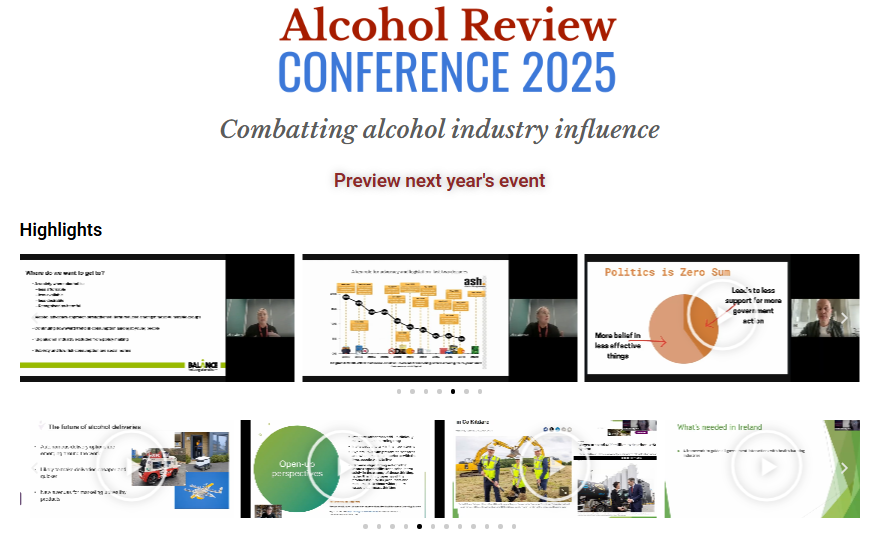
New highlights from AR2025

Before the AR2026 on March 26th we have assembled a few new highlights from this year’s debut annual event.

“Nanny is killing us right now. Government is subsidising alcohol,” said Grant Ennis, author of Dark PR, in a live plenary session at AR2025. Watch the full session.

Participants learned how Knowalcohol.ca enables users to better understand Canada’s guidance on alcohol and health. Watch the full session.

How will the future of alcohol delivery look and how do people feel about it? AR2035 offered some insights. Watch the full session.

Alcohol companies use “better for you claims” in their marketing to distract from alcohol’s health harms, participants learned. Watch the full session.

Are there potential loopholes in UK laws on the TV placement of alcohol products? It would seem there are. Watch the full session.

The alcohol industry intimidates alcohol researchers around the world, delegates heard. Watch the full session 

Join newsletter and events directly or on Substack ■

Alcohol Review – Issue 118, November 28th 2025

November 28, 2025

Read original

Join newsletter and events directly or on Substack

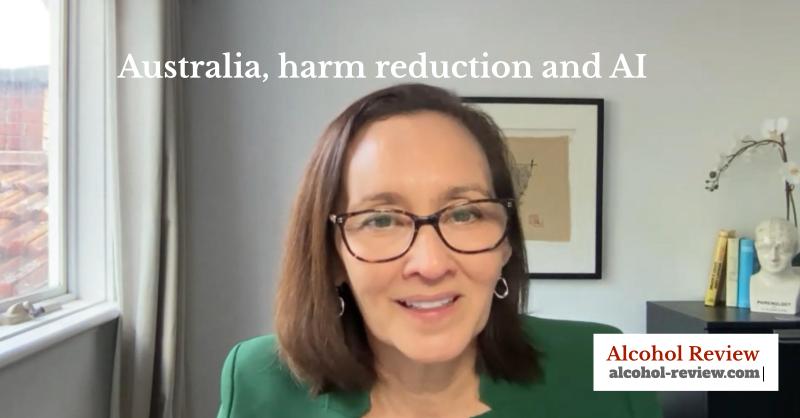
In this issue: UK halts tax backsliding; Nigerian sachet deadline; Korean collaboration rules; Poland’s parliamentary bar closes; Recovery barriers identified and more. Plus Australia, harm reduction and artificial intelligence, with Professor Nicole Lee.

Join AR2026. You can register now to disseminate and learn about global efforts to reduce alcohol harm. Live online sessions on March 26th will look at Alcohol and artificial intelligence. But the event will look far beyond, showcasing cutting-edge research, advocacy, ideas and offerings of all kinds. Event participation is open to all paid newsletter subscribers, who also have full access to AR2025.

News

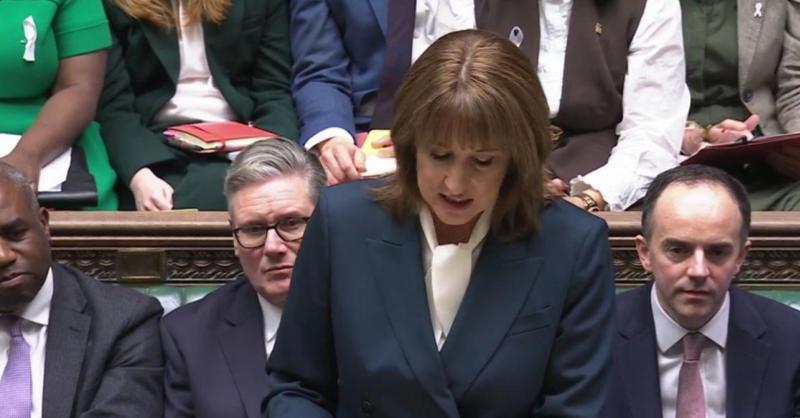
UK budget halts alcohol tax backsliding: The UK Chancellor Rachel Reeves this week gave respite from years of real terms alcohol tax cuts in her Budget statement, but made little headway on delivering on a manifesto promise to prioritise the prevention of health problems. [Share or comment]

Nigeria sets sachet deadline: Nigeria’s Senate this month told the National Agency for Food and Drug Administration and Control to end production and sale by December 31st 2025. The long-delayed move promped outrage from the alcohol industry. [Share or comment] 

Korea to tighten collaboration rules: Korea’s health ministry said it plans to impose stricter regulations on promotional collaborations between alcohol products and well-known food brands, saying such marketing appears to encourage alcohol consumption. [Share or comment]

Poland closes parliamentary bar: A cut-price bar in the Polish parliament bar closed this week following a decision by the Speaker, following a number of unruly incidents. [Share or comment]

Recovery barriers identified: The alcohol’s presence “poses a challenge to those seeking alcohol recovery and potentially increases the risk of relapse”, said a report highlighting half-a-dozen barriers to recovery. [Share or comment]

Abstinence savings estimated: Introducing minimum unit pricing across the UK could save £2.5bn, according to a report from Muslim faith informed think-tank Equi, which puts NHS savings from abstinence among Muslims at £1.6bn. [Share or comment]

Dry Australia imagined: Eliminating alcohol consumption in Australia would prevent more than 25m cases of disease and injury and more than 200 thousand deaths over 25 years, a study found. The cost saving would be A$55bn (US$36bn). [Share or comment] 


Feature

Australia, harm reduction and artificial intelligence: Less drinking among younger Australians has not outweighed harm within older cohorts, explains Professor Nicole Lee of the NGO Hello Sunday Morning and 360 Edge consultancy, who goes on to outline some of the applications and limits of artificial intelligence.

Join newsletter and events directly or on Substack ■

Alcohol Review – Issue 117, October 30th 2025

October 30, 2025

Read original

Subscribe for more newsletters and events

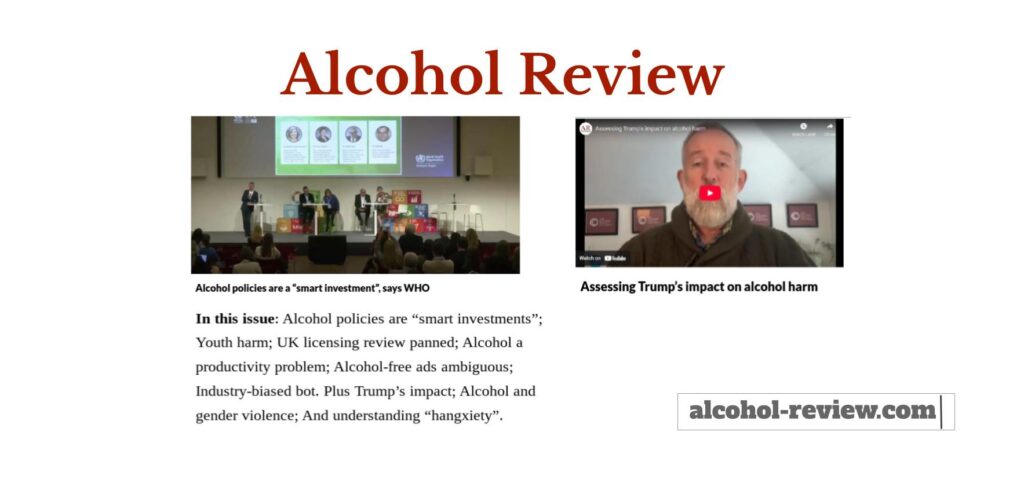
In this issue: Alcohol policies are “smart investments”; Youth harm; UK licensing review panned; Alcohol a productivity problem; Alcohol-free ads ambiguous; Industry-biased bot. Plus Trump’s impact; Alcohol and gender violence; Understanding “hangxiety”


Notices

AR2026, March 26th. Register now to join hundreds looking to disseminate and learn on a unique global platform. You will also gain full access to AR2025, giving you expert insight on how to push back against the alcohol industry at both the local and international levels. Please let us know if your organisation wants to support.


News

Alcohol policies are “smart investments”: “Strong alcohol policies are among the smartest investments you can make,” said the WHO Regional Office for Europe and the WHO’s International Agency for Research on Cancer this month.

Bid to quantify youth alcohol harm: The WHO’s EU-backed programme to reduce alcohol harm today launched an effort to quantify the burden alcohol places on young people to inform better alcohol policy.

Experts pan UK licensing review: The UK government’s current plans for alcohol licensing reflect the views of industry advocates. This “regulatory capture should be resisted by anyone with an interest in fair and effective governance” say its critics.

Alcohol a productivity problem: “When nearly half of young professionals are calling in sick after workplace drinking, it’s not just a hangover, it’s a productivity crisis,” says the UK’s left-leaning IPPR think-tank, calling for minimum pricing and tax rises.

Alcohol-free ads often ambiguous: “The trial [of AI analysis] found a higher rate of potential issues among alcohol-free product ads–around 48%–largely because of missing or unclear ABV information,” said the UK’s ad self-regulator, something especially problematic with spin off from an alcohol brand.

Bot to refer patients to alcohol industry: “Patients who engage with the [AI Surgery Assist] chatbot and mention alcohol concerns… will automatically be signposted to [alcohol industry funded] Drinkaware’s information and self-help tools.”

Feature

Assessing Trump’s impact on alcohol harm: The Trump administration has taken a chainsaw to efforts to reduce alcohol harm. Here Mike Marshall, CEO of the US Alcohol Policy Alliance, helps make sense of the bewildering news flow.

Opinion–Alcohol must be part of gender violence plan: It is impossible to address the high level of men’s violence in Australia without tackling alcohol use head on, write Anne-Marie Laslett, Cassandra Hopkins and Ingrid Wilson.

Understanding “hangxiety”: “People prone to anxiety or low mood, or those who drink to cope with stress, experience hangxiety more intensely – not because hangovers create new problems, but because alcohol temporarily dulls negative emotions,” write Rebecca Rothman and Blair Aitken.

Subscribe for more newsletters and events ■

Alcohol Review – Issue 116, September 18th 2025

September 18, 2025

Please subscribe for more

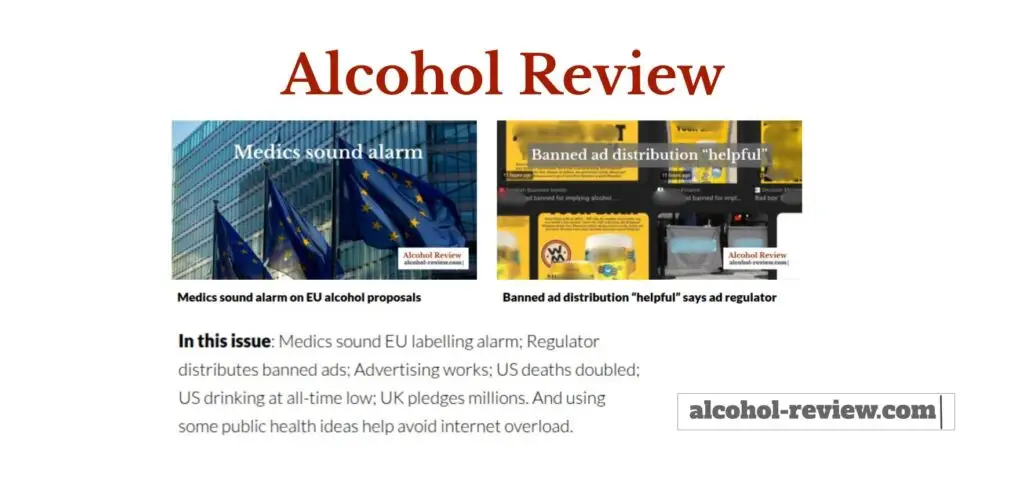
In this issue: Medics sound EU labelling alarm; Regulator distributes banned ads; Advertising works; US deaths doubled; US drinking at all-time low; UK pledges millions. And using some public health ideas help avoid internet overload.

AR2026: Date set for March 26th. Register now for full event participation and a year of premium newsletter access. You will also gain full access to AR2025, which gives expert insight on how to push back against the alcohol industry at both the local and international levels.

News

Medics sound alarm: Two recent EU labelling proposals risk decades of progress in reducing alcohol-related harm, warned the recently formed European Health Alliance on Alcohol. Belgium’s government also raised concerns earlier this month. Alcohol Review said the QR code proposal is a sham.

Regulator defends distributing banned ads: The UK’s advertising self-regulator is in favour of the distribution of alcohol ads it banned, Alcohol Review was told last month, after millions were exposed to a banned ad this week. The self-regulator then distributed more banned ads this month.

Advertising works: “Most evidence suggests that exposure [to alcohol marketing and advertising] is associated with increased intention to consume, consumption, and harmful consumption,” found a review from Public Health Scotland. A Polish NGO called for a complete ban on advertising it last month.

US deaths almost doubled since 1999: Alcohol-induced deaths in the US increased by 89% from 1999 to 2024, with the largest relative rise among females aged 25–34 which almost tripled.

US alcohol drinking at all-time low: Steep falls in alcohol drinking among women, Republicans and people at both the top and bottom ends of the economic spectrum reduced the percentage of alcohol drinkers in the US to its lowest point in 90 years, according to a Gallup poll.

UK pledges millions for research: The UK government said it will spend £10m ($14m) on addiction researchers through schemes from the Society for the Study of Addiction, National Institute for Health and Care Research and the Medical Research Council.

Feature

Using public health ideas to avoid internet overload
Alcohol Review’s editor applied some public health policies borrowed from alcohol to avoid internet overuse, with some success.

Please subscribe for more ■

  • Page 1
  • Page 2
  • Page 3
  • Interim pages omitted …
  • Page 6
  • Go to Next Page »

Copyright © 2026 · Phil Cain Impressum