• Skip to main content

Alcohol Review

Alcohol understanding for all

  • Highlights
  • AR2026
    • AR2025
    • Earlier events
  • Register
  • About
    • Organisers
    • Contact
  • Log In

alcohol

Opinion: Alcohol-free beer hype is unhelpful

November 19, 2024

Heavy marketing has created a buzz around alcohol-free beer diverting vital public attention from surging rates of alcohol harm. The stakes are too high to let commercial hype eclipse evidence-based action.

Alcohol deaths were up 33% on pre-pandemic levels in 2022 in the UK, for example. This astonished a BBC Radio 4 news anchor in May, so it is fair to assume the general public is probably less aware still of this dire situation. The US post-pandemic alcohol death surge is similar, at 31%, yet media coverage is sparse and the political response faltering. The WHO warned in summer “there has been little or no progress” in reducing alcohol consumption and harms in Europe.

As the death toll mounts the public is reminded, almost daily, of the success of alcohol-free beer. An alcohol-free beer garden at Munich’s Oktoberfest, for example, gained worldwide coverage, as if it were a sign humanity was turning the page on alcohol. And everything from the Olympics to Formula 1 promotes alcohol brands in alcohol-free clothing.  The unspoken implication is that this is a sign of spontaneous progress.

The rise of alcohol free beer story satisfies our fascination for novelties and craving for miraculous solutions. What’s not to like about a story about, say, a tiny island of non-drinkers in a giant sea of drinking at a Munich beer festival. Is this not a sure sign a quiet moderation revolution is afoot? “The problem is taking care of itself,” we can be tempted to think, “One less thing to worry about.”

But, then again, this positive impression is highly questionable. There is also the very real possibility that the alcohol-free Oktoberfest beer garden is a gimmick to pre-empt criticism and generate positive coverage. In this, it was a triumph, regardless of its popularity. And, more broadly, there is no firm evidence that alcohol-free beer makes any meaningful difference to alcohol consumption or alcohol harm.  We can be thankful some research is due in the next six months or so to quantify the effect, if there is any.

Nevertheless the media’s tireless trumpeting of alcohol-free beer, often from alcohol industry organisations. It is now “common sense” for non-specialists to see alcohol free beer as part of the solution to alcohol harm. In many cases we are falling for Potemkin villages constructed to show the market has the alcohol problem in hand. This is artful public relations triumphing over rational scientific and journalistic enquiry.

Alcohol-free beer has grown to quench a sizable share of the collective thirst in Europe. In France, Germany and Hungary alcohol-free beer is about 8% of the volume of beer in general. This is clearly progress, right? Well, again, maybe, maybe not. We do not know if alcohol-free beer replaces regular beer or if it is in reality chipping into soft drink sales. We might reasonably ask ourselves if alcohol producers would spend vast sums that cannibalise the sales of their core product? 

On an individual level there are more questions. The taste, look and smell of alcohol free beer can prompt some people to crave an alcoholic drink. And alcohol-free beer ads expose audiences including children and people trying to avoid alcohol drinking triggers. Alcohol free spinoffs duck advertising rules which would prohibit advertising the main alcoholic brand. And the imagery of alcohol free beer drinking means sparkling stock photos of attractive people in alcohol drinking situations are still fine.

Alcohol free beer also keeps drinking at the centre of the story. But people who try to avoid alcohol often find alternative activities far easier than attending alcohol drinking occasions sober. Why do we not see more coverage of the benefits of activities which have nothing to do with imbibing liquids, alcoholic or otherwise?  

Meanwhile alcohol interests enter alcohol free spaces, like schools, with self-serving “education” initiatives. And when there is an initiative like Men’s Sheds, mostly for middle-aged and older men to do some DIY, alcohol interests rocks up with some “education”. Tragically it is exactly this demographic who die most often from alcohol related causes.

Alcohol free beer is not all bad, of course. A lot of people like the taste of alcohol-free beer and it is not loaded with calories. And it can help us feel at ease avoiding alcohol at alcohol-dominated social occasions. Holding something that looks like a beer can flag we are ready to be sociable and placebo effects can be helpful to us. And there are some dedicated alcohol-free-only brands that might reduce triggering.

There is nothing inherently wrong with a new category of non-alcoholic drinks. But no alcohol-free beverage is automatically a remedy for large scale alcohol health problems. Our working assumption should be that the effect is minimal until proven otherwise. And the focus of media and policymakers should be on policies which are known to work, like those on price, availability and marketing.

We might also usefully look at promoting activities which do not revolve around drinking liquids of any type, like making things in sheds, for example. We can usefully facilitate these activities and protect them from alcohol marketing. This involves finding new ways to fund alcohol free spaces beyond selling drinks. Alcohol free drinks bars have struggled to survive, but alcohol free spaces offering games and other activities appear to have done rather better.

Hoping alcohol-free beer is reducing alcohol problems without evidence risks costing more lives. The stakes are too high to let uncertainty delay the implementation of evidence-based action to reduce record levels of harm. ■

Would-be commissioner noncommittal on alcohol labelling

November 7, 2024

Also on Substack

Hungarian health Commissioner-designate Oliver Varhelyi faces further questions having last night offered MEPs no clear reassurance he would deliver long-overdue alcohol health labelling proposals.

“We have just introduced a couple of labelling conditions for wine: ingredients, alergen content, but also the energy content. Let’s see how they sink in on the use,” he said when Alessandra Moretti of Italy’s centre-left Democratic Party asked if he would commit to producing proposals on alcohol labelling.

“I believe that we need to reflect on how to change the narrative on risk factors, including alcohol, and the economic determinants of health. Social attitudes can be a key driver for change,” he earlier wrote in a written answer to the same question.

He will be asked another set of written questions by MEPs who were unhappy with his answers, including those on protecting abortion rights, lack of clear plan for health and ties to his country’s authoritarian leader Viktor Orban. He won applause for defending the effectiveness of vaccines.

The Commission was meant to produce a proposal on nutrition and ingredients labels by the end of 2022 and warning labels by the end of 2023, according to the Beating Cancer Plan. Delivering this plan is part of the mission set out by Commission President Ursula von der Leyen in September.

Varhelyi is the first of the proposed commissioners to face such a redo. He will have to deliver his written answers by Monday. ■

Guest post: Why Northern Territory alcohol reforms would be a disaster, according nine experts

October 18, 2024

by Cassandra Wright, Menzies School of Health Research; Beau Jayde Cubillo, Menzies School of Health Research; John Holmes, University of Sheffield; Mark Mayo, Menzies School of Health Research; Mark Robinson, The University of Queensland; Michael Livingston, Curtin University; Nicholas Taylor, Curtin University; Sarah Clifford, Menzies School of Health Research, and Tim Stockwell, University of Victoria*

The new Northern Territory government is planning a swathe of changes to alcohol policy.

If implemented, these changes fly in the face of what evidence shows works to reduce alcohol-related harms. Some are also out of step with the rest of Australia.

Among our concerns are plans that would lead to harmful alcohol products becoming cheaper, alcohol becoming more easily available, criminalising public drunkenness, and a particularly worrying type of mandatory alcohol treatment – all of which evidence suggests will cause more harms.

No one is downplaying the magnitude and complexities of alcohol-related issues in the NT. But we hope the territory government will pay more heed to the evidence and voices of those most impacted.

Alcohol-related harm in the NT is complex
Alcohol-related harms in the NT are significantly higher (for both Aboriginal and non-Aboriginal people) than elsewhere in Australia.

In the territory, these harms contribute to health and social outcomes costing at least A$1.4bn [US$1bn]  a year. Alcohol harms result in costs related to health care, deaths, crime, policing and child protection.

Aboriginal communities in the NT have for decades cried out for solutions and services that effectively respond to alcohol-related harm. Instead, they found their lives made part of a political football match on law and order. Policies have been reactive and mostly ineffective. They’ve been overturned at each election.

Now, the new NT government is discussing changes that promise to exacerbate the very issues it aims to address.

1. Cheap alcohol that contributes most harm would be on the market
The World Health Organisation recognises that raising the price of alcohol is one of the most effective ways for governments to reduce alcohol-related harm.

So some governments around the world, including in the NT, have set a price below which alcohol cannot be sold, known as the minimum or “floor price”. This targets cheap, high-strength alcohol associated with patterns of drinking that cause the most harm.

The new NT government plans to repeal this, despite evidence showing this works to reduce harms.

Since the NT alcohol floor price was set at A$1.30 per standard drink in 2018, there has been a:

  • 14% reduction in alcohol-related assaults in Darwin and Palmerston

  • 11% reduction in domestic and family violence assaults

  • 21% reduction in domestic and family violence assaults involving alcohol

  • 19% reduction in alcohol-related emergency department attendances.

Originally, experts recommended a A$1.50 floor price but this was reduced to A$1.30 after a backlash from alcohol industry lobbyists. Had the policy not been watered down, evidence suggests the impacts above would likely have been greater.

The floor price has likely also lost some of its initial impact as it has never been indexed for inflation.

The best available research shows the floor price has reduced alcohol-related harms with no evidence of unintended consequences or negative impacts on the alcohol industry, despite claims otherwise.

Researchers and experts from around the world have been writing to NT ministers urging them to reconsider repealing this effective policy.

This includes researchers from the United Kingdom and Canada, who have coauthored this article. In these countries, evidence on the effectiveness of minimum pricing has been used to increase the floor price by 30%, not abolish it.

2. Bottle shops could be open longer
There are also proposals to repeal current restrictions on bottle shop trading hours. Such restrictions are highly effective in reducing alcohol harms, including violence.

Our paper from earlier this year found that in the town of Tennant Creek, restrictions to reduce trading hours and introduce purchase limits at bottle shops resulted in a 92% reduction in alcohol-involved domestic and family violence assaults.

Preliminary analyses of the reduced trading hours introduced in Alice Springs following Prime Minister Anthony Albanese’s visit in early 2023 also suggest a clear reduction on violence rates.

Car approaching drive-through bottle shop
Bottle shops would be open for longer, making alcohol more easily available. AustralianCamera/Shutterstock

3. New public drunkenness offence
Ministers were also set to pass laws to create a new offence for “nuisance” public intoxication (also known as public drunkenness). This would allow police officers to arrest people and fine them up to A$925, in addition to current powers to seize and tip out alcohol from people drinking in prohibited areas.

This is at the time when nearly every other jurisdiction in Australia is in the process of decriminalising public drunkenness, making the NT out of step with the rest of the nation.

The NT’s proposed new laws on public drunkenness would criminalise more people who are already locked out from our society, placing them at risk of the negative, intergenerational and preventable impacts that often arise from contact with the justice system.

4. Mandatory rehab
Mandatory alcohol treatment was also an election commitment.

In its previous term of government, mandatory alcohol treatment was focused on people with a public intoxication offence rather than providing quality care to people with alcohol dependence in life-saving circumstances. If the same model is reintroduced, this is potentially harmful and at best ineffective.

In the NT, this model of mandatory alcohol treatment had no better outcomes than for those who may not have received any treatment at all. But it cost the taxpayer three times as much.

Where to from here?
Researchers, health professionals and partner organisations have urged the NT government to reconsider these decisions, as we have well-founded concerns these may worsen the very issues the government aims to address.

There’s no need to guess the outcomes of changing, repealing or introducing alcohol policies. We can draw on robust evidence, including extensive research from the NT, on what works in our communities.The Conversation

*This piece is republished from The Conversation under a Creative Commons license. Read the original piece. ■

[Read more…] about Guest post: Why Northern Territory alcohol reforms would be a disaster, according nine experts

All washed up in Manchester and the Midwest

January 10, 2024

Covid has put a cruel kaibosh on hospitality businesses. Life looks bleaker without it and, in the past, it gave me some formative experiences of life and work on both sides of the Atlantic.

I grew up 30 yards from a pub in suburban south Manchester. This was no cosy affair in which to take a newspaper. It was a chain pub offering a young crowd a ready supply of carousing and pulling without the hassle of going into the city centre.

As a youngster I was often woken up at kicking-out time. I would watch the wavering procession of people make its way past in the orange of the street lights, laughing, shouting, chasing, fighting, kissing, screaming and being sick. Sometimes I would be spotted and someone would shout, “Oy, you, kid!” making me duck behind the curtain.

All this was quite interesting to me. And, to my mind, a few minutes of lost sleep seemed a small price to pay for limitless supplies of drinking glasses. We had hundreds, all thrown into the back garden by this nighttime parade and, occasionally, thoughtfully inserted, into the hedge, hanging like transparent birds’ nests.

By the time I was in my teens the pub had lost its cool. A kitchen was added where I got a weekend shift washing up. I spent Saturday and Sunday afternoons, Radio One blaring, chiseling microwaved steak and kidney gravy from beige microwavable basins. I had, I thought, finally learned the meaning of hard work.

But, it turned out, this was the pot-washing small time. During the summer holidays, in search of richer pickings I took my scouring skills to a short-order restaurant closer to town. The shift began around 6pm when I reluctantly entered amid the chorus of shouting, banging and crashing commercial cookery requires. Next to my sinks would be great, tottering towers of fat-encrusted pans within inches of the ceiling. No matter how fast I worked they never got smaller. The tsunami of soiled kitchenalia would not stop until past 3am, at which point I would be weak with exhaustion and thoroughly drenched in an ungodly soup of grease and water up to my armpits, my sodden trainers oozing this slippery, foaming brine with each step.

I got little respect for my efforts. In fact my Baldrick-like appearance seemed to revolt all who saw me, including the front-of-house staff, who flung things into my sink without so much as a hello. One day, however, a waitress spoke to me directly.

“You want this?” she said, putting a full meal down on the counter next to me before walking off. It was food and almost warm, of course I did. I dug in.
“Why is it here?” I asked the waitress on her return.
“The customer had a heart attack.”
“What? He’s alive though?”
She shrugged and kicked open the door into civilisation and I resumed eating.

 Now surely I really had learned the meaning of hard work. And one thing was certain, I didn’t like it very much. But in response to this I had learned to detach my brain from my physical surroundings and enter a kind of disembodied washing up trance. By chance, I had picked up Orwell’s Down and Out in Paris and London in which he begins by described his time as a fellow washer upper in late 20s Paris. Everything, no matter what it is, can become a story.

I went off to university, but there was still more hospitality to come. After my second year I got a work visa to work in the US during my summer break. I took an overnight bus from Manchester to Heathrow and then flew sitting next to a Korean vintage record collector on a flight to JFK. He toured the US picking up old vinyl which sold like hotcakes in Korea at the time. Smoking on the plane was still allowed although some people seemed to object to it.

I had an immigration debriefing the next morning in New York with the rest of the people on the visa exchange scheme. To my alarm others had actually organised jobs before they came. It had never occurred to me. They were going to be summer camp leaders and turn cartwheels in fancy dress at Disneyland. I, meanwhile, had no work plans beyond getting on a Greyhound to a city in the Midwest to stay with a friend.

There was no time to lose when I arrived in the oven-like heat. After a steak as big as a traditional Sunday roast I went knocking on doors. I was apparently the only one in the state who considered walking a mode of urban transport. Nevertheless, despite my lack of wheels, I managed to offer my services to half-a-dozen of places within walking distance. Cars honking as I did elementary parkour to get between one place and the next.  And, lo and behold, hours later, I was back at the place I shared with my friend and the phone rang. I had got a gig in a restaurant. It was the first one I’d called at, an Italian place. Quite fancy. Phase one of my American Dream was over.

I was apparently going to be “busboy”. I had never heard of it. To my surprise it turned out not to involve cleaning pots or pans. That side of the operation was already being handled by a pair of Puerto Rican brothers who looked like they were doing a great job, although I felt a pang of envy at their newfangled machinery. It was hardly the same job as the one I had. What was more impressive was their ability to enjoy their work in a way I never managed. They always had a smile at the ready. I realised, not for the last time, my attitude was badly amiss.

I think my British accent helped me swing a non-amphibious role for a change. But, on the downside my accent also meant I had to say everything twice or three times to be understood. Sometimes we just gave up. In the end my own take on the American accent improve things. I still sometimes like to say “take a shower” rather than “have a shower”. It is so much more dynamic. I also learned that, “How are you doing?” is not a question. It is, instead, your cue to smile and say, “Great!”

I discovered the job of busboy involves wearing a white shirt, bow tie and black trousers and running around filling guests’ glasses with ice water. None of the hundred or so people in the restaurant should ever be anywhere near to finishing a glass of water before I swoop in to save the day. Achieving this goal involves having a large supply of iced water to hand, with caches of jugs left about the place in case of a surge in demand. This has then to be backed up by constant monitoring of water levels across restaurant to identify a potential emergency. One needed to then hover discreetly then pick one’s moment. Heaven forbid anyone suggest putting a jug on the table.  And, once a party got up to leave, I had to clear and reset the table, while keeping a keen eye open for water shortage. In return for this I got paid a pittance as a basic wage, but a good share of the tips collected by the waiting staff. It sounded fine to me and, having no cartwheeling skills, I was in no position to haggle.

In reality it was almost as relentless a pot washing, though dryer. I would start at around ten in the morning and finish at 2am, with a break for a couple of hours between the end of lunch service and the start of dinner. In this time I would head home for a delirious nap in the 100 percent humidity, honked at by drivers as I crossed a bridge by walking along the top of the concrete blocks at the edge of the road, with my commute keenly observed by fellow neighbourhood residents.

I was living in what was euphemistically called a “transitional area”, something others less-euphemistically called the fringes of gangland. Some of our more nervous visitors would run between the cars and the house. There was, it is true, the occasional crackle of gunfire. But I would not accept their narrow-minded worries and, ultimately, I was vindicated. Nobody came to any harm. Occasionally, admittedly, when I came home late at night some youths would ask me where I was going. “Home!” I would say, pointing vaguely down the street.

It could be out of neighbourliness or it could be because I was so clearly nowhere near home in any broader sense, but either way they kindly let me pass. Maybe it just seemed unsporting pick on a dumb English guy wandering helpless in the dark? Whatever the reason was I managed to wander through a deprived neighbourhood dozens of times in the small hours with a few hundred dollars in my back pocket. That, as I told my concerned colleagues, was proof enough that I did not need to get a cab.

Every second at the restaurant was filled with work. There was no lunch break, although I was given a free and absolutely delicious Italian meal. I could have anything on the menu. But the second my plate was empty it was back to work. If there was nothing else to do I had to fold burgundy napkins into a kind of crown which would be the centrepiece of each place setting. Customers would pick them up, shake them out and stuff them into their shirts in that practical way etiquette disallows in the UK.  There was a pile of napkin crowns already made maybe six feet high. But, no matter, more spare napkin crowns were always needed.

It was while replenishing my stock of napkin crowns that I chatted with the waiting staff. They would talk about people and places I had never heard of and I would nod as if I had. And they would occasionally walk over to the blinds and curse the panhandlers on the street outside for living welfare. I think I was meant to agree. When I instead suggested that we might all need to claim welfare one day they looked at me offended. As someone brought up in north England in the 80s it seemed delusional to think it might never happen, but I did not press the point.

It was during one of these conversations, probably distracted enough to neglect my napkin duties that the host, a man in his 50s made husky by cigars—let’s call him Larry—beckoned to me. Was I going to be reprimanded for slacking off? Not directly. He took me into the main restaurant area and pointed to a wall pointing to some imperfections in the plaster. Here, he said, was where his predecessor as host had been shot dead a few months ago.
“Really?” 
“Really,” Larry said, and I went back to my napkin crowns.

It was the first of several times I heard this story. It was apparently over an unpaid cocaine debt. A full Sicilian brass band played in the street for his funeral procession. I notice the owner never smiled. Never. And a few of the customers were not the smiling type either. I would never ask any of them how they were doing.

Despite the owner’s gravity another part of my job was to go to the kitchen and pass on requests from guests asking if he would “sit with them” at their table. He never replied. He would throw down his towel and come out from the kitchen and sit with them for a few minutes, never the hint of a smile. It was not about having fun, but showing respect.

I dispensed ice water to senators, businessmen and occasionally stars big enough to fill the local baseball stadium, and also to unsmiling heavy-set men with nice suits, chunky watches and gold bracelets. There was no snobbery, so long as you settled the bill and tipped well. Clearing a table after a pair of customers left I found a wad of thousand dollar bills in a gold clip. I thought it best to assume it was a mistake rather than a tip and passed the packet to Larry,  who then walked into the car park and returned the money. One of the notes was peeled off and stuffed into his pocket. I saw none of it. Larry did not subscribe to the trickle-down theory of economics.

“Were they really likely to do anything to busboys for skiving off?” I thought as I threw another napkin crown onto the heap. I had no cocaine debt, so no. As far as I was concerned the whole gun thing simply did not apply to me as a Brit, just like unemployment did not apply to the waitresses. I took a pass. I refused a gun offered for my own protection by my housemate when he was away for the weekend. I had no intention of shooting anyone on my summer break. I was given a two-handed axe as an alternative, which I put back on the porch. If I was going to take a moral stand against shooting intruders I was not going to try to axe one either. They could have the VCR as far as I was concerned.

The general air of jumpiness and suspicion sapped my energy. So, although I had fun between the 15 hour days, I was also relieved to head home to where violence generally meant punches rather than gunshots.

 On later breaks back in Manchester I went back to the pub across the street to work. My transatlantic busboying experience carried little weight. I was instead moved to what I was told was a “special project”, which involved scraping up a sizeable backlog of dog shit and hypodermic needles from the car park.

Things had gone south since the long off days of pint pots thrown in the front garden. There was later talk of the police being called one day and a gun being found. Someone in my class back in primary school was apparently involved. When the pub closed and turned into a Tesco I was neither surprised or upset. ■

Make your own: Alcohol-free vodka

January 10, 2024

Guest post: People shouldn’t have to ‘get clean’ to get mental health treatment

January 10, 2024

Ground Picture/Shutterstock

By Simon Bratt, Staffordshire University

A decade ago, while working in a women’s prison, I met a young woman whose story would leave an indelible mark on me. She had endured severe abuse at the hands of men, and I was initially concerned that, as a male social worker, my presence might rekindle her trauma. Yet, through careful and considered engagement, we were able to forge a relationship of trust.

Jenny* confided in me that heroin had become her refuge – the only respite that quieted the relentless storm of her thoughts. But her dependency had brought dire consequences: the removal of her children and her subsequent imprisonment for possession with intent to supply. Even so, Jenny told me that before she was imprisoned: “Heroin was the only thing that helped me to cope.”

While inside, she experienced regular flashbacks and profound anxiety. Her treatment regime included antipsychotic medication Seroquel and heroin replacement Subutex – but Jenny didn’t use them conventionally. “The only way they help is if I grind them together and snort them,” she explained. This method provided her a fleeting, euphoric respite from her psychological torment.


Across the world, we’re seeing unprecedented levels of mental illness at all ages, from children to the very old – with huge costs to families, communities and economies. In this series, we investigate what’s causing this crisis, and report on the latest research to improve people’s mental health at all stages of life.


It wasn’t Jenny’s drug revelation that struck me most profoundly, but the reaction of some of my prison colleagues. Her unconventional use of the medication was labelled substance abuse, leading to her being ostracised by the prison’s mental health service, which refused to work with her until she “sorted out” her drug issues.

Even though I had known Jenny for a year, it was only when she was about to be released from prison that I really understood how serious her situation was. I was shocked to see her breaking the prison’s rules on purpose because she didn’t want to leave. She started smoking in places she shouldn’t, damaged her own cell and areas everyone used, attacked another prisoner, which was not like her at all, and started using spice and hooch.

Jenny preferred staying in jail over facing life outside, but she was let out all the same. A week after her release, I received news that she had died from a heroin overdose.

My search for answers

Mental health problems are experienced by the majority of drug and alcohol users in community substance use treatment. Death by suicide is also common, with a history of alcohol or drug use being recorded in 54% of all suicides in people experiencing mental health problems. (Public Health England guide, 2017.)

Jenny’s tragic story left me with many questions – what were the underlying causes of mental illness? What spurred the spiral into addiction? Why did individuals turn to substance use? – that, even after six years as a mental health social worker working in prisons and psychiatric hospitals, I had neither the knowledge nor experience to answer. Talking to colleagues did not resolve them, so I sought answers by returning to academia alongside my day job.

A postgraduate diploma helped me better understand the theories of mental health from neuroscientific, psychiatric and pharmacological perspectives. But above all, I realised that many of the people I was now encountering in my new role, working in a crisis home treatment team (a community-based team set up to support people experiencing severe mental health issues), would never get better. Rather, they would just keep coming back with a new crisis.

And for a large majority of them (around four in five), substances ranging from highly addictive narcotics to potent, mind-altering chemicals would be a key part of their daily lives in addition to, or as an alternative for, their prescribed psychiatric medication..

Roger was one of many people I met who relied on Spice, a synthetic cannabinoid designed to mimic the effects of naturally occurring THC. (In addition to consumption by smoking, there are increasing reports of synthetic cannabinoids being used in e-cigarettes or vapes.)

Nonetheless, Roger told me Spice was the “only thing that would help sort my head out”. And, after listening to a lecture from me about the dangers of these substances, he responded:

I know how much to take – I know when I’ve taken too much or not enough. I use it in doses now. Why would I stop if it’s the only thing that works?

It was clear that Roger knew much more about the effects of Spice than I did. Interactions like this ignited a desire in me for deeper knowledge – not from books or universities, but directly from people with co-existing mental health and addiction problems.

Perhaps surprisingly, in the UK we don’t know how many people are living in this combined state. Estimates have tended to focus only on people with severe mental health problems and problematic substance use. For example, a 2002 Department of Health guide suggested that 8-15% of its patients had a dual diagnosis – while acknowledging that it is difficult to assess exact levels of substance use, both in the general population and among those with mental health problems.

A decade earlier, US research had identified that for people with schizophrenia, substance use (non-prescribed drugs) was a significant problem relative to the general population. More recently, a 2023 global review of evidence identified that the prevalence of co-existing mental health and substance use among children and adolescents treated for psychiatric conditions ranged between 18.3% and 54%.

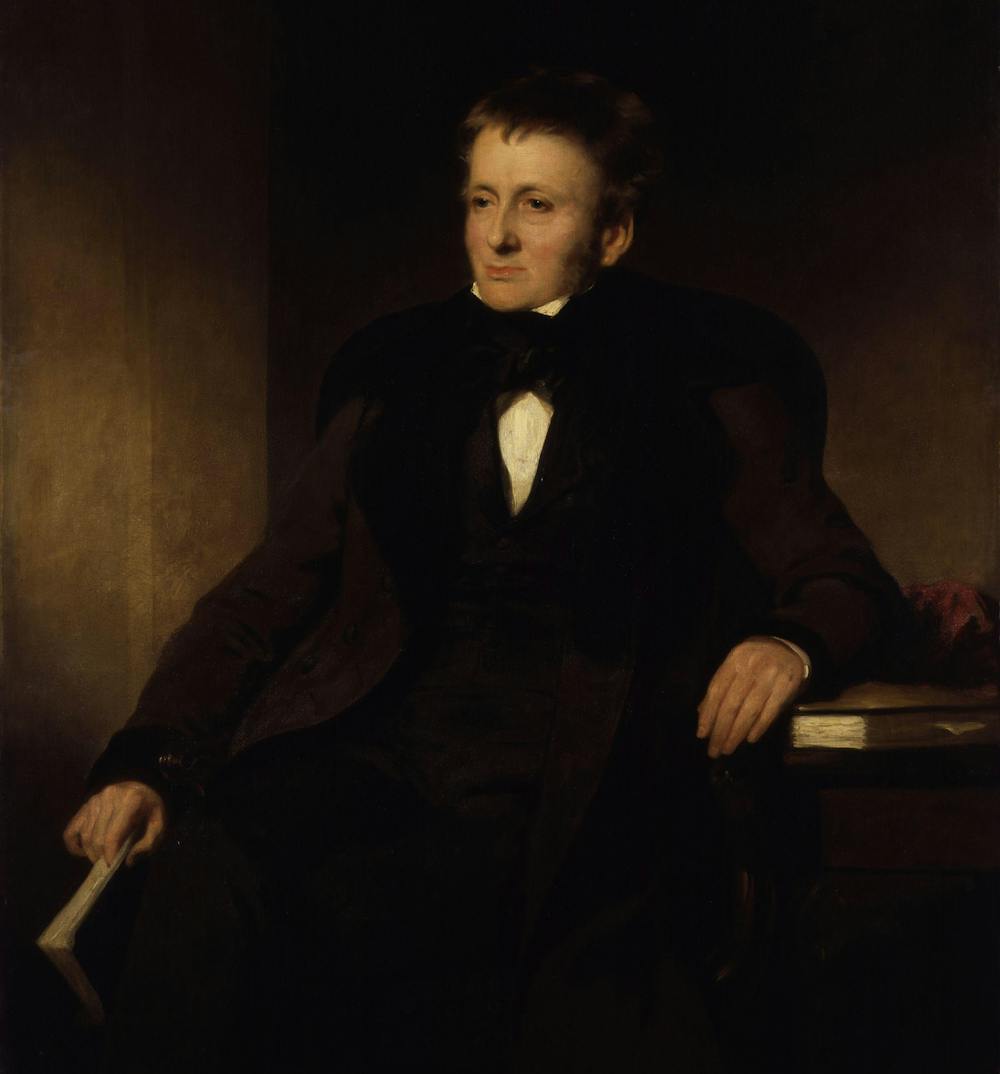
Painting of Thomas De Quincey
Thomas De Quincey, author of Lessons From an English Opium Eater.
National Portrait Gallery via Wikimedia

But what I found particularly interesting was an analysis of the writings of Thomas De Quincey from more than 200 years ago. In his 2009 article Lessons From an English Opium Eater: Thomas De Quincey Reconsidered, leading clinical academic, John Strang, highlighted that issues raised by De Quincey in 1821 remain causes for concern some two centuries later.

De Quincey was arguably the first person to document his own use of substances, in particular opium. His writing shows that he self-medicated to manage pain, including “excruciating rheumatic pains of the head and face”:

It was not for the purpose of creating pleasure, but of mitigating pain in the severest degree, that I first began to use opium as an article of daily diet … In an hour, oh Heavens! What an upheaving, from its lowest depths, of the inner spirit!

De Quincey’s use of non-prescribed drugs mirrors that of John, Jenny, Roger and so many other people I have met as a social worker. Clearly, we’ve known about the close relationship between mental illness and substance abuse for hundreds of years, yet are still wrestling with how best to respond.

Official guidance almost always advocates for a “no wrong door” policy, meaning that those with dual addiction and mental health issues will get help whichever service encounters them first. But from what people with lived experience were telling me, this was not the case.

I sent freedom of information requests to 54 mental health trusts across England, to try to discern any patterns of variation in the way their patients were being measured and treated. Some 90% of the trusts responded, of which a majority (58%) recognised the dual occurrence of mental illness and substance use. However, the estimated prevalence of this dual diagnosis varied widely – from only nine to around 1,200 patients per trust.

What I found most alarming was that less than 30% of the mental health trusts said they have a specialised service for addiction which accepts referrals for dual diagnosis patients. In other words, throughout England, a lot of these patients are not being appropriately supported.

Out-of-focus man holding a syringe in the foreground
271 Eak Moto/Shutterstock

‘When I say I use heroin, people change’

I started using when I was around 18. Things weren’t good in my life at the time, and I got in with a crowd who offered me heroin. It was the most amazing experience; all my worries disappeared better than the antidepressants I had been taking. But the more I used, the more I needed it. Now I use it in stages, just before I go to work and at night.

Carl had been using heroin for more than ten years when I interviewed him. When I asked if he wanted to stop, he shrugged and said no, explaining:

I’ve tried so many times – I’ve been on methadone but that was worse, especially coming off it. I know how much to take, and no one knows I use gear – so, no. But, as soon as you tell a professional you take heroin, their whole attitude changes. I’ve seen it many times. I dress quite well and I have a job, but as soon as I say I use heroin, they change. It’s almost as if they don’t see the same person any more.

Talking to Carl underlined that many users know far more than me about the substances they take and why they take them. Yet as soon as a professional (typically a nurse, social worker or doctor) hears they are taking an illegal substance, or are misusing a legal substance such as alcohol, they are stigmatised and often ostracised from service provision.

Suzanne was homeless and also using heroin, but for different reasons to Carl. I asked why she started using it:

I’ve had a shit life – it numbs all of that. Now being homeless, it helps me to sleep and keeps me warm, but I only use it in the winter because I need to sleep.

In summer, Suzanne explained, she would switch to taking “phet” – amphetamines. I asked her why:

You need to be awake – there are lots of dickheads around. I’ve been beaten and raped in the summer when I was asleep, so you need to be awake more.

Hearing the stories of people fighting their personal battles with mental health and substance use issues was at once haunting and cathartic for me. It was deeply moving to hear them, time and again, struggling with the most difficult aspect of their condition: the simple decision to ask for help. And sadly, far too often, when they did summon the courage, their requests would go unheard, unheeded, or they would be engulfed by a sprawling system that seemed unable to help.

Dave had been using alcohol for many years and had asked for support on several occasions – only to be passed from service to service:

I was made redundant and, at 50, was finding it hard to get another job. I wasn’t drinking all of the time then. But as I started to get into more debt and the bailiffs were knocking on the door, I needed a drink to get me through it. It was not until I was charged with drunk driving that I knew I had a problem.

Dave said he wasn’t shy about asking for help – at least, for a while. But he found himself caught in a downward spiral that led to more drinking, more suffering, and less support:

So many times I’d stop drinking, but I couldn’t deal with the voices in my head. I’d ask for support, but the waiting lists were so long. The medication the doctor gave me did nothing, so I’d start drinking again, and because I’d start to drink again, mental health services wouldn’t touch me. All they kept saying was: ‘You should stop drinking first.’

The biggest barrier to getting support

To expand my understanding, I also sought the perspectives of a dozen people working on the frontline of mental healthcare – from professionals in NHS mental health and substance use teams, to people working for charitable support groups. Their insights revealed a frayed and fragmented network of services, with the holes and inefficiencies obvious and crying out for attention and repair. As one nurse explained:

The stress of trying to get services to help is unbelievable. You’ve got pressure from the person’s family because they are afraid they’ll end up dead. You’ve got pressure from managers to discharge the person. All I’d get is criticism which far outweighed encouragement or support. The stress made me so anxious that I almost gave it all up – and even considered suicide myself.

Over 80% of the professionals I spoke to called for an integration of mental health and substance use teams, in part because of the huge cuts nationwide in funding to substance use services. One social worker in a substance use service explained the current situation:

If you get someone with an alcohol addiction, it becomes quite apparent that they use drink as a way of coping with their mental health. But, because of massive waiting lists within mental health services or because they are told they need to stop drinking before [they can be treated], mental health support can’t be offered. So, the person just keeps drinking and eventually disengages from our services as there is no hope for them. We shouldn’t expect someone to stop using a substance that they perceive is helping without offering an alternative treatment.

For all the professionals I interviewed, the most significant barrier to getting support for someone’s mental health issues was that they used substances and would not receive any treatment until they addressed this. As one mental health nurse told me:

I had one chap who was using cocaine, mainly due to social anxiety. Initially, he’d use it when socialising with friends. But because it gave him confidence and he could talk to people, he started to use it all the time and got himself in debt. I wanted to address the root cause, the social anxiety, so I referred him to our Improving Access to Psychological Therapy service. But I was told he needed to be abstinent from cocaine for three months before they’d accept him. He eventually disengaged, and I haven’t seen him since.

The word HELP spelled out in white powder
Runawayphill/Shutterstock

A seismic shift is needed

In the shadows of our society, hidden behind the walls of our prisons and in the dark corners of our streets, the experiences of Jenny and countless others bear witness to the profound failings of our healthcare system to address co-existing mental health and substance use issues. For those caught in the merciless cycle of addiction and illness, these systemic inefficiencies and administrative blockades do much to intensify their torment.

Their often brutally honest accounts (and the insights of those who try to support them) draw a portrait of a split and underfunded service, collapsing under the weight of its contradictions. The loud calls for integrated mental health and substance addiction treatment become muffled amid the bureaucratic din of funding cuts, lengthy waiting lists and policy neglect.

The evidence overwhelmingly confirms the need for a model of care that is holistic and integrated – one that shifts the narrative from stigma and isolation to awareness and support.

The economic case for reshaping investment in our mental health and substance misuse services is powerful. The annual cost of mental health problems to the UK economy is a staggering £117.9 billion – equivalent to 5% of its annual GDP – with substance misuse adding a further £20 billion.

However, these figures tell only part of the tale. While we know that 70% of people in treatment for drug misuse and 86% of people in treatment for alcohol misuse have a mental health diagnosis, the full financial impact of people with these co-occurring disorders is probably far greater.

This also includes people who often plough through a punitive and bewildering series of services as they navigate their intersecting problems, encountering barriers at every turn that fail to address their acute health and social care needs. As their distress is amplified, the costs to wider society escalate too – as one social worker explained to me:

I am currently supporting a woman who is struggling with alcohol dependency, a condition that began after she endured significant domestic abuse. The cycle is devastating: her trauma cannot be effectively addressed because of her dependency on alcohol, and she cannot abandon alcohol because it’s the only solace she finds from her emotional torment. Despite several attempts at rehabilitation, none of the programmes have sufficiently tackled the mental health aspects of her trauma. Now, with cirrhosis of the liver, her health is in critical decline. It’s a heart-wrenching situation – a stark reminder of the desperate need for integrated treatment approaches that address both substance dependency and the underlying psychological trauma.

Out-of-focus woman with a glass of alcohol on the table in front of her
Kamira/Shutterstock

‘I might as well be dead’

In the quiet confines of a West Midlands mental health crisis centre, I’m preparing to meet someone whose story I know only from the clinical notes on my screen. The phrase “is alcohol dependent” is highlighted in bold. Behind those words is another person whose life is unravelling in the silence of a battle fought alone.

John walks into the room, a man living in the grip of two relentless forces – addiction and mental illness. “It was just to stop the noises,” he says of the whisky he uses as medication for his inner turmoil. His hands are trembling. This is the moment of truth – his story is no longer trapped within the clinical pages of a case file.

“I’ve lost everything,” he tells me. “I might as well be dead.”

Then John explains why he’s given up hope:

I’ve asked for help so many times, but all I get told is that I need to stop drinking before my mental health can be treated. However, alcohol is the only thing that works for me. I’ve gone through detox, but then I had to wait months for counselling. I just can’t cope that long without any support – antidepressants don’t do anything for me. What’s the point?

Over the past 15 years, I have met countless “Johns”, both during my day job as a mental health social worker and, latterly, in my academic research. This has led me to conclude that the health and social care system in which I work falls catastrophically short.

This is no mere professional critique. It is an impassioned plea for society to rediscover its collective heart; to explore the human stories that lie hidden in statistics such as that, between 2009 and 2019, 53% of UK suicides were among people with comorbid diagnoses of mental health and substance use.

Instead of viewing people through the limiting lens of labels, we should endeavour to see their humanity. Engaging in conversation, extending empathy and showing compassion are powerful actions. A kind word, an understanding nod or a gesture of support can affirm their dignity and spark a connection that resonates with their innate human spirit. Or as John, whose journey I’ve had the privilege to witness, puts it:

It’s not about the help offered but the meaning behind it. Knowing you’re seen as a person, not just a problem to be solved – that’s what sticks with you.

*All names in this article have been changed to protect the anonymity of the interviewees.

If you or anyone you know require expert advice about the issues raised in this article, the NHS provides this list of local helplines and support organisations.


For you: more from our Insights series:

  • Insomnia: how chronic sleep problems can lead to a spiralling decline in mental health
  • Existential crisis: how long COVID patients helped us understand what it’s like to lose your sense of identity and purpose in life
  • OCD is so much more than handwashing or tidying. As a historian with the disorder, here’s what I’ve learned
  • How music heals us, even when it’s sad – by a neuroscientist leading a new study of musical therapy

To hear about new Insights articles, join the hundreds of thousands of people who value The Conversation’s evidence-based news. Subscribe to our newsletter.The Conversation

Simon Bratt, Mental Health Social Worker and PhD Candidate, Staffordshire University

This article is republished from The Conversation under a Creative Commons license. Read the original article.

  • Page 1
  • Page 2
  • Page 3
  • Interim pages omitted …
  • Page 22
  • Go to Next Page »

Copyright © 2026 · Phil Cain Impressum