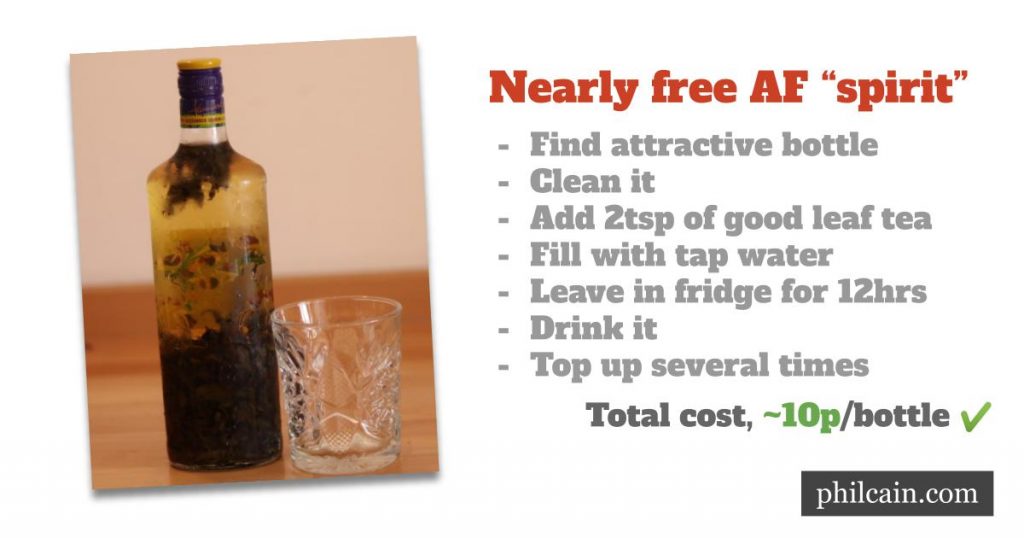
Nearly free “spirit”
Alcohol understanding for all
Adam Bertscher, University of Bath and Leslie London, University of Cape Town
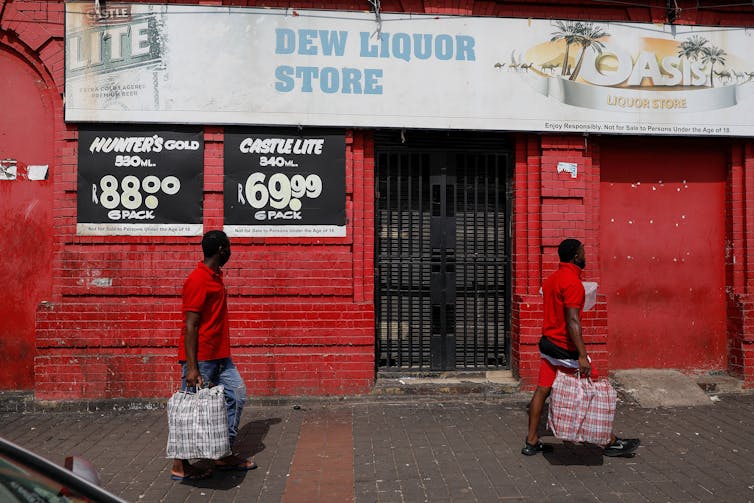
The lockdown restrictions introduced in South Africa to curb the initial spread of COVID-19 in March 2020 were the tightest in the world. They included a ban on alcohol sales. This, the government said, was to reduce the pressure on hospitals caused by drinking-related trauma, and to discourage social gatherings.
This restriction exposed the huge public health and social impact of alcohol in South Africa. Dramatic decreases in violence, injuries and trauma-related hospital admissions were reported following the ban on alcohol sales.
The country has some of the heaviest drinkers in the world. Excessive drinking is a major contributor to the health burden. Children are especially vulnerable.
In South Africa 12% of adolescents consumed their first alcoholic beverage before the age of 13 years. In 2016, of the young people between 15 and 19 years old who consumed alcohol, 65% reported binge drinking.
Alcohol abuse is also linked to many societal problems. These include domestic violence, foetal alcohol syndrome, child abuse, injuries, and risky sexual behaviours.
In 2012, the South African government drafted the Control of Marketing of Alcoholic Beverages Bill. The Bill sought to restrict advertising, marketing, sponsorship, or promotion of alcoholic beverages except at the point of sale. It was drafted specifically to protect children from alcohol advertising. This intervention is consistent with World Health Organisation recommendations to control alcohol-related harm.
The Bill underwent three regulatory and socio-economic impact assessments. It was meant to be published for public comment in 2013 but was never made public. Our previous research found that the alcohol and allied industries lobbied heavily against the draft Bill.
One argument made by opponents to the draft Bill was that it would unjustifiably violate human rights. These include freedom of expression, and consumers’ rights to information.
In a recent paper we analysed these claims using the Siracusa Principles, which guide the circumstances under which it is justifiable to restrict some rights.
Human rights are a well-recognised framework based on ethics and embedded in international law. They can be used to find a balance between competing societal goals.
The Siracusa Principles emerged from a meeting of experts in international law in 1984. They were concerned that limitations on rights in the International Covenant on Civil and Political Rights might be abused for national security or in a public emergency. They then provided principles for when limitations were permitted, according to international law.
The Siracusa Principles have five criteria that should be met to permit a restriction on human rights. The restriction must be:
We used this framework in our research to answer the question: is restricting alcohol advertising, in the interest of public health, a justifiable limitation on the right to freedom of expression?
We concluded that restricting alcohol advertising to protect children’s rights and the right to health is justifiable, for several reasons.
Firstly, is it doubtful that corporations can claim human rights. Human rights are intended for natural persons and not legal entities like corporations. But even if rights apply to legal entities, it’s still possible that a limit on freedom of expression could be justified.
Secondly, public health reasons may be acceptable grounds for restricting freedom of expression according to the International Covenant on Civil and Political Rights. This is because there is strong evidence of the negative impact of alcohol consumption on children. And alcohol advertising is linked to earlier initiation of drinking. This suggests that South Africa’s draft Bill would be effective in reducing drinking in young people.
Thirdly, many international human rights laws support this restriction. For example, article 24 of the United Nations Convention on the Rights of the Child supports children’s right to survival and development, and their right to health.
Article 17(e) of the Convention obliges governments to protect children from harmful information. Alcohol advertising would be information that is harmful for children.
Moreover, article 12 of the International Covenant on Economic, Social and Cultural Rights obliges governments to protect people’s rights from violations by non-state actors – such as the alcohol industry. Government failure to regulate the activities of corporations that market harmful substances may amount to a violation of the right to health.
Lastly, there are no less intrusive and restrictive methods available other than restricting alcohol advertising. Given the scale of the problem, other kinds of interventions targeting high risk drinkers are either ineffective or pose insurmountable logistical challenges, such as the notion of identifying and targeting problem drinkers.
And self-regulation does not work. These industry-preferred interventions put the responsibility on individuals without recognising the responsibility of the alcohol industry in influencing drinking behaviours.
Introducing regulation to reduce alcohol-related harm is fully consistent with human rights protection, particularly for children. Such regulation could include restricting alcohol advertising, marketing, sponsorship, or promotion.
The international treaty on transnational corporations, business enterprises and human rights is a new draft international law that could substantially strengthen public health goals. This treaty would place obligations on non-state actors, similar to those on governments, and help to make commercial actors accountable for their business practices.
Adam Bertscher, PhD candidate, University of Bath and Leslie London, Head of the Division of Public Health Medicine in the School of Public Health and Family Medicine, University of Cape Town
This article is republished from The Conversation under a Creative Commons license. Read the original article.
The UK took a narrow victory in this year’s World Beer Awards alcohol-free medals league table, bagging 23 of the 110 awards, two more than second-placed Germany. Canada took third, with 14 gongs, southern neighbour hot on its heels with ten. Brazil managed four, while Estonia, China, Japan and Russia also brought home honours. ■
| Style/brewery | Name | Country | Award |
| Dark | |||
| Athletic Brewing Co | All Out | US | World’s Best No & Low Alcohol Dark |
| Super Bock | Free Preta | Portugal | Country Winner |
| La Voie Maltee | La Raisonnable Rousse | Canada | Silver |
| Big Drop | Woodcutter Brown Ale | UK | Silver |
| Leffe | Brown 0.0% | Belgium | Silver |
| Super Bock | Negra Sín | Portugal | Silver |
| Wäls | Vienna Free | Brazil | Bronze |
| Flavoured | |||
| Karlsberg | Grapefruit Alkoholfrei | Germany | World’s Best No & Low Alcohol Flavoured |
| Athletic Brewing Co | Downwinder Gose | US | Country Winner |
| Karlsberg | Grapefruit Alkoholfrei | Germany | Country Winner |
| Sleeman Point | Five Non-Alcoholic Citrus Lager | Canada | Country Winner |
| Lösch-Zwerg | Weizen Zitrone Alkoholfrei | Germany | Silver |
| Karlsberg | Fresh Alkoholfrei | Germany | Silver |
| Karlsberg | Radler Alkoholfrei | Germany | Silver |
| Yanjing Beer | No Alcohol Weissbier | China | Silver |
| Fentimans | Lemon Shandy | UK | Silver |
| Mönchshof | Natur Radler 0,0% | Germany | Bronze |
| Bernard | Free Sour Cherry | Czech Republic | Bronze |
| San Miguel | 0,0 Radler | Spain | Bronze |
| Leffe | Ruby 0.0% | Belgium | Bronze |
| Schützengarten | Ginger Beer Alkoholfrei | Switzerland | Bronze |
| IPA | |||
| Samuel Adams | Just The Haze | US | World’s Best No & Low Alcohol IPA |
| Small Beer | IPA | UK | Country Winner |
| Twisted Cat | Alcohol Free IPA | Luxembourg | Country Winner |
| FrogBeer | Incroyable Ipa | France | Country Winner |
| Campinas | Ipa Zero | Brazil | Country Winner |
| Õllenaut | Kaineken | Estonia | Silver |
| Drop Bear Beer Co. | Tropical IPA | UK | Silver |
| Brand | IPA 0.0 | Netherlands | Silver |
| Thornbridge | Zero Five | UK | Silver |
| Samuel Adams | Just The Haze | US | Silver |
| Goose Island Brewhouse São Paulo | Little Ipa | Brazil | Silver |
| Rügener Insel-Brauerei | Snorkelers Sea Salt Ipa | Germany | Silver |
| Siboire | Discipline | Canada | Bronze |
| UNLTD. | IPA | UK | Bronze |
| Partake Brewing | IPA | Canada | Bronze |
| Microbrasserie Le Trou du diable | Nano Perroquet IPA | Canada | Bronze |
| Infinite | IPA | UK | Bronze |
| Lager | |||
| Jump Ship | Yardarm | UK | World’s Best No & Low Alcohol Lager |
| Mahou | 0,0 Tostada | Spain | Country Winner |
| Athletic Brewing Co | Athletic Brewing Company | US | Country Winner |
| Greif Bräu | Leicht | Germany | Country Winner |
| Pito | 1St Czech Non Alcoholic Beer | Czech Republic | Country Winner |
| Jump Ship | Yardarm | UK | Country Winner |
| Stella Artois | 0.0% | Belgium | Country Winner |
| B&B | Celestial Sin Hoppy Lager | Spain | Gold |
| Svyturys | Go Pilsner | Lithuania | Silver |
| Waldhaus | Diplom Pils Alkoholfrei | Germany | Silver |
| Drop Bear Beer Co. | New World Lager | UK | Silver |
| Clausthaler | Original | Germany | Silver |
| San Miguel | Magna Roja 0,0% | Spain | Silver |
| Ambar | 0,0 Tostada | Spain | Silver |
| Partake Brewing | Blonde | Canada | Silver |
| Schützengarten | Alkoholfrei | Switzerland | Silver |
| Maes | 0.0% | Belgium | Bronze |
| Spaten | Alkoholfrei | Germany | Bronze |
| Swinckels’ | 0.0% | Netherlands | Bronze |
| Engel | Kellerbier Hell Alkoholfrei | Germany | Bronze |
| Days Brewing | Lager | UK | Bronze |
| Hofmeister | Ultra Low | Germany | Bronze |
| Fortitude Drinks | Everyday Lager | UK | Bronze |
| Karlsberg | Pils Alkoholfrei | Germany | Bronze |
| Wäls | Session Free | Brazil | Bronze |
| Pale | |||
| Iwate Kura Beer | Heel In The Prohibition Era | Japan | World’s Best No & Low Alcohol Pale |
| La Voie Maltee | La Raisonnable IPA | Canada | Country Winner |
| Iwate Kura Beer | Heel In The Prohibition Era | Japan | Country Winner |
| Jupiler | 0.0% | Belgium | Country Winner |
| Heaps Normal | Quiet Xpa | Australia | Country Winner |
| Rügener Insel-Brauerei | Surfers Summer Ale | Germany | Country Winner |
| Maisel & Friends | Alkoholfrei | Germany | Gold |
| Affligem | Blond 0.0% | Belgium | Silver |
| Svyturys | Go Pale Ale | Lithuania | Silver |
| Palm | 0.0% | Belgium | Silver |
| Wold Top | Intuition | UK | Silver |
| Surreal Brewing Company | Natural Bridges Kolsch Style | US | Silver |
| San Miguel | 0,0% | Spain | Silver |
| Hawkesbury Brewing Co | Prohibition | Australia | Silver |
| FrogBeer | Incroyable Blonde | France | Silver |
| Big Drop | Pine Trail Pale Ale | UK | Silver |
| Störtebeker Brauspezialitäten | Atlantik-Ale Alkoholfrei | Germany | Silver |
| Partake Brewing | Pale | Canada | Silver |
| Tinnies | Ultra Low Alcohol | Australia | Silver |
| Mornington Peninsula Brewery | Mornington Free | Australia | Bronze |
| Drop Bear Beer Co. | Yuzu Pale Ale | UK | Bronze |
| Uwe | Summer Ale | Germany | Bronze |
| Bowness Bay Brewing | Swan Free | UK | Bronze |
| Libra | Pale Ale | Canada | Bronze |
| Sour & wild | |||
| Microbrasserie Le Bockale | Aurora | Canada | World’s Best No & Low Alcohol Sour & Wild |
| Microbrasserie Le Bockale | Aurora | Canada | Country Winner |
| Big Drop | Double Strike Sour | UK | Bronze |
| Speciality | |||
| Big Drop | Paradiso Citra IPA | UK | World’s Best No & Low Alcohol Speciality |
| Big Drop | Paradiso Citra IPA | UK | Country Winner |
| The Flying Dutchman Nomad Brewing Company | Freak Kriek Zero Point Three Feel Free Merry Cherry Beer | Belgium | Silver |
| Stout and porter | |||
| Big Drop | Galactic Milk Stout | UK | World’s Best No & Low Alcohol |
| Big Drop | Galactic Milk Stout | UK | World’s Best No & Low Alcohol Stout & Porter |
| Athletic Brewing Co | All Out | US | Country Winner |
| Deschutes | Non-Alcoholic Irish Style Dark | US | Country Winner |
| Big Drop | Galactic Milk Stout | UK | Country Winner |
| Surreal Brewing Company | 17 Mile Porter | US | Silver |
| Drop Bear Beer Co. | Bonfire Stout | UK | Silver |
| Wheet beer | |||
| Franziskaner | Alcoholfree Wheat Beer | Germany | World’s Best No & Low Alcohol Wheat |
| Franziskaner | Alcoholfree Wheat Beer | Germany | Country Winner |
| Microbrasserie Le Bockale | Meteorite | Canada | Country Winner |
| Svyturys | Go Baltas | Lithuania | Silver |
| Athletic Brewing Co | Wit’s Peak | US | Silver |
| Maisel’S Weisse | Alkoholfrei | Germany | Silver |
| Sober Carpenter | Canada | Silver | |
| Bavaria | 0.0% Wit | Netherlands | Silver |
| Baltika | 0.0% Wheat Unfiltered | Russian Federation | Silver |
| FrogBeer | Incroyable Blanche | France | Silver |
| La Voie Maltee | La Raisonnable Wheat Beer | Canada | Bronze |
| Grolsch | Weizen 0.0% | Netherlands | Bronze |
Seven in ten Brits want government policy to be protected from alcohol industry interference and a majority want a ban on alcohol advertising, says a survey for the Alcohol Health Alliance (which launches its manifesto in Parliament today.
“With a general election due to take place next year, our message to all political parties is that with the right political will there is a significant opportunity here to turn the tide on alcohol harm and drastically improve the lives of generations to come,” said Professor Sir Ian Gilmore, chair of the alliance.
The findings accompany the launch of a report and manifesto today in Parliament. The alliance points to National Audit Office figures showing alcohol deaths directly attributable to alcohol rose by 89% between 2001 and 2021, while alcohol harms cost the NHS £3.5bn a year.
The Yougov survey also found that 60% of people think alcohol displays and promotions in shops should only be visible to people who intend to browse or buy alcohol. They also showed strong support for making it mandatory to put basic information on alcohol product labels.
76% of respondents said the alcohol content of alcohol products should be required on labels, not just the alcohol percentage as is the case now, forcing consumers to work out how much alcohol a drink contains. Over half supported mandatory pregnancy warnings and nutritional information.
Alcohol products are exempt from laws requiring all other types of food and drink to include nutritional information on labels, despite alcohol being linked to seven types of cancer and over 200 other illnesses. The only requirement is for alcohol product labels to include volume, alcohol percentage and common allergens.
The UK government promised a consultation on alcohol labelling in 2020, but it did not deliver on its promise. ■
Twittersphere:

The wisdom of making Euro 2024 a beer marketing bonanza should surely be questioned when alcohol deaths are still 30% above pre-pandemic levels in the UK and elsewhere.
Imagine a national football hero wreathed in heavenly light, carrying a holy relic to bless long ranks of beer cans as they emerge from a production line. “Bring it home!” our hero commands as the cans wheel past in obedient legions.
The message is clear for anybody witnessing this unlikely tableau. Any true admirer of this man and supporter of the national team with which he played must procure some of these magical cans and imbibe their contents.
It is satire gone too far, surely? It would require a world in which quasi-religious imagery was used to manipulate people into consuming a health-harming psychoactive product while watching sportspeople in their prime.
Well, absurd yes, but it is 2024 when the bedrock of satire is what underpins reality. This is the storyline of the all-too-real Budweiser ad for Euro 2024 featuring Geoff Hurst, sole survivor of England’s 1966 World Cup winning team.
England may not get far in the tournament, but they can come home safe in the knowledge they are forever a team with one of the most ludicrous alcohol ads of 2024, bending England’s national football folklore into a commercial goal.
Sports watching is an alcohol marketing dream. The phases of boredom, anxiety, depression, frustration, sociability and euphoria it induces are all powerful cues for alcohol drinking. It may even help train us to feel we need alcohol to cope with emotions at other times.
Not walking alone
This is, of course, not the only alcohol ad doing the rounds during Euro 2023. TV viewers young and old are continually persuaded in any number of cunning ways to believe a few beers are an essential accessory to proper football viewing.
The alcohol industry boilerplate counter-message “drinking responsibly” does not stop the constant association building. And the example set by “real fans” at the matches does not help either, with some so assured of beer’s pivotal role in the football story they launch half-full beer cups at the players.
Euro 2024 is a beer industry bonanza, like all football tournaments. Advertising is a way of capitalising on the enormous buzz of activity around it, fuelling demand from existing beer drinkers and imprinting on new potential customers, like children and young people.
The idea alcohol companies might now or ever curtail their ads voluntarily is laughable. Alcohol companies are obliged to do what is allowed to enrich shareholders. The only way to curb a vector of incentivised harm is to have effective ad regulations. These are currently absent in most countries.
And ad regulation needs to cover alcohol-free brews which share their brand with an alcoholic beer. These are widely used to crowbar alcohol brands into sports coverage, like the upcoming Olympics. The subterfuge is obvious given the tiny share of alcohol-free sales.
Individual approach
No one of us is able to make these legal changes, which will take time. So all we can do in the meantime is protect ourselves and those around us as best we can.
One way is to avoid being in alcohol soaked environments including our homes. Alcohol is simply not an essential part of playing sport, nor an essential part of watching it either. Alcohol, of course, played no part in Geoff Hurst’s hat trick of goals in 1966. There would have been no beer ads for TV viewers and lager would have been, perhaps, 1% of the beer market.

We might remind ourselves that one of the greatest players of the same era, Sir Stanley Matthews (pictured), didn’t drink. Meanwhile a crop of football stars including France’s Kylian Mbappé oppose alcohol promotions. Opting out is not easy and not currently possible if someone does not offer a religious reason, even though there are plenty of secular reasons.
We might also remind ourselves that alcohol blighted the lives of many of the best football players, like Diego Maradona, George Best and Paul Gascoigne, to name just three known to this very occasional football viewer. Did people watching the 1966 England match need beer to appreciate it. Would that not have dulled the experience rather than enhance it.
We might also imagine that avoiding alcohol when watching football might be positive training for us. We can use it as a way to learn to ride a roller coaster of emotions without turning to alcohol to cope. Or we can at least see it as a way of reducing the risk of developing this common problem.
And finally, perhaps, we might ask ourselves something: If we are unable to enjoy watching football without consuming alcohol then maybe we do not like the game? ■
Find this story on X
Find this story on LinkedIn
Want to see more? Join the supporters

Recommendations for alcohol and other drugs from Professor David Best of Derby University based on evidence he outlined at yesterday’s NHS Addictions Provider Alliance conference: