• Skip to main content

Alcohol Review

Alcohol understanding for all

  • Highlights
  • AR2026
    • AR2025
    • Earlier events
  • Register
  • About
    • Organisers
    • Contact
  • Log In

alcohol

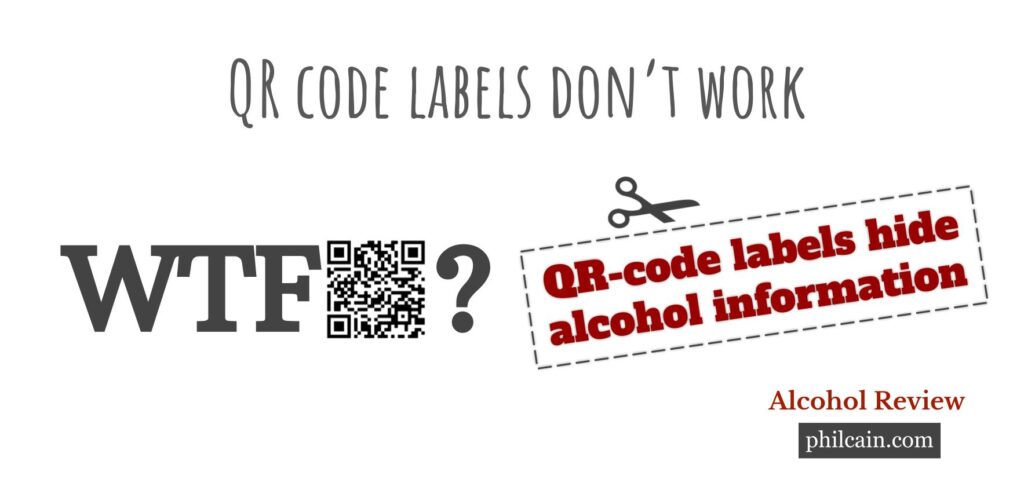
QR codes are a sham

January 10, 2024

Only a tiny fraction of us scan QR codes, making them the perfect way to conceal information while also, technically, providing it. Consumers have a right to be told alcohol’s health effects directly on the label in plain language. Do you agree? If so, please, join the supporters? ■

Note: This is one of a collection of shareable key alcohol messages.
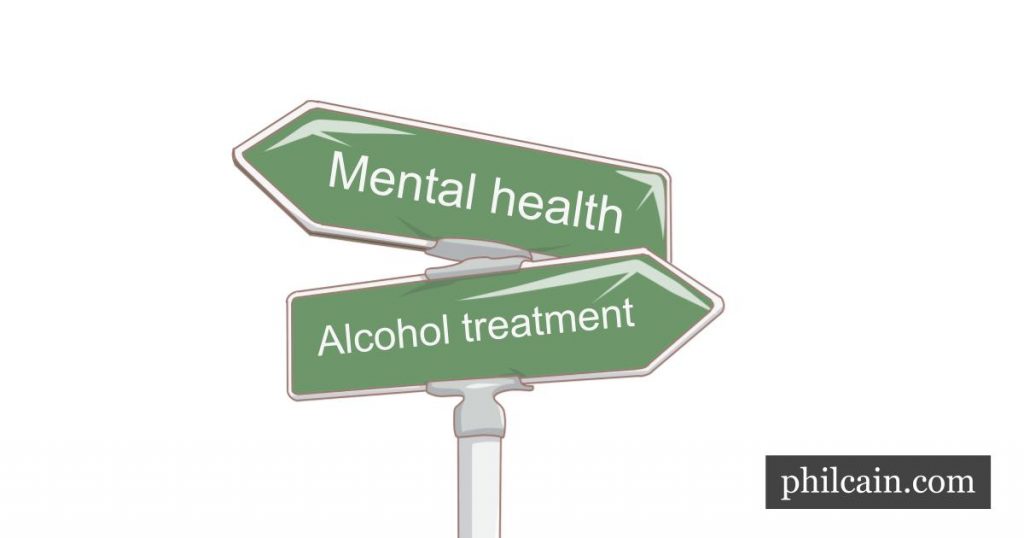
Discussion: The international problem tackling mental health and alcohol issues together

January 10, 2024

A recent piece highlighting the difficulty of getting help when we have both mental health and alcohol or other substance use problems attracted insight with sources spanning from Glasgow to Tauranga. Below is a lightly-edited selection.

“I’d say this isn’t ‘becoming’ the norm, I heard this in the field ten years ago regularly and it has never changed,” Michael Pearson, counsellor at Bristol University, UK.

“This article raises a very real problem and one that I did not realise was an international problem. It is things like this that cause my team and I to want to be identified as alcohol and drug workers rather than anything else. People need Hope and that is what we try to provide,” Darryl Wesley, The Salvation Army, Bridge & Oasis, Tauranga, New Zealand.

“All the evidence suggests that the best approach is to treat both in parallel. The fact that it’s so difficult for service users to get the help they need borders on criminal.” Norman Beecher, Kensington and Chelsea Recovery Care, London, UK.

“I come across this all too much in my work! While I understand that sometimes you have to remove substances to find out if certain mental health is triggered by these, what I know works from experience, is a joined up approach to mental health and substance use. It has far better lasting outcomes for people I’ve worked with,” Nicole Cooper,

a recovery facilitator at Bracknell Forest Council, UK

“A lot of services unwittingly provide care, treatment and support to people with a dual diagnosis, because it wasn’t identified as an issue. The problem comes when it is identified as an issue that clinicians lose confidence in their ability to provide care, treatment and support to a person who needs assistance,” Stephen Mihaly, director of nursing at The Endoscopy Centre, Melbourne, Australia.

“This has been an issue for my entire career in community services of over 20 years. Every conference I go to will have a well researched piece on why holistic no-wrong-door treatment services are what’s needed – yet still it doesn’t happen,” Xenia Girdler, working in education and training at Welways, Melbourne, Australia.


“With all the money and focus that was done some 11 years ago with Dual Diagnosis and State and Fed initiatives—this seems to now have gone backward. It is so disappointing.” Renee Hayden, CEO of HealthCare, Melbourne Australia.

“This is a very, very big issue. A new set of recruits with knowledge of both would really help. The amount of people pushed from pillar to post because they have both mental health and dependency issues. We have had dual diagnosis’s workers that seemed to have achieved nothing. It either gets dismissed as the dependency or the dependency needs to be dealt with first before we can do anything. And, when people get frustrated, upset and exhibit any anger they are often told to leave, ‘we will not tolerate that behaviour’ Despite the person clearly being unwell and desperate for help.” Mark Masterson, carer, UK.

“As someone with lived experience I lived with the problem of not qualifying for mental health support because of my addiction. The addiction services I did go to actively discouraging me from going to mental health services, despite clearly having both issues. There used to be a very strong division between the types of services which led to people like me falling between the cracks. I did end up focusing on abstinence from my addiction first and years of therapy through those services. I did truly believe that the symptoms I was experiencing (that I later realised were mental health related) to stop once I was abstinent. Of course that didn’t happen and I walked an exceptionally risky path and ultimately ended up in mental health clinical services anyway

There has been a lot of work in New Zealand to work towards that and in the clinical mental health and alcohol and other drug (AOD) clinicians work closely together. I was fortunate to work together with mental health teams which had AOD clinicians as part of their multi-disciplinary team  All clinicians were expected to be able to work with people with both mental health and/or addiction problems. In many ways that worked well especially when it came to sharing experience and knowledge of either area of speciality. So that was real progress in the teams, however, one other concern I had was the division of the people themselves who would really benefit from having both issues looked at, who really didn’t want that. Shame and stigma have a lot to do with that and historical cultures of being labelled as having one or the other issue and often people didn’t think kindly of people in the other group. A lot of stigma and discrimination. It’s changing, slowly. So there is hope of change,” Louise Windleborn, consumer and peer advisor, Wellington, New Zealand.

“I hate the fact this happens. I’m currently working in mental health and am told all the time by my bosses that if there is any hint that a person is using substances we have to signpost them out because ‘we don’t work with people who drink/use drugs’. It frustrates me so much; I’ve worked in a rehab centre where we did treat both the substance use and the underlying mental health issues that were frequently present and I just don’t see why we can’t have more joined up working in order to actually help people,” said a psychological wellbeing practitioner in the UK’s NHS.

“I can understand why stretched mental health services retreat behind this sequenced assessment of need. But then it’s more than a big ask for people who by definition can’t always organise their own wellbeing to fit themselves into service criteria for treatment. Arguably, service design provokes crisis level needs that can’t then be deferred. The treatment gap also shifts the cost of unmet needs onto emergency and criminal justice services. That’s not exactly a cost saving or a social investment either. Sad for the lives and communities in the middle of this,” Dave Chung, a social worker in Doncaster, UK.

“Important but so sad that we’re still where we are. When I was managing the Angel Drug Project in the late 1990s we almost never had a client we couldn’t work with and hopefully help. For me,  the term ‘dual diagnosis’ often told more about how services were configured and the inadequacy of that for all people who were having substance use problems than anything else,” Eric Carlin, a public health and alcohol policy expert currently working at the WHO, based in Glasgow, Scotland. ■

Another Round: More troubling than entertaining

January 10, 2024

UK release, July 2nd; certificate 12A

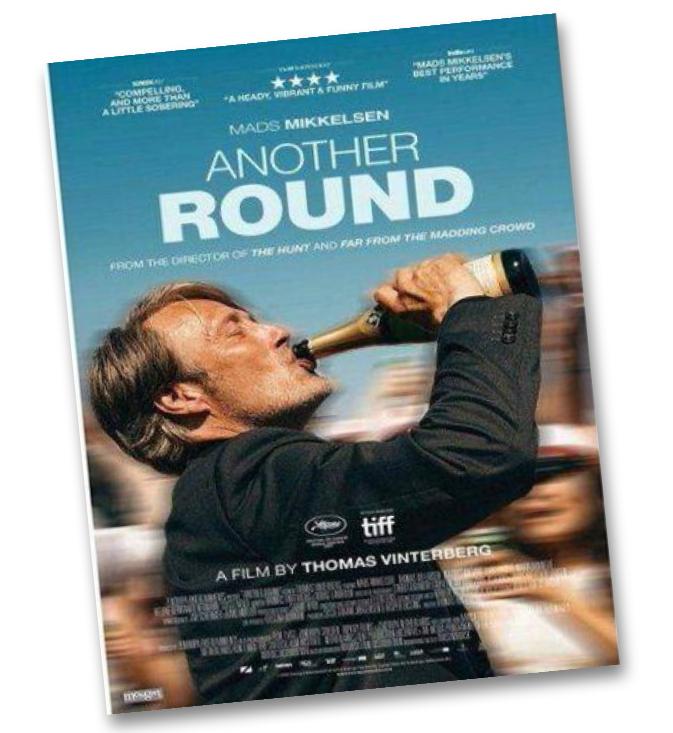
I hoped Another Round, an international Oscar winner about alcohol, might at least be entertaining, despite some obvious flaws. But I was disappointed.

I am no film critic, but I believe etiquette demands some positives at this point. The film is well made, well acted and shot, and there are moments of real pathos and extended periods of the bleak sadness that Scandinavia is so good at.

The lasting sadness, however, is that all this undoubted artistic skill and talent was employed in exploring alcohol through an idea even its own supposed inventor, psychiatrist Finn Skarderud, says was no more than an offhand joke.

There is also a Smirnoff vodka bottle put in the hands of photogenic lead actor Mads Mikkelsen, who just happens to also be the face of brewer Carlsberg. It is hard to imagine either appear accidentally or without conditions attached.

The premise is, some tell me, not even an original joke, but an oft-repeated psychiatrists’ common room gag, made funny mainly because it is obvious nonsense. The idea is, I should say, we are born with a deficit of 0.05% of alcohol in our blood.

The film cracks on, nonetheless, making this patently phoney idea its intellectual cornerstone. The audience is thereby invited to suspend their disbelief for a large chunk of a rather plodding 2.5 hours of image after image superficially “proving” the theory.

And for about two-thirds of the film things go swimmingly. Four grouchy middle-aged Danish men start teaching tiddly, perform like champs and generally regain their lost mojo. “All fired up and relaxed at the same time,” as one puts it.

Predictably, enough, they up the dose. But only after they reach more than double the 0.05% “deficit” does it go horribly wrong. No matter that it is a daft idea to depend on alcohol to do your job from the start, particularly if you look after kids.

But it is good, one might argue, that the film goes on to disproves its own crackpot theory in the tragic ending. Well, it does, sure, but [unapologetic spoiler] a few shots later alcohol is the catalyst of the final euphoric scene.

The film also does things like making Churchill’s notorious heavy drinking an unarguable endorsement of a liberating habit. It also fails to mention that Ernest Hemmingway’s alcohol drinking was life threatening for decades. Yada yada.

“Misuse of drugs must be infrequent and should not be glamorised or give detailed instruction,” is among the conditions of the UK’s 12A certificate, and films must not promote dangerous or anti-social behaviour.

There is a tragedy, sadness and a bit of sanitised puking, but these do not outweigh the impression left by the far longer sections in which we watch male role models experience a quasi-scientific miracle, reprised at the end.

In the closing scene Mikkelsen’s dour history teacher has a post-funeral pick-me-up enabling him to dance with the kids like it was 1999, before flinging himself fully-clothed off a jetty in a final alcohol-fuelled flourish.

There is a great film to be made about alcohol, about its real effects, dramas, humour, confusions and contradictions. This, sadly, is not it, and despite its many troubling flaws it seems likely to fill the niche for years to come. ■

Discover the invisi-fish

January 10, 2024

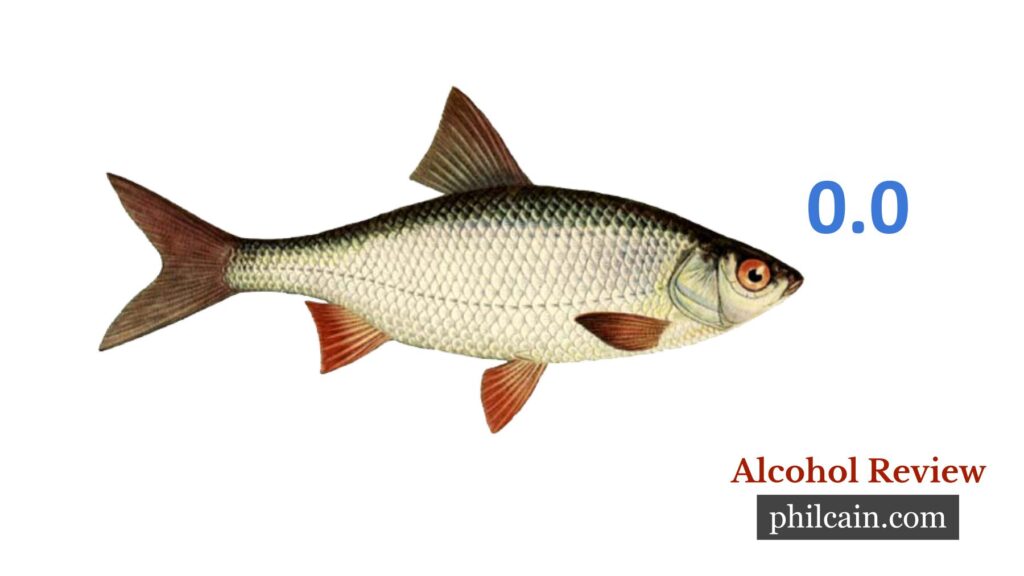
The invisi-fish is a remarkable optical phenomenon in which a fish become completely invisible when positioned next to the characters “0.0”. Do you see it? Explore this effect and more with Alcohol Review. ■

Join the supporters

England’s absurd beer ad brings home need for regulation

January 10, 2024

The wisdom of making Euro 2024 a beer marketing bonanza should surely be questioned when alcohol deaths are still 30% above pre-pandemic levels in the UK and elsewhere.

Imagine a national football hero wreathed in heavenly light, carrying a holy relic to bless long ranks of beer cans as they emerge from a production line. “Bring it home!” our hero commands as the cans wheel past in obedient legions. 

The message is clear for anybody witnessing this unlikely tableau. Any true admirer of this man and supporter of the national team with which he played must procure some of these magical cans and imbibe their contents.

It is satire gone too far, surely? It would require a world in which quasi-religious imagery was used to manipulate people into consuming a health-harming psychoactive product while watching sportspeople in their prime.

Well, absurd yes, but it is 2024 when the bedrock of satire is what underpins reality. This is the storyline of the all-too-real Budweiser ad for Euro 2024 featuring Geoff Hurst, sole survivor of England’s 1966 World Cup winning team.

England may not get far in the tournament, but they can come home safe in the knowledge they are forever a team with one of the most ludicrous alcohol ads of 2024, bending England’s national football folklore into a commercial goal.

https://www.youtube.com/watch?v=fZf5KtPWaJ0
Budweiser’s quasi-religious beer ad

Sports watching is an alcohol marketing dream. The phases of boredom, anxiety, depression, frustration, sociability and euphoria it induces are all powerful cues for alcohol drinking. It may even help train us to feel we need alcohol to cope with emotions at other times.

Not walking alone
This is, of course, not the only alcohol ad doing the rounds during Euro 2023. TV viewers young and old are continually persuaded in any number of cunning ways to believe a few beers are an essential accessory to proper football viewing.

The alcohol industry boilerplate counter-message “drinking responsibly” does not stop the constant association building. And the example set by “real fans” at the matches does not help either, with some so assured of beer’s pivotal role in the football story they launch half-full beer cups at the players.

Euro 2024 is a beer industry bonanza, like all football tournaments. Advertising is a way of capitalising on the enormous buzz of activity around it, fuelling demand from existing beer drinkers and imprinting on new potential customers, like children and young people.

The idea alcohol companies might now or ever curtail their ads voluntarily is laughable. Alcohol companies are obliged to do what is allowed to enrich shareholders. The only way to curb a vector of incentivised harm is to have effective ad regulations. These are currently absent in most countries.

And ad regulation needs to cover alcohol-free brews which share their brand with an alcoholic beer. These are widely used to crowbar alcohol brands into sports coverage, like the upcoming Olympics. The subterfuge is obvious given the tiny share of alcohol-free sales.

Individual approach
No one of us is able to make these legal changes, which will take time. So all we can do in the meantime is protect ourselves and those around us as best we can. 

One way is to avoid being in alcohol soaked environments including our homes. Alcohol is simply not an essential part of playing sport, nor an essential part of watching it either. Alcohol, of course, played no part in Geoff Hurst’s hat trick of goals in 1966. There would have been no beer ads for TV viewers and lager would have been, perhaps, 1% of the beer market.

We might remind ourselves that one of the greatest players of the same era, Sir Stanley Matthews (pictured), didn’t drink. Meanwhile a crop of football stars including France’s Kylian Mbappé oppose alcohol promotions. Opting out is not easy and not currently possible if someone does not offer a religious reason, even though there are plenty of secular reasons.

We might also remind ourselves that alcohol blighted the lives of many of the best football players, like Diego Maradona, George Best and Paul Gascoigne, to name just three known to this very occasional football viewer. Did people watching the 1966 England match need beer to appreciate it. Would that not have dulled the experience rather than enhance it. 

We might also imagine that avoiding alcohol when watching football might be positive training for us. We can use it as a way to learn to ride a roller coaster of emotions without turning to alcohol to cope. Or we can at least see it as a way of reducing the risk of developing this common problem. 

And finally, perhaps, we might ask ourselves something: If we are unable to enjoy watching football without consuming alcohol then maybe we do not like the game? ■ 
Find this story on X
Find this story on LinkedIn
Want to see more? Join the supporters

Investors favour alcohol

January 10, 2024

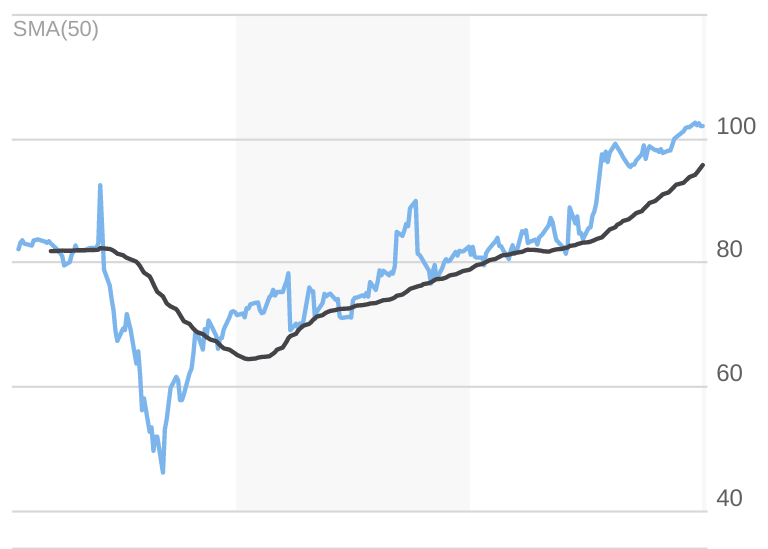
Alcohol share prices in the US are far stronger than before the covid-19 slump struck with the US Alcoholic Beverages/Drinks Index up a fifth over the full year, having almost halved in February (see chart).

A share price rise needn’t necessarily indicate an expectation of higher profits or revenue. It could be a “flight to safety”, where people make more reliable bets in crises, which is why gold prices go up.

Interpreting share movements is a matter of speculation. This interpretation would indicate the US financial market expects alcohol to fair relatively well and is willing to bank on it. ■

  • « Go to Previous Page
  • Page 1
  • Page 2
  • Page 3
  • Page 4
  • Interim pages omitted …
  • Page 22
  • Go to Next Page »

Copyright © 2026 · Phil Cain Impressum