Alcohol is not useful, with all of its purported benefits achievable by other means which are not hazardous to health or well-being. ■
Alcohol understanding for all
Alcohol is not useful, with all of its purported benefits achievable by other means which are not hazardous to health or well-being. ■
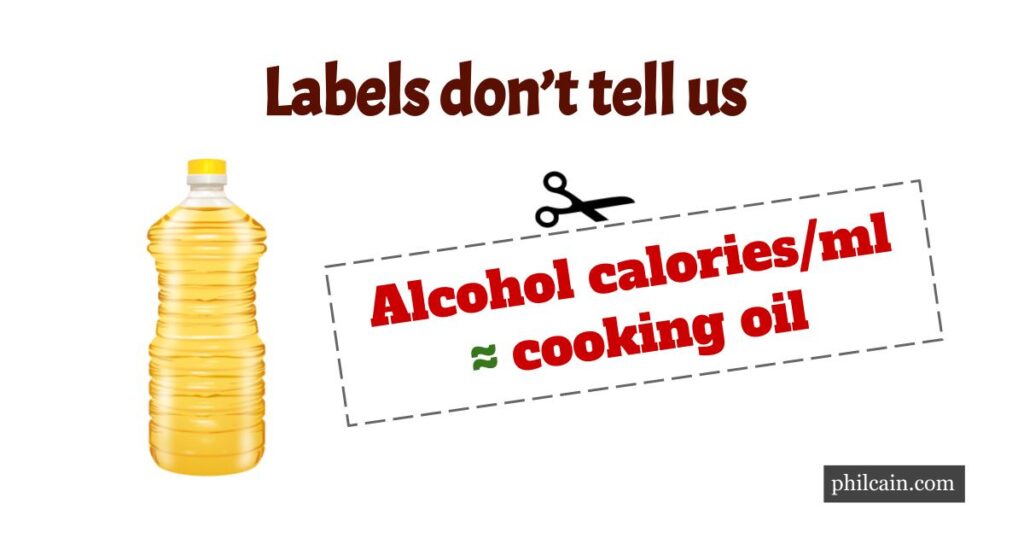
Labels don’t tell us: Alcohol has roughly the same calorie density as cooking oil. The 25ml of alcohol in a large beer contains around 175 calories and the 20ml of alcohol in a quarter of a bottle of wine is around 150 calories, the same as a 50ml double measure of spirits. ■
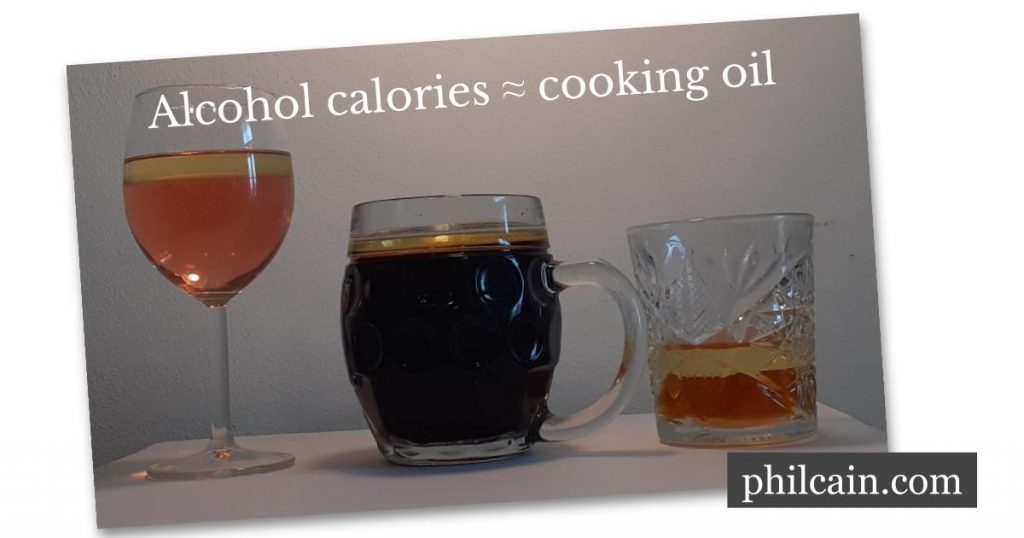
One way to visualise alcohol calories is to see it has has roughly the same amount as oil 5-9cal/ml. So 500ml of 5% lager alcohol contributes roughly the same as 25ml of oil, ~200 calories. And in a 75ml bottle of, say, 12% wine alcohol contribute about as much as 90ml of oil, 700 calories.
This high level should not be too surprising, given that alcohol is manufactured from sugar, again roughly the same order of calorie density. Part of Victorian doctors’ mistaken enthusiasm for prescribing alcohol was it provided weakened invalids with a “clean” source of energy.
It’s by no means perfectly accurate, but it is a reasonable way to get a feel for it, in the absence of clear labelling. ■
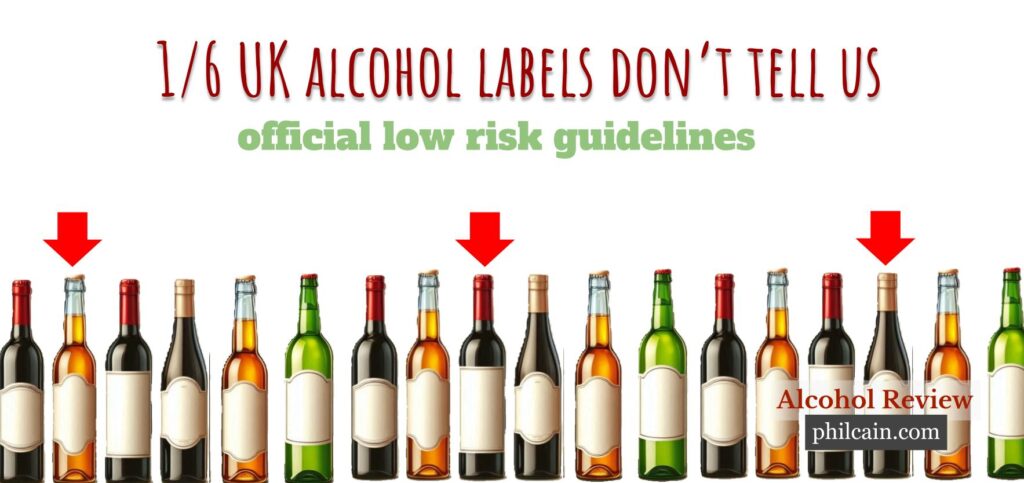
Around one-in-six alcohol labels in the UK fail to give the official 140ml per week low risk drinking guidelines eight years after their introduction, according to the alcohol industry’s own figures. ■
We should not drink alcohol to ward off any condition. Its many hazards, including cancer, outweigh any benefits. Alternatives like regular moderate exercise, a balanced diet, stress reduction and health care improve health without bringing any added risk. ■