• Skip to main content

Alcohol Review

Alcohol understanding for all

  • Highlights
  • AR2026
    • AR2025
    • Earlier events
  • Register
  • About
    • Organisers
    • Contact
  • Log In

philcain

Try changing your personal alcohol environment

January 5, 2025

Policies and individual choices are normally seen as completely separate, but in reality they merge. So why not ring in the New Year by road-testing some effective alcohol strategies at home?

We all set some rules, or policies, for our homes, for example. Few let outdoor shoes go beyond a certain threshold. Weaponry, road vehicles, fire, smoke and harmful chemicals also typically have their perimeters.

These are not prohibitions. They are regulations. By crossing borders we can have access to all of the things verboten in some places. Out there is a target-shooting, tanker driver who only smokes when scrubbed up, unarmed on the veranda.

The regulatory systems of our private lives often operate on the basis of unwritten policies picked up from parents, partners, and common sense. They offer an easy way to keep a safe, livable and inexpensive environment. 

These policies are typically adopted and applied without any democratic mandate. But we will also, sometimes, decide to set new policies, often through a process of thought, negotiation and compromise.

So why not consider adding evidence-based alcohol policies to the mix. We might take, for instance, government policies reckoned to curb harm at a population level as a starting point: increase the price, and reduce availability and marketing.

A few calculations might allow us to set a minimum unit price. This we might do by identifying products which are below it. Or we might levy a alcohol per unit “tax”, setting aside revenue for household running costs and infrastructure.

Implementation of these might be complicated. Perhaps an easier option would be reducing alcohol availability. We might bar keeping alcohol at home; Or to limit the stockpile; Or not put what we have in the fridge; Or, maybe, not to buy online. 

Limiting home availability would have a knock-on effect. It bumps up the price of alcohol at home, imposing on inhabitants the cost of leaving the house to buy it. This also gives us a chance for second thoughts. 

Reducing marketing exposure is trickier, because alcohol advertising targets us without our consent. But we can reduce it, by putting alcohol brands out of sight at home. We can also filter some online ads. And we can try to avoid alcohol retail.

Harmful levels of drinking are best addressed with the aid of medical advice. But making our own environments less alcohol loaded makes low-risk drinking the easy option. And home drinking is the source of the bulk of alcohol harm.

We all set and live by policies to create environments which are safe and best serve our needs. We need politicians to do this for us in environments we share. ■

Alcohol Review – Issue 109, December 23rd 2024

December 23, 2024

Read on the homepage

In this issue: Finns told less alcohol, better health; UK alcohol “catastrophe” highlighted’; US issues exceptionalist health report; Australian delivery proposals hailed; Saudi 2034 stadium drinking ban; Nigeria sachet ban enforcement

Register now for Alcohol Review 2025, a uniquely accessible, solution-focussed forum for everyone involved tackling alcohol harm worldwide. Showcase your research and action alongside an agenda-setting live online event. 

News:

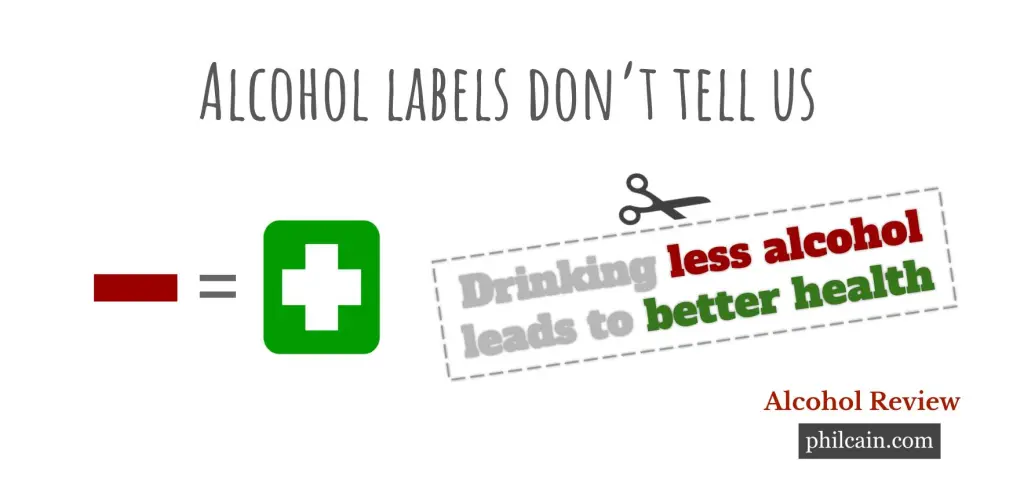
Finns told less alcohol, better health: New guidelines say drinking alcohol is not recommended for anyone for health and that any amount should be “as small as possible”. For children, young people, and pregnant and lactating women alcohol is “not recommended at all”. Seperately, South Korea’s health ministry said it was thinking of adding a label to say something similar. 

UK post-covid “catastrophe” highlighted: An alliance of 60 UK NGOs called for minimum alcohol pricing in England to help address a “catastrophic” 42% rise in alcohol deaths since the covid pandemic. The Labour government has so far done nothing to stem the tide of alcohol deaths, keeping alcohol taxes unchanged in real terms despite being elected on a manifesto saying it would focus on preventing health problems. Its Conservative predecessor actively stoked the surge in alcohol deaths with years of real terms alcohol tax cuts. Separately, figures showed alcohol deaths rose by almost two-thirds in the last decade across Northern Ireland where minimum pricing is on the agenda.

Exceptionalist US alcohol health report: A committee criticised for having financial ties to the alcohol industry and a lack of expertise said in a pre-publication report that moderate alcohol drinkers have a 16% lower all-cause mortality risk than non-drinkers. The National Academies of Sciences, Engineering, and Medicine committee’s pronouncement contradicts global authorities on the subject of alcohol, like the WHO, which says alcohol harms health even at low doses because it is carcinogenic. The report is expected to inform decision on updated dietary guidance.

Australia delivery restriction proposals hailed: Alcohol harm reduction campaigners welcomed proposed alcohol laws in South Australian which prioritise the health and wellbeing of women and children. Among the moves would be restricting alcohol delivery times, with late night alcohol deliveries thought to worsen domestic violence. Separately alcohol harm NGO FARE Australia announced the departure of its CEO of five years Caterina Giorgi, who will continue until the end of February.

Saudi World Cup stadium drinking ban: Football fans will be banned from drinking alcohol in stadiums at the 2034 World Cup in Saudi Arabia, the Guardian reported. It has not been announced whether co-branded alcohol-free beer will be allowed as it was at the Qatar tournament after a stadium alcohol ban was seemingly decided last minute. This gave the brand enormous global live TV and editorial exposure to audiences, includng many children and young people.

Nigeria sachet ban enforcement begins: The National Agency for Food and Drug Administration and Control seized alcoholic beverages packaged in sachets and small plastic bottles the southern Delta State this month. The agency said it expected to make more raids. Reports of the outlawed products still being openly sold in Lagos suggest an uphill battle.

Message of the month:

Alcohol, less is more: Reducing alcohol intake reduces the risks it poses to our health from the smallest amount. Fewer people know this than should. ■

Opinion: Alcohol-free beer hype is unhelpful

November 19, 2024

Heavy marketing has created a buzz around alcohol-free beer diverting vital public attention from surging rates of alcohol harm. The stakes are too high to let commercial hype eclipse evidence-based action.

Alcohol deaths were up 33% on pre-pandemic levels in 2022 in the UK, for example. This astonished a BBC Radio 4 news anchor in May, so it is fair to assume the general public is probably less aware still of this dire situation. The US post-pandemic alcohol death surge is similar, at 31%, yet media coverage is sparse and the political response faltering. The WHO warned in summer “there has been little or no progress” in reducing alcohol consumption and harms in Europe.

As the death toll mounts the public is reminded, almost daily, of the success of alcohol-free beer. An alcohol-free beer garden at Munich’s Oktoberfest, for example, gained worldwide coverage, as if it were a sign humanity was turning the page on alcohol. And everything from the Olympics to Formula 1 promotes alcohol brands in alcohol-free clothing.  The unspoken implication is that this is a sign of spontaneous progress.

The rise of alcohol free beer story satisfies our fascination for novelties and craving for miraculous solutions. What’s not to like about a story about, say, a tiny island of non-drinkers in a giant sea of drinking at a Munich beer festival. Is this not a sure sign a quiet moderation revolution is afoot? “The problem is taking care of itself,” we can be tempted to think, “One less thing to worry about.”

But, then again, this positive impression is highly questionable. There is also the very real possibility that the alcohol-free Oktoberfest beer garden is a gimmick to pre-empt criticism and generate positive coverage. In this, it was a triumph, regardless of its popularity. And, more broadly, there is no firm evidence that alcohol-free beer makes any meaningful difference to alcohol consumption or alcohol harm.  We can be thankful some research is due in the next six months or so to quantify the effect, if there is any.

Nevertheless the media’s tireless trumpeting of alcohol-free beer, often from alcohol industry organisations. It is now “common sense” for non-specialists to see alcohol free beer as part of the solution to alcohol harm. In many cases we are falling for Potemkin villages constructed to show the market has the alcohol problem in hand. This is artful public relations triumphing over rational scientific and journalistic enquiry.

Alcohol-free beer has grown to quench a sizable share of the collective thirst in Europe. In France, Germany and Hungary alcohol-free beer is about 8% of the volume of beer in general. This is clearly progress, right? Well, again, maybe, maybe not. We do not know if alcohol-free beer replaces regular beer or if it is in reality chipping into soft drink sales. We might reasonably ask ourselves if alcohol producers would spend vast sums that cannibalise the sales of their core product? 

On an individual level there are more questions. The taste, look and smell of alcohol free beer can prompt some people to crave an alcoholic drink. And alcohol-free beer ads expose audiences including children and people trying to avoid alcohol drinking triggers. Alcohol free spinoffs duck advertising rules which would prohibit advertising the main alcoholic brand. And the imagery of alcohol free beer drinking means sparkling stock photos of attractive people in alcohol drinking situations are still fine.

Alcohol free beer also keeps drinking at the centre of the story. But people who try to avoid alcohol often find alternative activities far easier than attending alcohol drinking occasions sober. Why do we not see more coverage of the benefits of activities which have nothing to do with imbibing liquids, alcoholic or otherwise?  

Meanwhile alcohol interests enter alcohol free spaces, like schools, with self-serving “education” initiatives. And when there is an initiative like Men’s Sheds, mostly for middle-aged and older men to do some DIY, alcohol interests rocks up with some “education”. Tragically it is exactly this demographic who die most often from alcohol related causes.

Alcohol free beer is not all bad, of course. A lot of people like the taste of alcohol-free beer and it is not loaded with calories. And it can help us feel at ease avoiding alcohol at alcohol-dominated social occasions. Holding something that looks like a beer can flag we are ready to be sociable and placebo effects can be helpful to us. And there are some dedicated alcohol-free-only brands that might reduce triggering.

There is nothing inherently wrong with a new category of non-alcoholic drinks. But no alcohol-free beverage is automatically a remedy for large scale alcohol health problems. Our working assumption should be that the effect is minimal until proven otherwise. And the focus of media and policymakers should be on policies which are known to work, like those on price, availability and marketing.

We might also usefully look at promoting activities which do not revolve around drinking liquids of any type, like making things in sheds, for example. We can usefully facilitate these activities and protect them from alcohol marketing. This involves finding new ways to fund alcohol free spaces beyond selling drinks. Alcohol free drinks bars have struggled to survive, but alcohol free spaces offering games and other activities appear to have done rather better.

Hoping alcohol-free beer is reducing alcohol problems without evidence risks costing more lives. The stakes are too high to let uncertainty delay the implementation of evidence-based action to reduce record levels of harm. ■

Alcohol Review – Issue 108, November 15th 2024

November 15, 2024

Read on Substack

In this issue: EU alcohol labelling in limbo; US post-pandemic drinking stays high; Northern Ireland readies minimum pricing; Trump 2 brings uncertainty; Industry playbook outlined; Canada may pay availability price. Opinion: Alcohol-free beer hype is unhelpful.

Is this service helpful? Please join Alcohol Review‘s supporters and leave a testimonial

News:
EU alcohol labelling in limbo: MEPs are at loggerheads over proposed EU commissioners, not least the would-be health and animal welfare commissioner Oliver Varhelyi. He gave little reassurance the EU’s stalled alcohol nutrition and health labelling plans would move forward under him. A possible resolution may be to strip him of responsibility for reproductive rights and health preparedness, but that may still leave labelling in limbo.

US post-pandemic drinking up: Elevated levels of US alcohol consumption during the covid pandemic continued into 2022, found a new study. This would be consistent with US alcohol deaths that year being almost a third higher than before the pandemic. Little has been done, but Chicago Mayor Brandon Johnson is now proposing a tax hike of over 30%.

Northern Ireland readies minimum pricing: Stormont’s health minister said he is looking for executive approval for introducing minimum unit pricing for alcohol in Northern Ireland like that in Scotland.

Trump 2 brings uncertainty: The consequences of the second Trump administration for alcohol harm are unclear. Donald Trump is expected to give a prominent role in steering US health to prominent health conspiracy theorist RFK Jr. The industry, meanwhile, is fearful of tariff escalation. One analyst saw Brown-Forman, Constellation Brands and Diageo as possible casualties of a round of tariff raising.

Industry playbook outlined: The WHO launched an “Alcohol Policy Playbook” offering research contradicting commercial narratives and showing “no level of alcohol consumption is safe”.

Canada may pay availability price: Ontario’s widening of alcohol availability could result in a 40% rise in alcohol-attributable hospitalisations and 700 emergency room visits a day, a health coalition warned.

South African policy review: South Africa’s treasury has published a policy review paper on alcoholic beverage tax, including the possibility of introducing a minimum pricing and reforming taxes.

Opinion: [supporter preview]
Alcohol-free beer hype is unhelpful
Heavy marketing has created a buzz around alcohol-free beer diverting vital public attention from surging rates of alcohol harm. The stakes are too high to let commercial hype eclipse evidence-based action.

“What a great piece… the best, clearest thing I have read to date on the topic.”

Is this service helpful? Please join Alcohol Review‘s supporters and leave a testimonial

Alcohol messages

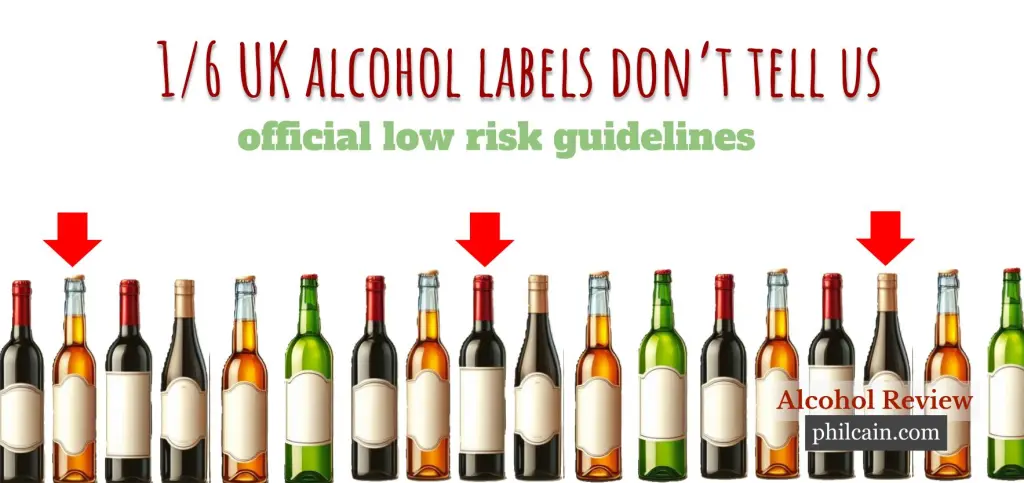
Chronic labelling failure: Around one-in-six alcohol labels in the UK fail to give the official 140ml per week low risk drinking guidelines eight years after their introduction, according to the alcohol industry’s own figures.

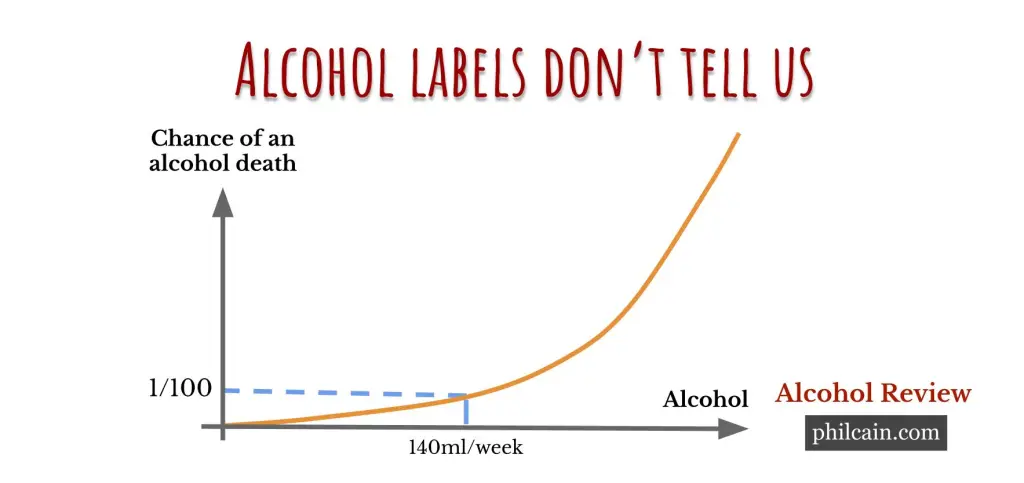
Alcohol risk made simple: The chance that alcohol causes our death increases rapidly with the amount consumed. Drinking under 140ml a week is estimated to keep the chances of an alcohol death below 1/100. The only way to make the risk zero risk is to not drink any.


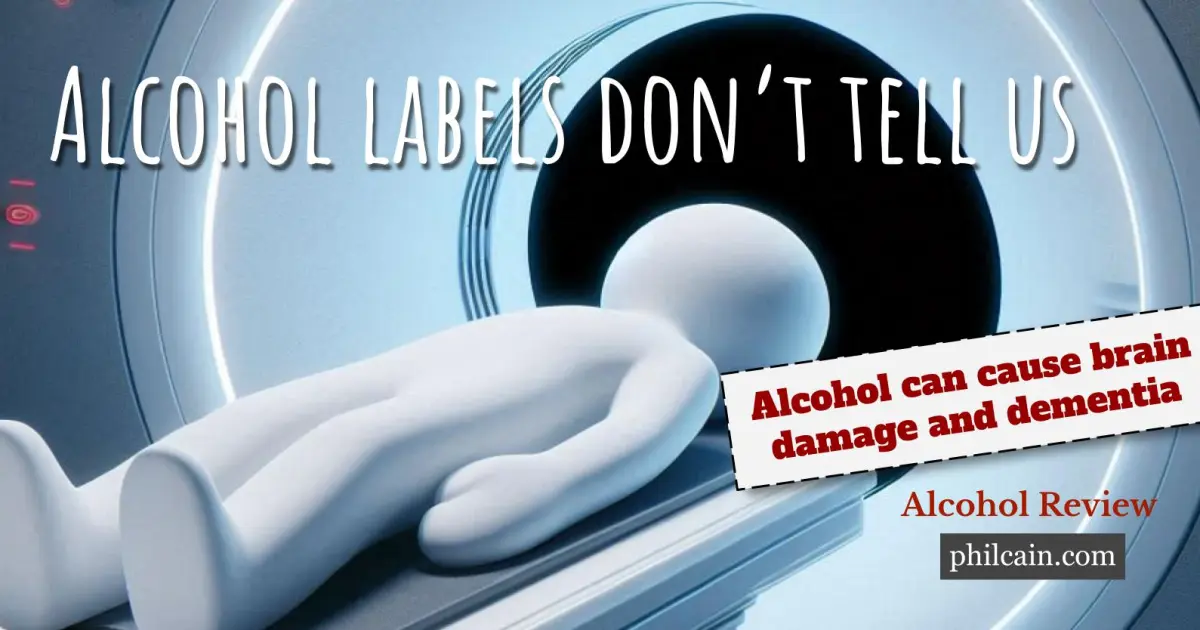
Alcohol can cause brain damage and dementia: Drinking more than a small amount of alcohol increases the risk of developing dementia in later life and can cause early-onset dementia and brain damage.

Full list of shareable alcohol messages…

Is this service helpful? Please join Alcohol Review‘s supporters and leave a testimonial
■

Would-be commissioner noncommittal on alcohol labelling

November 7, 2024

Also on Substack

Hungarian health Commissioner-designate Oliver Varhelyi faces further questions having last night offered MEPs no clear reassurance he would deliver long-overdue alcohol health labelling proposals.

“We have just introduced a couple of labelling conditions for wine: ingredients, alergen content, but also the energy content. Let’s see how they sink in on the use,” he said when Alessandra Moretti of Italy’s centre-left Democratic Party asked if he would commit to producing proposals on alcohol labelling.

“I believe that we need to reflect on how to change the narrative on risk factors, including alcohol, and the economic determinants of health. Social attitudes can be a key driver for change,” he earlier wrote in a written answer to the same question.

He will be asked another set of written questions by MEPs who were unhappy with his answers, including those on protecting abortion rights, lack of clear plan for health and ties to his country’s authoritarian leader Viktor Orban. He won applause for defending the effectiveness of vaccines.

The Commission was meant to produce a proposal on nutrition and ingredients labels by the end of 2022 and warning labels by the end of 2023, according to the Beating Cancer Plan. Delivering this plan is part of the mission set out by Commission President Ursula von der Leyen in September.

Varhelyi is the first of the proposed commissioners to face such a redo. He will have to deliver his written answers by Monday. ■

Guest post: Why Northern Territory alcohol reforms would be a disaster, according nine experts

October 18, 2024

by Cassandra Wright, Menzies School of Health Research; Beau Jayde Cubillo, Menzies School of Health Research; John Holmes, University of Sheffield; Mark Mayo, Menzies School of Health Research; Mark Robinson, The University of Queensland; Michael Livingston, Curtin University; Nicholas Taylor, Curtin University; Sarah Clifford, Menzies School of Health Research, and Tim Stockwell, University of Victoria*

The new Northern Territory government is planning a swathe of changes to alcohol policy.

If implemented, these changes fly in the face of what evidence shows works to reduce alcohol-related harms. Some are also out of step with the rest of Australia.

Among our concerns are plans that would lead to harmful alcohol products becoming cheaper, alcohol becoming more easily available, criminalising public drunkenness, and a particularly worrying type of mandatory alcohol treatment – all of which evidence suggests will cause more harms.

No one is downplaying the magnitude and complexities of alcohol-related issues in the NT. But we hope the territory government will pay more heed to the evidence and voices of those most impacted.

Alcohol-related harm in the NT is complex
Alcohol-related harms in the NT are significantly higher (for both Aboriginal and non-Aboriginal people) than elsewhere in Australia.

In the territory, these harms contribute to health and social outcomes costing at least A$1.4bn [US$1bn]  a year. Alcohol harms result in costs related to health care, deaths, crime, policing and child protection.

Aboriginal communities in the NT have for decades cried out for solutions and services that effectively respond to alcohol-related harm. Instead, they found their lives made part of a political football match on law and order. Policies have been reactive and mostly ineffective. They’ve been overturned at each election.

Now, the new NT government is discussing changes that promise to exacerbate the very issues it aims to address.

1. Cheap alcohol that contributes most harm would be on the market
The World Health Organisation recognises that raising the price of alcohol is one of the most effective ways for governments to reduce alcohol-related harm.

So some governments around the world, including in the NT, have set a price below which alcohol cannot be sold, known as the minimum or “floor price”. This targets cheap, high-strength alcohol associated with patterns of drinking that cause the most harm.

The new NT government plans to repeal this, despite evidence showing this works to reduce harms.

Since the NT alcohol floor price was set at A$1.30 per standard drink in 2018, there has been a:

  • 14% reduction in alcohol-related assaults in Darwin and Palmerston

  • 11% reduction in domestic and family violence assaults

  • 21% reduction in domestic and family violence assaults involving alcohol

  • 19% reduction in alcohol-related emergency department attendances.

Originally, experts recommended a A$1.50 floor price but this was reduced to A$1.30 after a backlash from alcohol industry lobbyists. Had the policy not been watered down, evidence suggests the impacts above would likely have been greater.

The floor price has likely also lost some of its initial impact as it has never been indexed for inflation.

The best available research shows the floor price has reduced alcohol-related harms with no evidence of unintended consequences or negative impacts on the alcohol industry, despite claims otherwise.

Researchers and experts from around the world have been writing to NT ministers urging them to reconsider repealing this effective policy.

This includes researchers from the United Kingdom and Canada, who have coauthored this article. In these countries, evidence on the effectiveness of minimum pricing has been used to increase the floor price by 30%, not abolish it.

2. Bottle shops could be open longer
There are also proposals to repeal current restrictions on bottle shop trading hours. Such restrictions are highly effective in reducing alcohol harms, including violence.

Our paper from earlier this year found that in the town of Tennant Creek, restrictions to reduce trading hours and introduce purchase limits at bottle shops resulted in a 92% reduction in alcohol-involved domestic and family violence assaults.

Preliminary analyses of the reduced trading hours introduced in Alice Springs following Prime Minister Anthony Albanese’s visit in early 2023 also suggest a clear reduction on violence rates.

Car approaching drive-through bottle shop
Bottle shops would be open for longer, making alcohol more easily available. AustralianCamera/Shutterstock

3. New public drunkenness offence
Ministers were also set to pass laws to create a new offence for “nuisance” public intoxication (also known as public drunkenness). This would allow police officers to arrest people and fine them up to A$925, in addition to current powers to seize and tip out alcohol from people drinking in prohibited areas.

This is at the time when nearly every other jurisdiction in Australia is in the process of decriminalising public drunkenness, making the NT out of step with the rest of the nation.

The NT’s proposed new laws on public drunkenness would criminalise more people who are already locked out from our society, placing them at risk of the negative, intergenerational and preventable impacts that often arise from contact with the justice system.

4. Mandatory rehab
Mandatory alcohol treatment was also an election commitment.

In its previous term of government, mandatory alcohol treatment was focused on people with a public intoxication offence rather than providing quality care to people with alcohol dependence in life-saving circumstances. If the same model is reintroduced, this is potentially harmful and at best ineffective.

In the NT, this model of mandatory alcohol treatment had no better outcomes than for those who may not have received any treatment at all. But it cost the taxpayer three times as much.

Where to from here?
Researchers, health professionals and partner organisations have urged the NT government to reconsider these decisions, as we have well-founded concerns these may worsen the very issues the government aims to address.

There’s no need to guess the outcomes of changing, repealing or introducing alcohol policies. We can draw on robust evidence, including extensive research from the NT, on what works in our communities.The Conversation

*This piece is republished from The Conversation under a Creative Commons license. Read the original piece. ■

[Read more…] about Guest post: Why Northern Territory alcohol reforms would be a disaster, according nine experts

  • « Go to Previous Page
  • Page 1
  • Interim pages omitted …
  • Page 9
  • Page 10
  • Page 11
  • Page 12
  • Page 13
  • Interim pages omitted …
  • Page 50
  • Go to Next Page »

Copyright © 2026 · Phil Cain Impressum