• Skip to main content
  • Skip to primary sidebar

Alcohol Review

Alcohol understanding for all

  • Highlights
    • Messages
    • Newsletters
    • AR Live
  • Events
    • AR2026
    • AR2025
    • Next year’s event
    • Earlier events
  • Join
  • About
    • Organisers
    • Contact
  • Log In

philcain

Alcohol Review – Issue 121, February 26th 2026

February 26, 2026

Join the full newsletter, present and discuss live at AR2026

In this issue: Effective policy absent from cancer plan; Industry data shows no-los dwarfed; Ghana bans alcohol-stimulant mixers; South African taxes frozen; LGB+ at higher harm risk; Influencers influence, and more
AR2026: Share your work and join the live discussion
Register now to take advantage of a uniquely sustainable, accessible and efficient global engagement platform live. Take part in an exciting online discussion on alcohol harm and artificial intelligence on March 26th; and disseminate your work to a highly-engaged global audience. Please, check out last year’s event and secure your place.

News

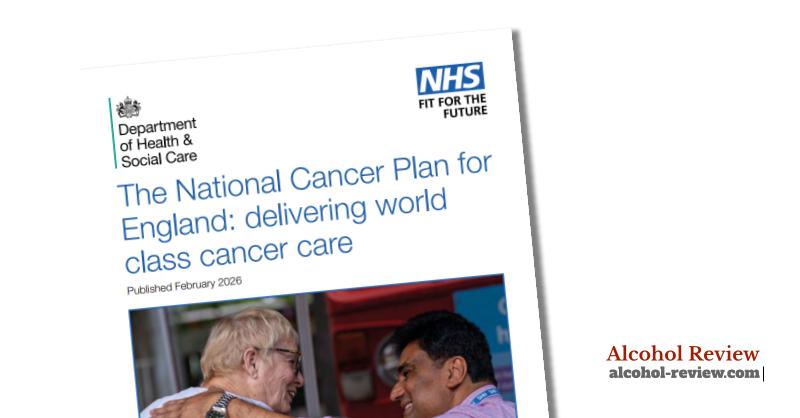
Cancer plan critique: Experts welcomed a re-commitment to alcohol health warning labels in a new cancer plan for England this week, but highlighted the absence of evidence-based policies. Instead the plan looks to the unproven merits of lo-no drinks. [Comment/share]
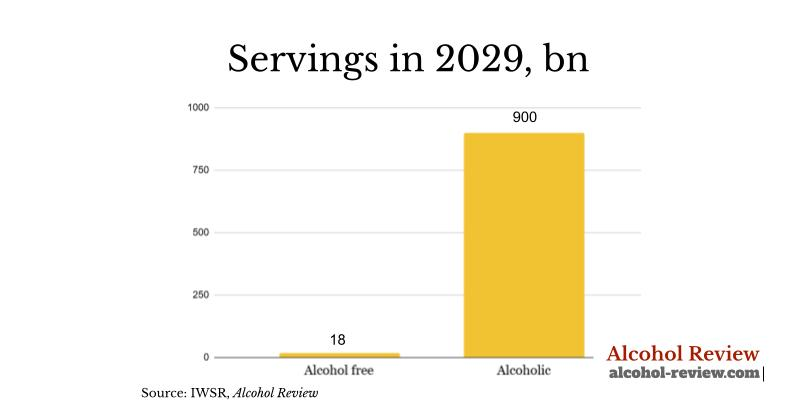
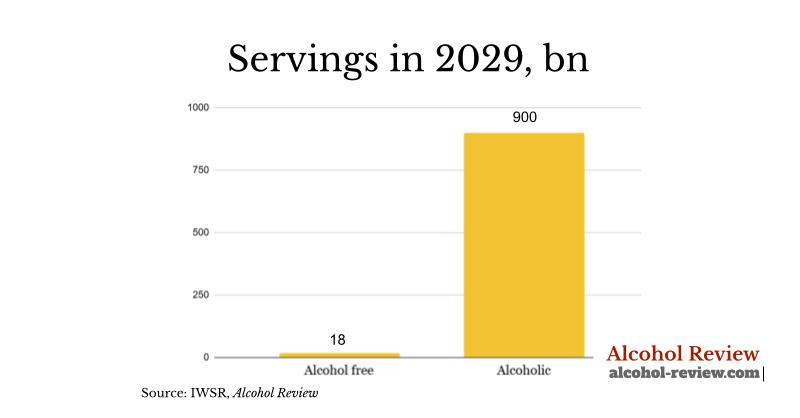
No-los dwarfed: A new alcohol industry forecast shows there is little chance of alcohol-free drinks reducing global alcohol consumption, which is an order of magnitude bigger with little evidence of erosion from alcohol-frees (see chart). [Comment/share]

Stimulant mixer ban: Ghana’s Food and Drugs Authority this week ordered the immediate removal of drinks containing a mix of alcohol and stimulants, like caffeine, ginseng and guarana from the Ghanaian market, citing growing public health concerns. [Comment/share]

Sachet clarification: Nigeria’s federal health ministry told the High Court that the National Agency for Food and Drug Administration and Control is fully empowered by law to enforce the ban on the production and sale of alcohol sachets. The statement follows a month of confusion and protest over the introduction of the long delayed ban. [Comment/share]

South African tax: South Africa’s Budget this week proposed increasing the tax in line with alcohol, meaning it is the same in real terms. The alcohol industry was relieved having feared there might be a genuine increase. [Comment/share] 

LGB+ risk: The risk of death directly attributable to alcohol among people identifying as lesbian, gay or bisexual was 1.8 times higher than among straight or heterosexual people, according to UK government statistics. [Comment/share]

Influencers influence: Exposure to alcohol-promoting social media content was associated with a desire to drink among young people, leading researchers to conclude “influencers may contribute to normalisation of alcohol consumption among young people”. [Comment/share] Another study found alcohol ads shape young people’s attitudes. [Comment/share]

Brands extended: Teenagers are unable to distinguish between non-alcoholic products and traditional alcoholic beverages when these are promoted through sports sponsorship, found a new study. [Comment/share]

Youth protection call: “Alcohol marketing ending up on under-18s’ screens via influencers and social media sponsorship is notably absent from the agenda,” said the Scottish Health Action on Alcohol Problems in response to the UK government’s plans to protect children online. [Comment/share]

Lobbying revealed: A new trove of documents revealed late last month showed how the alcohol industry aggressively campaigned for the UK government to drop alcohol marketing restrictions from its flagship health plan last year, as it did. [Comment/share]
Join the full newsletter, present and discuss live at AR2026 ■
England’s cancer plan short on evidence-based policies

February 6, 2026

Experts welcomed a re-commitment to alcohol health warning labels in a new cancer plan for England this week, but highlighted the absence of evidence-based policies. Instead the plan looks to the unproven merits of lo-no drinks.

The government said it would “tackle harmful alcohol consumption by introducing new mandatory health warnings and nutritional information on alcohol labels” in a cancer plan for England on Wednesday.

“The government’s re-commitment to cancer warnings on alcohol labels is the first step needed address this. But labelling alone will not go far enough,” said Professor Sir Ian Gilmore, Chair of the Alcohol Health Alliance UK.

The alliance said the government should also look to introduce evidence-based measures to reduce alcohol consumption which increase the price of alcohol and reduce its availability and marketing.

The plan does not mention these policies, instead saying the government will “explore options to encourage consumers to reduce their alcohol intake with no- and low- alcohol alternative”.

A group of influential experts said last month that there is currently no firm evidence that alcohol-free drinks reduce alcohol consumption. ■

Alcohol plans weakened after intense industry lobbying

January 29, 2026

A new trove of documents obtained under the UK’s freedom of information act show how the alcohol industry aggressively campaigned for the government to drop alcohol marketing restrictions from its flagship health plan last year, as it did.

The government’s NHS ten year plan caused consternation among health experts when it did not mention alcohol marketing restrictions that had been widely trailed in the runup to its launch. Such restrictions are among the WHO’s top recommendations for reducing alcohol harm.

The documents show alcohol companies and alcohol trade groups wrote to the health secretary, chancellor and business secretary pleading for them to help water down the government’s health plan, according to a new report from the Institute of Alcohol Studies (IAS).

The NGO, which works to improve UK alcohol policy, said it obtained a total of 47 documents showing alcohol companies and alcohol industry funded organisations using “strikingly similar arguments, shared language, and coordinated timing” to push for a weakened health agenda.  Their contents are misleading, according to the IAS.

“This is a textbook example of why the alcohol industry should have no role in shaping health policy. Their business model depends on increasing consumption, while public health depends on reducing it,” said Alice Wiseman, vice president at the Association of Directors of Public Health. ■

Alcohol market forecast to continue to dwarf alcohol-free alternatives

January 23, 2026

A new alcohol industry forecast shows there is little chance of alcohol-free drinks reducing global alcohol consumption, which is an order of magnitude bigger with little evidence of erosion from alcohol-frees.

Alcohol industry analyst IWSR said yesterday the global volume of “no-alcohol analogues”—alcohol-free beer, wine and spirits—would grow 36% by volume between 2024 and 2029, reaching over “18bn servings” globally.

This would bring alcohol-frees up to just 2% of the 900bn servings a year of alcoholic versions.* There is also currently no reliable evidence to suggest that alcohol-free drinks replace alcoholic drinks rather than soft drinks.

Last month a group of experts warned that public health “should not take market-led solutions to public health problems at face value” in regard to alcohol-free analogues.

AR has also been recommending scepticism about the potential of alcohol-free drinks as a solution to alcohol harm for a while. They divert valuable attention from measures shown to reduce harm.

*Note: The world consumes around 450bn litres of alcoholic drinks a year, mostly beer, which would translate into upwards of 900bn servings, if every serving were a half-litre. ■

Alcohol Review – Issue 120, January 16th 2026

January 16, 2026

Read original

Join newsletter and events directly or on Substack

In this issue: Scant affordability progress; US deaths surge on; Guidelines skip specifics; No-lo scrutiny call; Alcohol-free access; UK impact honours; Alcohol-free health minister. Opinion: Put alternative activities above alternative drinks

Join AR2026: Register now to participate in a unique event to underpin global efforts to reduce alcohol harm. Live online sessions on March 26th will look at Alcohol and artificial intelligence, while impactful video sessions spotlight all kinds of cutting-edge research, advocacy, ideas and innovations. Check out last year’s event, preview this year’s, and secure your place to discuss and present.

News

Scant affordability progress: Alcohol products were as affordable or became more affordable in most countries over the last few years, when evidence shows that reducing affordability is a crucial step to curbing alcohol harm, found a WHO report released yesterday. Share and discuss

US deaths surge on: US deaths directly attributable to alcohol are likely to have been at least 11% above the pre-pandemic level last year, extrapolating provisional figures from the CDC. Provisional totals tend to increase over time. Share and discuss

Specifics skipped: The Trump administration last week advised Americans to “consume less alcohol for better overall health” while dropping specific low-risk amounts from its guidance after 35 years. Alcohol harm experts had recommended the low-risk amount should be halved for men. Share and discuss

No-lo scrutiny call: “We should not take market-led solutions to public health problems at face value,” wrote a group of prominent alcohol harm researchers this week. And we should discount no-los as a solution until there’s evidence, argues AR. Share and discuss

Alcohol-free access: Separately the UK government said it will “explore measures to regulate access to no- and low-alcohol products in line with other alcoholic beverages”. This may include prohibiting sales to under-18s. Share and discuss

UK impact honours:The UK’s New Year’s Honours list today recognised six people working to reduce the impact of alcohol harm, a former frontbench Labour MP, a family judge and four public health directors. Share and discuss

Alcohol free health minister: Luxembourg’s health minister defended the government’s endorsement of the Dry January, having given up alcohol on taking the job. Share and discuss


Feature

Cutting down? Put alternative activities above alternative drinks

Alcohol-free drinks will not fill the gap left by omitting alcohol, so we should look to alternative activities instead. Share and discuss

Join newsletter and events directly or on Substack ■

Experts call for more no-lo scrutiny + AR comment

January 16, 2026

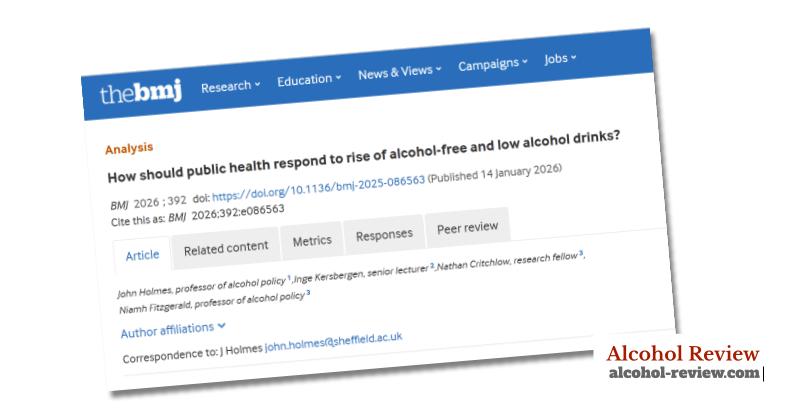
“As with e-cigarettes and reformulated foods, we should not take market-led solutions to public health problems at face value,” wrote a group of prominent alcohol harm researchers about no-lo drinks in the BMJ this week.

There is currently no clear evidence for no-lo drinks taking the place of alcohol products to any significant degree, the piece says. Where there is some the effects “may be too small to deliver substantial health gains”. No-lo sales may be rising, but they may be supplanting soft drinks not alcoholic ones.

“No-lo drinks present risks to wider public health policy,” the piece warns. Giving alcohol interests undue credit for contributing to a reduction in alcohol harm with no-los might allow them to pose as “contributors to reducing alcohol related harm”. In turn this would give alcohol interests undue influence over policy-making, it warns.

Noting alcohol-free Corona Cero’s recent Olympic sponsorship deal, the piece says, “Ensuring alcohol marketing codes apply the same rules to no-lo drinks would prevent this encroachment of alcohol brands into previously alcohol-free forums.”

——–
AR comment: We should not credit no-los with the status of a solution to our alcohol problems before there is any solid evidence. Alcohol-free drinks been around for a while and a miracle has yet to occur. And yet the breathless coverage leaves a different impression.

Further research is, of course, always welcome, but common sense is a useful guide in the meantime. Alcohol companies would surely not promote a product which would seriously undermine their core business, that of selling an addictive product.

To give the benefit of the doubt on this not only gives alcohol interests a foot in the door to health policy discussions, it allows them to crowd out discussion of harm reduction policies that have solid evidence to back them up. There is good reason to resist the hype.

On the individual level it is surely wrong to emphasis the benefit of replacing one type of drink with another. Promoting no-los encourages us to participate in the trickiest scenarios to navigate minus alcohol.

Instead, why not encourage a wider focus on recreational activities which are not centred on beverages of any kind? ■

  • « Go to Previous Page
  • Page 1
  • Interim pages omitted …
  • Page 7
  • Page 8
  • Page 9
  • Page 10
  • Page 11
  • Interim pages omitted …
  • Page 57
  • Go to Next Page »

Primary Sidebar

  • Bluesky
  • Instagram
  • LinkedIn
  • Twitter
  • WhatsApp

Copyright © 2026 · Phil Cain Impressum

Manage Consent
To provide the best experiences, we use technologies like cookies to store and/or access device information. Consenting to these technologies will allow us to process data such as browsing behaviour or unique IDs on this site. Not consenting or withdrawing consent, may adversely affect certain features and functions.
Functional Always active
The technical storage or access is strictly necessary for the legitimate purpose of enabling the use of a specific service explicitly requested by the subscriber or user, or for the sole purpose of carrying out the transmission of a communication over an electronic communications network.
Preferences
The technical storage or access is necessary for the legitimate purpose of storing preferences that are not requested by the subscriber or user.
Statistics
The technical storage or access that is used exclusively for statistical purposes. The technical storage or access that is used exclusively for anonymous statistical purposes. Without a subpoena, voluntary compliance on the part of your Internet Service Provider, or additional records from a third party, information stored or retrieved for this purpose alone cannot usually be used to identify you.
Marketing
The technical storage or access is required to create user profiles to send advertising, or to track the user on a website or across several websites for similar marketing purposes.
  • Manage options
  • Manage services
  • Manage {vendor_count} vendors
  • Read more about these purposes
View preferences
  • {title}
  • {title}
  • {title}
Loading Comments...