• Skip to main content
  • Skip to primary sidebar

Alcohol Review

Alcohol understanding for all

  • Highlights
    • Messages
    • Newsletters
    • AR Live
  • Events
    • AR2026
    • AR2025
    • Next year’s event
    • Earlier events
  • Join
  • About
    • Organisers
    • Contact
  • Log In

philcain

Alcohol Review – Issue 116, September 18th 2025

September 18, 2025

Please subscribe for more

In this issue: Medics sound EU labelling alarm; Regulator distributes banned ads; Advertising works; US deaths doubled; US drinking at all-time low; UK pledges millions. And using some public health ideas help avoid internet overload.

AR2026: Date set for March 26th. Register now for full event participation and a year of premium newsletter access. You will also gain full access to AR2025, which gives expert insight on how to push back against the alcohol industry at both the local and international levels.

News

Medics sound alarm: Two recent EU labelling proposals risk decades of progress in reducing alcohol-related harm, warned the recently formed European Health Alliance on Alcohol. Belgium’s government also raised concerns earlier this month. Alcohol Review said the QR code proposal is a sham.

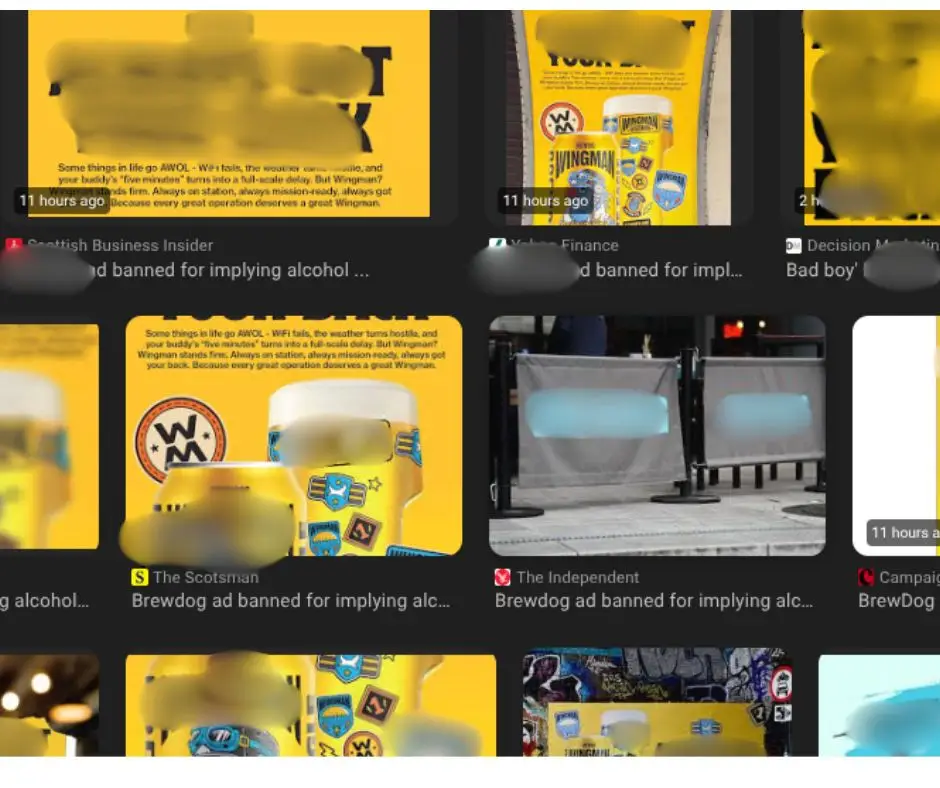
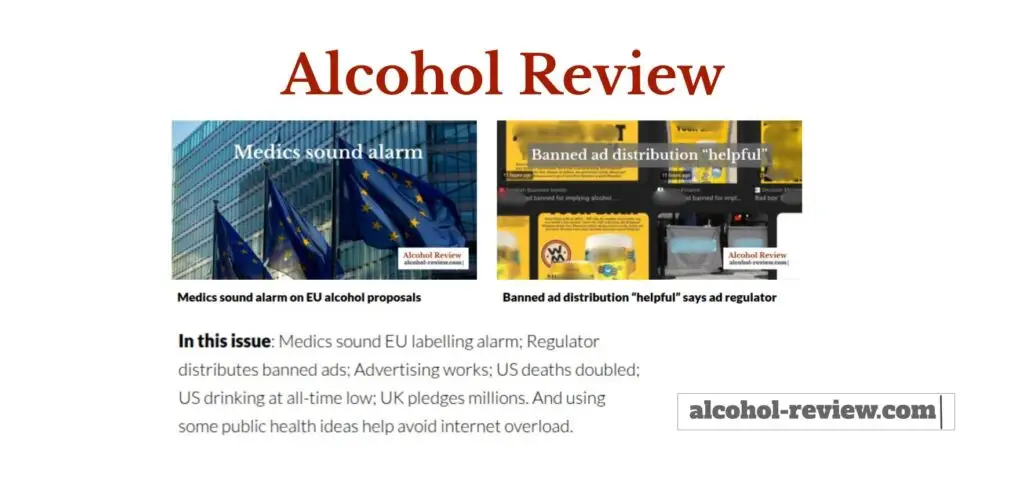
Regulator defends distributing banned ads: The UK’s advertising self-regulator is in favour of the distribution of alcohol ads it banned, Alcohol Review was told last month, after millions were exposed to a banned ad this week. The self-regulator then distributed more banned ads this month.

Advertising works: “Most evidence suggests that exposure [to alcohol marketing and advertising] is associated with increased intention to consume, consumption, and harmful consumption,” found a review from Public Health Scotland. A Polish NGO called for a complete ban on advertising it last month.

US deaths almost doubled since 1999: Alcohol-induced deaths in the US increased by 89% from 1999 to 2024, with the largest relative rise among females aged 25–34 which almost tripled.

US alcohol drinking at all-time low: Steep falls in alcohol drinking among women, Republicans and people at both the top and bottom ends of the economic spectrum reduced the percentage of alcohol drinkers in the US to its lowest point in 90 years, according to a Gallup poll.

UK pledges millions for research: The UK government said it will spend £10m ($14m) on addiction researchers through schemes from the Society for the Study of Addiction, National Institute for Health and Care Research and the Medical Research Council.

Feature

Using public health ideas to avoid internet overload
Alcohol Review’s editor applied some public health policies borrowed from alcohol to avoid internet overuse, with some success.

Please subscribe for more ■
Medics sound alarm on EU alcohol proposals

September 15, 2025

Two recent EU labelling proposals risk decades of progress in reducing alcohol-related harm, warned the European Health Alliance on Alcohol, formed in May to give a voice to 1.7m health professionals.

In June the Council of the European Union proposed allowing the term “low-alcohol” to be used for wines of up to 6% alcohol and allowing digital-only labelling for displaying health information and ingredients. 

Together the proposals “represent a dangerous precedent that blurs the line between public health and commercial interests. They risk undermining clinical guidance, weakening consumer protections, and increasing public confusion,” the alliance said. The Belgian government said it opposed the “low-alcohol” label last week.

Allowing “low-alcohol” labels would mislead consumers and create a false sense of safety, undermining cancer prevention efforts, the EHAA said. And allowing QR code digital labels would mean health information would reach precious few people.

The alliance said the solution is to label products which are 6% alcohol or below as “reduced alcohol” and to insist that on-package health and ingredients labelling should be mandatory. Fewer than one-in-a-thousand people scanned QR codes in pilots.

“There are few areas in public health where the evidence is as clear as it is with alcohol: the harms are well documented, the burden is enormous, the financial cost is unsustainable, and solutions exist. Prevention is not only possible—it is essential,” said Monica Tiberi of the European Society of Cardiology. ■

Banned ad distribution “helpful” says ad regulator

August 7, 2025

The UK’s advertising self-regulator is in favour of the distribution of alcohol ads it banned, Alcohol Review was told, after millions were exposed to a banned ad this week. 

“We think an ad being used in media reports for illustrative purposes is helpful and in the public interest in providing context for the reader or viewer to find out more about our decision,” the ASA said.

A story on a banned ad from Brewdog first appeared on the PA newswire and was picked up by the BBC, Daily Mail, Scottish TV, various regional newspapers, as well as the marketing, advertising and food trade press. Together their potential reach was in the millions.

“It is not our role to advise media on how they report on our decisions,” the ASA said when asked if its decisions should be reported in a way which does not provide free exposure to an ad it had ruled against. It says viewers and readers “sought out” such ad exposure.

The ASA said that being reported to have broken the advertising rules deters companies from doing it again. Brewdog has yet to get the message. It had six ASA rulings go against it in the last five years. Rival giants like AB Inbev, Carlberg, Diageo and Heineken had one or none at all.

Critics say reporting on banned ads is a big win for Brewdog, with the brand partly defined by its penchant for rule-breaking and ad illustrations used in the reporting provide it with advertising impacts indistinguishable from those of a paid ad.

Meanwhile editors and algorithms choose which stories an audience sees, not the audience members themselves. ■

UPDATED: Ireland delays alcohol health labels

July 25, 2025

The Irish government delayed alcohol health labelling from May next year unit until 2028 at a cabinet meeting on Monday, disappointing health advocates.

Some in the government have been convinced the labels may undermine ongoing EU-US trade negotiations if they were seen as a barrier to trade. Health advocates dispute this assessment. Health ministerJennifer Carroll MacNeill said she was “not pleased”.

The Irish Medical Organisation went further calling the delay a “serious threat to public health” with “health being ignored in favour of corporate interests”. “The longer this Government delays, the more irreversible damage is done,” said the organisation’s president Dr Anne Dee.

Taoiseach Micheál Martin 2024, source

“To say that this delay is a blow for public health in Ireland is an understatement. It is a failure of leadership and of democracy,” said Sheila Gilheany CEO of the NGO Alcohol Action Ireland. And many alcohol products in Ireland already carry the labels, making any delay “farcical if not so serious”.

“Re-examining the policy at this stage, under pressure from commercial interests, would not only weaken Ireland’s credibility but risk setting a damaging precedent across Europe,” said the newly-formed European Health Alliance on Alcohol in a letter to the Irish government last week.

The weeks leading up to the decision were filled with selective leaks about a likely delay until 2029. Coverage of the decision–which still has not been fomally announced–looks likely to be out-done that of a larger spending announcement and the summer recess.

AR This may offer a salutory tale for the UK where the government earlier this month initiated a bid to introduce alcohol health labels. At the same time it bowed to industry pressure to drop all the most effective alcohol health policies from its plans. The road ahead is not easy. ■

Alcohol Review – Issue 115, July 21nd 2025

July 21, 2025

Please subscribe to get more

In this issue: Starmer fumbles prevention promise; Kenya moves forward; WHO sets tax target. Starmer should showcase change with effective labelling; The beer gardens of Bulawayo. Public health double-think

Alcohol Review 2025: Learn to push back against the alcohol industry at the local and international levels. Full event recordings available with a subscription, as well as extra content and entry to next year’s event.

News

Starmer fumbles prevention promise: The UK government infuriated alcohol harm advocates by omitting the strongest evidence-based policies from its plans amid an ongoing alcohol harm crisis. Campaigners continued their calls for minimum pricing in England, among the ignored measures. Delivering effective mandatory alcohol health labelling–which miraculously survived the alcohol policy cull–would be a good way to come good on cleaning up government, argues Alcohol Review.

Fourth biggest cause: Alcohol-specific disorders and poisonings was the fourth biggest preventable cause of death in the EU in 2022, after lung cancer, heart disease and covid, according to Eurostat figures.

Kenya moves forward: The Kenyan cabinet signed a national alcohol strategy, including plans to raise the legal drinking age from 18 to 21, ban online alcohol sales and ban celebrity alcohol endorsements. It was a “big milestone”, head of the Nairobi-based NGO International Institute for Legislative Affairs Celine Awuor told Alcohol Review. 

WHO sets tax target: The WHO launched the “3 by 35” initiative to persuade countries to use taxes to increase the price of alcohol, tobacco and sugary drinks by 50% by 2035, cutting health harm and raising $1trn in tax revenue.

Features

Opinion: Labour should showcase change with labelling: Sir Keir Starmer’s government could find much-needed focus by committing to policymaking process reform, with the delivery of effective mandatory alcohol health labels being an excellent place to start.

The beer gardens of Bulawayo
Many of the western suburbs of Bulawayo contain an  intriguing industrial-era institution, the beer garden. Development researcher Maurice Hutton explores their century-long history of pursuing the conflicting aims.


Public health double-think

Please subscribe to get more ■

Public health double-think

July 18, 2025

  • « Go to Previous Page
  • Page 1
  • Interim pages omitted …
  • Page 11
  • Page 12
  • Page 13
  • Page 14
  • Page 15
  • Interim pages omitted …
  • Page 57
  • Go to Next Page »

Primary Sidebar

  • Bluesky
  • Instagram
  • LinkedIn
  • Twitter
  • WhatsApp

Copyright © 2026 · Phil Cain Impressum

Manage Consent
To provide the best experiences, we use technologies like cookies to store and/or access device information. Consenting to these technologies will allow us to process data such as browsing behaviour or unique IDs on this site. Not consenting or withdrawing consent, may adversely affect certain features and functions.
Functional Always active
The technical storage or access is strictly necessary for the legitimate purpose of enabling the use of a specific service explicitly requested by the subscriber or user, or for the sole purpose of carrying out the transmission of a communication over an electronic communications network.
Preferences
The technical storage or access is necessary for the legitimate purpose of storing preferences that are not requested by the subscriber or user.
Statistics
The technical storage or access that is used exclusively for statistical purposes. The technical storage or access that is used exclusively for anonymous statistical purposes. Without a subpoena, voluntary compliance on the part of your Internet Service Provider, or additional records from a third party, information stored or retrieved for this purpose alone cannot usually be used to identify you.
Marketing
The technical storage or access is required to create user profiles to send advertising, or to track the user on a website or across several websites for similar marketing purposes.
  • Manage options
  • Manage services
  • Manage {vendor_count} vendors
  • Read more about these purposes
View preferences
  • {title}
  • {title}
  • {title}
Loading Comments...