• Skip to main content

Alcohol Review

Alcohol understanding for all

  • Highlights
  • AR2026
    • AR2025
    • Earlier events
  • Register
  • About
    • Organisers
    • Contact
  • Log In

philcain

Health minister meets alcohol industry over alcohol-free drinks

January 10, 2024

Health minister Jo Churchill chaired a meeting with alcohol industry representatives which began exploring how uptake of low-alcohol drinks might help prevent health problems on Monday.
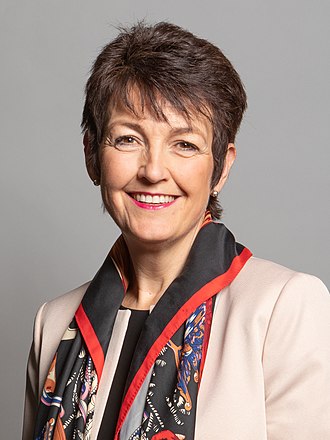
Jo Churchill

“The roundtable was made up of representatives from the alcohol industry, trade bodies, consumer groups and retailers,” said the Department of Health and Social Care (DHSC).

The health department said the meeting “kickstarted discussions” on proposals first outlined in the Prevention Green Paper of summer 2019.

The paper suggested increasing the availability of low-alcohol products by 2025 and reviewing evidence on raising the threshold for officially using the term “alcohol-free” to 0.5% from 0.05%.

Portman Group (PG), which represents large alcohol producers and retailers, said yesterday it “co-hosted” the meeting.

At the sam e time released a poll highlighting role its members could play in weaning their customers off alcohol, noting a quarter of alcohol drinkers are regular consumers of low-alcohol drinks.

“Work will continue on developing proposals including a further meeting with public health organisations,” said the DHSC.

Many in public health complain of a chronic lack of resources for treatment services, low alcohol prices and high levels availability and advertising. ■
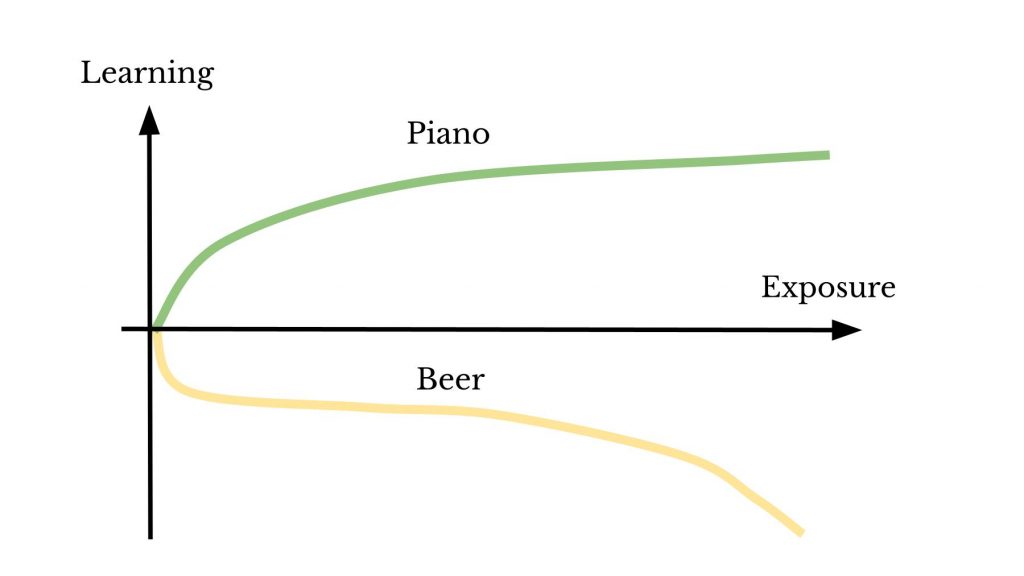

The alcohol “unlearning curve”

January 10, 2024

Alcohol has a reverse learning curve in which greater exposure tends to lessen our intuitive understanding of it rather than improving it. Alcohol Companion and Alcohol for Nerds were written to help rectify this unlearning process. ◼️

Taking a virtual break

January 10, 2024

I have dedicated the back end of the week to getting out my head. My goal was achieved, but without alcohol, thanks to a first dip in virtual reality.

I have been lucky so far this pandemic, but like many I have found the pleasures of homelife have begun to wear thin. It is not bad, far from it. I quite like the routine.

The problem is that the routine has barely changed for almost a year. There is really not much to distinguish one day from the next.

This is not fertile ground for fresh thoughts. The very same thoughts, positive and negative, tend to come round in and endless unchanging carousell.

I don’t actually need to find new thoughts. As a journalist I can rely on other people having these, but some variety is welcome, like a fresh coat of paint.

This is where experiences normally come in. If social life was a goer it might be a big night out or weekend away. And, if travel were possible, I might go somewhere.

But the immersion of travel or, indeed, social events is missing. There is no way around it, or so I thought until I had a brainwave while taking in the majesty of a potato peeler.

I will take a trip into virtual reality instead. It combines adventure, an office upgrade, research and a holiday, exactly the unhealthy mix of work and play I thrive on.

The chosen headset—a refurbed Oculus Rift S—duly arrived. It was easy enough to set up, though with cold sweats as I checked if my machine is up to the job.

It is. And I have already been stunned by its fidelity and believability. I am as bewildered and awed as any of those Victorians who took fright at an early attempt at cinema. This alone is a good thing.

I have not ventured very far into it and, quite typically, my first instinct was to look into exciting things like virtual ways in which to access my work desktop and to access a word processor.

But I have flown over Manhattan on Google Earth and, due to a mistake, Sofia and had many more other-worldly experiences. It has opened a mental door even when a my real door has to remain closed. ■

Guest post: Most US women don’t know alcohol’s health risks

January 10, 2024

Targeted marketing may play a role in increasing alcohol consumption among women.
Lisa Schaetzle/Moment via Getty Images

By Monica Swahn, Kennesaw State University and Ritu Aneja, University of Alabama at Birmingham

Did you know that casual drinks with friends or having a “wine mom” moment to unwind could actually be nudging up your risk for breast cancer? It sounds like a buzzkill. But it’s a truth that many might not know: Alcohol actually causes breast cancer.

The World Health Organization and the National Institute on Alcohol Abuse and Alcoholism lay it out pretty clearly: Compared to those who don’t drink, just one drink a day can bump up your breast cancer risk by 5% to 9%.

As alcohol and cancer researchers, we wanted to learn more about what women actually know about the connection between alcohol and breast cancer, especially since alcohol use has been increasing among women.

Explaining the knowledge gap
For our recently published research, we asked more than 5,000 women ages 18 and older across the US in 2021 about whether they were aware of the link between alcohol consumption and breast cancer. We also asked them about their drinking habits and other health and background factors.

We were surprised to find that only one in four of these women knew that alcohol is a risk factor for breast cancer. Even more concerning, 35% didn’t think there’s any link at all. Another 40% were sitting on the fence about it.

Closeup of person cupping glass of whisky in two hands
Fully understanding alcohol’s health risks can help people make more informed choices about how they consume it.
aire images/Moment via Getty Images

We also saw a knowledge gap based on age, education and race.

Younger, more educated women and those facing alcohol-related issues were more in the know about the link between alcohol and breast cancer risk than older, less educated women and those who have not drank in the past year. Black women were also less aware of the risk between alcohol and breast cancer compared to white women.

Drinking less lowers breast cancer risk
Despite the attempts of alcohol researchers, health officials and advocates to inform women about alcohol’s risks and its connection to breast cancer, our findings show that this message isn’t getting across to most people.

There are also pervasive myths about the benefits of alcohol use because some people don’t want to know that drinking can cause harm and don’t want to talk about it. As a result, many women simply don’t know or are uncertain of the health harms alcohol causes.

A comprehensive communication approach to increase awareness of alcohol’s harms and its link to cancer can help support and encourage women to make healthier choices regarding alcohol use.

Educational campaigns can help inform people from diverse backgrounds about alcohol and breast cancer risk.

Warning labels can help increase awareness of alcohol’s health risks.

Policy changes with respect to alcohol marketing, access and availability can also make a difference in people’s drinking patterns.

These policies may also address the “feminization” of alcohol marketing, which intentionally entices women to drink and purchase alcohol by normalizing or glamorizing heavy alcohol use and ignoring the health risks and harm caused. The World Health Organization recommends stricter rules on alcohol advertising and marketing along with higher taxes on alcohol to reduce alcohol-related harm.

Today’s culture may normalize dealing with life’s stresses by popping the cork.

But cutting down on alcohol is something that can make a difference in breast cancer risk. Stepping back and thinking about alcohol’s effects on your health can help you make informed choices about whether to drink or not.The Conversation ■

Monica Swahn, Dean of the Wellstar College of Health and Human Services, Kennesaw State University and Ritu Aneja, Professor of Clinical and Diagnostic Sciences, Associate Dean of Research and Innovation in the School of Health Professions, University of Alabama at Birmingham. This article is republished from The Conversation under a Creative Commons license. Read the original article.

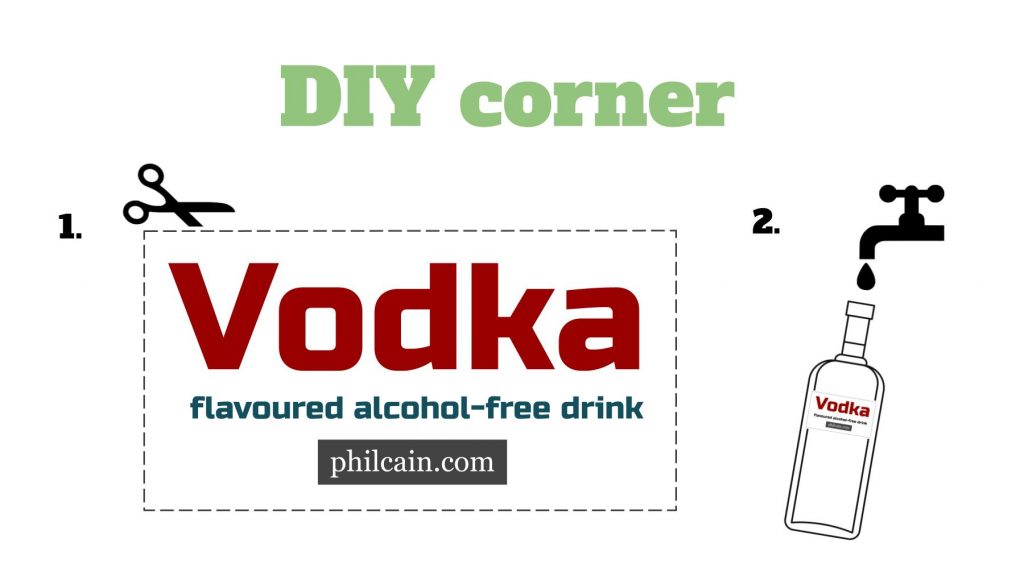
Make your own: Alcohol-free vodka

January 10, 2024

Just one in five Brits know alcohol basics

January 10, 2024

Alcohol calories similar to cooking oil

Just one in five Brits know how many calories are in wine or beer or know the official low-risk drinking guidelines, according to a Yougov survey from campaigners calling for labelling to inform them.

“It is absolutely unacceptable that the alcohol industry is able to get away with not providing full information on its packaging,” said Holly Gabriel from Action on Sugar, a view echoed by campaign partners Alcohol Health Alliance.

Alcohol is a carcinogenic drug of dependence with a calorie density comparable to cooking oil, causing a wide range of common physical and mental health problems and mistakes ranging from the deadly to the embarrassing.

But a legal loophole means alcoholic drinks labels need to contain less nutritional information than orange juice. Alcohol suppliers compound the problem by omitting low-risk drinking advice to protect shareholder profits. 

Labels provide crucial information to consumers, but alcoholic drinks labels need only show alcohol content, allergens and container size. Campaigners see an upcoming consultation as a way to put this right.

Our individual decision making has major limitations in curbing harm from an addictive drug, but denying us basic pieces information is not a solution. ■

  • « Go to Previous Page
  • Page 1
  • Interim pages omitted …
  • Page 22
  • Page 23
  • Page 24
  • Page 25
  • Page 26
  • Interim pages omitted …
  • Page 50
  • Go to Next Page »

Copyright © 2026 · Phil Cain Impressum