• Skip to main content

Alcohol Review

Alcohol understanding for all

  • Highlights
  • AR2026
    • AR2025
    • Earlier events
  • Register
  • About
    • Organisers
    • Contact
  • Log In

philcain

Grey-area drinking: pandemic’s heavy drinkers are ignoring the health risks

January 10, 2024

by Ian Hamilton, University of York
Increased drinking during the pandemic has created a group of people who don’t see themselves as alcoholics but have difficulty abstaining from alcohol for any length of time. This group, starting to be called grey-area drinkers, are at risk of alcohol-related health problems.

The relatively new term “grey-area drinking” describes people who consume more than a moderate amount of alcohol but don’t meet the criteria for dependence. Although they might not drink every day or have a drink first thing in the morning (the widely held view of an alcoholic) they are likely to be preoccupied with alcohol and have difficulty giving up. Many of these people don’t view themselves as in need of help.

Any widespread increase in levels of alcohol consumption matters. While most people are familiar with the risk of dependence there are a range of severe physical health problems associated with increased alcohol consumption that they are not so aware of. These include heart disease and a range of cancers, including bowel and breast.

Litres of alcohol bought in shops from April 2018 to 1 March 2021
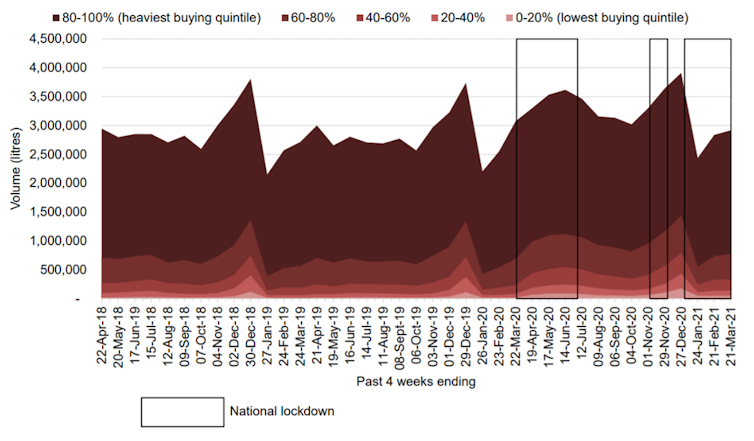
Source: Public Health England

Although overall consumption of alcohol has been slowly declining in recent years there is emerging evidence that some people have increased their consumption. The heaviest-buying segment of the population increased their purchasing by 5.3 million litres of alcohol (+14.3%) from 2019 to 2021. At the same time physical harm from alcohol has been increasing, with a significant rise in hospital admissions and alcohol-related deaths.

Public Health England collated the results of 18 surveys of self-reported alcohol consumption during the pandemic. Between 11% and 37% reported drinking less but between 14% and 26% of people reported drinking more than usual. This is especially concerning given that we know most people underestimate how much they drink by up to 40% in these surveys.

Pubs were closed during the pandemic, so drinking at home increased. This may have encouraged drinking in large quantities as people tend to pour larger measures of alcohol when drinking at home compared to the measures they are given in bars.

Evidence found that those who experienced stress during the pandemic increased the amount of alcohol they drank and how often. One international study exploring alcohol consumption during periods of self-isolation found that it was British drinkers who were most likely to increase the amount of alcohol they consumed – which they say was due to elevated levels of COVID-related stress.

These surveys found a noticeable increase in consumption for some once the pandemic began. Those who were drinking below the governments recommended weekly limits, continued to stay within these limits. However those who were already drinking above the 14 units a week increased their consumption.

Current UK guidance suggests no more than 14 units of alcohol should be consumed in a week (see illustration).
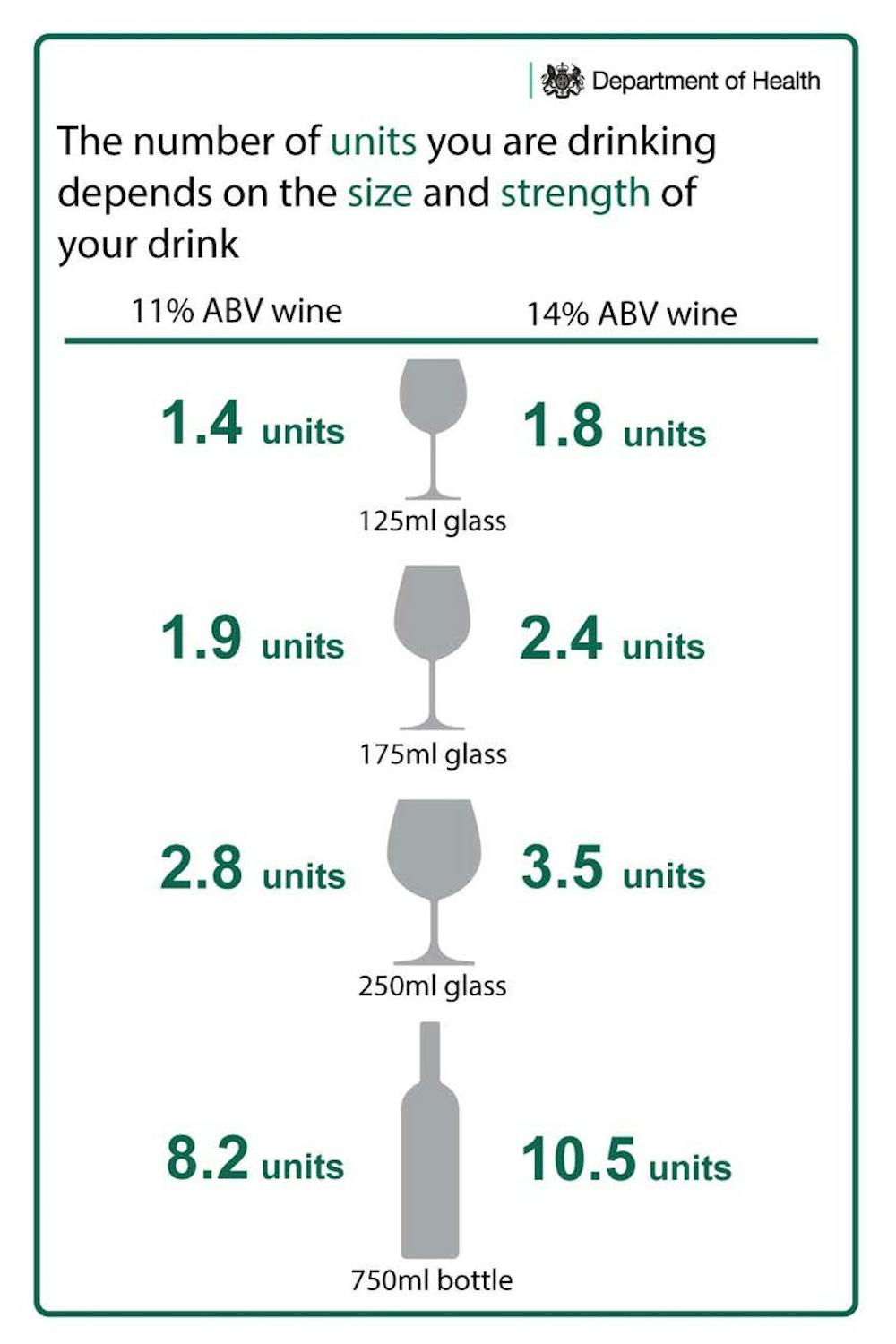
UK guidance on alcohol units.
Department of Health

Levels of hazardous drinking are considered to be more than 50 units a week for men and 35 units for women. Evidence suggests that there was a 59% increase in those reporting drinking at these levels compared to before the pandemic.

Some argue that the alcohol industry embraces the perception that the majority of people drink responsibly. This has been one of the industry’s main arguments for resisting greater regulation. The industry points to the need for personal responsibility rather than corporate responsibility, although they fail to define what responsible drinking is. This shifts the onus onto the individual to make a change to their drinking habits rather than requiring the industry to make changes to its marketing or promotion techniques.

At a time when there is a clear need to tackle increased alcohol consumption, funding for specialist treatment and support has been withering. Some sections of the alcohol industry were encouraged to increase marketing spend as it would be more effective than ever. Some analysis shows that alcohol companies have also used lockdown for targeted social media activity. And the alcohol industry’s multi-million pound spend on marketing is huge, compared with the budget for public health messages, a truly David and Goliath struggle.

There has been little mention of alcohol or our unhealthy relationship with it during the pandemic by the government. For instance, off-licences were deemed to be essential services and stayed open during lockdown. The alcohol industry has proved to be adept at influencing government policy in its favour.

As treatment budgets are cut industry marketing increases and there is nothing to suggest that there will be any reduction in demand for hospital treatment due to alcohol or, sadly, coroners recording yet more alcohol-related deaths.The Conversation ■

Ian Hamilton, Associate Professor of Addiction, University of York This article is republished from The Conversation under a Creative Commons license.
Parliamentary influence worries touch alcohol harm

January 10, 2024

The discussion over parliamentary groups is important to tackling alcohol harm, with some promoting alcohol interests while another looks to curb alcohol harm. They are not mutually exclusive.

The chair of a group of UK parliamentarians focused on reducing alcohol harm is also co-chair of another recently revealed to have taken money from an alcohol-industry-linked group.

Christian Wakeford, who switched from the Conservatives to Labour in January, is chair of the Alcohol Harm All-Party Parliamentary Group (APPG), supported by charity Alcohol Change for a figure of £3,000.

But Wakeford is also co-chair of the alcohol-industry supported group on the Night Time Economy, which has the mission, “To recognise the cultural and economic importance of nightlife to the UK.” 

Records show this APPG received £7,500 or more from the Night Time Industries Association (NTIA), which campaigns to #SaveNightlife for pubs, clubs and alcohol companies including Pernod Ricard and Jägermeister.

Wakefield and Alcohol Change were both contacted for comment on the issues raised by this story, but had yet to respond at the time of publication. Any replies will be added accordingly.

Just over half the £25m put into all-parliamentary bodies since 2018 was from the private sector, says research from the Guardian newspaper, a sum which critics say gives them undue sway in politics.

Journalists and members of the public are, arguably, encouraged to confuse reports written and published by commercial interests with one which has had politically balanced parliamentary oversight.

The smallprint of a 46-page NTIA report on the impact of covid-19 last year was billed, “An inquiry by the All-Party Parliamentary Group for the Night Time Economy,” and bears the parliamentary portcullis logo. 

But, in a small footnote, it adds, “This is not an official publication of the House of Commons or the House of Lords. It has not been approved by either House or its committees.”

The disproportionate role of commercial interests in establishing and being the real power behind All-Party Parliamentary Groups has wider implications for alcohol harm too.

There APPGs for beer, recipient of £30,000 from beer business; scotch, set up by the Scotch Whisky Association; and wine and spirits, the brainchild of the Wine and Spirits Trade Association.

The wine and spirits APPG produced a report last week on the “unworkability” of the government’s tax proposals. Some of its contentions were inaccurate but still gained uncritical media attention. ■

Try out some alcohol policies at home

January 10, 2024

Policies and individual choices are normally seen as completely separate, but in reality they merge. So why not ring in the New Year by road-testing some effective alcohol strategies at home?

We all set some rules, or policies, for our homes, for example. Few let outdoor shoes go beyond a certain threshold. Weaponry, road vehicles, fire, smoke and harmful chemicals also typically have their perimeters.

These are not prohibitions. They are regulations. By crossing borders we can have access to all of the things verboten in some places. Out there is a target-shooting, tanker driver who only smokes when scrubbed up, unarmed on the veranda.

The regulatory systems of our private lives often operate on the basis of unwritten policies picked up from parents, partners, and common sense. They offer an easy way to keep a safe, livable and inexpensive environment. 

These policies are typically adopted and applied without any democratic mandate. But we will also, sometimes, decide to set new policies, often through a process of thought, negotiation and compromise.

So why not consider adding evidence-based alcohol policies to the mix. We might take, for instance, government policies reckoned to curb harm at a population level as a starting point: increase the price, and reduce availability and marketing.

A few calculations might allow us to set a minimum unit price. This we might do by identifying products which are below it. Or we might levy a alcohol per unit “tax”, setting aside revenue for household running costs and infrastructure.

Implementation of these might be complicated. Perhaps an easier option would be reducing alcohol availability. We might bar keeping alcohol at home; Or to limit the stockpile; Or not put what we have in the fridge; Or, maybe, not to buy online. 

Limiting home availability would have a knock-on effect. It bumps up the price of alcohol at home, imposing on inhabitants the cost of leaving the house to buy it. This also gives us a chance for second thoughts. 

Reducing marketing exposure is trickier, because alcohol advertising targets us without our consent. But we can reduce it, by putting alcohol brands out of sight at home. We can also filter some online ads. And we can try to avoid alcohol retail.

Harmful levels of drinking are best addressed with the aid of medical advice. But making our own environments less alcohol loaded makes low-risk drinking the easy option. And home drinking is the source of the bulk of alcohol harm.

We all set and live by policies to create environments which are safe and best serve our needs. We need politicians to do this for us in environments we share. ■

Alcohol Review – issue 90, March 19th 2023

January 10, 2024

Find this service useful?
Please join the Alcohol Review‘s supporters who make it possible

In this issue: Public health welcomes end of alcohol tax freeze; Asian flush linked to cancer; Ads create harmful online environments

Public health welcomes end of alcohol tax freeze

Public health advocates this week welcomed a UK Budget heeding its call for alcohol duty to rise at least in line with inflation, as well as a move intended to lower pub prices relative to retail.

It could have gone further still, public health representatives said, including by closing the loophole responsible for ultra-cheap cider. Pubs themselves argued that more effective support would come by helping with their energy costs, VAT and business rates. It remains to be seen how much of the duty fall reaches pump prices. Big alcohol interests expressed their unhappiness, but saw their share prices rise.

Alcohol Review is a reader-supported publication. To receive new posts and support my work, consider becoming a free or paid subscriber.

The government estimated that it had given away £405m to the alcohol industry by freezing duty in December (see table below). The lower tax rate for pubs announced in this budget will cost £80m a year, the same estimates say, just over a twentieth of the £1.3bn annualised loss of public income forecast had it kept the blanket duty freeze.

The inflationary linkages of duty may be the new normal, with Chancellor Jeremy Hunt saying it was done “in the usual way” though it is a rarity in recent years. News of the special rate for pubs was leaked via the Bloomberg news service, which hosted Hunt at an event on budget day evening also attended by owner Michael Bloomberg, a proponent of heath taxes.

Press materials released by the Treasury also quoted Michael Bloomberg giving a glowing assessment of the UK’s economic prospects.

In brief

East Asian people with a low tolerance to alcohol, commonly known as “Asian flush”, have an increased chance of developing a hard-to-cure type of stomach cancer if they drink alcohol, according to a study in Nature Genetics.

Alcohol companies are creating online environments for harm, according to a new report which found nearly 40,000 alcohol ads are placed on Facebook and Instagram each year in Australia. They are often come with a button saying ‘shop now’.

Break-ins were down 45%, domestic violence was down 30% and youth disturbances were down 36%, said a leaked police briefing a month after the reintroduction of alcohol restrictions in parts of Northern Territory. Others doubt the figures.

Alcohol Review is a reader-supported publication. To receive new posts and support my work, consider becoming a free or paid subscriber.

THC and CBD use during pregnancy, adolescence and other periods of rapid development

January 10, 2024

by Hilary A. Marusak, Wayne State University

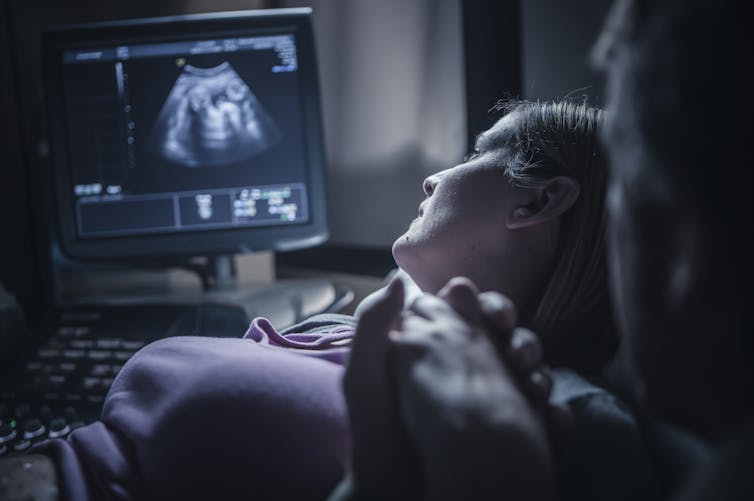
Marijuana use by the mother can affect a baby’s brain development.
John Fedele/Tetraimages via Getty Images

Cannabis is a widely used psychoactive drug worldwide, and its popularity is growing: The U.S. market for recreational cannabis sales could surpass US$72 billion by 2023.

As of early 2023, 21 U.S. states and the District of Columbia have legalized cannabis for recreational use for people age 21 and up, while 39 states plus the District of Columbia have legalized it for medical use.

The growing wave of legalization and the dramatic increase in cannabis potency over the past two decades have raised concerns among scientists and public health experts about the potential health effects of cannabis use during pregnancy and other vulnerable periods of development, such as the teen years.

I am a developmental neuroscientist specializing in studying what’s known as the endocannabinoid system. This is an evolutionarily ancient system found in humans and other vertebrates that produces natural cannabinoids such as THC and CBD.

Cannabis and its constituents interact with the body’s endocannabinoid system to product their effects. THC and CBD are the most commonly known cannabis extracts and can be synthesized in a lab. My lab also studies the risks versus potential therapeutic value of cannabis and cannabinoids.

People often assume there’s no risk when using cannabis or cannabinoids during vulnerable periods of life, but they’re basing that on little to no data. Our research and that of others suggests that cannabis use during pregnancy and adolescence can present myriad health risks the public should be aware of.

Data shows that many people who use cannabis continue to do so during pregnancy. But there are health risks.

Cannabis use during pregnancy
More and more pregnant people are using cannabis today compared with a decade ago, with some studies showing that nearly 1 in 4 pregnant adolescents report that they use cannabis.

Many cannabis-using people may have not known they were pregnant and stopped using when they found out. Others report using cannabis for its touted ability to ease pregnancy-related symptoms, like nausea and anxiety. However, studies do not yet confirm those health claims. What’s more, the potential harms are often downplayed by pro-cannabis marketing and messaging by dispensaries, advocacy groups and even midwives or doulas.

In addition, physicians and other health care providers often are not knowledgeable enough or don’t feel well equipped to discuss the potential risks and benefits of cannabis with their patients, including during pregnancy.

While research shows that most people who are pregnant perceive little to no risk in using cannabis during pregnancy, the data show there is clear cause for concern. Indeed, a growing number of studies link prenatal cannabis exposure to greater risk of preterm birth, lower birth weight and psychiatric and behavioral problems in children. These include, for example, difficulties with attention, thought, social problems, anxiety and depression.

Cannabis and the developing brain
When cannabis is inhaled, consumed orally or taken in through other routes, it can easily cross through the placenta and deposit in the fetal brain, disrupting brain development.

A recent study from my lab, led by medical student Mohammed Faraj, found that cannabis use during pregnancy can shape the developing brain in ways that are detectable even a decade later.

We used data from the National Institutes of Health Adolescent Brain Cognitive Development Study, which is the largest long-term study of brain development and child and adolescent health in the U.S. It has followed more than 10,000 children and their families from age 9-10 over a 10-year period.

Through that analysis, we linked prenatal cannabis exposure to alterations in functional brain networks in 9- and 10-year-old children. In particular, prenatal cannabis exposure appeared to disrupt the communication between brain networks involved in attentional control, which may explain why children who were exposed to cannabis in utero may develop difficulties with attention or other behavioral issues or mental disorders as they develop.

While alcohol abuse has steadily declined among adolescents since 2000 in the U.S., cannabis use shows the opposite pattern: It increased by 245% during that same period.

Data reported in 2022 from the Monitoring the Future survey of over 50,000 students in the U.S. found that nearly one-third of 12th grade students reported using cannabis in the past year, including cannabis vaping. Yet only about 1 in 4 12th grade students perceive great harm in using cannabis regularly. This suggests that many teens use cannabis, but very few consider it to have potential negative effects.


High-potency, concentrated forms of cannabis extracts have far higher levels of THC than the pot of earlier decades.

Cannabis use during adolescence
Research shows that the adolescent brain is primed to engage in high-risk behaviors such as experimenting with cannabis and other substances. Unfortunately, owing to ongoing brain development, the adolescent brain is also particularly susceptible to the effects of cannabis and other substances. Indeed, many neuroscientists now agree that the brain continues to develop well into the second and even third decade of life.

In line with this vulnerability, research shows that, relative to those who did not use cannabis during adolescence, those who started using it during adolescence are at increased risk of developing depression, suicidal ideation, psychosis and reductions in IQ during adolescence and adulthood. Neuroimaging studies also show residual effects of adolescent cannabis use on brain functioning, even later during adulthood.

Reading beyond the label
Despite common misconceptions that cannabis is “all natural” and safe to use during pregnancy or adolescence, the data suggests there are real risks. In fact, in 2019, the U.S. surgeon general issued an advisory against the use of cannabis during pregnancy and adolescence, stating that “no amount … is known to be safe.”

Cannabis may be harmful to the developing brain because it disrupts the developing endocannabinoid system, which plays a critical role in shaping brain development from conception and into adulthood. This includes neural circuits involved in learning, memory, decision-making and emotion regulation.

While much of this research has focused on cannabis use, there is also other research that comes to similar conclusions for THC and CBD in other forms. In fact, although CBD is widely available as an unregulated supplement, we researchers know almost nothing about its effects on the developing brain. Of note, these harms apply not only to smoking, but also to ingesting, vaping or other ways of consuming cannabis or its extracts.

In my view, it’s important that consumers know these risks and recognize that not everything claimed in a label is backed by science. So before you pick up that edible or vape pen for stress, anxiety, or sleep or pain control, it’s important to talk to a health care provider about potential risks – especially if you are or could be pregnant or are a teen or young adult


Marijuana use by the mother can affect a baby’s brain development.
John Fedele/Tetraimages via Getty Images

Hilary A. Marusak, Wayne State University

Cannabis is a widely used psychoactive drug worldwide, and its popularity is growing: The U.S. market for recreational cannabis sales could surpass US$72 billion by 2023.

As of early 2023, 21 U.S. states and the District of Columbia have legalized cannabis for recreational use for people age 21 and up, while 39 states plus the District of Columbia have legalized it for medical use.

The growing wave of legalization and the dramatic increase in cannabis potency over the past two decades have raised concerns among scientists and public health experts about the potential health effects of cannabis use during pregnancy and other vulnerable periods of development, such as the teen years.

I am a developmental neuroscientist specializing in studying what’s known as the endocannabinoid system. This is an evolutionarily ancient system found in humans and other vertebrates that produces natural cannabinoids such as THC and CBD.

Cannabis and its constituents interact with the body’s endocannabinoid system to product their effects. THC and CBD are the most commonly known cannabis extracts and can be synthesized in a lab. My lab also studies the risks versus potential therapeutic value of cannabis and cannabinoids.

People often assume there’s no risk when using cannabis or cannabinoids during vulnerable periods of life, but they’re basing that on little to no data. Our research and that of others suggests that cannabis use during pregnancy and adolescence can present myriad health risks the public should be aware of.

Data shows that many people who use cannabis continue to do so during pregnancy. But there are health risks.

Cannabis use during pregnancy
More and more pregnant people are using cannabis today compared with a decade ago, with some studies showing that nearly 1 in 4 pregnant adolescents report that they use cannabis.

Many cannabis-using people may have not known they were pregnant and stopped using when they found out. Others report using cannabis for its touted ability to ease pregnancy-related symptoms, like nausea and anxiety. However, studies do not yet confirm those health claims. What’s more, the potential harms are often downplayed by pro-cannabis marketing and messaging by dispensaries, advocacy groups and even midwives or doulas.

In addition, physicians and other health care providers often are not knowledgeable enough or don’t feel well equipped to discuss the potential risks and benefits of cannabis with their patients, including during pregnancy.

While research shows that most people who are pregnant perceive little to no risk in using cannabis during pregnancy, the data show there is clear cause for concern. Indeed, a growing number of studies link prenatal cannabis exposure to greater risk of preterm birth, lower birth weight and psychiatric and behavioral problems in children. These include, for example, difficulties with attention, thought, social problems, anxiety and depression.

Cannabis and the developing brain
When cannabis is inhaled, consumed orally or taken in through other routes, it can easily cross through the placenta and deposit in the fetal brain, disrupting brain development.

A recent study from my lab, led by medical student Mohammed Faraj, found that cannabis use during pregnancy can shape the developing brain in ways that are detectable even a decade later.

We used data from the National Institutes of Health Adolescent Brain Cognitive Development Study, which is the largest long-term study of brain development and child and adolescent health in the U.S. It has followed more than 10,000 children and their families from age 9-10 over a 10-year period.

Through that analysis, we linked prenatal cannabis exposure to alterations in functional brain networks in 9- and 10-year-old children. In particular, prenatal cannabis exposure appeared to disrupt the communication between brain networks involved in attentional control, which may explain why children who were exposed to cannabis in utero may develop difficulties with attention or other behavioral issues or mental disorders as they develop.

While alcohol abuse has steadily declined among adolescents since 2000 in the U.S., cannabis use shows the opposite pattern: It increased by 245% during that same period.

Data reported in 2022 from the Monitoring the Future survey of over 50,000 students in the U.S. found that nearly one-third of 12th grade students reported using cannabis in the past year, including cannabis vaping. Yet only about 1 in 4 12th grade students perceive great harm in using cannabis regularly. This suggests that many teens use cannabis, but very few consider it to have potential negative effects.


High-potency, concentrated forms of cannabis extracts have far higher levels of THC than the pot of earlier decades.

Cannabis use during adolescence
Research shows that the adolescent brain is primed to engage in high-risk behaviors such as experimenting with cannabis and other substances. Unfortunately, owing to ongoing brain development, the adolescent brain is also particularly susceptible to the effects of cannabis and other substances. Indeed, many neuroscientists now agree that the brain continues to develop well into the second and even third decade of life.

In line with this vulnerability, research shows that, relative to those who did not use cannabis during adolescence, those who started using it during adolescence are at increased risk of developing depression, suicidal ideation, psychosis and reductions in IQ during adolescence and adulthood. Neuroimaging studies also show residual effects of adolescent cannabis use on brain functioning, even later during adulthood.

Reading beyond the label
Despite common misconceptions that cannabis is “all natural” and safe to use during pregnancy or adolescence, the data suggests there are real risks. In fact, in 2019, the U.S. surgeon general issued an advisory against the use of cannabis during pregnancy and adolescence, stating that “no amount … is known to be safe.”

Cannabis may be harmful to the developing brain because it disrupts the developing endocannabinoid system, which plays a critical role in shaping brain development from conception and into adulthood. This includes neural circuits involved in learning, memory, decision-making and emotion regulation.

While much of this research has focused on cannabis use, there is also other research that comes to similar conclusions for THC and CBD in other forms. In fact, although CBD is widely available as an unregulated supplement, we researchers know almost nothing about its effects on the developing brain. Of note, these harms apply not only to smoking, but also to ingesting, vaping or other ways of consuming cannabis or its extracts.

In my view, it’s important that consumers know these risks and recognize that not everything claimed in a label is backed by science. So before you pick up that edible or vape pen for stress, anxiety, or sleep or pain control, it’s important to talk to a health care provider about potential risks – especially if you are or could be pregnant or are a teen or young adult. ■The Conversation

Note: Hilary A. Marusak, Assistant Professor of Psychiatry and Behavioral Neurosciences, Wayne State University This article is republished from The Conversation under a Creative Commons license. Read the original article.

Australia’s system of taxing alcohol is ‘incoherent’, but our research suggests a single tax rate isn’t the answer

January 10, 2024

by Ou Yang, The University of Melbourne and Preety Pratima Srivastava, RMIT University

The best word to describe the way Australia taxes alcoholic drinks is “incoherent”.

It was the word used by the 2010 Henry Tax Review to describe a system in which some wine effectively faces no alcohol tax, expensive wine is taxed heavily and cask wine lightly, beer (but not wine) is taxed by alcohol content, brandy is taxed less than other spirits, and cider is taxed differently to beer.

Industry calculations suggest cask wine is taxed at as little as six cents per standard drink, mid-price wine at 26 cents, bottled beer at 56 cents, and spirits at $1.24.

And yet it is cask wine that is often said to do the most damage.

The Henry Review recommended taxing all drinks containing more than a small amount of alcohol at the same rate per unit of alcohol, regardless of type. It was a recommendation backed by specialists in Australia’s tax system.

Implicit, and largely unexamined, in these recommendations is the assumption that alcohol does the same damage in whatever form it is taken.

Our new study, linking drinkers’ risky behaviours to the types of alcoholic beverages they mostly consume, finds this isn’t so.

Damage depends on the type of drink

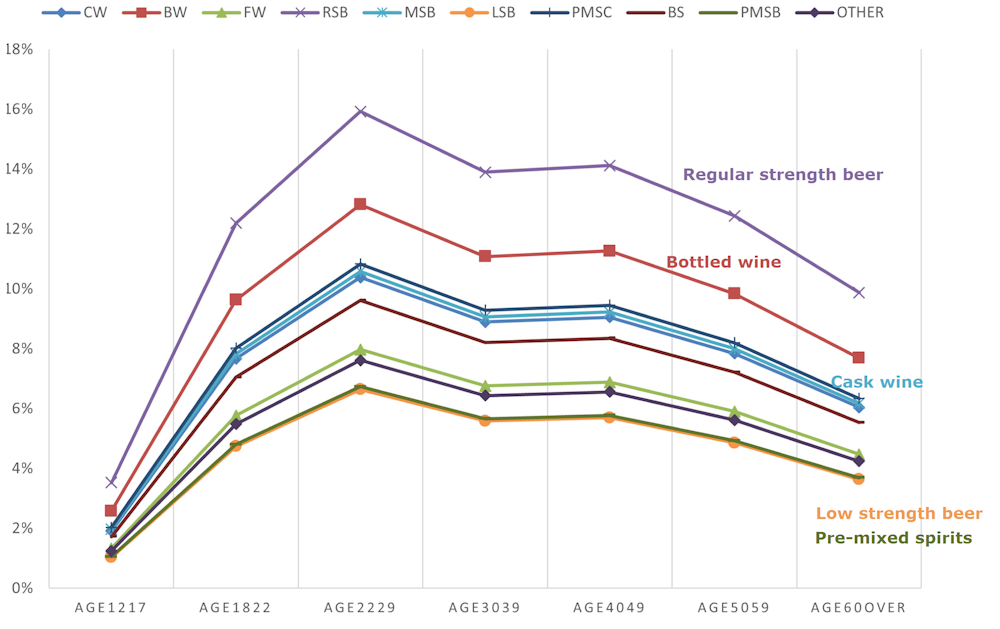
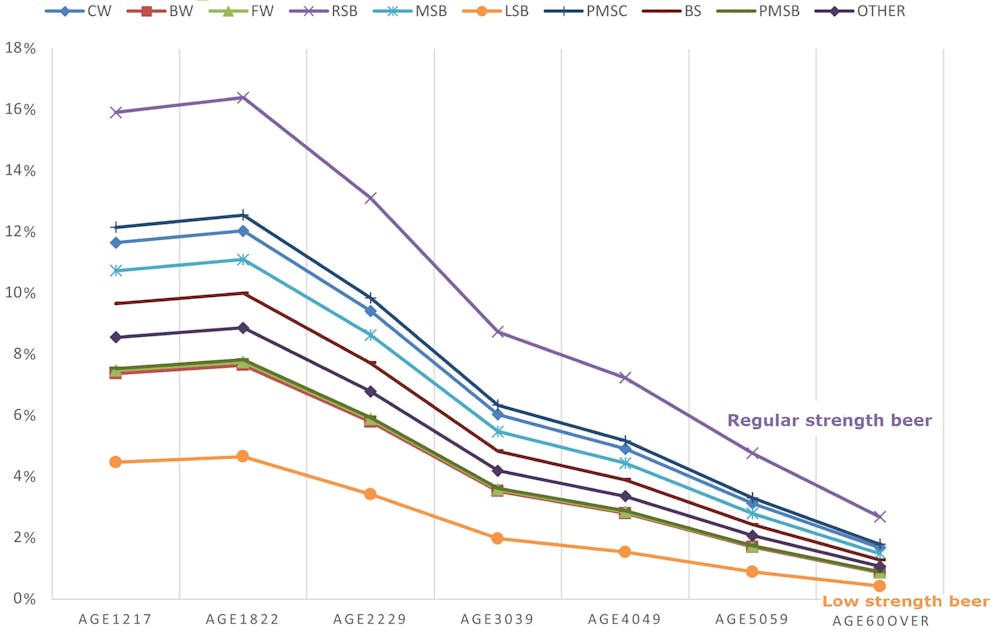
Using data from six waves of an Australian recreational drug survey, we find that regular-strength beer and pre-mixed spirits in a can rank among the highest in their links to both drink-driving and hazardous, disturbing or abusive behaviours.

Mid-range are mid-strength beer, cask wine, and bottled spirits and liqueurs.

At the bottom are low-strength beer and pre-mixed spirits in a bottle, which have the weakest links to risky and abusive behaviours when intoxicated.


Probability of drink driving, by age and beverage type

RSB = Regular-Strength Beer; LSB = Low-Strength Beer; MSB = Mid-Strength Beer; BW = Bottled Wine; FW = Fortified Wine; CW = Cask Wine; PMSC = Pre-Mixed Spirits in a Can; PMSB = Pre-Mixed Spirits in a Bottle; BS = Bottled Spirits and Liqueurs.
Source: Economic Record

Some of the relationships vary with the type of damage. While bottled wine is linked to a moderate to high probability of drink-driving, it is also linked to a low probability of hazardous, disturbing or abusive behaviours.

Pre-mixed spirits in a bottle are related to a low probability of both drink driving and hazardous, disturbing and abusive behaviours. But when account is taken of the gender of the drinkers (so-called alcopops are typically drunk by females), we find them no longer as safe.


Probability of hazardous, disturbing or abusive behaviour

RSB = Regular-Strength Beer; LSB = Low-Strength Beer; MSB = Mid-Strength Beer; BW = Bottled Wine; FW = Fortified Wine; CW = Cask Wine; PMSC = Pre-Mixed Spirits in a Can; PMSB = Pre-Mixed Spirits in a Bottle; BS = Bottled Spirits and Liqueurs.
Source: Economic Record

Our study suggests that Australia’s haphazard system of taxing alcohol might have got some things right. Beer, which is typically taxed more highly than wine, seems to do more damage.

But it has got some things wrong. Cask wine appears to be significantly undertaxed relative to the damage it does.

More broadly, our findings suggest that if alcohol is to be taxed according to the damage it does, the tax system we adopt will need to be more complicated than a single rate for every unit of alcohol regardless of the form in which it comes. ■The Conversation

Note: Ou Yang, Research Fellow, The University of Melbourne and Preety Pratima Srivastava, Senior Lecturer, RMIT University This article is republished from The Conversation under a Creative Commons license. Read the original article.
  • « Go to Previous Page
  • Page 1
  • Interim pages omitted …
  • Page 24
  • Page 25
  • Page 26
  • Page 27
  • Page 28
  • Interim pages omitted …
  • Page 50
  • Go to Next Page »

Copyright © 2026 · Phil Cain Impressum