• Skip to main content

Alcohol Review

Alcohol understanding for all

  • Highlights
  • AR2026
    • AR2025
    • Earlier events
  • Register
  • About
    • Organisers
    • Contact
  • Log In

philcain

England alcohol deaths remain severely elevated

December 4, 2025

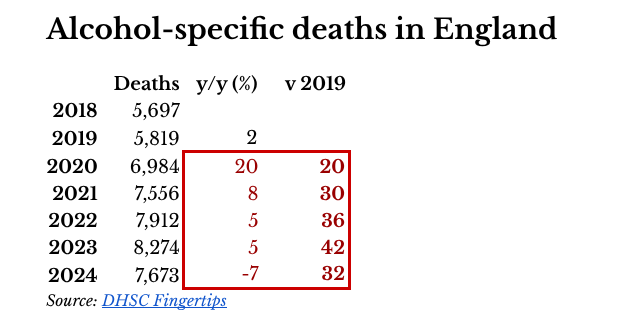
Alcohol deaths in England were 32% above pre-pandemic levels in 2024, despite a 7% fall from the post-pandemic peak the year before, according to new new figures. A total of 38,399 people in England died of causes directly linked to alcohol drinking in the five years to 2024, over 9,304 more than if alcohol-specific deaths had remained at 2019 levels.■
Alcohol Review – Issue 118, November 28th 2025

November 28, 2025

Read original

Join newsletter and events directly or on Substack

In this issue: UK halts tax backsliding; Nigerian sachet deadline; Korean collaboration rules; Poland’s parliamentary bar closes; Recovery barriers identified and more. Plus Australia, harm reduction and artificial intelligence, with Professor Nicole Lee.

Join AR2026. You can register now to disseminate and learn about global efforts to reduce alcohol harm. Live online sessions on March 26th will look at Alcohol and artificial intelligence. But the event will look far beyond, showcasing cutting-edge research, advocacy, ideas and offerings of all kinds. Event participation is open to all paid newsletter subscribers, who also have full access to AR2025.

News

UK budget halts alcohol tax backsliding: The UK Chancellor Rachel Reeves this week gave respite from years of real terms alcohol tax cuts in her Budget statement, but made little headway on delivering on a manifesto promise to prioritise the prevention of health problems. [Share or comment]

Nigeria sets sachet deadline: Nigeria’s Senate this month told the National Agency for Food and Drug Administration and Control to end production and sale by December 31st 2025. The long-delayed move promped outrage from the alcohol industry. [Share or comment] 

Korea to tighten collaboration rules: Korea’s health ministry said it plans to impose stricter regulations on promotional collaborations between alcohol products and well-known food brands, saying such marketing appears to encourage alcohol consumption. [Share or comment]

Poland closes parliamentary bar: A cut-price bar in the Polish parliament bar closed this week following a decision by the Speaker, following a number of unruly incidents. [Share or comment]

Recovery barriers identified: The alcohol’s presence “poses a challenge to those seeking alcohol recovery and potentially increases the risk of relapse”, said a report highlighting half-a-dozen barriers to recovery. [Share or comment]

Abstinence savings estimated: Introducing minimum unit pricing across the UK could save £2.5bn, according to a report from Muslim faith informed think-tank Equi, which puts NHS savings from abstinence among Muslims at £1.6bn. [Share or comment]

Dry Australia imagined: Eliminating alcohol consumption in Australia would prevent more than 25m cases of disease and injury and more than 200 thousand deaths over 25 years, a study found. The cost saving would be A$55bn (US$36bn). [Share or comment] 


Feature

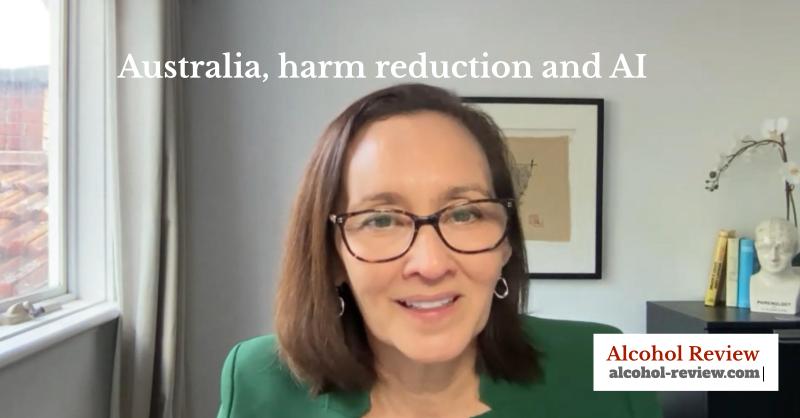
Australia, harm reduction and artificial intelligence: Less drinking among younger Australians has not outweighed harm within older cohorts, explains Professor Nicole Lee of the NGO Hello Sunday Morning and 360 Edge consultancy, who goes on to outline some of the applications and limits of artificial intelligence.

Join newsletter and events directly or on Substack ■

UK budget halts alcohol tax backsliding

November 28, 2025

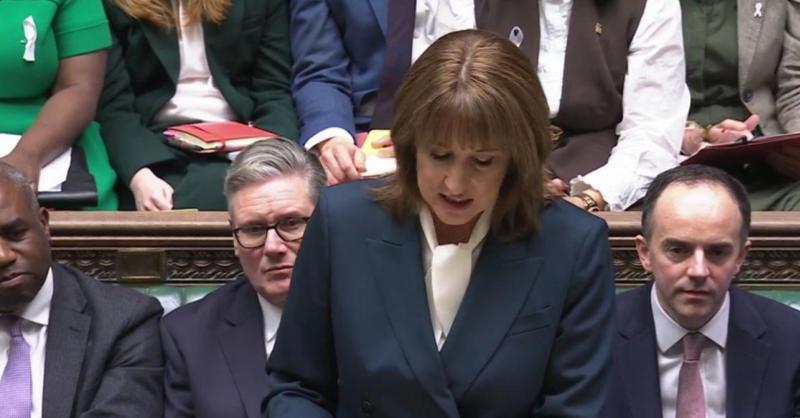
UPDATED: The UK Chancellor Rachel Reeves this week gave respite from years of real terms alcohol tax cuts in her Budget statement, but made little headway on delivering on a manifesto promise to prioritise the prevention of health problems.

“I will support the great British pub through our new national licensing framework, encouraging councils to back our pubs and back late night venues with greater freedoms,” Reeves said in her yearly financial statement on Wednesday.

Reeves was referring to a much-criticised plan to change local alcohol licensing law to allow councils to put economic growth over health criteria. The government seems to be rewriting its proposals following an outcry from public health.

Councils are still being asked to “view licensing as part of their economic development or regeneration functions” , but other controversial aspects of the proposals have been “watered down or dropped”, posted James Nicholls, a critic of the proposals.

Reeves also said alcohol tax would remain the same in real terms next year. Health advocates recommend that the tax would need to rise in real terms to reduce record levels of harm.

But health advocates see this year’s tax freeze as relatively good news after years of real-terms tax cuts. “It is a clear signal that ministers aren’t bowing to a barrage of misinformation and aggressive lobbying,” said Katherine Severi of the Institute Of Alcohol Studies.

The Alcohol Health Alliance UK also welcomed the freeze, but it also repeated its call for a sustained increase of 2% above inflation and to develop an alcohol strategy.

It is a “welcome step forward”, said Alcohol Change UK, but added that it “expected bolder action” while also raising concerns about licensing reform, especially on alcohol delivery. ■

Australia, harm reduction and artificial intelligence

November 10, 2025

Less drinking among younger Australians has not outweighed harm within older cohorts, explains Professor Nicole Lee of the NGO Hello Sunday Morning and 360 Edge consutancy, who goes on to outline some of the applications and limits of artificial intelligence.

Alcohol Review – Issue 117, October 30th 2025

October 30, 2025

Read original

Subscribe for more newsletters and events

In this issue: Alcohol policies are “smart investments”; Youth harm; UK licensing review panned; Alcohol a productivity problem; Alcohol-free ads ambiguous; Industry-biased bot. Plus Trump’s impact; Alcohol and gender violence; Understanding “hangxiety”


Notices

AR2026, March 26th. Register now to join hundreds looking to disseminate and learn on a unique global platform. You will also gain full access to AR2025, giving you expert insight on how to push back against the alcohol industry at both the local and international levels. Please let us know if your organisation wants to support.


News

Alcohol policies are “smart investments”: “Strong alcohol policies are among the smartest investments you can make,” said the WHO Regional Office for Europe and the WHO’s International Agency for Research on Cancer this month.

Bid to quantify youth alcohol harm: The WHO’s EU-backed programme to reduce alcohol harm today launched an effort to quantify the burden alcohol places on young people to inform better alcohol policy.

Experts pan UK licensing review: The UK government’s current plans for alcohol licensing reflect the views of industry advocates. This “regulatory capture should be resisted by anyone with an interest in fair and effective governance” say its critics.

Alcohol a productivity problem: “When nearly half of young professionals are calling in sick after workplace drinking, it’s not just a hangover, it’s a productivity crisis,” says the UK’s left-leaning IPPR think-tank, calling for minimum pricing and tax rises.

Alcohol-free ads often ambiguous: “The trial [of AI analysis] found a higher rate of potential issues among alcohol-free product ads–around 48%–largely because of missing or unclear ABV information,” said the UK’s ad self-regulator, something especially problematic with spin off from an alcohol brand.

Bot to refer patients to alcohol industry: “Patients who engage with the [AI Surgery Assist] chatbot and mention alcohol concerns… will automatically be signposted to [alcohol industry funded] Drinkaware’s information and self-help tools.”

Feature

Assessing Trump’s impact on alcohol harm: The Trump administration has taken a chainsaw to efforts to reduce alcohol harm. Here Mike Marshall, CEO of the US Alcohol Policy Alliance, helps make sense of the bewildering news flow.

Opinion–Alcohol must be part of gender violence plan: It is impossible to address the high level of men’s violence in Australia without tackling alcohol use head on, write Anne-Marie Laslett, Cassandra Hopkins and Ingrid Wilson.

Understanding “hangxiety”: “People prone to anxiety or low mood, or those who drink to cope with stress, experience hangxiety more intensely – not because hangovers create new problems, but because alcohol temporarily dulls negative emotions,” write Rebecca Rothman and Blair Aitken.

Subscribe for more newsletters and events ■

Understanding ‘hangxiety’

October 24, 2025

by Rebecca Rothman and Blair Aitken*

You wake up after a night out. Your head’s pounding and a wave of unease hits before you’ve even looked at your phone. Restlessness, self-doubt and flashes of regret creep in as last night’s conversations start to replay.

“Hangxiety” is not a clinical term but the anxious, uneasy feeling that follows drinking is widely recognised. Most people expect a headache, but the emotional comedown can hit just as hard.

Alcohol disrupts brain systems that regulate mood and stress. It boosts gamma-aminobutyric acid (GABA), a calming chemical, and suppresses glutamate, which keeps you alert. That’s why confidence rises and worries fade.

As your body processes alcohol, this balance flips. Calming signals drop, excitatory ones surge and your nervous system swings into overdrive.

Alcohol also disrupts the hypothalamic–pituitary–adrenal (HPA) axis – the body’s stress system – spiking cortisol, our main stress hormone.

Combine that with poor sleep, dehydration and low blood sugar, and you’ve got the perfect recipe for feeling on edge.

To understand how common these feelings are, we analysed 22 studies spanning four decades and involving more than 6,000 adults worldwide. Our systematic review published today included lab experiments, surveys and interviews capturing real-world experiences.

Despite differences in study designs and the challenge of asking hungover people to accurately recall their experiences, the results were consistent: hangovers triggered higher levels of anxiety, stress, guilt, irritability and sadness.

Certain traits make hangxiety hit harder
People prone to anxiety or low mood, or those who drink to cope with stress, experience hangxiety more intensely – not because hangovers create new problems, but because alcohol temporarily dulls negative emotions.

When the effects wear off, those feelings return in sharper focus, which can amplify stress and worry.

Hangxiety also hits harder when people act out of character while drunk. Saying or doing things that clash with personal values can trigger embarrassment or shame the next day, fuelling harsh self-criticism and intensifying emotional distress.

People who struggle with emotional regulation – recognising and managing your emotions in healthy ways – face particular challenges.

Good emotional regulation might mean noticing stress and choosing to go for run or call a friend, rather than reaching straight for a drink. It’s pausing to ask “what do I actually need right now?”

Without these skills, people get stuck in cycles of self-blame, amplifying the emotional rebound.

What traits make it less bothersome?
Not everyone experiences hangxiety the same way. People with higher emotional resilience – the ability to adapt to stress and keep perspective – tend to cope more effectively.

Reframing “I’m falling apart” into “my body’s recovering” shifts hangxiety from crisis into something temporary.

Social support helps too. Sharing a laugh about the night before or talking it through eases isolation and shame. Knowing you’re not alone makes the experience less overwhelming.

Bad hangxiety doesn’t stop people drinking
You might assume a brutal hangover would deter future drinking, but most people in our review saw hangovers as a routine inconvenience or rite of passage.

Rather than reducing their alcohol intake, people relied on short-term fixes such as, drinking water or eating beforehand to lessen the severity of their hangover.

When alcohol becomes a coping tool for stress, hangxiety can actually reinforce the cycle. Alcohol dulls discomfort, but when it wears off, the same feelings return, prompting another drink for relief.

This loop helps explain why even frequent hangovers rarely lead to meaningful behaviour change.

If you’re experiencing hangxiety, aside from planning to drink less next time, to get through the day:

  • hydrate, rest and eat well to support your body’s recovery
  • skip the “hair of the dog”. More alcohol only delays the crash
  • ground yourself with slow breaths or a short walk to calm the nervous system
  • reach out to friends or loved ones. Connection eases both guilt and anxiety.

In the longer term, reflect on why you drink and whether it’s become a way to manage stress.

If you’re drinking daily to manage emotions, if hangxiety disrupts your work or relationships, or if anxiety lingers long after the hangover fades, it’s time to seek professional help. A GP or a psychologist can assess whether underlying anxiety or problematic drinking patterns need support.

Hangxiety is more than a bad mood after drinking – it’s your brain and body recalibrating after chemical turbulence, where brain chemistry, personality and coping strategies interact.

Some people feel it mildly, others more deeply, depending on levels of emotional awareness, resilience and support. Understanding this can help replace self-criticism with self-compassion, and perhaps rethink what the “morning after” really means.

*Note: Rebecca Rothman, PhD Candidate in Clinical Psychology, School of Health Sciences, Swinburne University of Technology and Blair Aitken, Postdoctoral Research Fellow in Psychopharmacology, Swinburne University of Technology. ■

This article is republished from The Conversation under a Creative Commons license.

  • « Go to Previous Page
  • Page 1
  • Page 2
  • Page 3
  • Page 4
  • Page 5
  • Page 6
  • Interim pages omitted …
  • Page 50
  • Go to Next Page »

Copyright © 2026 · Phil Cain Impressum