• Skip to main content

Alcohol Review

Alcohol understanding for all

  • Highlights
  • AR2026
    • AR2025
    • Earlier events
  • Register
  • About
    • Organisers
    • Contact
  • Log In

philcain

Alcohol cancer labelling advocates unfazed by Yukon threats

January 10, 2024

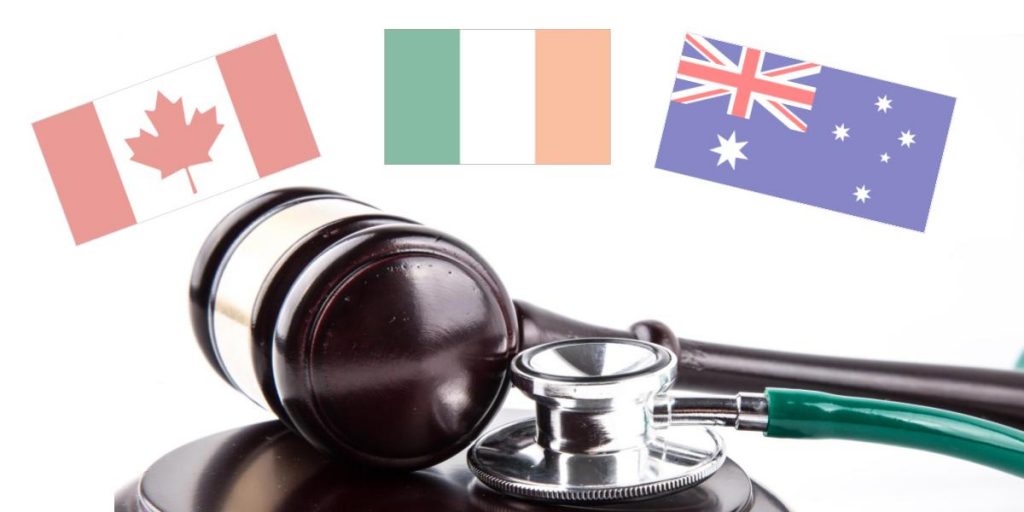
Legal threats of the kind which abruptly halted the first trial of cancer warning labels in Canada’s Yukon territory before Christmas are not altering plans elsewhere.

Measures proposed last month in Australia call for “readable, impactful” warning labels. And Gerald Nash, an Irish senator, introduced an amendment to a recent alcohol bill to include cancer warnings.

“Given the strength and level of support expressed in the Senate, I expect that the bill will receive the same level of support when it moves to the Dàil [Ireland’s Lower House],” Nash told Alcohol Companion.

Donal Buggy of the Irish Cancer Society says he is confident, “The public health imperative for inclusion of cancer-specific labelling warnings will prevail over the narrow sectoral interests of the alcohol industry.”

Legal threats are “not an issue” in Australia, says Michael Thorn, head of Foundation for Alcohol Research and Education: “Australia took it up to the tobacco industry on plain packaging and won.”

The initial focus of Thorn’s efforts will be to  secure mandated warning labels on the dangers of drinking while pregnant, paving the way for others. This might happen in the next 18 months, he says.

In Ireland, meanwhile, one seasoned observer suggests public support for the alcohol bill would mean any attempt by the alcohol industry to stand in its way would be a “PR disaster”.

The next phase of alcohol industry resistance there seems more likely to be quibbling about the format and wording of warning labels than whether they appear.

It is currently unclear whether the Yukon trial will restart. ■
Legal warnings halt first cancer label scheme

January 10, 2024

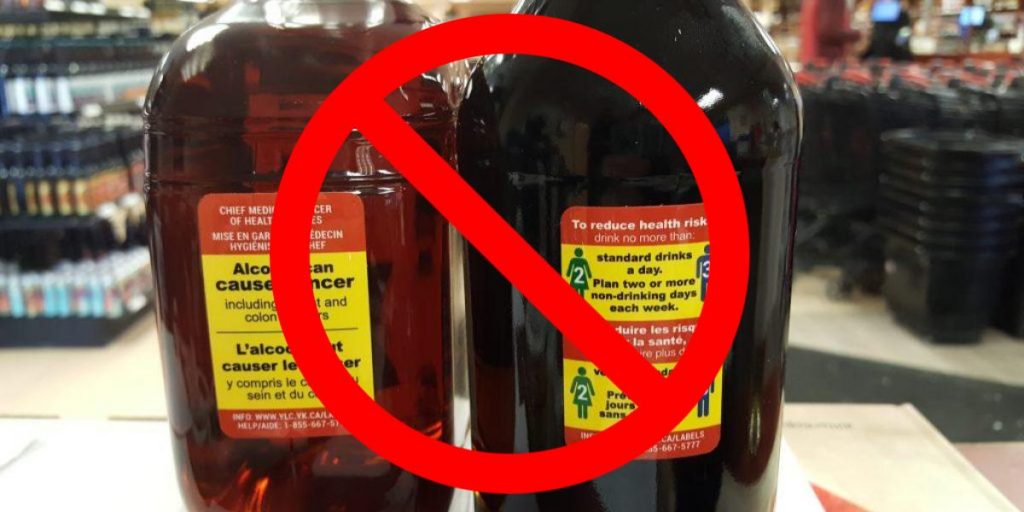
Legal warnings from alcohol brand-owners have halted the world’s first trial of labels warning that consuming alcohol increases the risk of cancer, raising question marks over similar plans elsewhere.

Unnamed alcohol brand owners have warned the state-owned alcohol retailer applying the labels in Canada’s Yukon territory that it may be infringing trademarks and guilty of defamation, say local media reports.

The Yukon trial had been running from one shop for little more than one of the eight months intended. No new labels have been applied to bottles and cans, but those already applied have be left in place. The trial began late last month.

The enforced hiatus may have implications elsewhere: Ireland decided this month to introduce labels warning of the risk, while Australia’s newly-released draft alcohol strategy mentions alcohol’s contribution to cancer cases and suggests “readable, impactful” warning labels.

Campaigners have also raised concerns that the labels have replaced rather than supplemented labels warning of the risk of drinking alcohol in pregnancy. Labels saying “Warning, drinking alcohol during pregnancy can cause birth defects” had been applied since 1991.

The trial is part of the second phase of the Northern Territories Alcohol Study led by researchers from Public Health Ontario and the Canadian Institute for Substance Use Research at the University of Victoria. Its research suggests enhanced labelling could have benefits.

Yukon has the highest alcohol sales per head in in Canada. ■

A third of Brits to skip alcohol over Christmas

January 10, 2024

More than a third of Brits say they will not drink alcohol at four or more social occasions this Christmas, while almost one-in-six 25-34s say they will not drink alcohol at all.

Almost a third also said they are more likely to lay off alcohol this Christmas than last year,  with younger groups even more open to the idea, according to figures gathered as part of Coca-Cola’s Designated Driver campaign.

It is part of a bigger trend, with 40% of people saying they avoided alcohol at parties in the last month. Their prime reasons were to avoid hangovers, to drive or to be safer. Toning down the alcohol is not for everyone, however, with over 40% of over-65s having no plans to lay off alcohol during the festivities.

The real sober enthusiasts are the 18-24 year-olds, 57% of whom said they had chosen not to drink in the last month. They mainly aimed to save money, to protect their health or to enjoy more interesting non-alcoholic drinks.

Around a third of interviewees said they tend to assume someone is not drinking at a Christmas do because they are driving, while 35% now assume someone does not feel a need to drink to have fun.

Coca-Cola is rewarding alcohol-free Christmas drivers with a buy-one-get-one-free offer at participating pubs. ■


[summary] Australia’s draft alcohol strategy proposes minimum pricing

January 10, 2024

Draft National Alcohol Strategy 2018-2026, key proposals:

  • Introduce a minimum price for alcohol
  • Volumetric taxation of alcohol, as recommended by the Henry Tax Review in 2010
  • “Readable, impactful” health-related warning labels
  • A single national advertising code protecting children from exposure
  • Reduce young people’s alcohol advertising exposure, including in sport and on the internet
  • Control alcohol promotion to protect at-risk groups, including youth and dependent drinkers
  • Increase screening, assessment, referral and treatment

Source: http://www.health.gov.au/internet/main/publishing.nsf/Content/55E4796388E9EDE5CA25808F00035035/$File/Consultation%20Draft%20National%20Alcohol%20Strategy%202018-2026.pdf

Experts query minimum alcohol price concerns

January 10, 2024

Minimum alcohol unit price advocates cast doubt on recent warnings that low-level drinkers would bear the brunt of Scotland’s plan to introduce the scheme next May.
The Institute for Fiscal Studies (IFS) said last week it may be “better to reform duties and not have a minimum price at all”. It estimated a 50p minimum would increase the price of around 70% of off-trade alcohol units purchased, unfairly impacting low-level drinkers.

But these calculations have some shortcomings, says John Holmes of the Sheffield Alcohol Research Group, which forecast the impact of Scotland’s scheme. These mean the IFS has over-estimated the cost to people who do not overdo it.

Most importantly the IFS figures to not recognise alcohol consumption is heavily skewed towards heavy drinkers, says Holmes. The one-in-four people in Scotland who exceed the old, looser guidelines together drink around three-quarters of the alcohol.

This top-loaded consumption pattern means it is heavy drinkers who purchase the vast majority of units, and an even greater proportion of units bought for under 50p. This means it is heavy drinkers who will feel the pinch as the result of heavy consumption under minimum pricing, as the scheme intends.

And, to add to this, the number of units bought in Scotland for under 50p is probably not the 70% of the total the IFS estimates, but more like 50%, Holmes says. This “more robust”percentage comes from sales data rather than the self-reports relied on by the IFS statistic.

Another point worth considering, according to another commentator, is that raising taxes on some categories of alcoholic drinks favoured by heavy drinkers instead, as recommended by IFS, would also have an unwelcome impact on some low-level drinkers. ■

Ireland pioneers alcohol cancer warnings and minimum prices

January 10, 2024

Ireland’s upper house last week passed a long-awaited bill introducing minimum alcohol prices and requiring warnings of alcohol’s cancer risks and the protection of children from marketing.

According to the bill passed on Friday drinks labels will also need to list their ingredients for the first time. Ads as well as labels will have to include warnings of the cancer risk.

To stop children being weaned onto alcohol brands, shops will be required to hide alcohol marketing behind a 1.5m-high screen.

The bill will return to the Dáil, the lower house, next year. The government first introduced the bill in December 2015 and has been the subject of fierce lobbying since.

Ireland is the second country in the world to pass laws to require alcohol is sold above a minimum price after Scotland became the first in November.

Only Canada’s Yukon has so far introduced cancer warnings, and that is in a trial. ■

  • « Go to Previous Page
  • Page 1
  • Interim pages omitted …
  • Page 45
  • Page 46
  • Page 47
  • Page 48
  • Page 49
  • Page 50
  • Go to Next Page »

Copyright © 2026 · Phil Cain Impressum