• Skip to main content
  • Skip to primary sidebar

Alcohol Review

Alcohol understanding for all

  • Highlights
    • Messages
    • Newsletters
    • AR Live
  • Events
    • AR2026
    • AR2025
    • Next year’s event
    • Earlier events
  • Join
  • About
    • Organisers
    • Contact
  • Log In

philcain

Experts query minimum alcohol price concerns

January 10, 2024

Minimum alcohol unit price advocates cast doubt on recent warnings that low-level drinkers would bear the brunt of Scotland’s plan to introduce the scheme next May.

The Institute for Fiscal Studies (IFS) said last week it may be “better to reform duties and not have a minimum price at all”. It estimated a 50p minimum would increase the price of around 70% of off-trade alcohol units purchased, unfairly impacting low-level drinkers.

But these calculations have some shortcomings, says John Holmes of the Sheffield Alcohol Research Group, which forecast the impact of Scotland’s scheme. These mean the IFS has over-estimated the cost to people who do not overdo it.

Most importantly the IFS figures to not recognise alcohol consumption is heavily skewed towards heavy drinkers, says Holmes. The one-in-four people in Scotland who exceed the old, looser guidelines together drink around three-quarters of the alcohol.

This top-loaded consumption pattern means it is heavy drinkers who purchase the vast majority of units, and an even greater proportion of units bought for under 50p. This means it is heavy drinkers who will feel the pinch as the result of heavy consumption under minimum pricing, as the scheme intends.

And, to add to this, the number of units bought in Scotland for under 50p is probably not the 70% of the total the IFS estimates, but more like 50%, Holmes says. This “more robust”percentage comes from sales data rather than the self-reports relied on by the IFS statistic.

Another point worth considering, according to another commentator, is that raising taxes on some categories of alcoholic drinks favoured by heavy drinkers instead, as recommended by IFS, would also have an unwelcome impact on some low-level drinkers. ■
Ireland pioneers alcohol cancer warnings and minimum prices

January 10, 2024

Ireland’s upper house last week passed a long-awaited bill introducing minimum alcohol prices and requiring warnings of alcohol’s cancer risks and the protection of children from marketing.

According to the bill passed on Friday drinks labels will also need to list their ingredients for the first time. Ads as well as labels will have to include warnings of the cancer risk.

To stop children being weaned onto alcohol brands, shops will be required to hide alcohol marketing behind a 1.5m-high screen.

The bill will return to the Dáil, the lower house, next year. The government first introduced the bill in December 2015 and has been the subject of fierce lobbying since.

Ireland is the second country in the world to pass laws to require alcohol is sold above a minimum price after Scotland became the first in November.

Only Canada’s Yukon has so far introduced cancer warnings, and that is in a trial. ■

Millions to zero alcohol levels this New Year

January 10, 2024

More than 3m people in the UK plan to turn their alcohol clocks to zero for a month from January 1st,  joining an increasingly popular annual initiative to realise the multiple benefits of lower levels of drinking.

Alcohol Concern’s Dry January provides information, support and extra motivation for those taking a break. There is a free app to track our progress and the chance to raise money for charity. 

The popularity of the annual lay-off is easily explained, says the charity’s chief executive Richard Piper: “The benefits are astounding”. Around half of those who take part find they lose weight, two-thirds sleep better and over three-quarters save money. It may also lift depression and anxiety.

Parents and the middle-aged were the most likely to be joining in this year, according to a survey of 2,000 people, with parents of more than two children particularly keen, as are people in full-time employment and those from the North East and Northern Ireland.

“Alcohol is the biggest cause of death, ill-health and disability for people aged 15-49 in the UK–but these tragedies are all totally avoidable,” says Piper. It is among the reasons the annual reset has the support of Public Health England.

The benefits of a mass alcohol reset can add up. It contributes significantly to an annual cost to the NHS or around £3.5bn, or £120 per taxpayer. The burden reaches its peak in December as Christmas parties end in injury, alcohol poisoning and violence.

Success is not uniform, although we can still benefit even if we do not make it to the end. In the past around two-thirds of participants made it through January without drinking any alcohol, while nearly three-quarters were sticking to lower levels of harmful drinking six months later.

Realising the full benefits of not drinking much alcohol can often take longer. Typically getting rid of withdrawal symptoms like emotional instability and memory issues takes between three months and a year. ■

One-in-six parents defies youth alcohol advice

January 10, 2024

One-in-six British parents allows their under-15 to drink, contrary to official advice, with the educated, employed and white more likely to do so, according to a UK study.
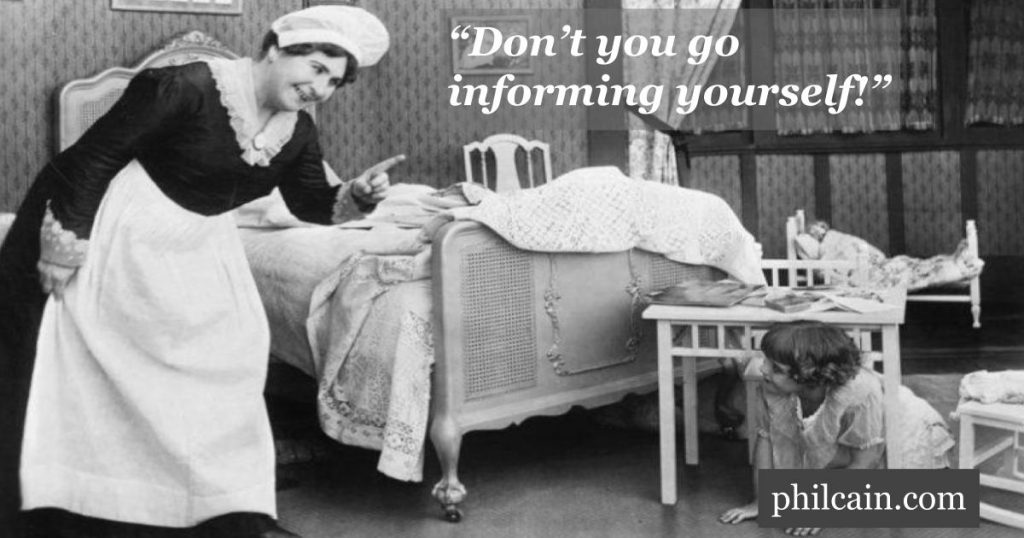
The official guidance is that children should not drink alcohol before the age of 15, and from then up to the age of 17 only at a very low level, at most one day a week. Exposure to alcohol at any age tends to make us worse at controlling our future intake.

By the age of 14 around half of children in the UK had tried more than a few sips. Drinking below 14 is associated with greater chances of injury, involvement in violence, and suicidal thoughts and attempts.

Overall the level of drinking among children and young adults seems to be declining, perhaps because of technology. ■

Labels can empower alcohol drinkers

January 10, 2024

As responsible adults we should be presented with accurate, eye-catching and timely information about alcohol’s immediate and long-term effects. Anything less is to squander the benefits of decades of scientific research.

Whether we are from the left, right or centre politically, we cannot deny we are better off for encouraging choices which serve our long-term interests. And there is a mountain of scientific evidence showing alcohol impairs this kind of decision-making.

As a sedative alcohol causes a kind of acute cognitive near-sightedness, with our mental life more than usually occupied with attending to our immediate surroundings. Matters beyond these narrow confines often slip our minds, whether next door or tomorrow morning.

The haze of inebriation can also mean we do and say things which, to coin a phrase, “seem like a good idea at the time”, only to prove otherwise later. These can range from the faintly embarrassing to the life-changingly serious, depending on the circumstances we encounter.

Regularly drinking above a low level of around 14 UK units (140ml/4.7 fl oz) a week can disturb our sleep, lower our mood, impair our sexual function, increase our anxiety and blur our memories.  These largely ignored side-effects can undermine our quality of life and limit our choices.

Should we drink more than a little for a period of weeks, months or years we may unwittingly slip into a degree of alcohol dependency, where our brains adapt to alcohol inebriation. We might then start to find we act more on the spur of the moment and have trouble making and fulfilling plans.

As a species we look for solutions and drinking alcohol can seem to be one off the peg. It relieves our discomforts, particularly after we are dependent. So it is hard to remember it is a sticking-plaster and the cause of many difficulties and discomforts we hope to escape.

Alcohol’s interference with our mental capacities and effect on our behaviour are undisputed science. Its fascinating complexity fills Alcohol Companion, which provides an accessible account. The problem is not that its contents are contentious, but that knowledge is not widespread.

Also scientifically unquestioned and too-little-known are the effects of alcohol drinking beyond our brains. Above a low level it increases our risk of cancers, heart problems, liver problems and physical injuries, as well as trouble with the law, relationships and employment. It is involved in most early-onset dementias and triples the risk of all types of it.

Warnings need to reach us reliably at the times and places it is most helpful to us. One simple remedy is to provide more informative labels. Such labels are now in the pipeline in Ireland and Australia. Efforts in Canada and the EU, however, are delayed, and blocked in the UK.

The invective used to justify the lack of label information is a reversal of the truth: It is the killjoy who fails to warn fellows of the risk of fueling depression and anxiety; And the crudely caricatured “nanny” of pro-alcohol cliché would be the first to shield us from disconcerting facts.

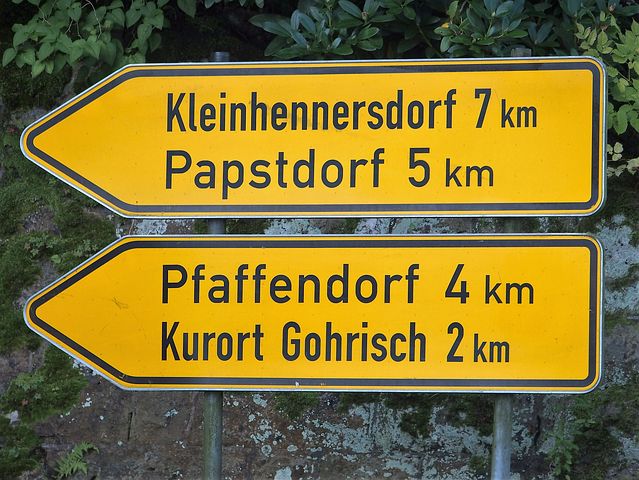
Few of us find cause for alarm or resentment in a road sign. Keeping alcohol drinkers in the dark at the moment we make our decisions to drink or not is to deny us the benefits of science.

Alcohol drinking impairs our short- and long-term decision-making, especially around alcohol drinking. It is self-serving flattery to suggest otherwise. We should be treated like adults, rather than taken for fools. ■

Orkney’s link in nascent alcohol-free hotel chain

October 23, 2023

The owner of Orkney’s Stromness Hotel confirmed it will not sell alcohol as part of a nascent socially-engaged hotel chain.

Jersey-based Payman Investment already owns a dozen hotels and has three more in the pipeline, says CEO Na’im Anis Payman, on a call from Albania.

“There is no huge money pot,” says Payman, saying the chain’s expansion is funded from bank financing.

Its eclectic portfolio already offers stays in locations from Stoke-on-Trent to Ulaanbaatar and points between.

Payman follows baha’i, a faith barring the consumption and sale of alcohol, but he notes his view also fits with science.

The company’s alcohol-free approach is best seen as part of a human and women’s rights agenda, says chief impact officer Tahirih Danesh.

The details of Stromness’s offer are still being finalised, but a common feature of all the hotels will be strong ties with local communities, Danesh says.

It will definitely include serving soothing alcohol-free drinks in the public Flattie Bar. Other possible options will include a spa, massage, yoga and tai chi.

The hotel will not be entirely alcohol-free either, because guests at events like weddings will be allowed to bring their own supply.

Payman says the clarified alcohol-free plan now has significant public and private support, having caused a rumpus when first floated in August. ■

  • « Go to Previous Page
  • Page 1
  • Interim pages omitted …
  • Page 54
  • Page 55
  • Page 56
  • Page 57
  • Go to Next Page »

Primary Sidebar

  • Bluesky
  • Instagram
  • LinkedIn
  • Twitter
  • WhatsApp

Copyright © 2026 · Phil Cain Impressum

Manage Consent
To provide the best experiences, we use technologies like cookies to store and/or access device information. Consenting to these technologies will allow us to process data such as browsing behaviour or unique IDs on this site. Not consenting or withdrawing consent, may adversely affect certain features and functions.
Functional Always active
The technical storage or access is strictly necessary for the legitimate purpose of enabling the use of a specific service explicitly requested by the subscriber or user, or for the sole purpose of carrying out the transmission of a communication over an electronic communications network.
Preferences
The technical storage or access is necessary for the legitimate purpose of storing preferences that are not requested by the subscriber or user.
Statistics
The technical storage or access that is used exclusively for statistical purposes. The technical storage or access that is used exclusively for anonymous statistical purposes. Without a subpoena, voluntary compliance on the part of your Internet Service Provider, or additional records from a third party, information stored or retrieved for this purpose alone cannot usually be used to identify you.
Marketing
The technical storage or access is required to create user profiles to send advertising, or to track the user on a website or across several websites for similar marketing purposes.
  • Manage options
  • Manage services
  • Manage {vendor_count} vendors
  • Read more about these purposes
View preferences
  • {title}
  • {title}
  • {title}
Loading Comments...