• Skip to main content

Alcohol Review

Alcohol understanding for all

  • Highlights
  • AR2026
    • AR2025
    • Earlier events
  • Register
  • About
    • Organisers
    • Contact
  • Log In

newsletter

Alcohol Review – Issue 109, December 23rd 2024

December 23, 2024

Read on the homepage

In this issue: Finns told less alcohol, better health; UK alcohol “catastrophe” highlighted’; US issues exceptionalist health report; Australian delivery proposals hailed; Saudi 2034 stadium drinking ban; Nigeria sachet ban enforcement

Register now for Alcohol Review 2025, a uniquely accessible, solution-focussed forum for everyone involved tackling alcohol harm worldwide. Showcase your research and action alongside an agenda-setting live online event. 

News:

Finns told less alcohol, better health: New guidelines say drinking alcohol is not recommended for anyone for health and that any amount should be “as small as possible”. For children, young people, and pregnant and lactating women alcohol is “not recommended at all”. Seperately, South Korea’s health ministry said it was thinking of adding a label to say something similar. 

UK post-covid “catastrophe” highlighted: An alliance of 60 UK NGOs called for minimum alcohol pricing in England to help address a “catastrophic” 42% rise in alcohol deaths since the covid pandemic. The Labour government has so far done nothing to stem the tide of alcohol deaths, keeping alcohol taxes unchanged in real terms despite being elected on a manifesto saying it would focus on preventing health problems. Its Conservative predecessor actively stoked the surge in alcohol deaths with years of real terms alcohol tax cuts. Separately, figures showed alcohol deaths rose by almost two-thirds in the last decade across Northern Ireland where minimum pricing is on the agenda.

Exceptionalist US alcohol health report: A committee criticised for having financial ties to the alcohol industry and a lack of expertise said in a pre-publication report that moderate alcohol drinkers have a 16% lower all-cause mortality risk than non-drinkers. The National Academies of Sciences, Engineering, and Medicine committee’s pronouncement contradicts global authorities on the subject of alcohol, like the WHO, which says alcohol harms health even at low doses because it is carcinogenic. The report is expected to inform decision on updated dietary guidance.

Australia delivery restriction proposals hailed: Alcohol harm reduction campaigners welcomed proposed alcohol laws in South Australian which prioritise the health and wellbeing of women and children. Among the moves would be restricting alcohol delivery times, with late night alcohol deliveries thought to worsen domestic violence. Separately alcohol harm NGO FARE Australia announced the departure of its CEO of five years Caterina Giorgi, who will continue until the end of February.

Saudi World Cup stadium drinking ban: Football fans will be banned from drinking alcohol in stadiums at the 2034 World Cup in Saudi Arabia, the Guardian reported. It has not been announced whether co-branded alcohol-free beer will be allowed as it was at the Qatar tournament after a stadium alcohol ban was seemingly decided last minute. This gave the brand enormous global live TV and editorial exposure to audiences, includng many children and young people.

Nigeria sachet ban enforcement begins: The National Agency for Food and Drug Administration and Control seized alcoholic beverages packaged in sachets and small plastic bottles the southern Delta State this month. The agency said it expected to make more raids. Reports of the outlawed products still being openly sold in Lagos suggest an uphill battle.

Message of the month:
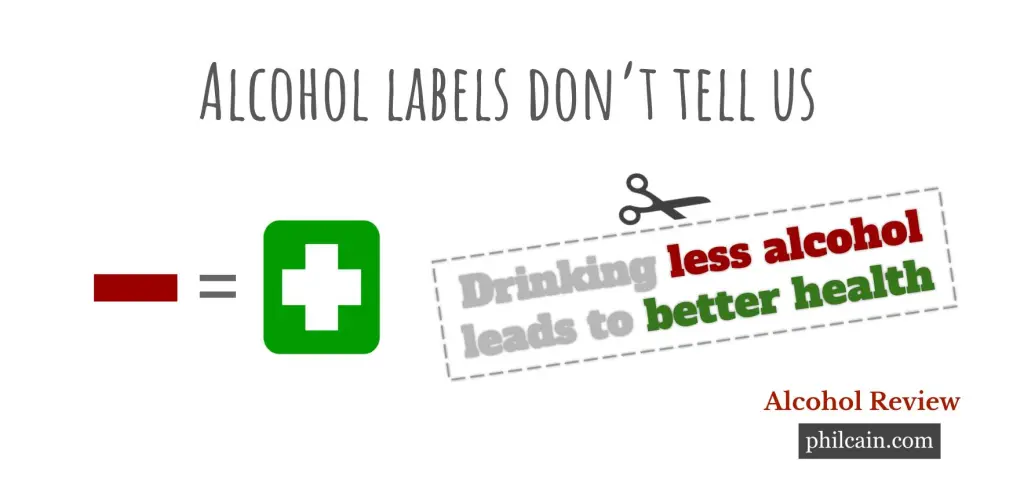
Alcohol, less is more: Reducing alcohol intake reduces the risks it poses to our health from the smallest amount. Fewer people know this than should. ■
Alcohol Review – Issue 108, November 15th 2024

November 15, 2024

Read on Substack

In this issue: EU alcohol labelling in limbo; US post-pandemic drinking stays high; Northern Ireland readies minimum pricing; Trump 2 brings uncertainty; Industry playbook outlined; Canada may pay availability price. Opinion: Alcohol-free beer hype is unhelpful.

Is this service helpful? Please join Alcohol Review‘s supporters and leave a testimonial

News:
EU alcohol labelling in limbo: MEPs are at loggerheads over proposed EU commissioners, not least the would-be health and animal welfare commissioner Oliver Varhelyi. He gave little reassurance the EU’s stalled alcohol nutrition and health labelling plans would move forward under him. A possible resolution may be to strip him of responsibility for reproductive rights and health preparedness, but that may still leave labelling in limbo.

US post-pandemic drinking up: Elevated levels of US alcohol consumption during the covid pandemic continued into 2022, found a new study. This would be consistent with US alcohol deaths that year being almost a third higher than before the pandemic. Little has been done, but Chicago Mayor Brandon Johnson is now proposing a tax hike of over 30%.

Northern Ireland readies minimum pricing: Stormont’s health minister said he is looking for executive approval for introducing minimum unit pricing for alcohol in Northern Ireland like that in Scotland.

Trump 2 brings uncertainty: The consequences of the second Trump administration for alcohol harm are unclear. Donald Trump is expected to give a prominent role in steering US health to prominent health conspiracy theorist RFK Jr. The industry, meanwhile, is fearful of tariff escalation. One analyst saw Brown-Forman, Constellation Brands and Diageo as possible casualties of a round of tariff raising.

Industry playbook outlined: The WHO launched an “Alcohol Policy Playbook” offering research contradicting commercial narratives and showing “no level of alcohol consumption is safe”.

Canada may pay availability price: Ontario’s widening of alcohol availability could result in a 40% rise in alcohol-attributable hospitalisations and 700 emergency room visits a day, a health coalition warned.

South African policy review: South Africa’s treasury has published a policy review paper on alcoholic beverage tax, including the possibility of introducing a minimum pricing and reforming taxes.

Opinion: [supporter preview]
Alcohol-free beer hype is unhelpful
Heavy marketing has created a buzz around alcohol-free beer diverting vital public attention from surging rates of alcohol harm. The stakes are too high to let commercial hype eclipse evidence-based action.

“What a great piece… the best, clearest thing I have read to date on the topic.”

Is this service helpful? Please join Alcohol Review‘s supporters and leave a testimonial

Alcohol messages

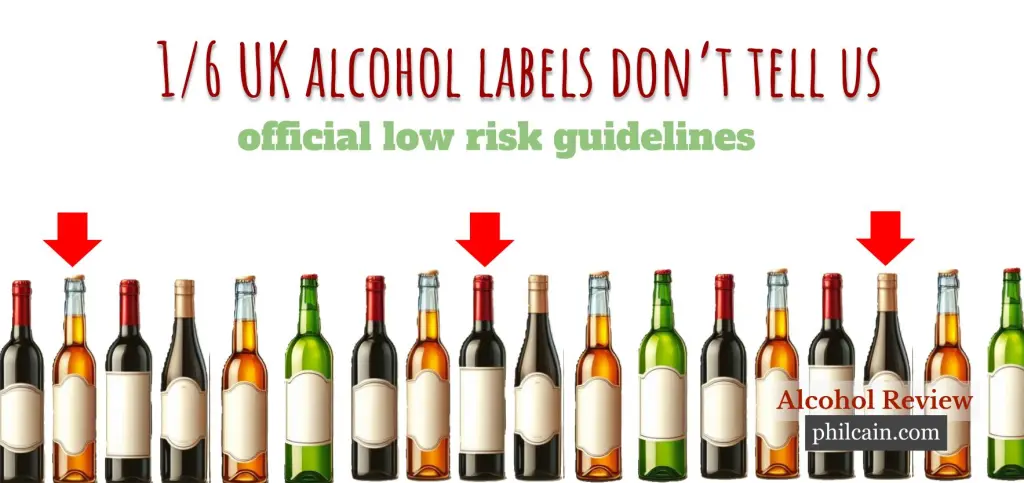
Chronic labelling failure: Around one-in-six alcohol labels in the UK fail to give the official 140ml per week low risk drinking guidelines eight years after their introduction, according to the alcohol industry’s own figures.

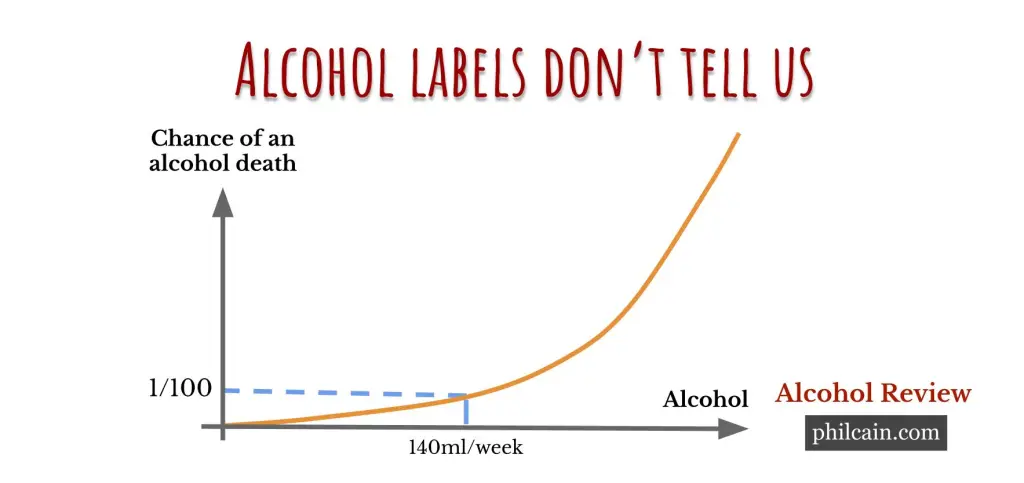
Alcohol risk made simple: The chance that alcohol causes our death increases rapidly with the amount consumed. Drinking under 140ml a week is estimated to keep the chances of an alcohol death below 1/100. The only way to make the risk zero risk is to not drink any.


Alcohol can cause brain damage and dementia: Drinking more than a small amount of alcohol increases the risk of developing dementia in later life and can cause early-onset dementia and brain damage.

Full list of shareable alcohol messages…

Is this service helpful? Please join Alcohol Review‘s supporters and leave a testimonial
■

Alcohol Review – issue 92, July 14th 2023

January 10, 2024

Find this service useful?
Please join the Alcohol Review‘s supporters who make it possible

This week: Brits want alcohol-protected policy; CBT may help people with alcohol afflicted people sleep; Court ruling undermines Swedish alcohol monopoly

*Join the WhatsApp Group*

Seven in ten Brits want government policy to be protected from alcohol industry interference and a majority want a ban on alcohol advertising, says a survey for the Alcohol Health Alliance which launched its manifesto in Parliament this week.
https://twitter.com/alcohol_review/status/1678539848272187392

“Cognitive behavioural therapy (CBT) is an effective first-line treatment for insomnia among individuals with alcohol use disorder, regardless of abstinence from alcohol.”
https://twitter.com/alcohol_review/status/1679151249306820613

“Our research confirms that substance use induces long-lasting changes in the inhibitory communication between dMSNs and CINs [neurons], consequently dampening cognitive flexibility.”
https://twitter.com/alcohol_review/status/1679028325946105858

“Sweden’s Supreme Court on Friday said a Danish online wine retailer has the right to sell directly to Swedish households and businesses, in a ruling that could challenge the Nordic state’s alcohol retail monopoly.”
https://twitter.com/alcohol_review/status/1677312959297515521

“The percentage of [Kenyan] men who consume alcohol every day or almost every day decreases from 19% among men in the lowest quintile to 9% among those in the highest wealth quintile.”
https://twitter.com/alcohol_review/status/1676487967781662720

Alcohol Review – issue 93, July 22nd 2023

January 10, 2024

Find this service useful?
Please join the Alcohol Review‘s supporters who make it possible

*For alcohol books and resources, visit the homepage*

This week: US alcohol death surge rolled on; More US states allow teenage bartenders; Alice Springs’ restrictions prolonged; French tax tweak; Rwanda’s “Let’s drink less” campaign. Discussion: We should look more at the big picture.

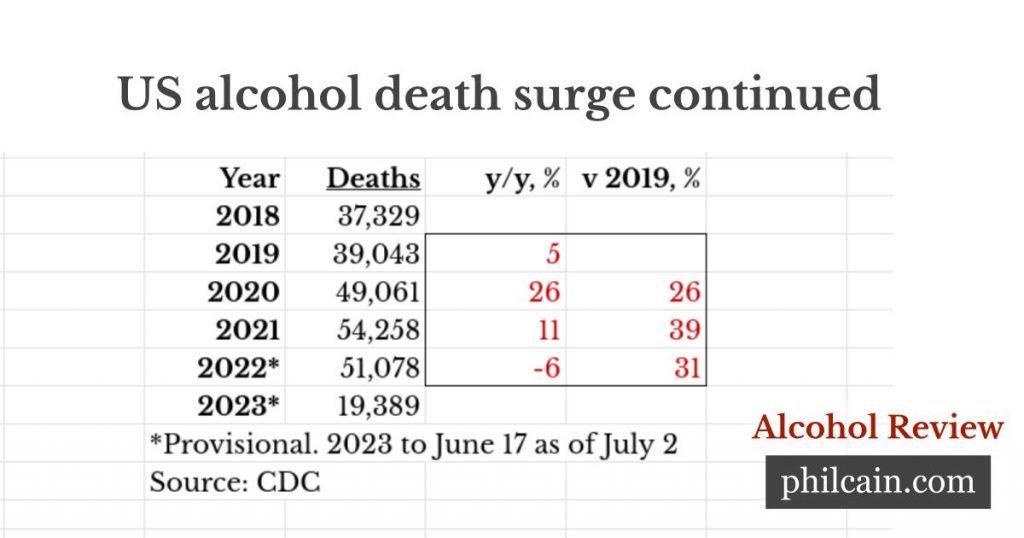
US alcohol death surge rolled on: The surge in US alcohol deaths continued last year with alcohol-induced fatalities at least 31% above pre-pandemic levels, according to the latest CDC estimates. The previous year saw a death toll 39% above pre-pandemic levels. The figure is only likely to increase as new cases are added to the CDC’s tally. It is already 6,000 higher than its February estimate.

More US states allow teenage bartenders: Nine US states have introduced bills to lower the minimum age for serving alcohol since 2021, according to a report by the Economic Policy Institute.

Alice Springs’ restrictions prolonged: Australia’s Northern Territory government will extended takeaway liquor restrictions in Alice Springs for at least the next 12 months, citing a dramatic reduction in harm to the community since their introduction. The local mayor and others, including the alcohol interests, are unhappy with the decision.

French tax tweak: France’s minister of economy told Le Figaro newspaper the government plans to increase alcohol taxes to curb excessive consumption. It appears to be considering a subtle change, indexing alcohol tax to last year’s inflation rather than that of the year before that.

“Let’s drink less” campaign: The Rwandan government this week launched the “TunyweLess”, or “Let’s Drink Less”, campaign in response to a survey showing a significant increase in alcohol consumption.

FASD nightmares: 60% of the children with foetal alcohol spectrum disorder experienced nightmares, while 44% exhibited frequent insomnia symptoms, according to a new study.

Discussion

Let’s look big picture: “It’s pretty clear why people don’t drink–the real question is why do people continue to drink when they don’t want to?” asked journalist Moya Lothian-McLean in a recent Guardian opinion piece. Alcohol Review suggests we should look more at the bigger picture and ways politicians can make healthier choices easier for us.

*For alcohol books and resources, see the homepage*

Alcohol Review – issue 94, August 3rd 2023

January 10, 2024

Find this service useful?
Please join the Alcohol Review‘s supporters who make it possible

This week: Brits now enjoy big savings from alcohol reduction; UK to end to-go alcohol from bars; Alcohol boosts blood pressure; A third of Irish farmers drink harmfully; Ad tracking aid shows promise

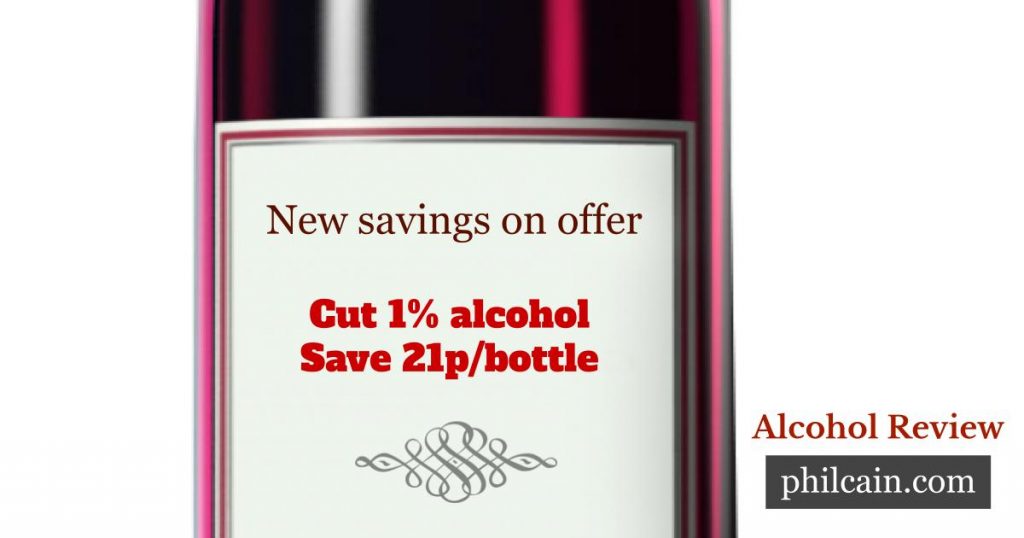
Brits now enjoy big savings from alcohol reduction: UK wine suppliers and their costumers now pay 21p less in tax for every percentage point they cut from any 75cl bottle of wine purchased. This means tax on a 75cl bottle of 9% wine is now £1.92 ($2.44), a 14% fall of 31p from the flat fee of £2.23 charged before August 1st. The old system meant that wines of 14% were charged 40% less per ml of alcohol than wines of 9%, despite posing less risk to consumers’ health. Public health advocates welcomed the new tax structure, as well as taxes rising to match inflation. The wine industry complained that it will lose money under the news system because its current offerings have not adapted to the new tax system. Others say there are no good low alcohol wines. Alcohol Review suggests that some businesses will succeed in profiting where others fail. 

UK to end to-go alcohol from bars: The UK will wind up a scheme to allow pubs to sell to-go alcohol on 30 September, the Home Office has said. It stands in marked contrast to the widespread extension of state level bar off-sales mandates in the US, where alcohol deaths were still up 31% on pre-pandemic levels last year.

Alcohol boosts blood pressure: As little as one alcoholic drink a day increased systolic blood pressure, according to a new study. The study found no beneficial effects in adults who drank a low level of alcohol compared to those who did not drink alcohol.

A third of Irish farmers drink harmfully: One in three farmers in Ireland drink alcohol at harmful levels, according to a new study, and one in 20 takes drugs, with most of them doing so to a risky degree. But 28% do not drink alcohol.

Ad tracking aid shows promise: An artificial intelligence called Zero-Shot Learning has shown promise in recognising alcohol exposures in media, a laborious task normally done by people.

*For alcohol books and resources, see the homepage*

Alcohol Review – issue 95, September 29th 2023

January 10, 2024

Find this service useful?
Please join the Alcohol Review‘s supporters who make it possible

In this issue: Australian alcohol deaths accelerate; Scotland plans minimum price adjustment; UK labelling relaxation; US costs to climb; TV shots off target; Dutch wariness rises

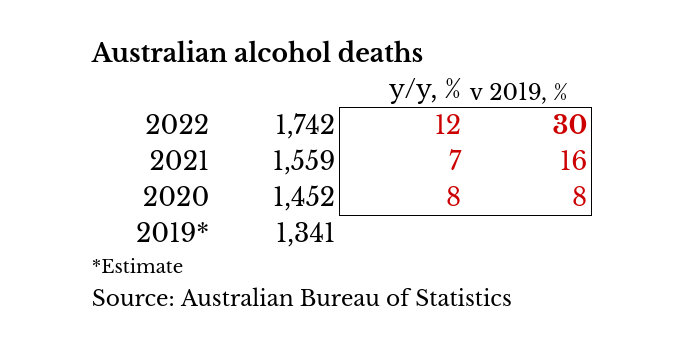
Australian alcohol deaths up 30% since pandemic

The number of alcohol-induced deaths in Australia increased to around 30% above pre-pandemic levels in 2022. They rose 11% year on year, on top of a 7% rise in 2021 and around 8% in 2020.

They are at their highest level for over a decade, a pattern seen in other anglophone countries, which are among the most scrupulous in reporting figures.

“It is absolutely devastating to see the ways that alcoholic products cause so much harm to so many families and communities across Australia. Every person that dies because of alcohol is a life cut tragically short…,” said Caterina Giorgi of alcohol harm NGO FARE Australia.

America’s alcohol death rates were up 31% on pre-pandemic levels in 2022, falling back from 38% above in 2021. Canada’s alcohol deaths were up a fifth during the pandemic, as were the UK’s. Comment/sources

Scotland plans minimum price adjustment

The Scottish Government published plans to increase the minimum unit price of alcohol from 50p to 65p to catch up with inflation since its introduction in 2018.

A study released in parallel said an increase to 60p would reduce the number of harmful drinkers by well over 26,000, while removing the minimum price would increase their number by about the same.

The industry response has so far been muted, focussing on the fact the increase would mean the price of some budget drinks goes up. Comment/sources

UK labelling relaxation

Drinks containing up to 0.5% alcohol could be labelled as “alcohol free” in the UK, as in Australia, Germany, New Zealand and the US. Some wonder if the rule may also allow them to be used to bypass alcohol advertising rules as 0.0 brews now do. Comment/sources

US costs to climb

The annual cost of alcoholic liver disease is expected to more than double to $66bn in the US by 2040. It is projected to cost a total $880bn between now and 2040, $355bn in direct healthcare-related costs, and $525bn in lost labour and economic consumption. Comment/sources

Shots off target

Broadcasters providing coverage of sporting events should avoid ‘problematic’ shots of fans drinking alcohol, a team of researchers said Thursday. The study’s observations were based on watching the Women’s World Cup. Comment/source 

Dutch wariness rises

Some 40% of the 10- 17-year-old in the Netherlands said alcohol was unhealthy, compared with 27% of adults. Those saying alcohol drinking was fun rose from 13% among 10-11-year-olds to over half of those aged 16 and 17. Comment/sources

US insurance denial down

18 US states still have laws allowing companies to deny insurance payments for treatment to people inebriated with alcohol when they were injured, down from 37 in 2004. The number of states explicitly banning the practice increased from three to 15. Comment/sources

  • « Go to Previous Page
  • Page 1
  • Page 2
  • Page 3
  • Page 4
  • Page 5
  • Page 6
  • Go to Next Page »

Copyright © 2026 · Phil Cain Impressum