• Skip to main content

Alcohol Review

Alcohol understanding for all

  • Highlights
  • AR2026
    • AR2025
    • Earlier events
  • Register
  • About
    • Organisers
    • Contact
  • Log In

story

England’s absurd beer ad brings home need for regulation

January 10, 2024

The wisdom of making Euro 2024 a beer marketing bonanza should surely be questioned when alcohol deaths are still 30% above pre-pandemic levels in the UK and elsewhere.

Imagine a national football hero wreathed in heavenly light, carrying a holy relic to bless long ranks of beer cans as they emerge from a production line. “Bring it home!” our hero commands as the cans wheel past in obedient legions. 

The message is clear for anybody witnessing this unlikely tableau. Any true admirer of this man and supporter of the national team with which he played must procure some of these magical cans and imbibe their contents.

It is satire gone too far, surely? It would require a world in which quasi-religious imagery was used to manipulate people into consuming a health-harming psychoactive product while watching sportspeople in their prime.

Well, absurd yes, but it is 2024 when the bedrock of satire is what underpins reality. This is the storyline of the all-too-real Budweiser ad for Euro 2024 featuring Geoff Hurst, sole survivor of England’s 1966 World Cup winning team.

England may not get far in the tournament, but they can come home safe in the knowledge they are forever a team with one of the most ludicrous alcohol ads of 2024, bending England’s national football folklore into a commercial goal.

https://www.youtube.com/watch?v=fZf5KtPWaJ0
Budweiser’s quasi-religious beer ad

Sports watching is an alcohol marketing dream. The phases of boredom, anxiety, depression, frustration, sociability and euphoria it induces are all powerful cues for alcohol drinking. It may even help train us to feel we need alcohol to cope with emotions at other times.

Not walking alone
This is, of course, not the only alcohol ad doing the rounds during Euro 2023. TV viewers young and old are continually persuaded in any number of cunning ways to believe a few beers are an essential accessory to proper football viewing.

The alcohol industry boilerplate counter-message “drinking responsibly” does not stop the constant association building. And the example set by “real fans” at the matches does not help either, with some so assured of beer’s pivotal role in the football story they launch half-full beer cups at the players.

Euro 2024 is a beer industry bonanza, like all football tournaments. Advertising is a way of capitalising on the enormous buzz of activity around it, fuelling demand from existing beer drinkers and imprinting on new potential customers, like children and young people.

The idea alcohol companies might now or ever curtail their ads voluntarily is laughable. Alcohol companies are obliged to do what is allowed to enrich shareholders. The only way to curb a vector of incentivised harm is to have effective ad regulations. These are currently absent in most countries.

And ad regulation needs to cover alcohol-free brews which share their brand with an alcoholic beer. These are widely used to crowbar alcohol brands into sports coverage, like the upcoming Olympics. The subterfuge is obvious given the tiny share of alcohol-free sales.

Individual approach
No one of us is able to make these legal changes, which will take time. So all we can do in the meantime is protect ourselves and those around us as best we can. 

One way is to avoid being in alcohol soaked environments including our homes. Alcohol is simply not an essential part of playing sport, nor an essential part of watching it either. Alcohol, of course, played no part in Geoff Hurst’s hat trick of goals in 1966. There would have been no beer ads for TV viewers and lager would have been, perhaps, 1% of the beer market.

We might remind ourselves that one of the greatest players of the same era, Sir Stanley Matthews (pictured), didn’t drink. Meanwhile a crop of football stars including France’s Kylian Mbappé oppose alcohol promotions. Opting out is not easy and not currently possible if someone does not offer a religious reason, even though there are plenty of secular reasons.

We might also remind ourselves that alcohol blighted the lives of many of the best football players, like Diego Maradona, George Best and Paul Gascoigne, to name just three known to this very occasional football viewer. Did people watching the 1966 England match need beer to appreciate it. Would that not have dulled the experience rather than enhance it. 

We might also imagine that avoiding alcohol when watching football might be positive training for us. We can use it as a way to learn to ride a roller coaster of emotions without turning to alcohol to cope. Or we can at least see it as a way of reducing the risk of developing this common problem. 

And finally, perhaps, we might ask ourselves something: If we are unable to enjoy watching football without consuming alcohol then maybe we do not like the game? ■ 
Find this story on X
Find this story on LinkedIn
Want to see more? Join the supporters
The personal story conundrum

January 10, 2024

As someone writing about alcohol I am often asked to tell my own story. I find it very difficult to know how to respond.

It is not that I don’t have one. I do. I even wrote it down once. But it is never the right moment to tell it.

Lived experiences make a huge contribution to the discussion around alcohol, giving us the insider perspectives we need.

The openness of Labour MPs Jonathan Ashcroft, Liam Byrne and Caroline Flint has had an enormous positive impact.

At the same time adding one’s own tale into the mix can, in some circumstances, have significant drawbacks.

Not being the story
Journalists of all kinds typically avoid talking about themselves because it obscures the broader stories they try to tell.

We would hardly tolerate a political journalist book-ending each piece with an update on which way they were leaning.

Like them, I typically cover stories involving many thousands of other people, not just me. I am just a tiny drop in this ocean.

Alcohol is odd too. There is no perfect amount of personal experience of it that make us more credible when talking about it.

Too much and some will think we are probably shaped by it. Too little and they will wonder if we can possibly know the subject.

Suffice it to say, I hope, I am somewhere in the middle, like most people, neither unaffected nor the most affected.

Researching my book shed new light my experiences, making me see them afresh, and of myself as part of a vast continuum.

This motivates me to listen to other people, and try to explore the research with imagination, empathy and critical thought.

Striking a balance
Hearing stories and ideas beyond our own experiences is a vital part in assembling the jigsaw puzzle of alcohol understanding.

That said, we can also often have good reason to keep our own experiences to ourselves. And we have every right to.

We all share things in some circumstances and not others, and the same is true here. It is up to us.

It was a decision I agonised over. While I could see some positives, I could also see downsides. Would it add or subtract value?

I concluded that telling my own story comes second to uncovering and telling stories beyond myself.

Journalists are by no means the only ones with circumstances not always wholly suited to telling their own stories.

So, if there is a story I would tell about my own alcohol experience in the hope it helps others, it is this one. ■

Alcohol and beyond with Alison Canavan

January 10, 2024

Supermodel, wellness guru and single mum Alison Canavan shares how her problematic relationship with alcohol intertwined with stellar international success and her longstanding Buddhist practice. She shares what she learned and what she has carried into her new alcohol-free life in LA. ■

Go figure: Alcohol jobs versus dependence

January 10, 2024

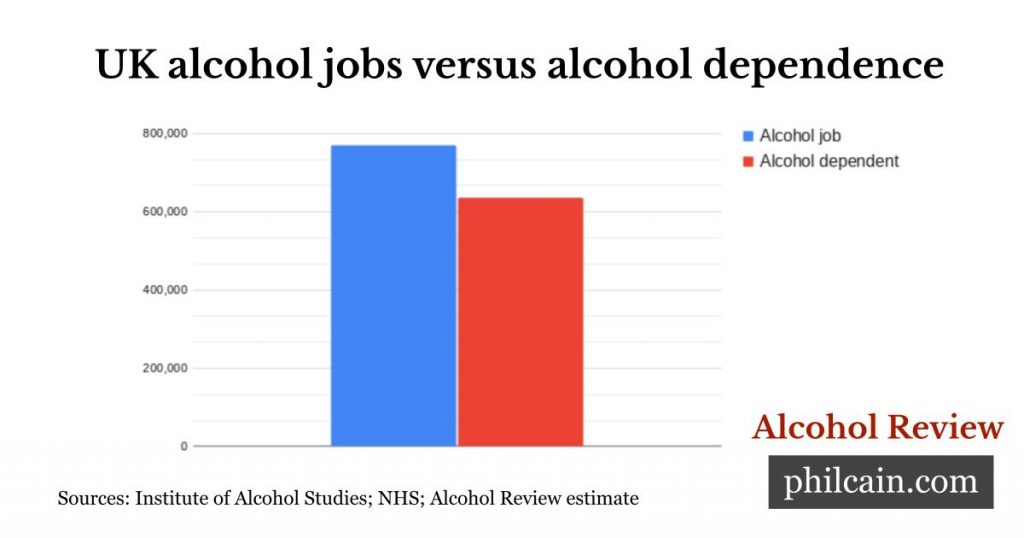
There are maybe 770,000 part-time and full-time jobs connected with alcohol business in the UK, according to an IAS estimate. And there are about 638.000 people who are alcohol dependent, meaning they experience side effects when not inebriated. ■

Alcohol undermines our nerve

January 10, 2024

This is one of a collection of shareable alcohol messages. If you think more people should know, please share and join the supporters.

Our lives, world events and, yes, watching football can be roller coaster rides, exciting and, at times, seemingly unbearable. Alcohol can make us less able to deal with stress in the future. Facing stress alcohol-free is a useful rehearsal. ■

Try out some alcohol policies at home

January 10, 2024

Policies and individual choices are normally seen as completely separate, but in reality they merge. So why not ring in the New Year by road-testing some effective alcohol strategies at home?

We all set some rules, or policies, for our homes, for example. Few let outdoor shoes go beyond a certain threshold. Weaponry, road vehicles, fire, smoke and harmful chemicals also typically have their perimeters.

These are not prohibitions. They are regulations. By crossing borders we can have access to all of the things verboten in some places. Out there is a target-shooting, tanker driver who only smokes when scrubbed up, unarmed on the veranda.

The regulatory systems of our private lives often operate on the basis of unwritten policies picked up from parents, partners, and common sense. They offer an easy way to keep a safe, livable and inexpensive environment. 

These policies are typically adopted and applied without any democratic mandate. But we will also, sometimes, decide to set new policies, often through a process of thought, negotiation and compromise.

So why not consider adding evidence-based alcohol policies to the mix. We might take, for instance, government policies reckoned to curb harm at a population level as a starting point: increase the price, and reduce availability and marketing.

A few calculations might allow us to set a minimum unit price. This we might do by identifying products which are below it. Or we might levy a alcohol per unit “tax”, setting aside revenue for household running costs and infrastructure.

Implementation of these might be complicated. Perhaps an easier option would be reducing alcohol availability. We might bar keeping alcohol at home; Or to limit the stockpile; Or not put what we have in the fridge; Or, maybe, not to buy online. 

Limiting home availability would have a knock-on effect. It bumps up the price of alcohol at home, imposing on inhabitants the cost of leaving the house to buy it. This also gives us a chance for second thoughts. 

Reducing marketing exposure is trickier, because alcohol advertising targets us without our consent. But we can reduce it, by putting alcohol brands out of sight at home. We can also filter some online ads. And we can try to avoid alcohol retail.

Harmful levels of drinking are best addressed with the aid of medical advice. But making our own environments less alcohol loaded makes low-risk drinking the easy option. And home drinking is the source of the bulk of alcohol harm.

We all set and live by policies to create environments which are safe and best serve our needs. We need politicians to do this for us in environments we share. ■

  • « Go to Previous Page
  • Page 1
  • Interim pages omitted …
  • Page 18
  • Page 19
  • Page 20
  • Page 21
  • Page 22
  • Interim pages omitted …
  • Page 44
  • Go to Next Page »

Copyright © 2026 · Phil Cain Impressum