• Skip to main content
  • Skip to primary sidebar

Alcohol Review

Alcohol understanding for all

  • Highlights
  • Events
    • AR2026
    • AR2025
    • Next year’s event
    • Earlier events
  • Register
  • About
    • Organisers
    • Contact
  • Log In

story

Why are we paying so much for alcohol-free drinks that aren’t taxed?

January 10, 2024

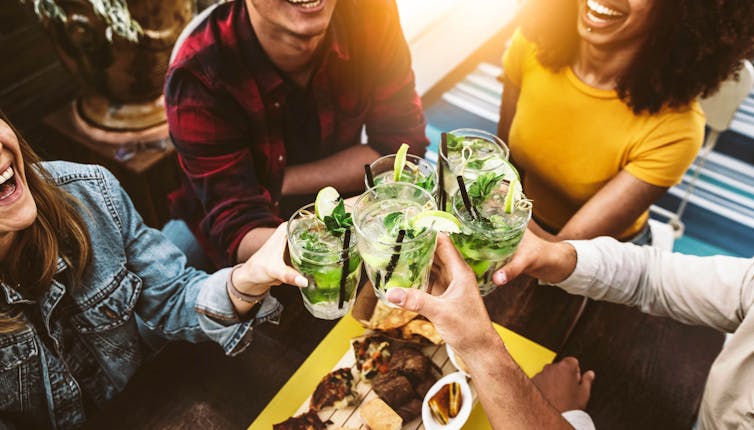
Image Shutterstock

by Cameron Shackell, Queensland University of Technology

Dry July, an Australian fundraising campaign to support people affected by cancer, is almost here again. The premise is that abstaining from booze and hangovers for a month frees up money to donate.

But with prices in the booming alcohol-free drinks category often rivalling those of regular tipples, participants this year might find they have less spare cash than they anticipate.

Traditional alcohol producers, who have expanded into the US$11 billion non-alcoholic drinks industry, have helped make the high prices charged seem acceptable to consumers by using a marketing tactic called price-anchoring.

Lured into paying more

When we encounter a new product, we latch onto whatever seems relevant in the immediate environment to estimate its value. Sellers often exploit this by staging information at purchase points. The classic is a price tag with $99 struck out and $79 written in. Whether it’s accurate or not, the $99 reference point shapes our perception of value and price.

This so-called “price anchoring”, is just one example of the broader anchoring cognitive bias described by psychologists Amos Tversky and Daniel Kahneman.

The essence of anchoring is that we tend to rely too heavily on an initial piece of information (the “anchor”) when making decisions. This can lead to skewed judgements and poor decisions in everything from deciding whether to have surgery to buying real estate.

Anchoring has been used to reinvent and elevate the virgin drinks category by exploiting the fact we are used to paying high prices for alcohol in bottles, cans or glasses of a certain size, shape and sophistication. When alcohol-free versions with similar labels appear beside them on the shelf, website or menu, we tacitly accept they should command roughly the same prices.

It’s not just that the next bottle along provides a suggestive price. Our brains, steeped in marketing, know that alcohol prices can range far upwards from “normal”, making them not just comparison points but the proverbial $99 scratched out. So even if we spend a lot on non-alcoholic wine, we feel like we have scored compared with what we might have dropped on a bottle of Grange.

Where we are most susceptible

The effect is strongest in bottle shops and bars, where the glitz of alcohol marketing, social pressure and the sheer number of expensive items overwhelms our rational thinking. But it also works on websites of the national liquor outlets where special zero-alcohol categories have been established beside the traditional beer, wine and spirits listings.

It doesn’t take much browsing to confirm that prices are similar. Currently, on one of the big retailers’ websites, a case of 330ml bottles of Heineken Lager (5% alcohol) is $55, Heineken 3 (3.3% alcohol) is $50, and Heineken Zero (less than 0.5% alcohol) is $49. Among the non-alcoholic spirits, 700ml of Lyre’s Dry London Spirit – “crafted to capture the essence of a classic gin” – is $51 at another outlet while the same size bottle of 37% alcohol Gordon’s London Dry Gin is $45. Gordon’s own non-alcoholic offering – Gordon’s 0.0 Alcohol Free – is listed at $38.

Price anchoring in the alcohol-free market comes with an extra twist of lemon.

Brands will encourage you to think their investment in developing “healthier options” using “high-quality ingredients” means high prices are fair enough, and that a non-alcoholic drink made with arcane “botanicals” and “adaptogens” in a nice bottle is worth a splurge.

But look at what makes up the price. All processed drinks incur a Goods and Services Tax (GST). And drinks that contain alcohol are hit with a heavy additional excise. The exact percentage is difficult to calculate, but the alcohol-related tax on a bottle of full-strength beer can exceed 30%.

Industry players don’t pay that tax on non-alcoholic drinks. So, in a sense, they are pocketing a hefty bonus that well-anchored customers forget is not being passed on to the government. Ouch.

Supermarkets and nurturing the next generation

Seemingly at odds with price anchoring is the appearance of non-alcoholic versions of some famous brands in supermarkets.

An incentive for names like Heineken, Coopers and Gordon’s to be in supermarkets is visibility in a family-friendly environment. Their brand becomes recognisable to customers who are underage now, but will soon be ready to buy alcohol for their 18th birthday bash.

It’s a risky strategy, however, and can attract adverse publicity. In fact, to protect their reputations, several supermarket chains in New Zealand require customers to show ID when purchasing non-alcoholic lookalike drinks.

Is there a way to overcome the illusion?

The Australian government’s Behavioural Economics Team (BETA) has an informative blog post on minimising the impact of price anchors. But research suggests even experts are susceptible.

Besides awareness, you can reduce the effect by curating your exposure to price information. If you need non-alcoholic drinks for home or an event, visit the supermarket before the bottle shop. The range may not be as big, the drinks may not be any cheaper, and you may need to go to the bottle shop anyway. But the experience will put the untaxed non-alcoholic products in a fairer context – the soft drink aisle. Comparing prices under those sober lights, you might suddenly feel like picking up a bottle of ginger ale instead.

In bars and clubs, you can try to flip the script. Ask for your soda water in a fancy glass with lots of ice and slices of lemon or lime. This anchors what’s in your hand to high-priced cocktails.

Of course, if you embrace the life of a true ascetic, H₂O is a zero-dollar option that, as Nietzsche said always suffices. In Dry July, you might even join the hype and call it non-alcoholic vodka.The Conversation

*Cameron Shackell is Visiting Fellow at Queensland University of Technology This article is republished from The Conversation under a Creative Commons license. Read the original article.
Alcohol unlearning curve

January 10, 2024

Increasing our exposure to an activity, like say playing piano, typically increases our skills in that activity, but the opposite is the case with alcohol drinking because it is an addictive psychoactive. The negative effects of exposure are greatest when we are still young and our brains are still forming. Find out more. ■

Alcohol can cause brain damage and dementia

January 10, 2024

Drinking more than a small amount of alcohol increases the risk of developing dementia in later life and can cause early-onset dementia and brain damage. ■

This is one of a collection of shareable alcohol messages. If you think more people should know, please share and join the supporters.

Guideline labelling’s welcome return leaves open question

January 10, 2024

Health minister gives UK the alcohol industry until September to introduce health guideline labelling

So it is welcome news that the government is pressing for the official guidelines to return in September (see video), albeit two years after they were quietly dropped.

I have joined calls for official health guidelines to appear on all alcoholic drinks labels since revealing that they had been dropped from the UK’s voluntary code in my reporting in late 2017.

It seems extraordinary that robust, scientific information about the safe consumption of a product could ever omitted from packaging, so undermining our right to make informed choices as consumers.

If official health guidelines do reappear on labels in September, as the government hopes, some can be forgiven for looking back and wondering whether self-regulation is an effective way to safeguard consumers?

The responsibility for such concerns about the current system of regulation lies with the alcohol industry. ■

Alcohol education is essential

January 10, 2024

Knowledge is necessary to inspire, shape and sustain positive change, with its dissemination providing the conditions for this change to occur. Alcohol is no exception.

We cannot require anyone to learn about alcohol, no more than we can require them to learn about physics or the Brontë sisters, but everyone should have the chance.

An accurate understanding of alcohol based on scientific research offers a solid basis for us to safeguard our wellbeing, both as individuals and as a society. 

Regulating alcohol prices, availability and ads are more effective as direct interventions, but education is necessary for these measures to be designed, justified and accepted.

Increasing the alcohol knowledge base of politicians, citizens and the media are preconditions for the implementation of effective alcohol policy. 

An asset for individualists 
A coherent understanding of alcohol is far better for us as individuals than relying on traditional rules of thumb, enabling us to avoid a wide array of misfortunes.

Those informed about alcohol can help themselves and others to avoid mistakes. Informed people can better help those who suffer alcohol harm and become a positive influence.

An understanding of the reasons for guidelines and regulations makes them far more likely to make people take heed than blind trust or irritation born of confusion.

The effects of alcohol are inherently misleading. We are bombarded by misleading ads with flimsy regulation and alcohol industry-run information platforms.

Inaccurate beliefs are therefore common, just as they are in stock market bubbles and politics. Grassroots education is the only way to put a lid on the spread of misconceived ideas.

Underpinning change
Financial education does not provide a safeguard from financial mistakes, but it does make us justifiably wary and recognise the benefit of robust regulation.

And, should we fall prey to financial misfortune, we can find the financial knowledge we need to understand what went wrong and how to avoid it in future.

Reliable alcohol knowledge can fulfil a similar role, helping to improve the lives of those who embrace it, for next to nothing, and enabling us to make the best of mistakes.

Alcohol education does not offer immediate, measurable payoffs, but a lack of understanding rarely has positive outcomes in any other area. Alcohol should not be shrouded in mystery.

Education ranks low on the policymakers’ alcohol to-do list, but it still remains vital to achieving a less harmful relationship with alcohol long term.

Learning about alcohol, a topic with enormous social, psychological, economic, health and political reach, can help us engage more fully as citizens as well as students. ■

Brits want alcohol-industry-protected policy

January 10, 2024

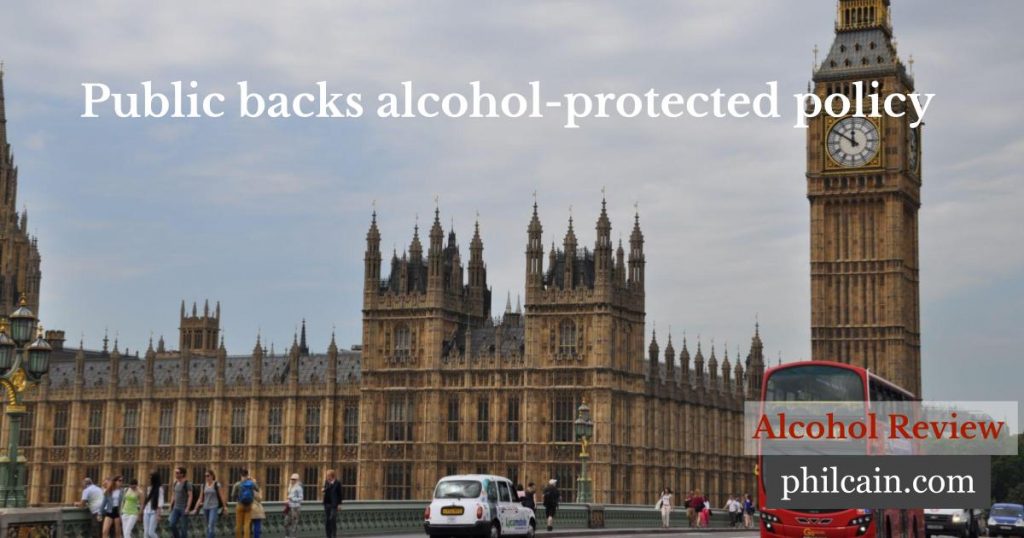
Seven in ten Brits want government policy to be protected from alcohol industry interference and a majority want a ban on alcohol advertising, says a survey for the Alcohol Health Alliance (which launches its manifesto in Parliament today.

“With a general election due to take place next year, our message to all political parties is that with the right political will there is a significant opportunity here to turn the tide on alcohol harm and drastically improve the lives of generations to come,” said Professor Sir Ian Gilmore, chair of the alliance.

The findings accompany the launch of a report and manifesto today in Parliament. The alliance points to National Audit Office figures showing alcohol deaths directly attributable to alcohol rose by 89% between 2001 and 2021, while alcohol harms cost the NHS £3.5bn a year.

The Yougov survey also found that 60% of people think alcohol displays and promotions in shops should only be visible to people who intend to browse or buy alcohol. They also showed strong support for making it mandatory to put basic information on alcohol product labels.

76% of respondents said the alcohol content of alcohol products should be required on labels, not just the alcohol percentage as is the case now, forcing consumers to work out how much alcohol a drink contains. Over half supported mandatory pregnancy warnings and nutritional information.

Alcohol products are exempt from laws requiring all other types of food and drink to include nutritional information on labels, despite alcohol being linked to seven types of cancer and over 200 other illnesses. The only requirement is for alcohol product labels to include volume, alcohol percentage and common allergens.

The UK government promised a consultation on alcohol labelling in 2020, but it did not deliver on its promise. ■

Twittersphere:

Report and manifesto here.: "70% of people surveyed support protecting Government policy from the influence of the alcohol industry and its representatives." (p3). Ad ban support below (p17). There were 12,000 on Yougov's panel.https://t.co/MWq2WAIxS5 pic.twitter.com/IB66MAQhKC

— Alcohol Review (@alcohol_review) July 11, 2023
  • « Go to Previous Page
  • Page 1
  • Interim pages omitted …
  • Page 17
  • Page 18
  • Page 19
  • Page 20
  • Page 21
  • Interim pages omitted …
  • Page 45
  • Go to Next Page »

Primary Sidebar

  • Bluesky
  • Instagram
  • LinkedIn
  • Twitter
  • WhatsApp

Copyright © 2026 · Phil Cain Impressum

Manage Consent
To provide the best experiences, we use technologies like cookies to store and/or access device information. Consenting to these technologies will allow us to process data such as browsing behaviour or unique IDs on this site. Not consenting or withdrawing consent, may adversely affect certain features and functions.
Functional Always active
The technical storage or access is strictly necessary for the legitimate purpose of enabling the use of a specific service explicitly requested by the subscriber or user, or for the sole purpose of carrying out the transmission of a communication over an electronic communications network.
Preferences
The technical storage or access is necessary for the legitimate purpose of storing preferences that are not requested by the subscriber or user.
Statistics
The technical storage or access that is used exclusively for statistical purposes. The technical storage or access that is used exclusively for anonymous statistical purposes. Without a subpoena, voluntary compliance on the part of your Internet Service Provider, or additional records from a third party, information stored or retrieved for this purpose alone cannot usually be used to identify you.
Marketing
The technical storage or access is required to create user profiles to send advertising, or to track the user on a website or across several websites for similar marketing purposes.
  • Manage options
  • Manage services
  • Manage {vendor_count} vendors
  • Read more about these purposes
View preferences
  • {title}
  • {title}
  • {title}

Loading Comments...