• Skip to main content
  • Skip to primary sidebar

Alcohol Review

Alcohol understanding for all

  • Highlights
  • Events
    • AR2026
    • AR2025
    • Next year’s event
    • Earlier events
  • Register
  • About
    • Organisers
    • Contact
  • Log In

story

Video: Meet the 170-year-old sobriety movement

January 10, 2024

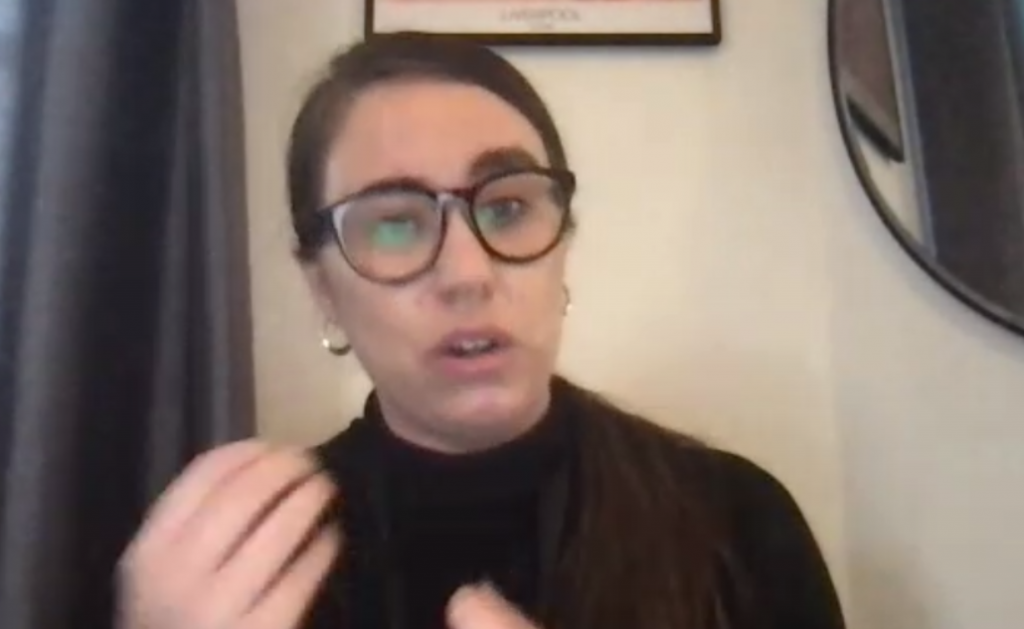
The current wave of attention might make it seem like tackling alcohol harm is a new thing, but far from it. Movendi International has been working in the area for nigh-on 170 years, with a name change from IOGT last month the latest evolution. Its president Katarina Sperkova talks with me here about the organisation’s legacy, its values, policies and hopes for the future.

Key points:

  • “We can see a boom in coming out as a person who has a problem with alcohol and being confident in talking about it.”  [1m47s]
  • Reasons for the name-change: “There are very few members in the organisation that understand what a ‘good templar’ is. They have never been part of any order.” [4m15s]
  • “IOGT [the name adopted in 2006] was difficult to explain. … People were asking what it is? We didn’t have any good answer. We really needed to move away from that name.” [4m57s]
  • On the use of ritual and regalia. “I have never experienced it as a member and I have been active in the organisation since 1999.” [6m29s]
  • The number of member organisations with such practices “I would count them on one hand” [6m51s]. The practices are important for them as part of a recovery process.
  • On being an umbrella organisation: “We are not taking active steps in finding individual members.” [10m13s] It might assist in creating an organisation when one does not exist.
  • The situation in the global south, “It reminds us very much of the situation in 1851 in the US [when Movendi began].” [13m43s]
  • 14 out of the UN’s 17 sustainable development goals are “negatively impacted by alcohol harm”. [16m57s]
  • Areas where it has a negative impact are: Poverty, gender-based violence and sexist advertising undermining gender equality, access to water.
  • What does “alcohol prevention” mean in the organisation’s catchline? “What we are talking about is to reduce harm caused by alcohol, or prevent harm caused by alcohol. … It is definitely not a prohibitionist term.” [20m16s] 
  • The phrase also includes recovery because people who recover “create alcohol-free space”, which influenced people around them. [21m54]
  • “We do not interfere in people’s personal choices. What is important for us is what a society offers to people.” [22m50]
  • Have we got another 170 years of this same story? “I have a very strong belief this is about to change. … I think it has already changed.” [25m17s]

Deadly lockdown drinking polarisation quantified

January 10, 2024

The heaviest drinking households bought 17 times more alcohol than the lightest drinking ones at the start of the covid pandemic, a study says, helping to explain record high levels of alcohol-induced death.

The polarisation of alcohol consumption found between the top and bottom fifth of households in the UK is likely one reason why there was a 19% rise in alcohol-specific deaths in 2020, reaching the highest level for 20 years.

The US saw an even bigger alcohol-induced death surge in 2020 Alcohol Review revealed last month (see chart). The CDC has since confirmed the 26% rise that year and now also estimates a similarly high level for last year.

The increase in US deaths has so far attracted scant public attention or research. But it is likely the lifestyle changes and stress of the covid crisis saw heavier drinkers in both sides of the Atlantic increase their intake to deadly levels, just as this research suggests they did in the opening phase of the covid crisis in the UK.

Late last year around 30% more people in England said they drank more than the official low risk guidelines of 14 units (140ml) a week compared to before the covid crisis, said a Office for Health Improvement and Disparities survey.

“It is also likely that reduced access to care and treatment during covid contributed to an increase in alcohol-related deaths,” said lead author Professor Peter Anderson of Newcastle University when asked if other factors played a part in the UK. 

Households in the more socially disadvantaged locations of northern England bought more alcohol. The pattern in Scotland and Wales was “less pronounced”, possibly because they have minimum alcohol pricing policies, the study says. 

 “This suggests that a focus on policies to reduce high levels of drinking are even more important in extraordinary times, such as those we’ve seen since March 2020,” said Professor Anderson from Newcastle University.

“By failing to implement minimum unit pricing as part of its plans for public health, England is now falling further behind the rest of the UK in the race to tackle alcohol harm,” said Professor Sir Ian Gilmore of the Alcohol Health Alliance.

The research is a joint project between Newcastle University and the National Institute for Health Research (NIHR) Applied Research Collaboration (ARC) North East and North Cumbria. 

The study used retail data from Kantar WorldPanel for 30,000 UK homes for six years to 2020. ■

Alcohol Review – issue 99, January 29th 2024

January 10, 2024

Find this service useful?
Please join the Alcohol Review‘s supporters who make it possible

*Subscribe *Books *Whatsapp *Twitter, LinkedIn *ARchive

In this issue: Olympics strikes first global beer deal; Local alcohol levies mooted; Pope issues wine reminder; Smaller glasses cut drinking; US alcohol deaths state-by-state; and more

Olympic beer deal: The Olympics’ first ever global beer promotion deal drew sharp criticism from a range of UK health advocates, including the Association of Directors of Public Health. The deal to promote beer brands at the next two Olympics covers all brands in AB InBev’s portfolio, Alcohol Review was told. The Olympics organiser said the beer branding will not be seen in the field of play and will initially revolve around the Corona Cero alcohol-free brand, a modified version of the 4.5% brand. At the LA games in 2028 the emphasis will switch to the 3.5% Michelob Ultra brand, marketed as low calorie.

Local levies: Local levies on alcohol and other unhealthy products could raise funds and reduce inequality, said the left-leaning UK think tank IPPR in a new report. Such levies would top up £3bn funding from a Health Creation Fund, with poorer areas where unhealthy outlets cluster able to raise more money. Scottish Labour said earlier in the month that it is backing an alcohol levy.

Papal whine: Pope Francis was reported to have reminded Italian wine producers of their moral and ethical responsibilities, while reassuring them their product is a “gift from God”. His reminder may relate to the Italian industry being at the vanguard of resistance to nutrition and ingredients labels.

Glass ceiling: A study removing the largest glass of wine from sale in pubs cut the total amount of alcohol consumed by 7.6%, while income remained the same. One commentator suggested huge glasses are naff anyway, while another felt the discussion was a sure sign a full ban on alcohol is nigh.

US deaths state-by-state: Alcohol Review published a table of rises in US alcohol-induced deaths by state, using provisional CDC figures. They range from Mississippi with an 85% rise and New Jersey with 11%. PBS this month talked to the author of a new four-part series in the Denver Post on how alcohol has not been treated with the same urgency as opioids. Colorado, the CDC data says, is in the middle with a 32% in deaths.

Conflicted again: The US organisation assembling a committee to assess evidence for an update to alcohol guidelines has picked a Harvard professor with financial ties to the alcohol industry, having recently backtracked on the appointment of two people with such ties.

AI ageing: The UK government is considering the use of age assurance technologies, including age estimation to decide  if an individual is old enough to purchase age restricted products like alcohol.

*Subscribe *Books *Whatsapp *Twitter, LinkedIn *ARchive

Drink less alcohol, make fewer mistakes

January 10, 2024

Alcohol impairs a wide range of brain functions, making a wide range of mistakes more likely, with consequences ranging from the minor to the life-changing. Drinking less alcohol means fewer mistakes. If you think more people should know, please become a supporter. ■

Alcohol: comfort or bounce?

January 10, 2024

Alcohol choices are tricky. One way we might visualise the choice between drinking and not drinking is that between immediate comfort and preserving our bounce. ■

Make a Burns Night dram 0.0

January 10, 2024

Burns Night is a great chance to see how much of the positive side of alcohol culture lies in its social trimmings rather than the substance, in this case a shared ritual and in being accepted on equal terms. With goodwill this is achievable regardless of our drinking preferences.

An alcohol-free Burns Night dram-alike can be a real help and you can make one for next-to-nothing with some black tea. a formula used for generations on stage and screen. As with most alcohol-free drinks its largely about joining in and avoiding unhelpful comments. Sláinte! ■

  • « Go to Previous Page
  • Page 1
  • Interim pages omitted …
  • Page 16
  • Page 17
  • Page 18
  • Page 19
  • Page 20
  • Interim pages omitted …
  • Page 45
  • Go to Next Page »

Primary Sidebar

  • Bluesky
  • Instagram
  • LinkedIn
  • Twitter
  • WhatsApp

Copyright © 2026 · Phil Cain Impressum

Manage Consent
To provide the best experiences, we use technologies like cookies to store and/or access device information. Consenting to these technologies will allow us to process data such as browsing behaviour or unique IDs on this site. Not consenting or withdrawing consent, may adversely affect certain features and functions.
Functional Always active
The technical storage or access is strictly necessary for the legitimate purpose of enabling the use of a specific service explicitly requested by the subscriber or user, or for the sole purpose of carrying out the transmission of a communication over an electronic communications network.
Preferences
The technical storage or access is necessary for the legitimate purpose of storing preferences that are not requested by the subscriber or user.
Statistics
The technical storage or access that is used exclusively for statistical purposes. The technical storage or access that is used exclusively for anonymous statistical purposes. Without a subpoena, voluntary compliance on the part of your Internet Service Provider, or additional records from a third party, information stored or retrieved for this purpose alone cannot usually be used to identify you.
Marketing
The technical storage or access is required to create user profiles to send advertising, or to track the user on a website or across several websites for similar marketing purposes.
  • Manage options
  • Manage services
  • Manage {vendor_count} vendors
  • Read more about these purposes
View preferences
  • {title}
  • {title}
  • {title}

Loading Comments...