• Skip to main content
  • Skip to primary sidebar

Alcohol Review

Alcohol understanding for all

  • Highlights
  • Events
    • AR2026
    • AR2025
    • Next year’s event
    • Earlier events
  • Register
  • About
    • Organisers
    • Contact
  • Log In

story

Heineken launches its first alcohol-free beer | The Fix

January 10, 2024

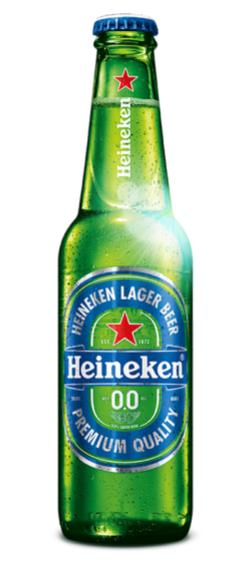
Heineken’s master brewer Willem van Waesberghe says that the brewery researched non-alcoholic beers and took two years to perfect the formula of Heineken 0.0. “We pulled Heineken beers apart and looked at how we could get the Heineken tastes,” van Waesberghe said. However, even after extensive research, he acknowledged that the taste will be different.

Source: www.thefix.com/heineken-launches-its-first-alcohol-free-beer


Note: Interested to read any reviews. ■

Children of alcohol dependents lose Tory champion | philcain.com

January 10, 2024

Blackwood in February ►

Conservative MP Nicola Blackwood, who as health minister ordered a strategy to help the children of alcohol dependent people, narrowly lost her Oxfordshire seat to a Lib Dem in last week’s parliamentary election.

There is no mention of the strategy in the Conservative or LibDem manifestos, while an explicit commitment to it appears in Labour’s. Labour champions of developing a strategy, Jonathan Ashworth and Liam Byrne, were re-elected.

Blackwood’s replacement as minister with responsibility for public health has yet to be named. Ashworth was re-appointed Shadow Minister for Health on Wednesday.  ■

Sobriety sizzles

January 10, 2024

Any takers?

There are signs sobriety is creating the “sizzle” it needs to achieve the popularity it deserves.

Low-risk drinking is, on the face of it, the stuff of marketing executives’ dreams, a robust product with undisputed benefits, available to all at negative cost.

Yes, negative cost. It is not some something-for-nothing deal. This is a something-for-money-back deal. It is both beneficial and profitable for its adopters.

While easing the load on our wallets, it improves our sleep, relieves depression and anxiety, promotes clearer thinking, boosts resilience, reduces mistakes and accidents, and avoids disease.

Drinking rates, nevertheless, barely budge from year to year. Imagine it: health payoffs and dollar bills lying around across the globe and yet few of us trouble to pick them up.

Is this a rational choice? Is heavy drinking really worth the price we pay? It seems doubtful. So, then, what is going wrong?

Knowledge and desire
It is partly misunderstanding. The scientific findings around alcohol are counterintuitive and constantly undermined, as I found while writing my book Alcohol Companion.

A stats-fest tickles our cortices but does not push the buttons which guide our humdrum choices.

Everyday decisions are rarely made through agonising rational computation. Think of a trip to a supermarket. We lob things in our trolleys mostly to answer emotional and sensory appeals.

We need to connect with choices on a non-intellectual level for them to be easy and enjoyable. This applies to rational choices as much as self-defeating ones.

Marketing people know this. Winning our decisions is about “selling the sizzle, not the sausage”.

It is not just meat though. We prefer crisped rice with added Snap, Crackle and Pop too. An iPhone is no better, yet is still more desirable.

Better health labelling, though important to have, will not be enough to provide the sizzle that makes low-risk alcohol choices desirable in the way which shifts our behaviour.

Low-risk drinking needs sizzle to turn its stock of wholesome statistical sausagemeat into a tempting consumer choice.

Turning up the gas
It is starting to happen. The online world is fulfilling our need for superficial socialising, an area where alcohol once reigned supreme. Psychology, meanwhile, is giving more insight into happiness.

These developments are being met by the arrival of a new generation of alcohol-free alternatives allowing us low-hassle alcohol opt-outs, with a positive placebo-effect thrown in.

The contribution of public health professionals, counsellors, treatment providers, campaigners and help groups, meanwhile, are being supplemented by fresh new communities like Club Soda and Soberistas.

The payoff is potentially huge. Globally alcohol is among the top four reasons for us to lose healthy years of life and a major contributor to crime rates and countless lesser cock-ups.

Reducing the impact by any significant amount would deliver benefits across society, particularly for poorer people. It would also free resources to tackle other problems.

Putting reasonable choices in attractive packages is as essential as the science they are composed of. Sobriety is becoming increasingly tempting and this is worth celebrating. ■

[summary] Public involvement in alcohol research | Alcohol Research UK

January 10, 2024

Key points

  • “Public involvement is not simple, but creating stronger links between universities, services, volunteers, and individuals with lived experiences is essential if the work we fund is to continue to help improve lives.” —Dr James Nicholls, Director of Research and Policy Development, Alcohol Research UK
  • Public involvement can be applied to all stages of research: Research strategy; Funding allocation; Development of research plans and proposals; Carrying out primary research; Data analysis and interpretation; Peer review; Communication and dissemination
  • Recommendations:
    – Make it fit: The level and nature of public involvement in a given research project should be appropriate to the subject
    – Invest time in building relationships
    – Try to find common language that everyone is comfortable with
    – It is important to manage expectations. Public involvement does not guarantee the success of a research project
    – Provide remuneration and reimburse expenses

Source: http://alcoholresearchuk.org/wp-content/uploads/2017/12/Alcohol-Research-UK-Public-Involvement-Report-FINAL.pdf


Note: Here is an outline of some ways the public has contributed to addiction research from Alcohol Research UK’s spring event on this topic. ■

Alcohol labellers face legal “domino effect”

January 10, 2024

Jurisdictions trying to introduce health warning labels on alcoholic drinks face a daunting battery of legal challenges intended to discourage them and others, say experts.

Hardly any country or province currently provides labels warning people that drinking alcohol increases the risk of a range of mental, physical and social problems, including cancer, heart disease, birth defects, anxiety and depression.

Jurisdictions which try to change this face the threat of being hit by “legal big guns”, according to analysis published last week.* The most recent case was in the sparsely-populated Yukon territory in Canada which halted a trial in December after receiving worrisome legal warnings.

“The raising of legal doubts, threats of litigation and the actual commencement of litigation have the potential to sway all but the most resolute and well-resourced governments from prioritising public health over industry interests,” the paper says.

The law allows the alcohol industry to make legal challenges at the national, supranational or international courts, as well as tribunals. Australia’s defence of plain tobacco packaging, the paper says, drawing a comparison, has been costly and time-consuming, although it seems set to be successful.

Thailand was the first to hear the drumbeat of possible litigation from the alcohol industry after proposing graphic warning labels in 2010. It planned to introduce labels warning that drinking alcohol causes liver cirrhosis and can undermine sexual performance.

But Thailand’s labels never appeared after they were discussed in the World Trade Organisation’s Technical Barriers to Trade Committee, a diplomatic forum. Concerns raised by the EU, US, Australia and New Zealand may have been taken as the signs of impending legal action.

Jurisdictions can have some confidence courts will take their side when their labels are designed to reflect “good scientific evidence”, the paper explains, but opponents can play on nagging doubts by introducing the prospect of long and expensive litigation.

The alcohol industry may, the paper argues, be looking for a “domino effect” in which governments lose their resolve to introduce alcohol labels. Dr Margaret Chan, a former director-general of the World Health Organisation, described the tobacco industry using this strategy in 2015.

The alcohol industry will be “extremely pleased” to halt the Yukon trial (pictured), says Professor Robin Room of Melbourne University, one of the authors of the paper. It also saw the disappearance of a label in place for 27 years warning that drinking while pregnant can cause birth defects.

“We are still a little hopeful that our study may resume in some capacity,” Erin Hobin, a researcher on the trial, told Alcohol Companion. Supporters of plans for health labels in Australia and Ireland, meanwhile, say they are undaunted by Yukon’s legal difficulties.

Continuing to use trade and investment treaties to launch legal action, the paper says, would be “substantially against the public interest and public health”. With overwhelming public support for health labels, the dominos could yet fall the other way. ■

*Paula O’Brien, Deborah Gleeson, Robin Room, Claire Wilkinson; Commentary on ‘Communicating Messages About Drinking’: Using the ‘Big Legal Guns’ to Block Alcohol Health Warning Labels, Alcohol and Alcoholism, https://doi.org/10.1093/alcalc/agx124

#brainawarenessweek, consider Alcohol Companion

January 10, 2024

Alcohol has a profound impact on our brains and consequently our well-being. Understanding this more fully provides a powerful way to help us improve our lives, letting our brains to look after us better. So, to coincide with #brainawarenessweek, there is a 50% off Alcohol Companion using code FT6RK7J9 redeemable at the philcain.com bookshop. ■
  • « Go to Previous Page
  • Page 1
  • Interim pages omitted …
  • Page 37
  • Page 38
  • Page 39
  • Page 40
  • Page 41
  • Interim pages omitted …
  • Page 45
  • Go to Next Page »

Primary Sidebar

  • Bluesky
  • Instagram
  • LinkedIn
  • Twitter
  • WhatsApp

Copyright © 2026 · Phil Cain Impressum

Manage Consent
To provide the best experiences, we use technologies like cookies to store and/or access device information. Consenting to these technologies will allow us to process data such as browsing behaviour or unique IDs on this site. Not consenting or withdrawing consent, may adversely affect certain features and functions.
Functional Always active
The technical storage or access is strictly necessary for the legitimate purpose of enabling the use of a specific service explicitly requested by the subscriber or user, or for the sole purpose of carrying out the transmission of a communication over an electronic communications network.
Preferences
The technical storage or access is necessary for the legitimate purpose of storing preferences that are not requested by the subscriber or user.
Statistics
The technical storage or access that is used exclusively for statistical purposes. The technical storage or access that is used exclusively for anonymous statistical purposes. Without a subpoena, voluntary compliance on the part of your Internet Service Provider, or additional records from a third party, information stored or retrieved for this purpose alone cannot usually be used to identify you.
Marketing
The technical storage or access is required to create user profiles to send advertising, or to track the user on a website or across several websites for similar marketing purposes.
  • Manage options
  • Manage services
  • Manage {vendor_count} vendors
  • Read more about these purposes
View preferences
  • {title}
  • {title}
  • {title}

Loading Comments...