By Kristen Foley, Belinda Lunnay and Paul Ward, including photos*
Ellidy pops into the bottle shop on her way out to dinner with friends.
She’s faced with rows of evocative labels – using artwork, imagery and symbols to help portray the essence and style of the alcohol on sale.
She narrows it down by wine variety, something local and in her price range. She chooses between two eye-catching labels: one with vivid pink flowers and another with a young woman’s face on the label, hidden by clouds.
She grabs one she thinks will mean something to the group of people she’s going to see.
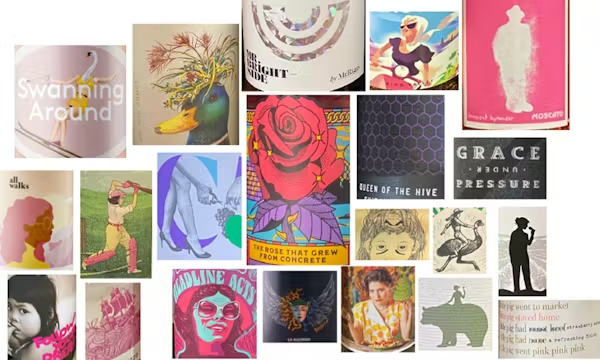
Ellidy is a fictional shopper. But the labels she’s faced with are real examples from our research on how alcohol labels are designed to appeal to women.
This includes pink labels, and those featuring women’s body parts, high heels or needlework.
Here’s what else our research, published in the International Journal of Drug Policy, found.
We analysed 473 products – including wine, spirits and ready-to-drink products – and spotted five themes.
1. Pink, purple and glitter
Companies used pink, purple, petals and glitz, such as glitter, embossed glass, sparkles, and images of diamonds, in the product design and labe (pictured top).
This “pinkwashing” appeals to some women. But it perpetuates the stereotype of the pink, hyper-feminine consumer.

2. Names, bodies and body parts
Labels featured stereotypical and sexualised versions of women’s names, bodies and body parts. Examples included names such as “la femme” and “madame sass”, and images depicting breasts and an orgy (pictured).
Australia’s alcohol advertising code prohibits advertising that suggests social, sexual or other success.

3. Wellness
Our analysis found labels suggested alcohol was a form of wellness, balance and connection (pictured).
This included a wine called “Mother’s Milk”. This suggests alcohol may provide replenishment in a woman’s life and care for her as she cares for others.
Another was “One Lovely Day”, which featured young women holding hands in a forest.
4. Strong women
Alcohol promoted women’s strength, resilience and confidence. For instance, it showed them in positions traditionally associated with men, playing cricket, owning a vineyard, or exercising choice and power (pictured).
These depictions are typical of postfeminism, sometimes called “backlash” feminism, which focuses on individual women who succeed in the face of gendered adversity. This may be “doing it all” while keeping a happy, confident and “feminine” disposition.
Their success is then used to downplay the structural forces that disadvantage women. This includes sexism and misogyny, as well as gendered expectations around unpaid care and emotional labour.
Examples in this category included wines featured children with shiny purple and pink text saying “follow your dreams” or “chin up”.

5. Escaping reality
This group of products promoted the dissipation and disassociation alcohol can enable. This includes the wine label Ellidy looked at with clouds drifting over a woman’s face (pictured).
These kinds of marketing suggest alcohol can provide psychological distance from life’s pressures, somewhat like anaesthetic.
We found products that referenced mental health states such as “muddled up moscato” or “better days”. Others reflected desires for freedom, revelry or rest, such as “freebird”, “tail spin” or “silence”.
Reinforcing stereotypes
Marketing alcohol this way can reproduce harmful gendered stereotypes.
Such “femmewashing” can also be confusing for women. Alcohol may be marketed as sexy, empowering and offering escapism. Yet there’s a growing understanding of the health risks of drinking alcohol, including breast cancer.
And while it is laudable for companies to recognise women and celebrate their strengths and talents, not everyone’s a fan of this type of gendered marketing. Some feel powerless to stop it.
In other research, Australian women told us it communicates that women need to be hyper-feminine, sexy and happy if they want to succeed.
As part of Kristen’s PhD research, one woman said:
I think that there should be regulation of it […] it’s very cynical and destructive, I totally see that.
Another participant said women were conscious they were being targeted to prop up industry profits:
Large companies clearly prey on exhausted, time-poor women tempting them to find their ‘me time’ in a glass or several of wine.
Is this legal?
Our research with women shows they can often see through this marketing spin. However, it can also work in the background to reinforce harmful gendered norms, and associate drinking with femininity.
In Australia, there is no current regulatory mechanism to restrict gendered alcohol marketing, but this is needed for a number of reasons. For a start, it would bring Australia into line with World Health Organization advice to reduce gender stereotypes in alcohol control policies.
We also need to be cautious of repurposing feminism as a cheap gimmick to market empowerment as a commodity.
Some suggest commoditising feminism ironically worsens gender inequality by hiding its social and political drivers. It gives the impression that merely buying the right products will enable you to succeed as a woman. ■
*Note: All of Torrens University Australia. This article is republished from The Conversation under a Creative Commons license.