• Skip to main content

Alcohol Review

Alcohol understanding for all

  • Highlights
  • AR2026
    • AR2025
    • Earlier events
  • Register
  • About
    • Organisers
    • Contact
  • Log In

alcohol

Not drinking is pure hedonism

January 10, 2024

Taking an alcohol break, as many are doing now, can be seen as a step towards a purposeful pursuit of pure pleasure, or hedonism, instead of a spartan act of self-denial.

Maximising pleasure is more than giving ourselves a series of nice feelings. Otherwise we might simply lie around all the time gorging ourselves on delicious snacks and, er, tickling ourselves.

Some pleasures we discover are transient and not connected to anything else. So, over time, we learn not to invest excessive amounts of time in pleasures which do not pay off, or which bring downsides.

Thankfully, however, as uniquely sophisticated, conscious mammals capable of reasoning, our range of pleasures are uniquely wide, varied and adaptable. It is no coincidence they take in activities which help us thrive.

We typically get great pleasure from learning, practising and succeeding, getting a buzz from passing exams and triple-twenties in darts. And we enjoy work, music, movement, socialising, sights, sounds and sensations.

And we can even conjure joy from outwardly tedious activities which pay off. Some of us can, for instance, with the right mind-games, elicit unlikely gratification from catching up with paperwork or sweeping behind the tumble dryer.

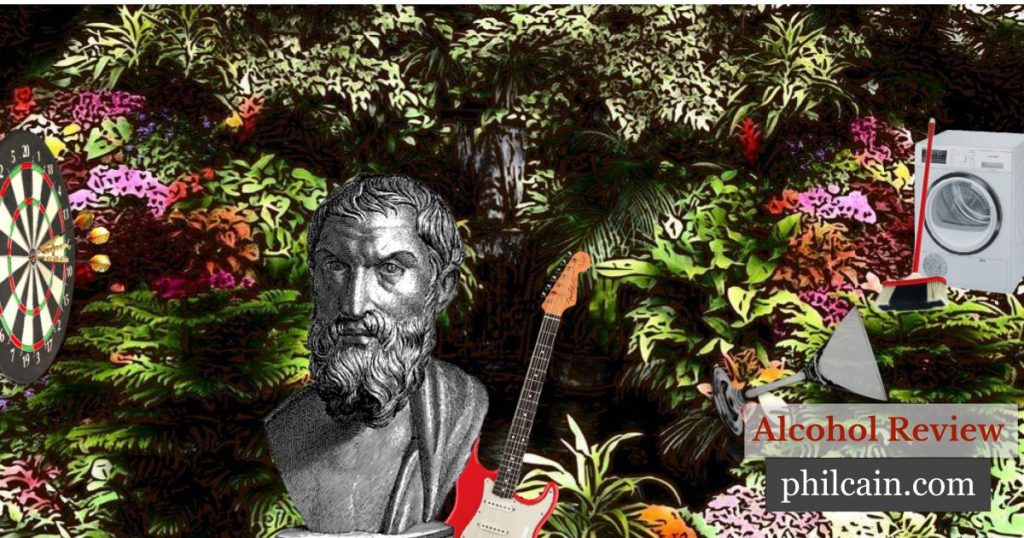
Epicurus, a Greek hedonist from 2,300 year ago (pictured), plumped for chilling in a communal garden talking with mates about philosophy. He rejected the idea that drinking a lot of alcohol as the best route to pleasure.

Alcohol, a psychoactive, gives us an out-sized impression of its reward. This can mean we invest more time and energy in alcohol than it deserves. Our human relish for persistence in the face of hardship does us no favours here.

We can persist in drinking alcohol even though it  brings scant pleasure and is causing us grief. We can want alcohol without liking it, with its pleasures and rewards long outweighed by hangovers, crappy sleep and low mood. 

Not drinking for a month or longer is a good way for us to weigh up the pleasures and downsides of alcohol. What things positive and negative do we correctly attribute to it? And what downsides does it have we did not notice?

It can take us from three months to a year to be free of side-effects that heavier alcohol drinking can bring, like anxiety and low or changeable mood. If we make one month it can be worth banking the investment and carrying on.

Taking time without alcohol is a route to finding more pleasure in life. And it can also be the beginning of a life devoted to pursuing of long lasting pleasures without serious downsides. This is a pure form of hedonism. 

Stopping alcohol for any length of time we choose is not a hair-shirt exercise. It is time we can use to rid ourselves of any illusions conjured up by alcohol and to focus on greater pleasures. ■
Dry January is a vital part of the alcohol debate

January 10, 2024

The difficulty of putting a lid on our alcohol drinking for a month or more provides us with important understanding of alcohol and the often bewildering public debate around it.

How can we understand the impact of advertising, taxation tweaks or the complex interplay of mind, body and environment? The answer is, by experiencing them ourselves.

Having an ad for our favourite tipple pop up just as we managed to ignore the urge to pour ourselves one helps us understand how advertising stimulates alcohol demand.

The effort we need to make to swerve the alcohol aisle in the supermarket or the offie shows how availability is a challenge to those wanting to limit their consumption.

How can we understand the social pressures to drink alcohol without at some point trying to rebuff the alcoholic ribbing of our friends, family and colleagues?

Opening our wallets to find folding money in there on Sunday morning shows us in no uncertain terms that increasing alcohol prices increases the incentive to cut down.

So it is that Dry January, and all similar short-term quitting initiatives, offer valuable first-hand insight into the key elements of the policy discussion around alcohol.

It allows us to feel first-hand the challenges faced by anyone looking to reduce their alcohol intake, difficulties experienced most intensely by those of us most deeply affected.

Dry January and the like establish a valuable common ground of shared experience which can inform an often off-putting discussion which, nevertheless, has huge potential to improve health and well-being.

The exercise of quitting alcohol, albeit often temporary, connects a personal assessment of the benefits of changing our own alcohol habits to something far wider.

A DIY quitting exercise was fundamental to my writing. Alcohol’s complex challenges need to be tackled with empathy as well as analytical thought.

Wider understanding provides the platform needed for informed alcohol policy. Dry initiatives go a long way towards informing us on every level. ■

Euro beer placement rules unclear for non-religious

January 10, 2024

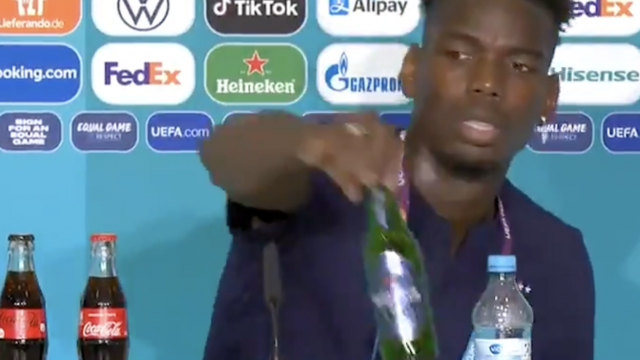
The Euro 2020 organiser will not say if footballers can give secular reasons for withholding their apparent endorsement for a beer brand in press conferences.

The freedom was clearly given to religious believers last week after Paul Pogba (pictured), a Muslim, publicly set aside a bottle of Heineken 0.0 in a press conference a fortnight ago.

The Heineken 0.0 brand can be easily mistaken for its alcoholic sister product which means that appearing to endorse one can unwittingly promote the other.

The Euro 2020 organiser UEFA confirmed to Alcohol Review that players and managers can give religious reasons to have Heineken 0.0 bottles removed from in front of them in press conferences.

The objection it says needs to be made “owing to religious beliefs”. It is currently unclear if the same freedom is available to those objecting to the placement for secular reasons, like a wish to support football fans in adopting healthy lifestyles.

“UEFA has reminded participating teams that partnerships are integral to the delivery of the tournament and to ensuring the development of football across Europe, including for youth and women. We have no further comment,” UEFA replied.

Limiting freedoms to just one religious group or belief system is “an affront to human dignity and a disavowal of the principles of the Charter of the UN”, the UN says in a 1981 declaration on intolerance and discrimination.

The Heineken 0.0 bottles may disappear from some press conference tables but will still appear on the wall of logos behind and also features prominently during games. This is of concern to health advocates of all backgrounds. ■

Video/podcast: A more rational alcohol tax

January 10, 2024

On the eve of Brexit and the Budget I talked with Scott Corfe, research director of the Social Market Foundation think-tank about his proposals for a more rational form of alcohol tax.

  • “If an increase in alcohol tax has a regressive impact, you can mitigate that elsewhere, through more generous benefits or through curbing other types of tax.” [19m04s]
  • “Minimum alcohol pricing and alcohol duty are policies which have different impacts.” Duty might be a way to cut drinking among higher income groups, who are the biggest drinkers. [13m51s]
  • The Conservatives have committed to a review of alcohol duties, possibly diverging from EU rules. Nevertheless, “This might be an area where Europe puts its foot down.” [13m06s]

What about cap and trade for alcohol?

January 10, 2024

Why don’t we fix the amount of alcohol which can be legally sold and issue tradable permits to sell it, like we do with pollution?

Such “cap and trade” systems helped create commercial incentives for reducing emissions, including greenhouse gases.

Democratically accountable regulators could be in charge of setting the level of the cap, raising or lowering the annual amount in response to its health costs.

Having a market for alcohol sales permits would mean they went to the highest bidders, able to make the best of their allocation.

This would create a powerful commercial incentive for companies to sell alcohol at higher prices, rather than simply sell the most by discounting.

In doing so it would incentivise those adding value to alcohol through taste or in the hospitality they offer around it.

This would, arguably, be good news for niche alcohol players with unique product offerings rather than bulk producers.

The renewable energy market is now worth around $1trn, in partly thanks to cap and trade together with other regulation. 

Regulation by its nature prevents certain business practices, but it can also create commercial opportunities.

A form of market regulation which helped align environmental and business goals might do the same for health. ■

Temperance, unfinished history

January 10, 2024

This week BBC Radio 4’s In Our Time told the story of the Temperance movement in Britain which is said to have really got going in 1832 in Preston. It provides fascinating insight into where we find ourselves now, where we have moved forward and where the debate has become frozen in time. You can listen yourself here.

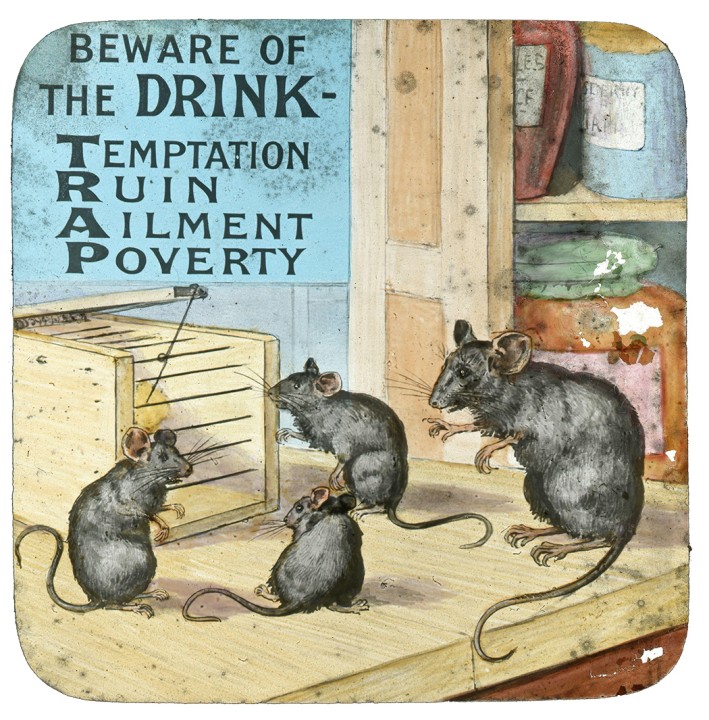
What struck me was that we are not so much reliving this history, but that the knotty issues raised by retailing addictive psychoactives were never resolved. While we might scoff at our ancestors, we have not come much further. What we see now on the internet are, perhaps, are echoes of the arguments made in temperance halls and colourful lantern slides.

One notable quote from the programme came from Bishop of Peterborough in 1872. Looking it up verbatim in Hansard it was, “…it would be better that England should be free than that England should be compulsorily sober.” He went on, however, “I would distinctly prefer freedom to sobriety, because with freedom we might in the end attain sobriety.”

The bill he was opposing with this speech to the House of Lords was one to allow local parishes to stop the issue of alcohol licences. This might well have been a blunt and ineffective instrument. I don’t know. But what is clear is that the bishop’s argument brushed aside positive freedoms we typically value on a par with the freedom to do business.

This is a fateful oversimplification of the conception of freedom, which has the dire consequence of polarising the discussion from there on. I outline this more fully in the opening chapter of Alcohol for Nerds, drawing on the work of intellectual historian Professor Quentin Skinner who created a detailed genealogy of freedoms, plural.

But, in essence, 150-years on it is still not accurate to portray those who seek to regulate alcohol sales more as being “against freedom” and those in favour of fewer regulations as being “for freedom”. It ignores the fact that restrictions help curb the freedom-reducing effects of things like inebriation, violence, dependence, illness and disability.

As the BBC programme makes clear the Temperance movement was largely led by and for the benefit of working people looking to improve their lives, by avoiding the many perils of Victorian life. It was also part of a wider struggle to find a political voice. This is a struggle for freedom, not against it, although it can impinge on some commercial freedoms.

The UK has not found a satisfactory democratic solution to this day. Elected representatives have long abdicated responsibility for regulating alcohol marketing and advertising, handing it to the alcohol industry itself, despite the direct conflict of interest. The results are predictably poor, with government ministers unable to introduce something simple as guideline labelling.

We have changed enormously since the days of the Temperance movement, as has the knowledge-base from which we work. But the balancing of different conceptions of freedom goes on. This is society struggling to decide what freedom is and how to deliver it. Long may it continue. ■

  • « Go to Previous Page
  • Page 1
  • Interim pages omitted …
  • Page 14
  • Page 15
  • Page 16
  • Page 17
  • Page 18
  • Interim pages omitted …
  • Page 22
  • Go to Next Page »

Copyright © 2026 · Phil Cain Impressum