• Skip to main content
  • Skip to primary sidebar

Alcohol Review

Alcohol understanding for all

  • Highlights
    • Messages
    • Newsletters
  • Events
    • AR2026
    • AR2025
    • Next year’s event
    • Earlier events
  • Register
  • About
    • Organisers
    • Contact
  • Log In

alcohol

UPDATED: UK lockdown alcohol volume estimates disagree

January 10, 2024

A UK alcohol industry trade body says beer and wine sales measured in litres both fell in the covid-19 lockdown, apparently contradicting a health analyst’s findings.

Beer sales fell 10% by volume in the year to October 2020 and the volume of wine sold fell by 5% in the same period, says the Wine and Spirit Trade Association (WSTA).

It gave no number for spirits, but in a later press release on low- and no-alcohol labelling it said “spirits sales are flat”.

“It combines sales across on-trade venues with off-trade sales from shops, supermarkets etc to produce an overall volume sales figure,” says Tom Pratt, the WSTA data manager.

An estimate by Sheffield University’s Colin Angus published last year showed an overall increase in alcohol consumption, based on official tax information. WSTA says its estimate is based on Nielsen and CGA data.

Neither estimate sheds light on which groups of people are drinking more alcohol and in what circumstances, which may be more useful in pinpointing harm than the average over the population. ◼

A third of Brits to skip alcohol over Christmas

January 10, 2024

More than a third of Brits say they will not drink alcohol at four or more social occasions this Christmas, while almost one-in-six 25-34s say they will not drink alcohol at all.

Almost a third also said they are more likely to lay off alcohol this Christmas than last year,  with younger groups even more open to the idea, according to figures gathered as part of Coca-Cola’s Designated Driver campaign.

It is part of a bigger trend, with 40% of people saying they avoided alcohol at parties in the last month. Their prime reasons were to avoid hangovers, to drive or to be safer. Toning down the alcohol is not for everyone, however, with over 40% of over-65s having no plans to lay off alcohol during the festivities.

The real sober enthusiasts are the 18-24 year-olds, 57% of whom said they had chosen not to drink in the last month. They mainly aimed to save money, to protect their health or to enjoy more interesting non-alcoholic drinks.

Around a third of interviewees said they tend to assume someone is not drinking at a Christmas do because they are driving, while 35% now assume someone does not feel a need to drink to have fun.

Coca-Cola is rewarding alcohol-free Christmas drivers with a buy-one-get-one-free offer at participating pubs. ■


Millions readying for Dry January 2019

January 10, 2024

As many as 4.2m people are planning to go alcohol-free in January 2019, according to a YouGov poll, being on course to enhance their drinking choices all year round by doing so.

“Dry January can change lives. We hear every day from people who took charge of their drinking using Dry January, and who feel healthier and happier as a result,” said Richard Piper, head of Alcohol Change, the charity behind the initiative.

A survey of 2018’s participants, reckoned to number over 3m, found: drinking fell from an average of four days a week to three; drunkenness fell to twice a month from three times; eight out of ten felt more in control of their drinking; nine-in-ten saying they saved money.

People can sign up for Dry January online, receiving support from a website, app and a new book on taking a month-long alcohol break, called Try Dry.  ■

Legal warnings halt first cancer label scheme

January 10, 2024

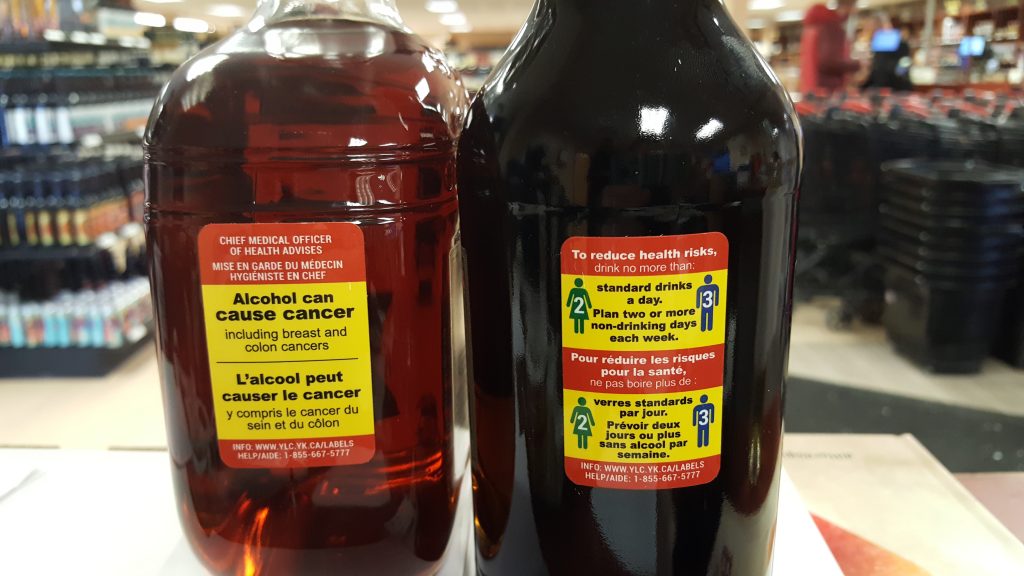
Legal warnings from alcohol brand-owners have halted the world’s first trial of labels warning that consuming alcohol increases the risk of cancer, raising question marks over similar plans elsewhere.

Unnamed alcohol brand owners have warned the state-owned alcohol retailer applying the labels in Canada’s Yukon territory that it may be infringing trademarks and guilty of defamation, say local media reports.

The Yukon trial had been running from one shop for little more than one of the eight months intended. No new labels have been applied to bottles and cans, but those already applied have be left in place. The trial began late last month.

The enforced hiatus may have implications elsewhere: Ireland decided this month to introduce labels warning of the risk, while Australia’s newly-released draft alcohol strategy mentions alcohol’s contribution to cancer cases and suggests “readable, impactful” warning labels.

Campaigners have also raised concerns that the labels have replaced rather than supplemented labels warning of the risk of drinking alcohol in pregnancy. Labels saying “Warning, drinking alcohol during pregnancy can cause birth defects” had been applied since 1991.

The trial is part of the second phase of the Northern Territories Alcohol Study led by researchers from Public Health Ontario and the Canadian Institute for Substance Use Research at the University of Victoria. Its research suggests enhanced labelling could have benefits.

Yukon has the highest alcohol sales per head in in Canada. ■

Alcohol cancer labelling advocates unfazed by Yukon threats

January 10, 2024

Legal threats of the kind which abruptly halted the first trial of cancer warning labels in Canada’s Yukon territory before Christmas are not altering plans elsewhere.

Measures proposed last month in Australia call for “readable, impactful” warning labels. And Gerald Nash, an Irish senator, introduced an amendment to a recent alcohol bill to include cancer warnings.

“Given the strength and level of support expressed in the Senate, I expect that the bill will receive the same level of support when it moves to the Dàil [Ireland’s Lower House],” Nash told Alcohol Companion.

Donal Buggy of the Irish Cancer Society says he is confident, “The public health imperative for inclusion of cancer-specific labelling warnings will prevail over the narrow sectoral interests of the alcohol industry.”

Legal threats are “not an issue” in Australia, says Michael Thorn, head of Foundation for Alcohol Research and Education: “Australia took it up to the tobacco industry on plain packaging and won.”

The initial focus of Thorn’s efforts will be to  secure mandated warning labels on the dangers of drinking while pregnant, paving the way for others. This might happen in the next 18 months, he says.

In Ireland, meanwhile, one seasoned observer suggests public support for the alcohol bill would mean any attempt by the alcohol industry to stand in its way would be a “PR disaster”.

The next phase of alcohol industry resistance there seems more likely to be quibbling about the format and wording of warning labels than whether they appear.

It is currently unclear whether the Yukon trial will restart. ■

Labels can empower alcohol drinkers

January 10, 2024

As responsible adults we should be presented with accurate, eye-catching and timely information about alcohol’s immediate and long-term effects. Anything less is to squander the benefits of decades of scientific research.

Whether we are from the left, right or centre politically, we cannot deny we are better off for encouraging choices which serve our long-term interests. And there is a mountain of scientific evidence showing alcohol impairs this kind of decision-making.

As a sedative alcohol causes a kind of acute cognitive near-sightedness, with our mental life more than usually occupied with attending to our immediate surroundings. Matters beyond these narrow confines often slip our minds, whether next door or tomorrow morning.

The haze of inebriation can also mean we do and say things which, to coin a phrase, “seem like a good idea at the time”, only to prove otherwise later. These can range from the faintly embarrassing to the life-changingly serious, depending on the circumstances we encounter.

Regularly drinking above a low level of around 14 UK units (140ml/4.7 fl oz) a week can disturb our sleep, lower our mood, impair our sexual function, increase our anxiety and blur our memories.  These largely ignored side-effects can undermine our quality of life and limit our choices.

Should we drink more than a little for a period of weeks, months or years we may unwittingly slip into a degree of alcohol dependency, where our brains adapt to alcohol inebriation. We might then start to find we act more on the spur of the moment and have trouble making and fulfilling plans.

As a species we look for solutions and drinking alcohol can seem to be one off the peg. It relieves our discomforts, particularly after we are dependent. So it is hard to remember it is a sticking-plaster and the cause of many difficulties and discomforts we hope to escape.

Alcohol’s interference with our mental capacities and effect on our behaviour are undisputed science. Its fascinating complexity fills Alcohol Companion, which provides an accessible account. The problem is not that its contents are contentious, but that knowledge is not widespread.

Also scientifically unquestioned and too-little-known are the effects of alcohol drinking beyond our brains. Above a low level it increases our risk of cancers, heart problems, liver problems and physical injuries, as well as trouble with the law, relationships and employment. It is involved in most early-onset dementias and triples the risk of all types of it.

Warnings need to reach us reliably at the times and places it is most helpful to us. One simple remedy is to provide more informative labels. Such labels are now in the pipeline in Ireland and Australia. Efforts in Canada and the EU, however, are delayed, and blocked in the UK.

The invective used to justify the lack of label information is a reversal of the truth: It is the killjoy who fails to warn fellows of the risk of fueling depression and anxiety; And the crudely caricatured “nanny” of pro-alcohol cliché would be the first to shield us from disconcerting facts.

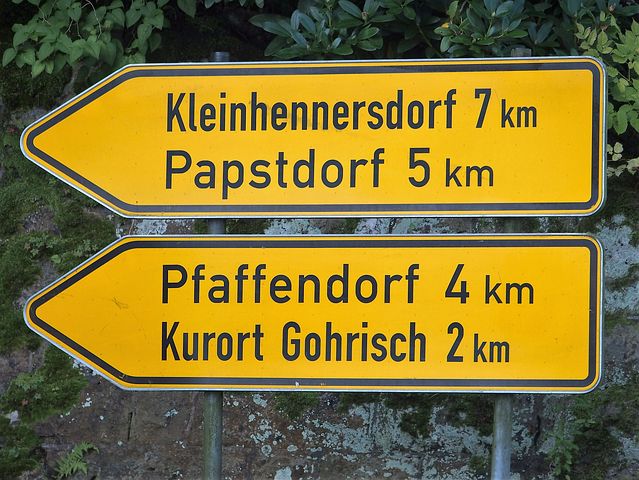
Few of us find cause for alarm or resentment in a road sign. Keeping alcohol drinkers in the dark at the moment we make our decisions to drink or not is to deny us the benefits of science.

Alcohol drinking impairs our short- and long-term decision-making, especially around alcohol drinking. It is self-serving flattery to suggest otherwise. We should be treated like adults, rather than taken for fools. ■

  • « Go to Previous Page
  • Page 1
  • Interim pages omitted …
  • Page 14
  • Page 15
  • Page 16
  • Page 17
  • Page 18
  • Interim pages omitted …
  • Page 21
  • Go to Next Page »

Primary Sidebar

  • Bluesky
  • Instagram
  • LinkedIn
  • Twitter
  • WhatsApp

Copyright © 2026 · Phil Cain Impressum

Manage Consent
To provide the best experiences, we use technologies like cookies to store and/or access device information. Consenting to these technologies will allow us to process data such as browsing behaviour or unique IDs on this site. Not consenting or withdrawing consent, may adversely affect certain features and functions.
Functional Always active
The technical storage or access is strictly necessary for the legitimate purpose of enabling the use of a specific service explicitly requested by the subscriber or user, or for the sole purpose of carrying out the transmission of a communication over an electronic communications network.
Preferences
The technical storage or access is necessary for the legitimate purpose of storing preferences that are not requested by the subscriber or user.
Statistics
The technical storage or access that is used exclusively for statistical purposes. The technical storage or access that is used exclusively for anonymous statistical purposes. Without a subpoena, voluntary compliance on the part of your Internet Service Provider, or additional records from a third party, information stored or retrieved for this purpose alone cannot usually be used to identify you.
Marketing
The technical storage or access is required to create user profiles to send advertising, or to track the user on a website or across several websites for similar marketing purposes.
  • Manage options
  • Manage services
  • Manage {vendor_count} vendors
  • Read more about these purposes
View preferences
  • {title}
  • {title}
  • {title}

Loading Comments...