• Skip to main content

Alcohol Review

Alcohol understanding for all

  • Highlights
  • AR2026
    • AR2025
    • Earlier events
  • Register
  • About
    • Organisers
    • Contact
  • Log In

alcohol

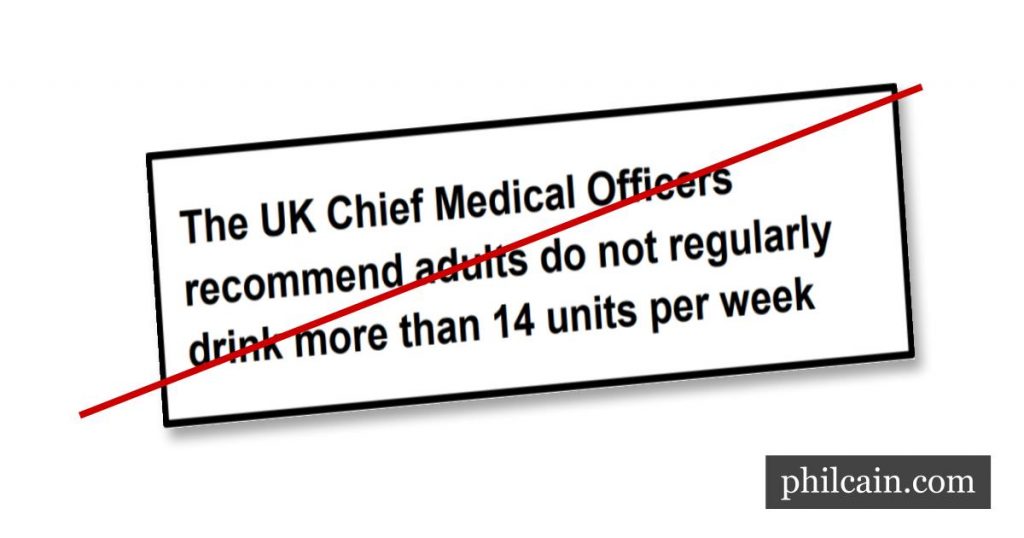
Tepid reception for industry alcohol labelling pledge

January 10, 2024

News the biggest players in the UK’s alcohol industry have agreed to put weekly drinking guidelines on their labels, a month before a government deadline to do so, has prompted little jubilation among health advocates.

The Portman Group, an alcohol industry mouthpiece, dribbled out the news in a piece in the Daily Mail, couching its promise with a caveat about it being subject to “feasibility”. Jubilation was muted, with the UK’s trust-based system taking some 1,300 days to get this far.

The government agreed to let the alcohol industry have a “grace period” until September 1st to comply in March 2017, only making the agreement widely known in January this year. The terms of any new arrangement underlying today’s statement are unknown.

“This half-hearted pledge, by some parts of the alcohol industry, is a strong indicator that the UK deserves a fair system that sets a level playing field for all food and drinks producers,” the Alcohol Health Alliance told Alcohol Companion.”

“All alcohol products must advise drinkers about both the contents and consequences of consumption to empower consumers to make fully- informed choices about their health.”

“While this marks a half-step forward, it shows that the current system of alcohol industry self-regulation is failing consumers,” said Katherine Severi, head of the Institute of Alcohol Studies, which provides a health slant on alcohol policy

It remains to be seen what effect the Portman Group agreement will have, if any. It could prove to be mostly about refreshing the label for a period of inaction from “grace period” to “feasibility period”. ■
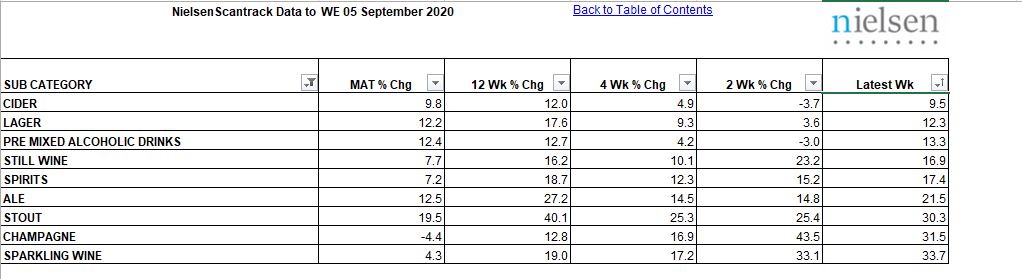
How much alcohol are we really drinking post-covid?

January 10, 2024

Notes: MAT = Moving Annual Total, a rolling 52 week period. All in comparison to the same time period last year. 

Data from mid-July showed a total volume of 1.3bn litres of alcoholic drinks were bought in shops in the first 17 weeks of lockdown, compared to 2bn litres in the same period the previous year. This is a 35% fall in the total volumes of alcoholic drink bought compared to last year. But this may overstate the fall in alcohol retail purchasing, because we tend to consume more wine at home than beer, so getting twice or three times the amount of alcohol per litre. So, for the statistically inclined, here are some figures on sales volumes growth by drink type, which should allow the calculation of an estimate of alcohol volume purchased. This story will be updated with any resulting analysis. ■

The nanny private sector

January 10, 2024

Guest post: Most US women don’t know alcohol’s health risks

January 10, 2024

Targeted marketing may play a role in increasing alcohol consumption among women.
Lisa Schaetzle/Moment via Getty Images

By Monica Swahn, Kennesaw State University and Ritu Aneja, University of Alabama at Birmingham

Did you know that casual drinks with friends or having a “wine mom” moment to unwind could actually be nudging up your risk for breast cancer? It sounds like a buzzkill. But it’s a truth that many might not know: Alcohol actually causes breast cancer.

The World Health Organization and the National Institute on Alcohol Abuse and Alcoholism lay it out pretty clearly: Compared to those who don’t drink, just one drink a day can bump up your breast cancer risk by 5% to 9%.

As alcohol and cancer researchers, we wanted to learn more about what women actually know about the connection between alcohol and breast cancer, especially since alcohol use has been increasing among women.

Explaining the knowledge gap
For our recently published research, we asked more than 5,000 women ages 18 and older across the US in 2021 about whether they were aware of the link between alcohol consumption and breast cancer. We also asked them about their drinking habits and other health and background factors.

We were surprised to find that only one in four of these women knew that alcohol is a risk factor for breast cancer. Even more concerning, 35% didn’t think there’s any link at all. Another 40% were sitting on the fence about it.

Closeup of person cupping glass of whisky in two hands
Fully understanding alcohol’s health risks can help people make more informed choices about how they consume it.
aire images/Moment via Getty Images

We also saw a knowledge gap based on age, education and race.

Younger, more educated women and those facing alcohol-related issues were more in the know about the link between alcohol and breast cancer risk than older, less educated women and those who have not drank in the past year. Black women were also less aware of the risk between alcohol and breast cancer compared to white women.

Drinking less lowers breast cancer risk
Despite the attempts of alcohol researchers, health officials and advocates to inform women about alcohol’s risks and its connection to breast cancer, our findings show that this message isn’t getting across to most people.

There are also pervasive myths about the benefits of alcohol use because some people don’t want to know that drinking can cause harm and don’t want to talk about it. As a result, many women simply don’t know or are uncertain of the health harms alcohol causes.

A comprehensive communication approach to increase awareness of alcohol’s harms and its link to cancer can help support and encourage women to make healthier choices regarding alcohol use.

Educational campaigns can help inform people from diverse backgrounds about alcohol and breast cancer risk.

Warning labels can help increase awareness of alcohol’s health risks.

Policy changes with respect to alcohol marketing, access and availability can also make a difference in people’s drinking patterns.

These policies may also address the “feminization” of alcohol marketing, which intentionally entices women to drink and purchase alcohol by normalizing or glamorizing heavy alcohol use and ignoring the health risks and harm caused. The World Health Organization recommends stricter rules on alcohol advertising and marketing along with higher taxes on alcohol to reduce alcohol-related harm.

Today’s culture may normalize dealing with life’s stresses by popping the cork.

But cutting down on alcohol is something that can make a difference in breast cancer risk. Stepping back and thinking about alcohol’s effects on your health can help you make informed choices about whether to drink or not.The Conversation ■

Monica Swahn, Dean of the Wellstar College of Health and Human Services, Kennesaw State University and Ritu Aneja, Professor of Clinical and Diagnostic Sciences, Associate Dean of Research and Innovation in the School of Health Professions, University of Alabama at Birmingham. This article is republished from The Conversation under a Creative Commons license. Read the original article.

Alcohol safety labelling may be about to get worse

January 10, 2024

An apparent forward step on alcohol safety labelling last week may, in fact, signal that it is about to get worse.

The alcohol industry Portman Group (PG) says it agreed with the health department “for the removal of out-of-date information” by September 1st. But it does not mention adding current low-risk guideline amounts.

Adding the weekly guidelines is not among the minimum “best practice options”. Instead, PG offers advice on how to “reflect” weekly consumption guidelines it refers to as “revised” though current since January 2016.

PG emphasises it offers advice while ignoring the fact that none of its members are committed to follow it. So years of foot-dragging on safety labelling may yet morph into a full-blown reverse.

The health department agreed a September 1st deadline for the alcohol industry action in March 2017. The existence of the “grace period” was unknown until a speech by then junior minister Steven Brine in January.

Few may yet realise it, but the grace period may have just been quietly extended and also expanded to green-light alcohol suppliers to offer no weekly consumption guidelines at all. ■

Brand new

January 10, 2024

Explore a new, entirely unconnected brand. The Alcohol Review 0.0 brand has been carefully hand-crafted and scientifically filtered so that it can get the approval even of people who do not particularly like the regular Alcohol Review. ■

Join the supporters

  • « Go to Previous Page
  • Page 1
  • Page 2
  • Page 3
  • Page 4
  • Page 5
  • Page 6
  • Interim pages omitted …
  • Page 22
  • Go to Next Page »

Copyright © 2026 · Phil Cain Impressum