• Skip to main content
  • Skip to primary sidebar

Alcohol Review

Alcohol understanding for all

  • Highlights
  • Events
    • AR2026
    • AR2025
    • Next year’s event
    • Earlier events
  • Register
  • About
    • Organisers
    • Contact
  • Log In

alcohol

Brits back youth alcohol ad ban amid record deaths

January 10, 2024

Over three-quarters of Brits want laws to limit the exposure of children and young people to alcohol advertising amid record alcohol deaths across the country.

The alcohol death toll is highest among older, heavier drinkers whose intake increased under the strain of the covid-19 crisis. Stopping alcohol marketing to under-18s could help curb future problems.

Alcohol is not part of the government’s plans to stop junk food advertising online and stop TV ads for it before 9pm in 2023, despite killing record numbers of British people in 2020.

“If alcohol is not included in the plans, we risk alcohol advertising filling the void that is left behind,” said Professor Sir Ian Gilmore, head of the Alcohol Health Alliance, of the survey done by YouGov for Action on Smoking and Health.

The survey found 77% support a ban on advertising alcohol to children and young people, with 70% supporting a ban on TV ads before 9pm, and 72% a ban on cinema ads for films for under 18s, the legal drinking age.

Another 57% of the 12,000 surveyed support a ban on alcohol advertising in public spaces such as streets, parks and on public transport. Parents have little control of the messages their children see outside the house.

Advertising is done to make products as desirable as possible to maximise sales. Consequently alcohol advertising is causally linked to earlier and riskier alcohol use among young people, with the vast majority seeing it.

Alcohol marketing in the UK is informally overseen by the alcohol and advertising industries themselves, and in special cases Ofcom, a government body. The alcohol industry says genuine regulation is unnecessary.

Others disagree. “Limits on the marketing can help prevent young people’s relationship with alcohol being influenced by advertising,” said Richard McVey of Aquarius, which helps young people with alcohol and other drug problems.

“We need comprehensive restrictions on alcohol advertising across multiple media, including restrictions on sponsorships and activities targeting young people,” said the Alcohol Health Alliance.

The placement of alcohol brands in nominally non-commercial content of TV and films raises yet more complex issues. This may lie beyond the scope of even a legally-empowered advertising regulator. ■

Note: You can explore this topic through the Alcohol in the Media event, with expert presentations from researchers Alex Barker and Amanda Atkinson, and Alison Douglas, head of the charity Alcohol Focus Scotland.

Alcohol worsens disadvantages

January 10, 2024

With a welcome spotlight being shone on rising inequality this week it is worth noting that alcohol makes it harder for poorer people to succeed in a game already heavily weighted against them.

This fact is not as widely acknowledged as it should be. A large charity told me to call elsewhere because it focuses on poverty not alcohol. Of course, specialism is necessary, but not when it means neglecting clear links. Luckily it seems they will not be ignored much longer.

On the radar
“One cause for concern is a rise in ‘deaths of despair’” said the IFS Deaton Review, launched in the UK this week, referring to deaths from suicide, drug and alcohol overdose and alcohol-related liver disease. They have overtaken deaths from heart disease in recent years (see chart).

Of course death is the most stark outcome. With luck, the review’s army of sociologists, demographers and epidemiologists will also shed light on a myriad more nuanced inequalities to which alcohol contributes. As the Alcohol Change UK campaign pointed out alcohol harms poorer people more in many other ways.

Poorer people tend to live with fewer healthcare facilities, more crime, more stress and higher levels of alcohol availability, so slipping more easily into heavy drinking. The middle classes have their difficulties, but generally nothing to compare with the perils faced by people struggling to get by.

A dicey game
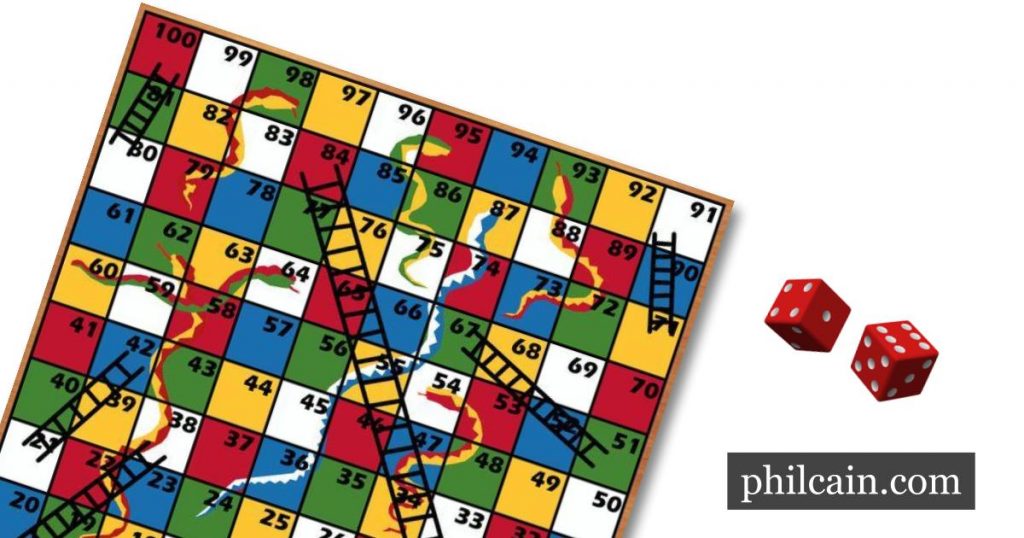
The board game snakes and ladders, or chutes and ladders in the US, can help picture how circumstances alter our chances of success or mishap. Each player moves along the board and when landing on a ladder takes a big step up and when they land on a snake they slip a long way down.

But, crucially, we do not all play on the same board. Poorer people start further away from the giddy heights of their terrain. And, to reflect their less fortunate circumstances, they face more penalties and fewer bonuses, so fewer and shorter ladders, and more, longer snakes. Consequently a smaller percentage of poorer people make as much progress.

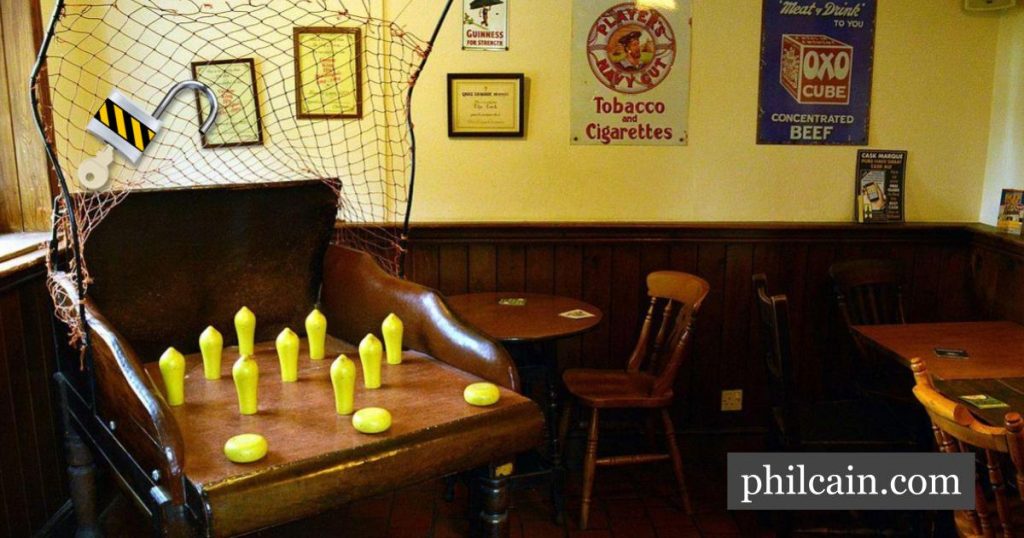
To make it more realistic we should test a skill to decide whether we necessarily slide down a snake or climb a ladder. Maybe we have to answer an exam question or, something silly like catch a ball in a cup, anything really to mimic a real life test. Adding this extra obstacle simply multiplies the extra difficulties faced by poorer people.

Now, finally, we can add another level of realism to the model, alcohol. Consuming alcohol impairs our skills, judgement and planning, so meaning we fall down even more snakes and can take advantage fewer lucky breaks. Adding alcohol to the equation tips the balance of an unfair game even further against poorer people.

At the same time advertising relentless associates alcohol with success and winning, deliberately obscuring the fact that it is far more likely to increase our chances of losing.

Clear, not less subtle
The “alcohol paradox”, the name often given to the way alcohol disproportionately harms poorer people is unhelpful, adding intrigue to something which is not mysterious. It is not paradoxical that poorer people are harmed more It is simply a testament to the combined effect of more challenging circumstances and substance blunting our abilities.

It is, of course, vital for the review unveiled this week to go beyond this simplistic model and to shed light on the details. But, as a starting point, the reason alcohol tends to compound inequality can be an unfortunate effect everyone can readily understand and find ways to avoid. With luck, more policies will emerge to make it easier. ■

Brits drank less alcohol in early pandemic

January 10, 2024

Brits overall drank less alcohol than usual in the first few months of the pandemic last year, despite scenes of frenzied panic buying.

There was a fall of around 10% in England and Wales and 5% in Scotland in the second quarter of 2020, according to figures published by Public Health Scotland yesterday. But these were just averages.

“Unfortunately we know that some of us—particularly heavier drinkers— have been drinking more. We need to make support available,” wrote Alison Douglas of Alcohol Focus Scotland. 

Average amounts may not have changed much but the average context has. We now drink more often alone at home to soothe anxiety or cheer ourselves up, uses in which alcohol backfires in the longer term.

This means, taking the population as a whole, the dramatic rise in the amount consumed at home was not enough to outweigh the amount they would normally drink in pubs and bars.

In England and Wales men’s drinking on average fell by just under 13% and women’s by 7%. In Scotland the falls were 7% for men and just 1% for women.

What happened in the third and fourth quarters of 2020 is currently unclear, with tax figures suggesting a rise in overall alcohol consumption and industry figures a fall. ■

On seven years working on alcohol-freedom

January 10, 2024

It was seven years ago when I first stopped drinking alcohol as background for a book, a project which significantly changed my life and my ideas.

I never intended to make my own experiences central to my work on the topic and this has not changed. I will only ever be a single data point in a story involving millions.

But I do think having first-hand experience from both “sides” is crucial to the journalistic task. They allow us to understand and describe things better.

Like many my alcohol habits have had phases at the riskier end of the spectrum. It was mostly the classic British weekly session, or two, and the odd drink dotted through the week.

I had started drinking in what I considered a “mature” way in my 30s, as many do, pouring a loosener at the end of a day at work. It might be two or three if it was a hard one.

But having an unexceptional drinking pattern does not mean change comes easily. I used alcohol as both a stressbuster and mood booster. Life was going to be rougher without it.

Each situation and hangup had to be dealt with head on as it arose, rather than being conveniently smoothed over with the silky-smooth plaster of a pint or three.

A great number of things had been summarily dealt with using alcohol. Going alcohol-free meant dealing with this backlog on top of the flow of new challenges.

Luckily for me I saw this as a work assignment, so I was okay with it not being a barrel of laughs. And my research was, thankfully, showing it should get easier in time.

In the short term I found it best to simply avoid challenging situations. Alcohol-free drinks are good cover for mingling without an interrogation from evangelistic drinkers.

But also crucial to the exercise was exploring activities beyond alcohol drinking situations. After a certain point they are, sadly, often less entertaining when experienced sober.

This resulted in no end of experiments, including cold showers, improv, leaf tea, swimming, psychogeography, VR and simulators. Alcohol was replaced by chronic dilettantism.

I noticed that my long distance running and cycling actually contributed to stress and pain I might seek alcohol to relieve. So I turned down the intensity of my sessions.

So over years my counterproductive stress-drinking has been replaced by an eclectic mix. Negative stress is now gone quicker and the buzz of occasional success is felt longer.

A few of life’s trials have come along in the interim. None of them have led me to drink alcohol again. And giving up tobacco was not a big deal without alcohol there to derail me.

The book was finished in summer 2016 after just under two years. I no longer felt obliged to continue with not drinking, but I wanted to.

I had made so much effort learning to live free of alcohol, which I’d also learned was counterproductive. It would be a massive waste to return to drinking, so I didn’t.

Another three years or so passed and I did not touch a drop. I simply did not want to. But then I got interested in the taste, so had the odd tiny alcoholic drink.

And that’s more or less where I am. Once or twice I have had a strong craft beer and felt a mild psychoactive effect. To my surprise I found I disliked it. 

Something I once saw as a universal balm for my worries now makes me feel like I am coming down with a cold and aware I am talking too much. And I feel annoyingly agitated.

So there is no epic struggle needed to resist drinking more. I drink a tiny measure to taste it and leave it at that. I stay well away from the unwanted effects. 

No doubt I am shaped by years of covering the subject. So, I would not recommend this very low-level dabbling as an objective for anyone.

And it helps to rethink freedom too. It now does not involve disabling my brain, harming myself in obedience to social convention, or relying on a sedative to quash stress.

If there is a health objective which might be more universal, it is to look after our brains as best we can. It is our biggest asset. This, for me, means no alcohol bingeing at all.

If I feel like I might go against this objective, I will simply go back to drinking nothing at all. It would, in comparison, be no big loss. 

There have been challenges, of course, but my choices were the ones that were easiest and most enjoyable on aggregate for me. The only real difficulty was ensuring they were not overlooked. ■

The astonishing usefulness of alcohol-free beer

January 10, 2024

Alcohol-free beer offers a harmless way to transform our mistaken beliefs about alcoholic drinks into something positive, so we should welcome its increasing availability.

Alcohol is the opposite of the joyful, relaxing “social lubricant” we are led to think it is. Drinking more than a small amount—the UK guideline maximum being around 14 units (140ml) a week—is liable to making us grumpier, tenser, more socially clumsy and sleep less soundly. 

Alcohol-free beer, by contrast, helps us fulfil many of the hopes we have of alcohol without suffering any downsides. Experiments show placebos like it make us more prosocial and at ease with each other, while leaving our brain function intact giving us no nasty side-effects.

This is partly because alcohol-free beer does a convincing impression of alcoholic beer, making us imagine some of the effects we want from its alcoholic brethren. Having a beer in hand also gives others the unmistakable signal we are up for some fun and laughter.

This amazing psychological freebie is growing ever more popular. Sales are spiking. Sainsbury’s said recently it is opening an alcohol-free pop-up pub to showcase its range of faux tipples. Heineken 0.0 launched in the US this year and alcohol-free Guinness is on Diageo’s drawing board.

Too good to be true?
The involvement of such corporate giants in the alcohol-free area raises understandable concerns. Surely they are using alcohol-free drinks as a trojan horse to turn consumers towards their alcoholic offerings? Surely they hope to gain the brand loyalty of our children?

Some liken selling alcohol free beer to minors to selling children candy cigarettes. We might be encouraged to get interested in Heineken 0.0 in our childhood to prime us for the real thing at 18. So it is that age restrictions for alcohol-free beer get the thumbs-up from many health advocates. 

The concern is not any harmful substance within, but that the crossover branding may smooth a psychological pathway to heavy alcohol drinking. The concern is understandable, but it is unclear whether it is justified or if alcohol-free beer sales-restrictions help?

Habits picked up in our teenage years are likely to be sustained later in life. Earlier alcohol drinking, as we know, significantly increases the chances of problem drinking later. This is one reason it seems wrong to bar teenagers from buying alcohol-free beer, by far the better choice.

As teenagers we experiment with being grown up, finding problems and solutions in the process, depending on which experiments we select. How can we sensibly deny a low risk product many adults find helpful? I was boggled by this anomaly as a teenager already drinking alcohol.

And the branding-blur that causes worries can is also part of the value of alcohol-free products. The confusion it causes allows us to drink socially sans alcohol without being singled out as oddballs, as we almost certainly would if we were, say, sipping a cup of tea.

It pays to be wary, of course, but stymying alcohol companies’ for the sake of it may not always be the best strategy. Co-branding does expose non-drinkers to an alcohol brand, but the reverse is also true: a popular alcohol brand is broadened to embrace a non-alcoholic alternative.

There might also be resistance from retailers concerned that some might think they are wrongly thought to be selling alcohol to minors. Some kind of solution could surely be found to minimise the risk of this happening. Perhaps they could use a “not alcohol” bag or sticker?

And others arguing for maintaining age restrictions may have less charitable motives. Keeping age restrictions hinders access to a harm-free alternative to their addictive product. I, for one, would have been better off for being allowed to discover alcohol-free beer’s potential earlier.

Staying open to solutions
This debate clearly needs to be informed by more research. We need to know how alcohol-free beer is used and seen by different age-groups. We also need to discover the real effects of alcohol-free/alcoholic co-branding rather than simply speculating.

There are some untoward effects we should investigate. People trying to curb their drinking sometimes complain that alcohol-free beer can trigger craving. This is not surprising when images of alcoholic drinks are enough to do this. And relying too much on alcohol-free beer could mean we enter social drinking situations where relapse is more likely.

But, while accepting these potential downsides, it seems alcohol-free beer does also help many adults in their bid to reduce their alcohol consumption. And it may well also help teenagers practice the key skills needed to establish a low-risk drinking habit from the off. It may prove to be a help overall, rather than a first step on a slippery slope to problem drinking. 

Alcohol-free beer has some profound lessons for us. It opens our eyes to the fact that having positive expectations and beliefs, coupled with an accepting social environment, can have uplifting effects. This part of our nature we would do well to recognise and harness early. 

Anyone involved in the discussion around alcohol can be forgiven for developing a cynical streak, but we must also be ready to make the most of solutions whenever they appear. ■

The case for an alcohol advertising cap

January 10, 2024

Limiting alcohol advertising spend could boost industry profits while testing the premise underlying our current approach.

Policy is often based on the assumption alcohol advertising is about battling for a share of a market of fixed size.

Cynics, of which I am one, doubt we are unmoved by the billions being spent on influencing our spending decisions.

Proving or disproving either case is nigh-on impossible, with the real world having too many complicating factors.

Accept the premise
With science offering no obvious way forward, the solution may lie taking the premise to its logical conclusion.

So, let’s say it is true, demand for alcohol is indeed immovable. It would mean nearly all advertising money was being wasted.

Most cash spent, say, promoting lager A over lager B, would be adding to the sector’s cost base for no extra income.

The route to higher shareholder returns can only lie in conducting this contest at lower cost.

Alcohol suppliers should, then, agree to cut their mostly fruitless marketing costs by agreeing a cap on advertising expenditure.

To maximise shareholder returns this cap would be best set as low as possible, allowing it to be returned as profit.

Guaranteed benefits 
There is no reason for shareholders to resist such a cap on wastage, unless the notion of having fixed market size is untrue.

A low adspend cap would also satisfy those doubting that it does not help boost overall alcohol consumption.

If the premise of current policy is right, alcohol sector’s profits will rise, if not, alcohol consumption will fall. 

Wherever the truth lies, someone would stand to benefit from putting this critical assumption to the test. ■

  • « Go to Previous Page
  • Page 1
  • Interim pages omitted …
  • Page 11
  • Page 12
  • Page 13
  • Page 14
  • Page 15
  • Interim pages omitted …
  • Page 22
  • Go to Next Page »

Primary Sidebar

Follow us

  • Bluesky
  • Instagram
  • LinkedIn
  • Twitter
  • WhatsApp

Copyright © 2026 · Phil Cain Impressum


Loading Comments...