• Skip to main content
  • Skip to primary sidebar

Alcohol Review

Alcohol understanding for all

  • Highlights
    • Messages
    • Newsletters
    • AR Live
  • Events
    • AR2026
    • AR2025
    • Next year’s event
    • Earlier events
  • Join
  • About
    • Organisers
    • Contact
  • Log In

philcain

Alcohol: Why not all use millilitres?

January 10, 2024

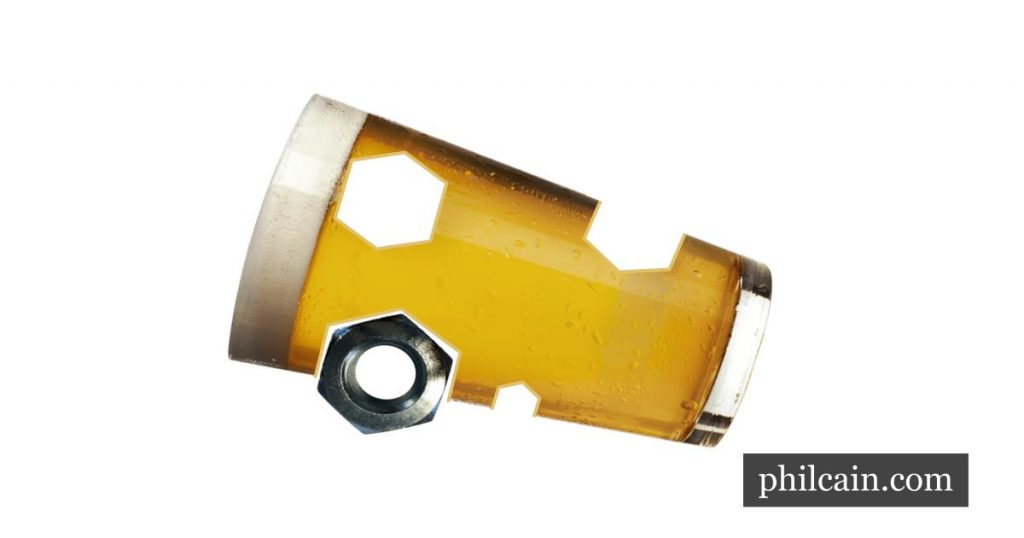
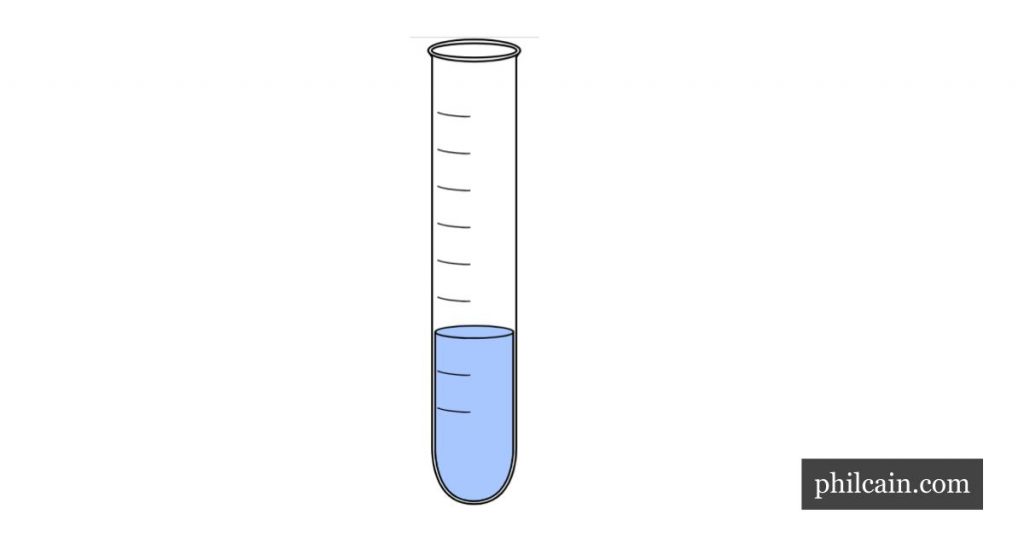
We could make alcohol health guidelines easier to picture, calculate and compare internationally by giving them all in millilitres.

We measure oil, water and every other liquid in metric units, so why use 20-odd different units for alcohol?

It is like a throwback to the bygone days in which Europe operated on a bewildering array of measurement systems.

An account of a medieval journey might mean converting the Finnish virsta (Russian or Swedish) to the Rheinland miele. 

This week’s new proposed weekly guideline of saw us scrabbling for the definition of the “Australian standard drink”.

Once converted to 125ml it could be compared easily to the UK one of 140ml, itself normally given in local units.

Offering it to begin with in millilitres would avoid this process, allowing consumers and nerds a ready-made comparison.

It would make recommendations more intuitive too. We can imagine 100ml far more easily than a bespoke unit.

The volume of alcohol is a good guide too, giving a direct picture of the number of molecules it contains, so its effects.

Using millilitres as a standard means only needing to do a one-step calculation to work out a dose, not two or three.

The alcohol present in a drink is just a drink’s alcohol percentage by volume multiplied by its volume. That’s it.

So, for example, in 500ml of 5% beer there is 0.05x500ml of alcohol, or 25ml. 

One large continental lager is, then, a fifth of the Australian weekly low-risk guideline total of 125ml.

Using alcohol specific units, by comparison, we might have two more stages, perhaps converting to mass on route.

We need not drop local units, which some may find helpful, but we could easily add the equivalent amount in millilitres in brackets.

This would be a simple way to reduce barriers in a field in which international cooperation is essential. ■
Not drinking is pure hedonism

January 10, 2024

Taking an alcohol break, as many are doing now, can be seen as a step towards a purposeful pursuit of pure pleasure, or hedonism, instead of a spartan act of self-denial.

Maximising pleasure is more than giving ourselves a series of nice feelings. Otherwise we might simply lie around all the time gorging ourselves on delicious snacks and, er, tickling ourselves.

Some pleasures we discover are transient and not connected to anything else. So, over time, we learn not to invest excessive amounts of time in pleasures which do not pay off, or which bring downsides.

Thankfully, however, as uniquely sophisticated, conscious mammals capable of reasoning, our range of pleasures are uniquely wide, varied and adaptable. It is no coincidence they take in activities which help us thrive.

We typically get great pleasure from learning, practising and succeeding, getting a buzz from passing exams and triple-twenties in darts. And we enjoy work, music, movement, socialising, sights, sounds and sensations.

And we can even conjure joy from outwardly tedious activities which pay off. Some of us can, for instance, with the right mind-games, elicit unlikely gratification from catching up with paperwork or sweeping behind the tumble dryer.

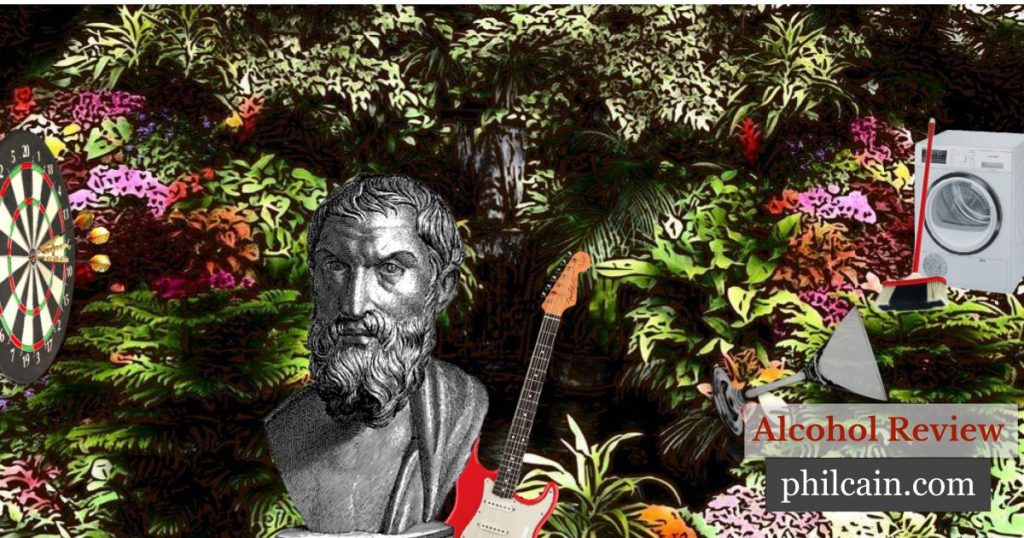
Epicurus, a Greek hedonist from 2,300 year ago (pictured), plumped for chilling in a communal garden talking with mates about philosophy. He rejected the idea that drinking a lot of alcohol as the best route to pleasure.

Alcohol, a psychoactive, gives us an out-sized impression of its reward. This can mean we invest more time and energy in alcohol than it deserves. Our human relish for persistence in the face of hardship does us no favours here.

We can persist in drinking alcohol even though it  brings scant pleasure and is causing us grief. We can want alcohol without liking it, with its pleasures and rewards long outweighed by hangovers, crappy sleep and low mood. 

Not drinking for a month or longer is a good way for us to weigh up the pleasures and downsides of alcohol. What things positive and negative do we correctly attribute to it? And what downsides does it have we did not notice?

It can take us from three months to a year to be free of side-effects that heavier alcohol drinking can bring, like anxiety and low or changeable mood. If we make one month it can be worth banking the investment and carrying on.

Taking time without alcohol is a route to finding more pleasure in life. And it can also be the beginning of a life devoted to pursuing of long lasting pleasures without serious downsides. This is a pure form of hedonism. 

Stopping alcohol for any length of time we choose is not a hair-shirt exercise. It is time we can use to rid ourselves of any illusions conjured up by alcohol and to focus on greater pleasures. ■

The year in alcohol

January 10, 2024

The world continued to bump its way through the covid pandemic, with alcohol playing a fringe role in public discussion, despite inflicting a far heavier death toll than before.

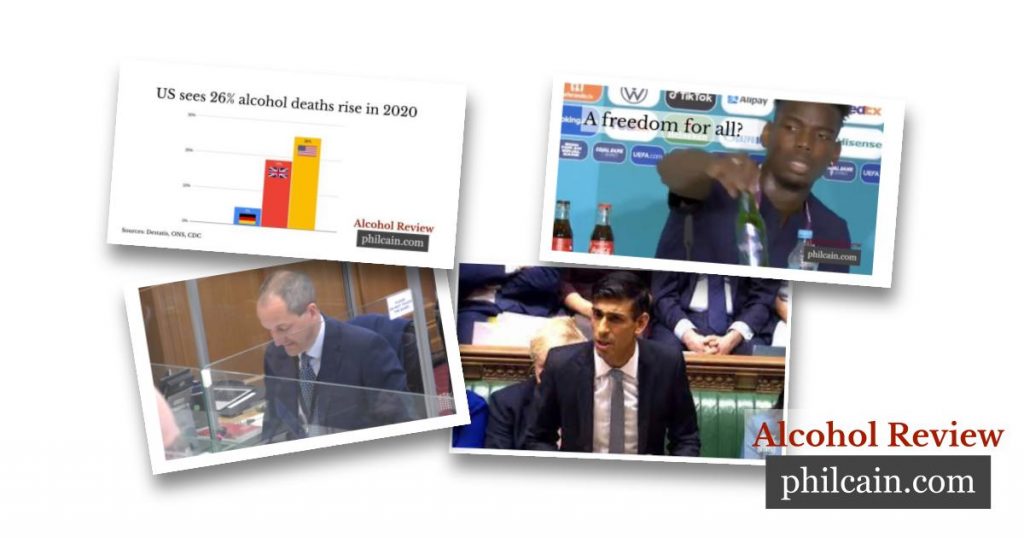
The year ended with the discovery that the US suffered a mystery 26% increase in alcohol-induced deaths last year, according to provisional CDC figures. This is higher than the UK’s 19% and five times the rise in Germany. The unexplained leap is set to be followed by 14% rise this year. The closest thing to an explanation for the US rise is the rise of home delivery.

In November Wales launched the first framework for caring for people with alcoholic brain damage, about 10% of people with dementia. At the same time the alcohol industry boasted that one in five alcoholic drinks in the UK does not include official guidelines, five years after they were introduced.

A lack of adequate labelling partly explains why few Brits know the basic facts about the alcoholic drinks they consume. Just one in five know how many calories are in their alcoholic drinks or know the official low-risk drinking guidelines, a survey found in July.

The UK Budget in October ignored health advice, freezing alcohol tax in 2022. This means prices will fall relative to inflation, so lowering the barriers to deadly levels of drinking despite 2020’s record rise. Tax reforms slated for 2023 were praised, but also leave a loophole for ultra-cheap cider.

There was little positive news for those who might develop alcohol drinking problems. Local government alcohol treatment services have seen their budgets cut by 17% over the last five years, according to Health Foundation figures. Alcohol was not part of its drugs strategy in December.

Not having an alcohol strategy may ultimately prove unpopular, with steps to help to curb future alcohol drinking problems wildly popular among the British public. Three-quarters of Brits want to see curbs on alcohol ads reaching children, an Alcohol Health Alliance survey found in August.

Not having an alcohol policy also runs counter to the government’s goal of “levelling up” society. A third of England’s alcohol deaths were among the most deprived, a Public Health England report said in July. Why, some ask, avoid popular policies and undermine a central manifesto commitment?

The government’s position was first confirmed in April by then health minister Lord Bethell to a parliamentary committee. His wife is a board member of alcohol giant Diageo and Tescos, the biggest UK alcohol retailer. Alcohol Review‘s reporting was followed up by Private Eye. He was removed in September amid controversy over covid contracts.

Among those who might appreciate action to spare media consumers of constant reminders about something we wish to avoid is the newly-sober-curious Queen Elizabeth. In October Vanity Fair reported she is skipping her favoured martinis ahead of her Platinum Jubilee in June.

French footballer Paul Pogba caused a stir in July when he tried to skip endorsing a Heineken-branded alcohol-free beer in a Euro 2020 [sic] press conference. Alcohol Review discovered it may be an option only open to the religious, Alcohol Review , and apparent breach of UN human rights principles.

The end of the covid era may finally be nigh, but only time will tell whether shortcomings that have led to so many more alcohol deaths are corrected or ignored. ■

Mental illness and substance use: the two often go hand in hand so why is it so difficult to get help?

January 10, 2024

by Simon Bratt, Staffordshire University

Sam Wordley

In the UK it’s estimated that 86% of people who access treatment for alcohol use experience mental health problems. Similarly, 70% of people in treatment for drug dependency also have a mental illness. For those people that report coexisting mental health difficulties, depressive and anxiety symptoms tend to be the most common.

Often people with substance use issues find getting help for their mental health is difficult and frustrating – as there’s often the view from mental health professionals that patients need to stop using drugs or alcohol before they can access treatment.

But herein lies the problem because, for many people, using a substance can be the way they cope – or mask mental health difficulties. Asking them to stop using drugs or alcohol means taking away their coping strategy and without immediate support it’s likely that person will return to using substances to cope with psychological distress.

This often leads to a revolving-door scenario, whereby the person will ask for support from mental health services only to be told to stop using substances. They stop using substances but can’t get support for months thanks to long waiting lists, so end up returning to substance use to cope.

‘Dual diagnosis’
Someone with both a mental illness and substance use disorder is considered to have a “dual diagnosis” – a concept that emerged in 1990. Back in 2002, the Department of Health reported that supporting people with dual diagnosis was one of the biggest challenges facing frontline mental health services.

The report highlighted how fragmented care leads to people falling between the cracks in services. It warned that “patients should not be shunted between different sets of services or put at risk of dropping out of care completely”.

The report also stated that people with dual problems deserve high-quality, patient-focused and integrated care, which should be delivered within mental health services. But 18 years on from these findings, sadly nothing has changed – if anything things have got worse.

Treatment and recovery
As part of my ongoing PhD research, I sent a freedom of information request to every mental health trust within England. I wanted to find out if high-quality and integrated care exists for people with a dual diagnosis.

Man holds his head in his hands.

Many suicides involve people with mental health problems and substance dependency. Viajero/Pexels

The results show that only 58% of the NHS trusts record data about people with a dual diagnosis and that only 28% of those trusts had specific teams that offered treatment. The remaining trusts outsourced treatment to voluntary or private sector substance use services. This means that where you live affects the type of care you will be given – creating a postcode lottery for people trying to access support and treatment.

From the data I collected, only 11,486 UK patients were recorded to have a dual diagnosis. Yet it’s estimated that 586,780 people are alcohol dependent in the UK – so it’s likely that the real figure is far higher.

A crisis on the frontline
There are several reasons why the data collected is not a true reflection of the prevalence of dual diagnosis – and one reason is the term itself. There isn’t a clear definition of “dual diagnosis” – and services often develop their own local word or use the term “co-occurring mental illness and substance use” instead.

Another reason is that people with a substance dependency may not go to the doctors for help with their mental health for fear of being rejected. Hearing the words: “We can’t treat your mental health if you are using substances” is becoming the norm for people with a substance use. This discrimination and stigmatisation puts people’s lives at risk.

Woman sitting by window with cup of tea

People can fall between the cracks and struggle to access any help or support. pexels/sarah dietz

COVID-19 has presented significant challenges to UK healthcare systems and public health policies. Disruption has led to community-based services grinding to a halt due to the redeployment of healthcare workers and quarantine restrictions. People with a dual diagnosis not only suffer from their mental health and substance use, but most will also have multiple needs. Some will have experienced significant trauma, live in poverty, may be known to the criminal justice system and have little or no support in the community.

Research has shown how past crises significantly affected the more vulnerable in society, leading to an increase in substance use. So it would be remiss to think that mental health difficulties and substance use will not increase in the wake of the pandemic. In fact it runs the risk of overwhelming an already exhausted NHS.

This is why an integrated approach to care is needed, as well as a culture change in terms of how healthcare professionals work with and treat people with mental health problems and substance use. The stigma must be banished now – before it’s too late.The Conversation ■

Simon Bratt, Mental Health Social Worker and PhD Candidate, Staffordshire University

Note: This article is republished from The Conversation under a Creative Commons license. Read the original article.

Rocketman lands admirably rich alcohol story

January 10, 2024

Rocketman, a biopic of Elton John starring Taron Egerton, offers a compelling account of the veteran piano prima-donna’s life story, successfully interweaving his journey into and out of alcohol and other drug issues.

His alcohol and cocaine use quietly tiptoes up behind him, the viewer’s mind screaming louder and louder, “He’s behind you,” in the powerless agony of a child who spies a baddie at a Christmas pantomime.

While this silent threat looms ever larger, scene by scene, the story tirelessly flips between the flamboyant and introspective, the comical and tragic, the loud and the quiet, and the serious and the absurd.

The emotional load of this makes the musical interludes a much-needed emotional release. These numbers grow organically out of the story-line and are beautifully choreographed and energetically performed.

Perhaps the most touching of these numbers is the chillingly alienated underwater rendition of the song Rocketman of the title. It conveys poignantly the loneliness and disconnection of alcohol and drug problems.

Whether or not you are an Elton John fan there is much to be learned and enjoyed in this telling of his life story, in which alcohol, drugs and then 25 years without them are critical elements.

Egerton goes through more costumes in two hours than many of us in a lifetime. But, more impressively, he manages to admirably capture a combination of defiance and acceptance that allows many to start again. ■

The astonishing usefulness of alcohol-free beer

January 10, 2024

Alcohol-free beer offers a harmless way to transform our mistaken beliefs about alcoholic drinks into something positive, so we should welcome its increasing availability.

Alcohol is the opposite of the joyful, relaxing “social lubricant” we are led to think it is. Drinking more than a small amount—the UK guideline maximum being around 14 units (140ml) a week—is liable to making us grumpier, tenser, more socially clumsy and sleep less soundly. 

Alcohol-free beer, by contrast, helps us fulfil many of the hopes we have of alcohol without suffering any downsides. Experiments show placebos like it make us more prosocial and at ease with each other, while leaving our brain function intact giving us no nasty side-effects.

This is partly because alcohol-free beer does a convincing impression of alcoholic beer, making us imagine some of the effects we want from its alcoholic brethren. Having a beer in hand also gives others the unmistakable signal we are up for some fun and laughter.

This amazing psychological freebie is growing ever more popular. Sales are spiking. Sainsbury’s said recently it is opening an alcohol-free pop-up pub to showcase its range of faux tipples. Heineken 0.0 launched in the US this year and alcohol-free Guinness is on Diageo’s drawing board.

Too good to be true?
The involvement of such corporate giants in the alcohol-free area raises understandable concerns. Surely they are using alcohol-free drinks as a trojan horse to turn consumers towards their alcoholic offerings? Surely they hope to gain the brand loyalty of our children?

Some liken selling alcohol free beer to minors to selling children candy cigarettes. We might be encouraged to get interested in Heineken 0.0 in our childhood to prime us for the real thing at 18. So it is that age restrictions for alcohol-free beer get the thumbs-up from many health advocates. 

The concern is not any harmful substance within, but that the crossover branding may smooth a psychological pathway to heavy alcohol drinking. The concern is understandable, but it is unclear whether it is justified or if alcohol-free beer sales-restrictions help?

Habits picked up in our teenage years are likely to be sustained later in life. Earlier alcohol drinking, as we know, significantly increases the chances of problem drinking later. This is one reason it seems wrong to bar teenagers from buying alcohol-free beer, by far the better choice.

As teenagers we experiment with being grown up, finding problems and solutions in the process, depending on which experiments we select. How can we sensibly deny a low risk product many adults find helpful? I was boggled by this anomaly as a teenager already drinking alcohol.

And the branding-blur that causes worries can is also part of the value of alcohol-free products. The confusion it causes allows us to drink socially sans alcohol without being singled out as oddballs, as we almost certainly would if we were, say, sipping a cup of tea.

It pays to be wary, of course, but stymying alcohol companies’ for the sake of it may not always be the best strategy. Co-branding does expose non-drinkers to an alcohol brand, but the reverse is also true: a popular alcohol brand is broadened to embrace a non-alcoholic alternative.

There might also be resistance from retailers concerned that some might think they are wrongly thought to be selling alcohol to minors. Some kind of solution could surely be found to minimise the risk of this happening. Perhaps they could use a “not alcohol” bag or sticker?

And others arguing for maintaining age restrictions may have less charitable motives. Keeping age restrictions hinders access to a harm-free alternative to their addictive product. I, for one, would have been better off for being allowed to discover alcohol-free beer’s potential earlier.

Staying open to solutions
This debate clearly needs to be informed by more research. We need to know how alcohol-free beer is used and seen by different age-groups. We also need to discover the real effects of alcohol-free/alcoholic co-branding rather than simply speculating.

There are some untoward effects we should investigate. People trying to curb their drinking sometimes complain that alcohol-free beer can trigger craving. This is not surprising when images of alcoholic drinks are enough to do this. And relying too much on alcohol-free beer could mean we enter social drinking situations where relapse is more likely.

But, while accepting these potential downsides, it seems alcohol-free beer does also help many adults in their bid to reduce their alcohol consumption. And it may well also help teenagers practice the key skills needed to establish a low-risk drinking habit from the off. It may prove to be a help overall, rather than a first step on a slippery slope to problem drinking. 

Alcohol-free beer has some profound lessons for us. It opens our eyes to the fact that having positive expectations and beliefs, coupled with an accepting social environment, can have uplifting effects. This part of our nature we would do well to recognise and harness early. 

Anyone involved in the discussion around alcohol can be forgiven for developing a cynical streak, but we must also be ready to make the most of solutions whenever they appear. ■

  • « Go to Previous Page
  • Page 1
  • Interim pages omitted …
  • Page 37
  • Page 38
  • Page 39
  • Page 40
  • Page 41
  • Interim pages omitted …
  • Page 57
  • Go to Next Page »

Primary Sidebar

  • Bluesky
  • Instagram
  • LinkedIn
  • Twitter
  • WhatsApp

Copyright © 2026 · Phil Cain Impressum

Manage Consent
To provide the best experiences, we use technologies like cookies to store and/or access device information. Consenting to these technologies will allow us to process data such as browsing behaviour or unique IDs on this site. Not consenting or withdrawing consent, may adversely affect certain features and functions.
Functional Always active
The technical storage or access is strictly necessary for the legitimate purpose of enabling the use of a specific service explicitly requested by the subscriber or user, or for the sole purpose of carrying out the transmission of a communication over an electronic communications network.
Preferences
The technical storage or access is necessary for the legitimate purpose of storing preferences that are not requested by the subscriber or user.
Statistics
The technical storage or access that is used exclusively for statistical purposes. The technical storage or access that is used exclusively for anonymous statistical purposes. Without a subpoena, voluntary compliance on the part of your Internet Service Provider, or additional records from a third party, information stored or retrieved for this purpose alone cannot usually be used to identify you.
Marketing
The technical storage or access is required to create user profiles to send advertising, or to track the user on a website or across several websites for similar marketing purposes.
  • Manage options
  • Manage services
  • Manage {vendor_count} vendors
  • Read more about these purposes
View preferences
  • {title}
  • {title}
  • {title}
Loading Comments...