• Skip to main content
  • Skip to primary sidebar

Alcohol Review

Alcohol understanding for all

  • Highlights
    • Messages
    • Newsletters
    • AR Live
  • Events
    • AR2026
    • AR2025
    • Next year’s event
    • Earlier events
  • Join
  • About
    • Organisers
    • Contact
  • Log In

philcain

Massive public support for alcohol labelling

January 10, 2024

The UK public overwhelmingly supports experts’ calls for consumers to be given nutritional information, alcohol content and the official low-risk guidelines on alcoholic drinks.

“Why should alcohol continue to be exempt?” asks Sir Ian Gilmore, head of the Alcohol Health Alliance (AHA), pointing out that all other forms of food and drink must offer consumers such basic information.

Three-quarters of Brits want to be told the number of units in a product, something they currently have to work out, says a Yougov survey for the AHA. Two-thirds want calorie information and half sugar levels.

Three-quarters of people also want to be told the official low-risk guidelines of 14 units (140ml) a week, according to a regional survey by AHA member Balance North East.

The alcohol industry’s marketing body Portman Group abruptly dropped the UK’s official low risk guidelines from its labelling standards in 2017. Its promises to return them to all labels have not been fulfilled

The public also said being told the official low-risk guidelines was essential if unit information is given in a Royal Society for Public Health survey in 2018. And 86% said they used labels.

The new survey forms the backbone of a letter co-signed by 94 health experts calling for better alcohol labelling. Its intended recipient is Health Secretary Matt Hancock who took over the role 2018.

The letter also points out that than only one-in-five people in the UK know the five-year-old official drinking guidelines, and only one in ten yet identify cancer as a health consequence of alcohol. ■
Temperance, unfinished history

January 10, 2024

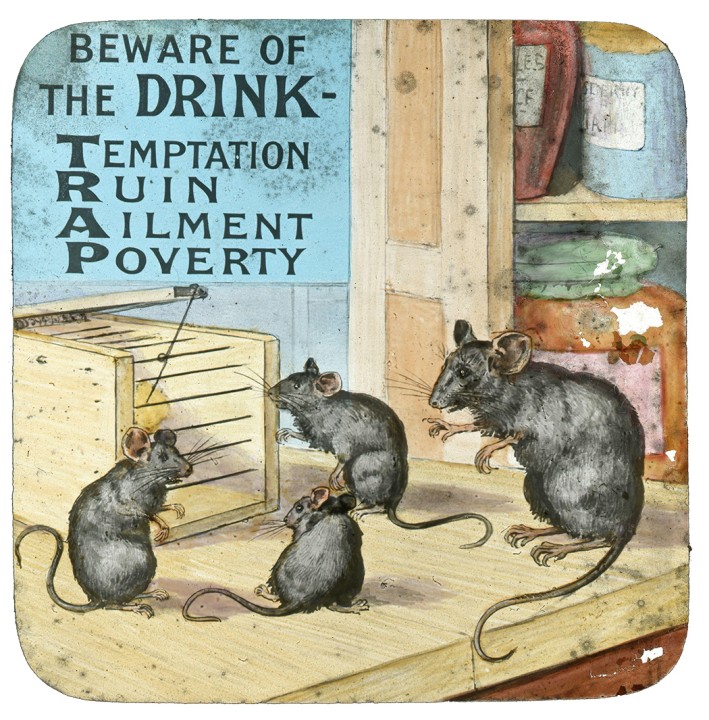
This week BBC Radio 4’s In Our Time told the story of the Temperance movement in Britain which is said to have really got going in 1832 in Preston. It provides fascinating insight into where we find ourselves now, where we have moved forward and where the debate has become frozen in time. You can listen yourself here.

What struck me was that we are not so much reliving this history, but that the knotty issues raised by retailing addictive psychoactives were never resolved. While we might scoff at our ancestors, we have not come much further. What we see now on the internet are, perhaps, are echoes of the arguments made in temperance halls and colourful lantern slides.

One notable quote from the programme came from Bishop of Peterborough in 1872. Looking it up verbatim in Hansard it was, “…it would be better that England should be free than that England should be compulsorily sober.” He went on, however, “I would distinctly prefer freedom to sobriety, because with freedom we might in the end attain sobriety.”

The bill he was opposing with this speech to the House of Lords was one to allow local parishes to stop the issue of alcohol licences. This might well have been a blunt and ineffective instrument. I don’t know. But what is clear is that the bishop’s argument brushed aside positive freedoms we typically value on a par with the freedom to do business.

This is a fateful oversimplification of the conception of freedom, which has the dire consequence of polarising the discussion from there on. I outline this more fully in the opening chapter of Alcohol for Nerds, drawing on the work of intellectual historian Professor Quentin Skinner who created a detailed genealogy of freedoms, plural.

But, in essence, 150-years on it is still not accurate to portray those who seek to regulate alcohol sales more as being “against freedom” and those in favour of fewer regulations as being “for freedom”. It ignores the fact that restrictions help curb the freedom-reducing effects of things like inebriation, violence, dependence, illness and disability.

As the BBC programme makes clear the Temperance movement was largely led by and for the benefit of working people looking to improve their lives, by avoiding the many perils of Victorian life. It was also part of a wider struggle to find a political voice. This is a struggle for freedom, not against it, although it can impinge on some commercial freedoms.

The UK has not found a satisfactory democratic solution to this day. Elected representatives have long abdicated responsibility for regulating alcohol marketing and advertising, handing it to the alcohol industry itself, despite the direct conflict of interest. The results are predictably poor, with government ministers unable to introduce something simple as guideline labelling.

We have changed enormously since the days of the Temperance movement, as has the knowledge-base from which we work. But the balancing of different conceptions of freedom goes on. This is society struggling to decide what freedom is and how to deliver it. Long may it continue. ■

Covid-19 shows life-saving policies are popular

January 10, 2024

The effort to control the covid-19 outbreak shows the public welcomes government action to protect life. Politicians might take note when formulating policies on alcohol, responsible for one in twenty deaths.

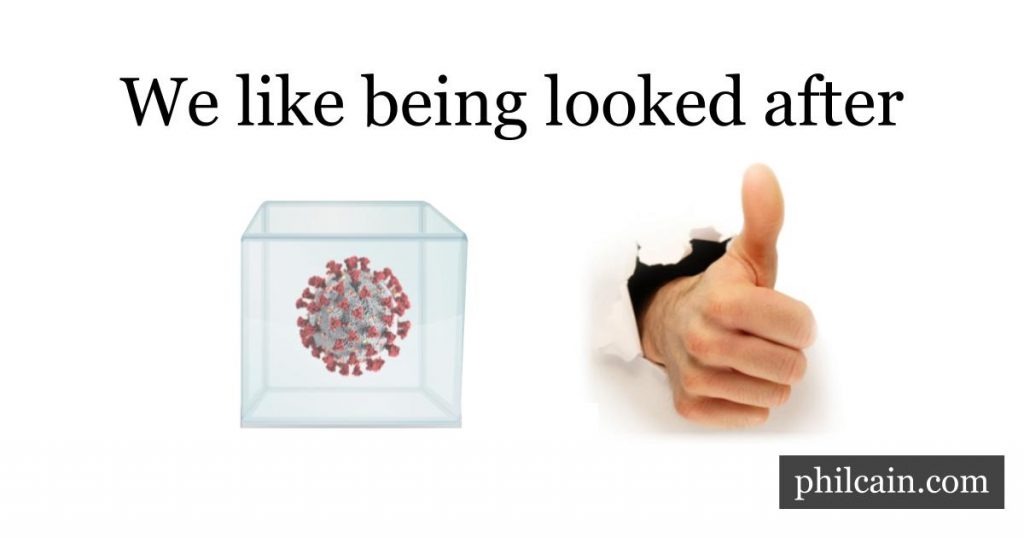
Billions of us have overnight willingly complied with often stringent laws curtailing our business and social lives, thanks to our clear understanding that doing so is saving millions of lives.

It seems reasonable to suggest that we would also gladly accept modest extra tax, advertising restrictions, and labelling and availability measures to cut millions of deaths, injury and suffering from alcohol consumption.

Far harsher restrictions are in place. Alcohol sales have been banned under lockdown laws in South Africa, Botswana, and parts of Thailand, Greenland and among a native group in Canada. The impact is uncertain.

Alcohol dependents will likely suffer the physical and mental health effects of withdrawal.Some have reportedly died as a result of “toddy” becoming hard to come by in India, largely by their own hand.

Providing support will be more challenging in coming months. Can Zoom support ever really replace a face-to-face meeting? Or might online even attract new people and offer more privacy?

Or will online help miss those who need it most? One former alcohol dependent said in a philcain.com discussion that being in covid-19 isolation with a stash of alcohol would have been her “happy place”.

Like it or not, we will find out some answers in the very near future. But our exceptional circumstances will also create exceptional statistics, full of “confounders”, making them incomparable with those before.

Road accidents in places where alcohol is suddenly off-limits, for example, are likely to drop sharply. But, then again, there is going to be hardly anyone on the road. So what will the numbers mean?

The first phase of the covid-19 outbreak has shown the public welcomes decisive government action to protect health and we will gladly accommodate them. 

As a species we are adaptable survivors. And we have now shown we welcome advice that helps us survive. We might also use this time to reflect and rethink our priorities and habits.

There is room for a glimmer of optimism we might make the best of this unusually bleak situation. ■

Sobriety sizzles

January 10, 2024

Any takers?

There are signs sobriety is creating the “sizzle” it needs to achieve the popularity it deserves.

Low-risk drinking is, on the face of it, the stuff of marketing executives’ dreams, a robust product with undisputed benefits, available to all at negative cost.

Yes, negative cost. It is not some something-for-nothing deal. This is a something-for-money-back deal. It is both beneficial and profitable for its adopters.

While easing the load on our wallets, it improves our sleep, relieves depression and anxiety, promotes clearer thinking, boosts resilience, reduces mistakes and accidents, and avoids disease.

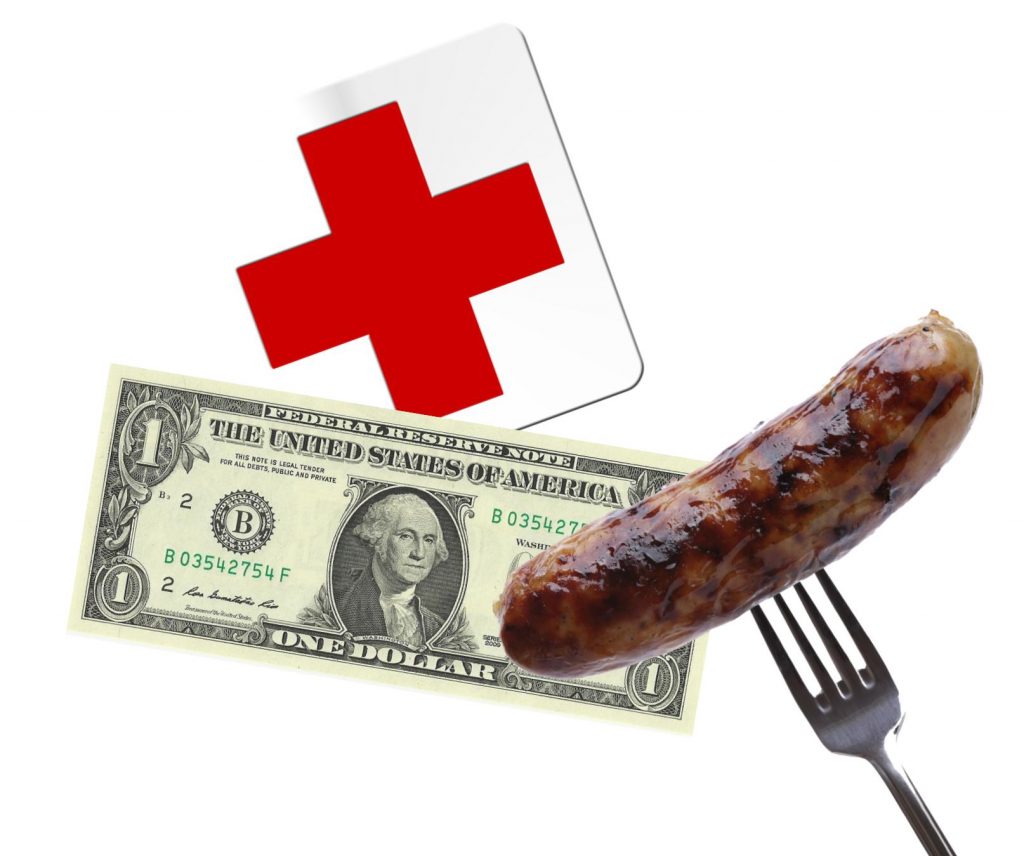
Drinking rates, nevertheless, barely budge from year to year. Imagine it: health payoffs and dollar bills lying around across the globe and yet few of us trouble to pick them up.

Is this a rational choice? Is heavy drinking really worth the price we pay? It seems doubtful. So, then, what is going wrong?

Knowledge and desire
It is partly misunderstanding. The scientific findings around alcohol are counterintuitive and constantly undermined, as I found while writing my book Alcohol Companion.

A stats-fest tickles our cortices but does not push the buttons which guide our humdrum choices.

Everyday decisions are rarely made through agonising rational computation. Think of a trip to a supermarket. We lob things in our trolleys mostly to answer emotional and sensory appeals.

We need to connect with choices on a non-intellectual level for them to be easy and enjoyable. This applies to rational choices as much as self-defeating ones.

Marketing people know this. Winning our decisions is about “selling the sizzle, not the sausage”.

It is not just meat though. We prefer crisped rice with added Snap, Crackle and Pop too. An iPhone is no better, yet is still more desirable.

Better health labelling, though important to have, will not be enough to provide the sizzle that makes low-risk alcohol choices desirable in the way which shifts our behaviour.

Low-risk drinking needs sizzle to turn its stock of wholesome statistical sausagemeat into a tempting consumer choice.

Turning up the gas
It is starting to happen. The online world is fulfilling our need for superficial socialising, an area where alcohol once reigned supreme. Psychology, meanwhile, is giving more insight into happiness.

These developments are being met by the arrival of a new generation of alcohol-free alternatives allowing us low-hassle alcohol opt-outs, with a positive placebo-effect thrown in.

The contribution of public health professionals, counsellors, treatment providers, campaigners and help groups, meanwhile, are being supplemented by fresh new communities like Club Soda and Soberistas.

The payoff is potentially huge. Globally alcohol is among the top four reasons for us to lose healthy years of life and a major contributor to crime rates and countless lesser cock-ups.

Reducing the impact by any significant amount would deliver benefits across society, particularly for poorer people. It would also free resources to tackle other problems.

Putting reasonable choices in attractive packages is as essential as the science they are composed of. Sobriety is becoming increasingly tempting and this is worth celebrating. ■

#Lifehack health advice | philcain.com

January 10, 2024

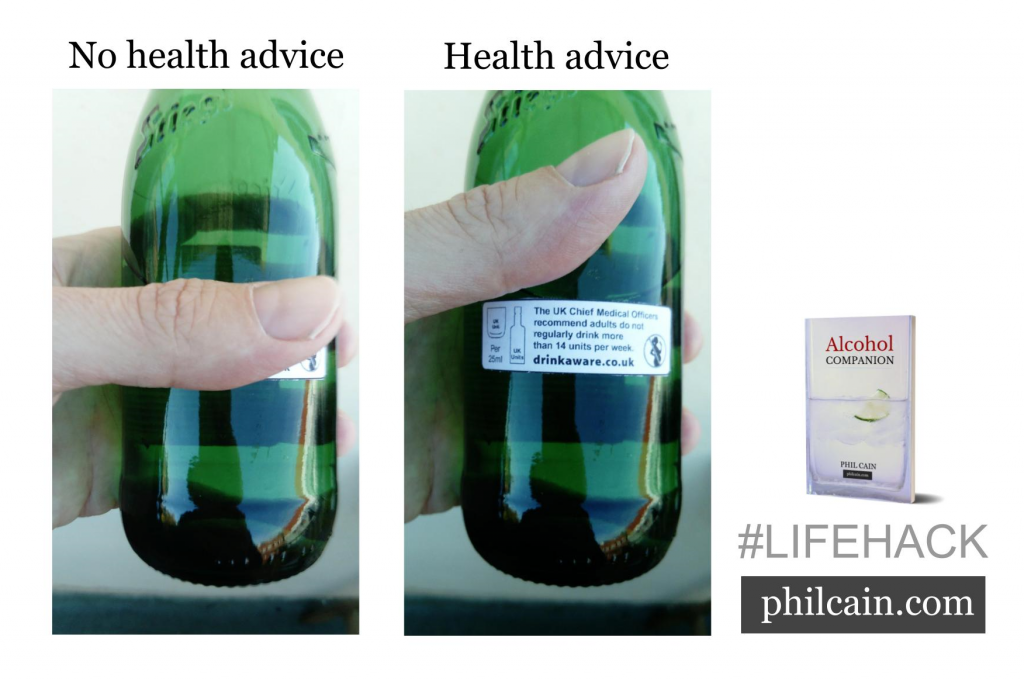
It is surprisingly easy to miss public health information on bottles and cans, like: “The UK Chief Medical Officers recommend adults do not regularly drink more than 14 units per week.” ■


Note: Read here why the label used in the demonstration is currently set to be a rare sight in the UK. ■

#brainawarenessweek, consider Alcohol Companion

January 10, 2024

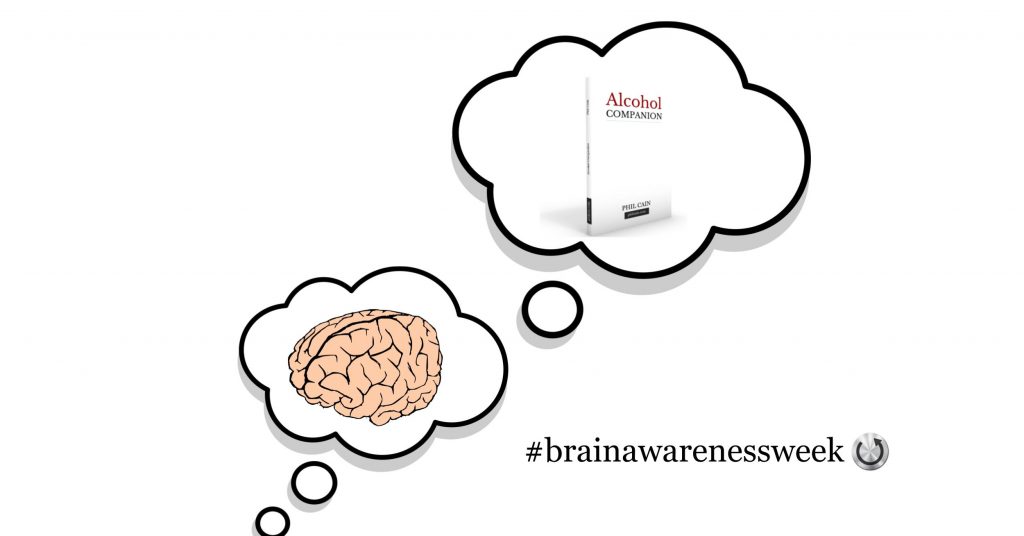
Alcohol has a profound impact on our brains and consequently our well-being. Understanding this more fully provides a powerful way to help us improve our lives, letting our brains to look after us better. So, to coincide with #brainawarenessweek, there is a 50% off Alcohol Companion using code FT6RK7J9 redeemable at the philcain.com bookshop. ■
  • « Go to Previous Page
  • Page 1
  • Interim pages omitted …
  • Page 38
  • Page 39
  • Page 40
  • Page 41
  • Page 42
  • Interim pages omitted …
  • Page 57
  • Go to Next Page »

Primary Sidebar

  • Bluesky
  • Instagram
  • LinkedIn
  • Twitter
  • WhatsApp

Copyright © 2026 · Phil Cain Impressum

Manage Consent
To provide the best experiences, we use technologies like cookies to store and/or access device information. Consenting to these technologies will allow us to process data such as browsing behaviour or unique IDs on this site. Not consenting or withdrawing consent, may adversely affect certain features and functions.
Functional Always active
The technical storage or access is strictly necessary for the legitimate purpose of enabling the use of a specific service explicitly requested by the subscriber or user, or for the sole purpose of carrying out the transmission of a communication over an electronic communications network.
Preferences
The technical storage or access is necessary for the legitimate purpose of storing preferences that are not requested by the subscriber or user.
Statistics
The technical storage or access that is used exclusively for statistical purposes. The technical storage or access that is used exclusively for anonymous statistical purposes. Without a subpoena, voluntary compliance on the part of your Internet Service Provider, or additional records from a third party, information stored or retrieved for this purpose alone cannot usually be used to identify you.
Marketing
The technical storage or access is required to create user profiles to send advertising, or to track the user on a website or across several websites for similar marketing purposes.
  • Manage options
  • Manage services
  • Manage {vendor_count} vendors
  • Read more about these purposes
View preferences
  • {title}
  • {title}
  • {title}
Loading Comments...