• Skip to main content
  • Skip to primary sidebar

Alcohol Review

Alcohol understanding for all

  • Highlights
    • Messages
    • Newsletters
    • AR Live
  • Events
    • AR2026
    • AR2025
    • Next year’s event
    • Earlier events
  • Join
  • About
    • Organisers
    • Contact
  • Log In

philcain

Millions readying for Dry January 2019

January 10, 2024

As many as 4.2m people are planning to go alcohol-free in January 2019, according to a YouGov poll, being on course to enhance their drinking choices all year round by doing so.

“Dry January can change lives. We hear every day from people who took charge of their drinking using Dry January, and who feel healthier and happier as a result,” said Richard Piper, head of Alcohol Change, the charity behind the initiative.

A survey of 2018’s participants, reckoned to number over 3m, found: drinking fell from an average of four days a week to three; drunkenness fell to twice a month from three times; eight out of ten felt more in control of their drinking; nine-in-ten saying they saved money.

People can sign up for Dry January online, receiving support from a website, app and a new book on taking a month-long alcohol break, called Try Dry.  ■
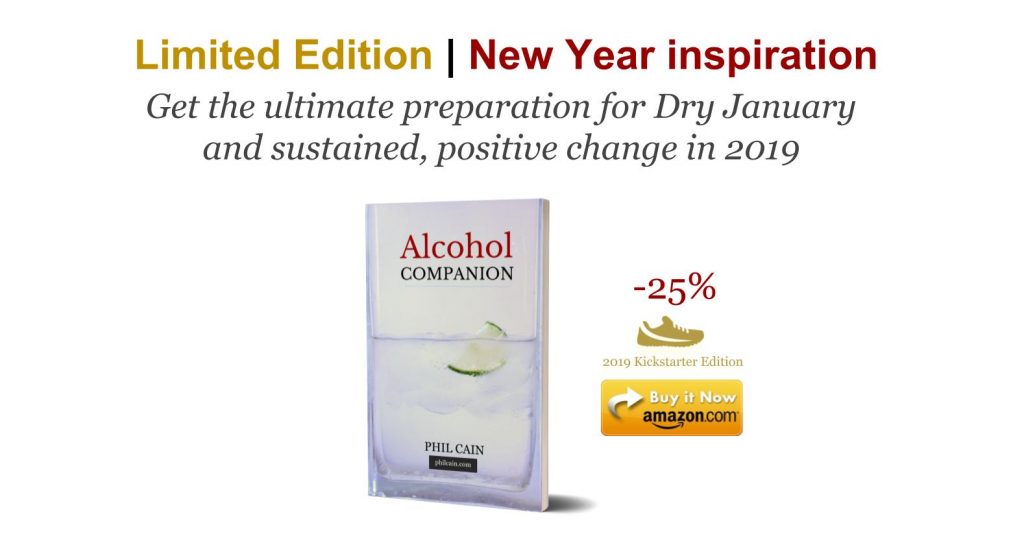
Limited Edition | New Year inspiration

January 10, 2024

Update: Alcohol strategy rift remains over conflicts of interest

January 10, 2024


There was no narrowing of the rift in the UK’s bid to tackle alcohol harm, which sprang open on Monday when a government health agency went into partnership with an alcohol industry-funded campaign, despite hearing strong opposition to the conflict of interests.

The “drink-free days” campaign will be entirely paid for by Drinkaware, an organisation receiving 92% of its £5.4m annual income from alcohol producers and others with interests in selling alcohol. It has committed to spend over £1m on the campaign this year.

“We will work together with any partner that speaks to the evidence and shares the same commitment,” Public Health England (PHE) told Alcohol Companion. “We brought our public health expertise and track record on delivering behaviour change campaigns.”

Drinkaware says it shares the same “aims and principles” as its new public sector partner. But it did not answer when asked if it would risk donors’ business interests to achieve public health goals? Critics conclude this is because of a conflict of interests.

Head of the Wine and Spirits Trade Association Miles Beale also would not say if his association’s members would continue to contribute to Drinkaware if the organisation’s work threatened their business interests. The alcohol industry wants “long-term customers”, he says.

PHE head Duncan Selbie said he would be “fiercely vigilant” about Drinkaware’s governance. Many, however, remain horrified. “As a profession, this potentially brings public health into national ridicule,” wrote one commentator on Twitter.

Sir Ian Gilmore, PHE adviser no more

A group of 40 health organisations, led by the Alcohol Health Alliance, objected to the deal last month. “We hoped they would see sense,” said one insider. AHA head Sir Ian Gilmore resigned as a PHE adviser this week and his tobacco counterpart John Britton may yet follow.

Drinkaware “misrepresents evidence and frames alcohol harms as solely an individual responsibility issue”, says Mark Petticrew, a long-time critic. The new venture “normalises the role of the alcohol industry in influencing public health”.

In particular Petticrew says Drinkaware downplays cancer risk as part of a wider strategy to neuter health advice to protect shareholder returns. A PHE evidence review has acknowledged potential problems of this kind.

PHE and Drinkaware say they will do separate evaluations and peer reviews of the campaign. Portman, the alcohol industry outfit which created Drinkaware, drew conclusions at odds with the findings of a joint health labelling study this year.

This site revealed Portman unilaterally dropped official health guidelines from its voluntary labelling standard in October. The attempt to restore them is led by the Department of Health and Social Care, but the PHE looked at the evidence and came down in favour of health labelling.

“Using labels to include information about the health risks and harms associated with alcohol can be implemented with relatively low-cost and will have a wide population reach,” the PHE’s review said in its 2016 review.

Few health professionals quibble with the idea behind “drink-free days”. Having two or more days a week without drinking alcohol may help older, steady drinkers cut down. It is already part of the Chief Medical Officer’s drinking guidelines.

A PR campaign for the idea began on Monday. This will be backed up with national radio and digital advertising which will direct people to a dedicated site. The Drinkaware board has yet to decide on budgets for 2019 and 2020.

Among the reasons the PHE gives for its partnership with Drinkaware is that the alcohol-business backed site had 9m unique visitors in 2017, an unaudited figure taken from Google Analytics. Most, it says, arrive from an organic search for an alcohol-related term.

“This is the first step in reframing our relationship with the alcohol industry,” PHE said its head, Mr Selbie. Some are finding the route being mapped out a more enticing prospect than others. ■


There is no safe level of alcohol drinking

January 10, 2024


There is no safe level of alcohol drinking, something linked to almost one-in-ten deaths in adults under 50 globally, says a study published today in 
The Lancet. [Read more…] about There is no safe level of alcohol drinking

[book] Preventing Alcohol-Related Problems: Evidence and Community-based Initiatives | APHA Press

January 10, 2024

“… The book combines the latest research on community-level alcohol problems with success stories from community practitioners. …”
ISBN: 978-0-87553-291-2

Author: Edited by: Norman Giesbrecht and Linda M. Bosma
Publisher: APHA Press
Format: Soft Cover
Pages: 623
Publishing Date: 11/17

Source: secure.apha.org/imis/ItemDetail?iProductCode=978-087553-2912

Sobriety sizzles

January 10, 2024

Any takers?

There are signs sobriety is creating the “sizzle” it needs to achieve the popularity it deserves.

Low-risk drinking is, on the face of it, the stuff of marketing executives’ dreams, a robust product with undisputed benefits, available to all at negative cost.

Yes, negative cost. It is not some something-for-nothing deal. This is a something-for-money-back deal. It is both beneficial and profitable for its adopters.

While easing the load on our wallets, it improves our sleep, relieves depression and anxiety, promotes clearer thinking, boosts resilience, reduces mistakes and accidents, and avoids disease.

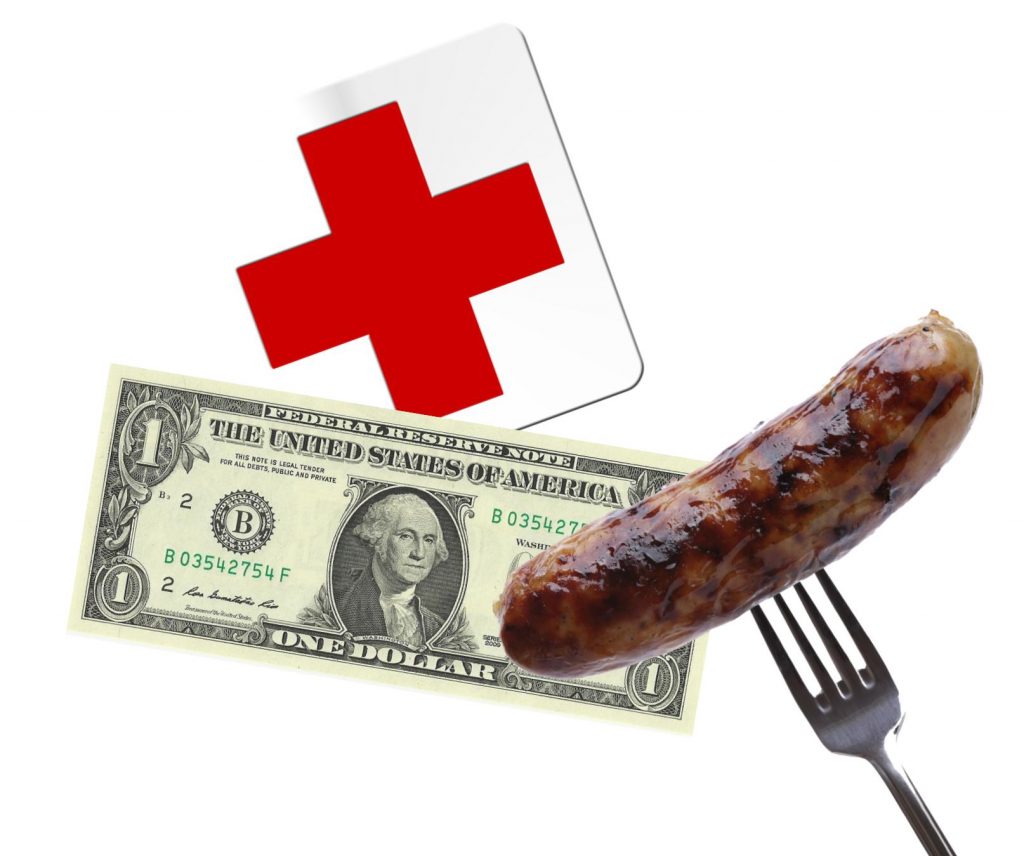
Drinking rates, nevertheless, barely budge from year to year. Imagine it: health payoffs and dollar bills lying around across the globe and yet few of us trouble to pick them up.

Is this a rational choice? Is heavy drinking really worth the price we pay? It seems doubtful. So, then, what is going wrong?

Knowledge and desire
It is partly misunderstanding. The scientific findings around alcohol are counterintuitive and constantly undermined, as I found while writing my book Alcohol Companion.

A stats-fest tickles our cortices but does not push the buttons which guide our humdrum choices.

Everyday decisions are rarely made through agonising rational computation. Think of a trip to a supermarket. We lob things in our trolleys mostly to answer emotional and sensory appeals.

We need to connect with choices on a non-intellectual level for them to be easy and enjoyable. This applies to rational choices as much as self-defeating ones.

Marketing people know this. Winning our decisions is about “selling the sizzle, not the sausage”.

It is not just meat though. We prefer crisped rice with added Snap, Crackle and Pop too. An iPhone is no better, yet is still more desirable.

Better health labelling, though important to have, will not be enough to provide the sizzle that makes low-risk alcohol choices desirable in the way which shifts our behaviour.

Low-risk drinking needs sizzle to turn its stock of wholesome statistical sausagemeat into a tempting consumer choice.

Turning up the gas
It is starting to happen. The online world is fulfilling our need for superficial socialising, an area where alcohol once reigned supreme. Psychology, meanwhile, is giving more insight into happiness.

These developments are being met by the arrival of a new generation of alcohol-free alternatives allowing us low-hassle alcohol opt-outs, with a positive placebo-effect thrown in.

The contribution of public health professionals, counsellors, treatment providers, campaigners and help groups, meanwhile, are being supplemented by fresh new communities like Club Soda and Soberistas.

The payoff is potentially huge. Globally alcohol is among the top four reasons for us to lose healthy years of life and a major contributor to crime rates and countless lesser cock-ups.

Reducing the impact by any significant amount would deliver benefits across society, particularly for poorer people. It would also free resources to tackle other problems.

Putting reasonable choices in attractive packages is as essential as the science they are composed of. Sobriety is becoming increasingly tempting and this is worth celebrating. ■

  • « Go to Previous Page
  • Page 1
  • Interim pages omitted …
  • Page 41
  • Page 42
  • Page 43
  • Page 44
  • Page 45
  • Interim pages omitted …
  • Page 57
  • Go to Next Page »

Primary Sidebar

  • Bluesky
  • Instagram
  • LinkedIn
  • Twitter
  • WhatsApp

Copyright © 2026 · Phil Cain Impressum

Manage Consent
To provide the best experiences, we use technologies like cookies to store and/or access device information. Consenting to these technologies will allow us to process data such as browsing behaviour or unique IDs on this site. Not consenting or withdrawing consent, may adversely affect certain features and functions.
Functional Always active
The technical storage or access is strictly necessary for the legitimate purpose of enabling the use of a specific service explicitly requested by the subscriber or user, or for the sole purpose of carrying out the transmission of a communication over an electronic communications network.
Preferences
The technical storage or access is necessary for the legitimate purpose of storing preferences that are not requested by the subscriber or user.
Statistics
The technical storage or access that is used exclusively for statistical purposes. The technical storage or access that is used exclusively for anonymous statistical purposes. Without a subpoena, voluntary compliance on the part of your Internet Service Provider, or additional records from a third party, information stored or retrieved for this purpose alone cannot usually be used to identify you.
Marketing
The technical storage or access is required to create user profiles to send advertising, or to track the user on a website or across several websites for similar marketing purposes.
  • Manage options
  • Manage services
  • Manage {vendor_count} vendors
  • Read more about these purposes
View preferences
  • {title}
  • {title}
  • {title}
Loading Comments...