story
Just one in five Brits know alcohol basics
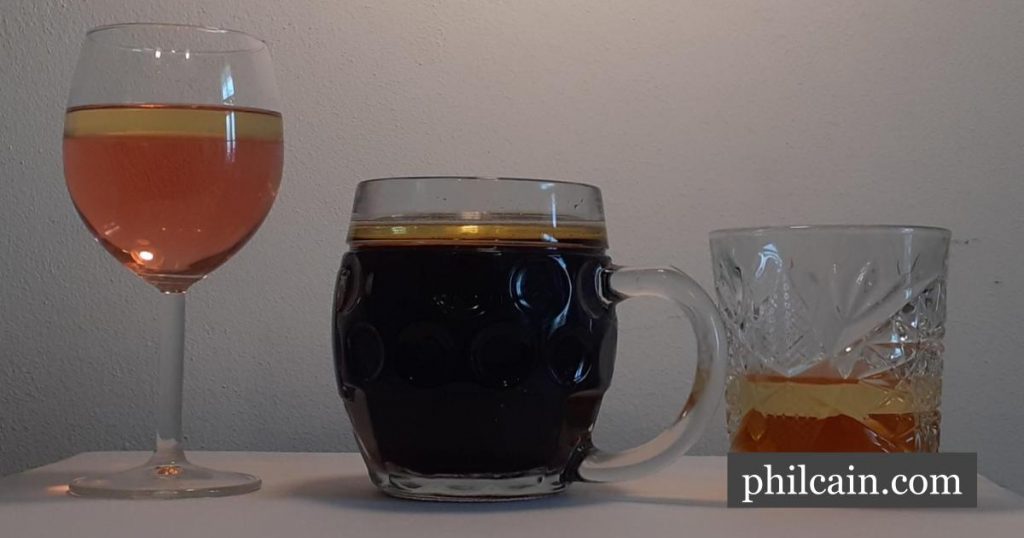
Just one in five Brits know how many calories are in wine or beer or know the official low-risk drinking guidelines, according to a Yougov survey from campaigners calling for labelling to inform them.
“It is absolutely unacceptable that the alcohol industry is able to get away with not providing full information on its packaging,” said Holly Gabriel from Action on Sugar, a view echoed by campaign partners Alcohol Health Alliance.
Alcohol is a carcinogenic drug of dependence with a calorie density comparable to cooking oil, causing a wide range of common physical and mental health problems and mistakes ranging from the deadly to the embarrassing.
But a legal loophole means alcoholic drinks labels need to contain less nutritional information than orange juice. Alcohol suppliers compound the problem by omitting low-risk drinking advice to protect shareholder profits.
Labels provide crucial information to consumers, but alcoholic drinks labels need only show alcohol content, allergens and container size. Campaigners see an upcoming consultation as a way to put this right.
Our individual decision making has major limitations in curbing harm from an addictive drug, but denying us basic pieces information is not a solution. ■
Trying to cut back on alcohol? Here’s what works
by Nicole Lee, Curtin University
With everything going on over the past couple of years, many people have changed their drinking habits.
We’ve seen an increased demand for support, suggesting more people are trying to cut back or quit.
There are so many options for cutting back or quitting alcohol it’s hard to know what will be most effective.
What works depends on how much you drink
Most people successfully quit or cut back their alcohol consumption on their own.
People who drink more frequently are much more likely to have symptoms of dependence and might find it more difficult.
You might be dependent if:
- you can’t easily go a day without drinking alcohol, or find it hard to cut back
- a lot of your social activities include or are based around drinking
- you find yourself thinking about or wanting alcohol a lot
- you find it difficult to control the amount you drink once you start
- you need to drink a lot to feel the effects
- you experience withdrawal symptoms, even mild ones, such as feeling unwell or a slight shaking in your hands when you go a day or two without alcohol.
The more of these signs you have and the more severe they are, the more dependent you’re likely to be. You can check your risk of dependence here.
If you have a mild dependence on alcohol, you may be able to cut back on your own. But if you are moderately dependent, you may need to get some kind of support.
If you are severely dependent, you should seek medical advice before you make any change to your drinking because stopping suddenly can cause severe health problems, including seizures and even death in some people.
For people who are severely dependent, the usual recommendation is to take a permanent or temporary break from alcohol. It may take six months to a year or more before you are able to start drinking again. Some people find it’s better for them not to drink again at all. With severe dependence, there’s a high risk of quickly going back to heavy drinking if you just try to cut back.
If you experience any symptoms of dependence, once you stop or cut back your drinking, you might need specialist treatment or ongoing support to prevent going back to heavy drinking.
‘Cold turkey’ or reduction?
If you’re not dependent, you should be able to either reduce the quantity or frequency of drinking or quit altogether. You may do this on your own or choose to get some support. If one method doesn’t work, try a different way.
If you experience mild to moderate dependence, every time you have a drink it can become a trigger to drink more. So it’s sometimes easier to increase drink-free days, rather than reducing the quantity on drinking days, or to quit altogether for a period of time.
People who are severely dependent usually require some kind of withdrawal support to stop drinking. It is usually better to stop altogether (“cold turkey”) as long as you have medical support. You can undertake withdrawal treatment in a hospital, at home with the help of a GP or nurse, or via telehealth. Alcohol withdrawal typically lasts about five to seven days.
Zero-alcohol drinks
Zero-alcohol drinks are alcoholic drinks with the alcohol removed but which retain a taste similar to the alcoholic version. There is now a huge variety of options for spirits, beer and wine.
If you are not dependent but are trying to reduce your alcohol intake for health or other reasons, these can be a good option. By replacing some or all of your usual alcoholic drinks with zero-alcohol drinks, you can still enjoy the social aspects of drinking without the health risks of alcohol.
If you are dependent on alcohol, the smell and taste of zero-alcohol drinks can act as a trigger for drinking alcohol. They might make it more difficult to make permanent changes to your drinking.
Treatment apps and online support
A range of computerised, web-based, and mobile apps have been developed to support people cutting back or quitting alcohol. They have shown promising results in early trials. The benefit of these apps is accessibility, but the outcomes are modest and they seem to work best in conjunction with professional support.
Hello Sunday Morning’s Daybreak program is a large online alcohol support community, accessed through a mobile and desktop app. It’s designed for moderate drinkers who want to cut back or quit. Early research suggests it’s effective in reducing drinking, as well as improving psychological well-being and quality of life.
Some previously face-to-face support groups like SMART Recovery and Alcoholics Anonymous have moved online, which has increased accessibility. These are typically more suited to people who are dependent on alcohol.
Psychological interventions
Brief interventions: As little as five minutes of advice from a GP can reduce alcohol consumption by 30%, especially for people who are in the mild to moderate dependence category. So it’s worth chatting to your doctor if you need a little help getting started.
Counselling and psychological therapy: The main treatment type to help with alcohol issues is counselling. Sessions are usually once a week with a qualified professional, such as a psychologist. Sometimes they are delivered in group settings. Counselling is suitable for any level of drinker who is trying to make changes.
Some of the main evidence-based counselling treatments in Australia are behavioural and cognitive therapies, such as cognitive behavioural therapy and mindfulness-based relapse prevention. These types of treatments have been shown to be at least as effective as medication
Intensive group programs
A number of more intensive group programs are suited to people who are dependent on alcohol or who are having significant problems, including:
- residential rehabilitation, which is usually for people who have tried other treatments unsuccessfully or who may be unsuitable for non-residential treatment because their home life is not supportive of making changes. It has been shown to be effective in increasing abstinence in dependent drinkers
- day programs, which are similar to residential rehabilitation programs but participants live at home and go in each day. These are a relatively new treatment type and there is limited good quality research on their outcomes.
Medication
A number of medications can help people who are moderately to severely dependent on alcohol. They tend to work best in conjunction with counselling.
- disulfiram is an older medication that works on the alcohol metabolism system and induces nausea and vomiting if alcohol is taken at the same time
- acamprosate can help prevent relapse in people who have already been through withdrawal
- naltrexone reduces cravings in heavy drinkers.
Self-help groups
Alcoholics Anonymous’s 12-step movement has a long history dating back to the 1930s, when there was very little available in the way of real alcohol treatment. There is relatively little research on AA and much of that has been conducted from within the organisation. The known outcomes are modest – the success rate is estimated to be around 10% and the dropout rate appears high.
AA can be helpful for some people and also provides a very well-established peer support network if you need support. It seems to be more effective in conjunction with professional treatment.
There are many options if you are trying to reduce your drinking and no single strategy works for everyone. The best approach is to start with something that looks appealing and feasible to get the outcomes you are looking for. If that’s not effective, try something else or seek professional help. ■
■
Nicole Lee, Professor at the National Drug Research Institute (Melbourne), Curtin University
This article is republished from The Conversation under a Creative Commons license. Read the original article.
A health conscious life can be more carefree
Being health conscious–by minimising alcohol, for instance–dramatically reduces our reasons for worry, but an unhelpful level of perfectionism can make us less carefree than health risk denier.
This piece continues for logged in supporters from any platform. You can retrieve your password using the form below. The story is also on Substack.
Supporter login
Forgot password?
Supporter content
Taking steps to reduce health risks does not mean we need to dedicate every second to being a super-chilled, rippling quasi-Olympian with a top notch social circle. The vast majority of the health benefits we can get from lifestyle come long before this.
Simply paying heed to a handful of achievable lifestyle guidelines has been shown to add a decade or two to our lives, cutting the chance we have health problems in the near future. It is a short list of achievable goals, not a relentless regime.
A typical to-do list might include seven factors: never smoking; drinking little or no alcohol; having a balanced, vegetable-biased diet; do regular moderate exercise; have regular social connection; get adequate sleep; and manage stress.
The trickier ones for many are likely to involve addictive drugs like tobacco and alcohol, which are often woven into our lives. We may need to compromise and acknowledge drinking no alcohol is more achievable than trying to drink just a little. Meanwhile we might struggle to say what is an adequate level of social connection, sleep or stress. But okay is enough, we do not need to look for perfection.
Routinely ticking off many or all of the items on the shortlist will significantly reduce our health risks. That is something to bank, not worry about. Slip-ups are not ideal, but not the end of the world either. Consistently achieving all the items on the list is doable one day.
No health recommendations can ever avert our deaths. But a significant delay is a reasonable expectation for following a few lifestyle recommendations. This is extra time to appreciate being alive which need not involve fine-tuning a health regime. ■
Drink less alcohol, make fewer mistakes
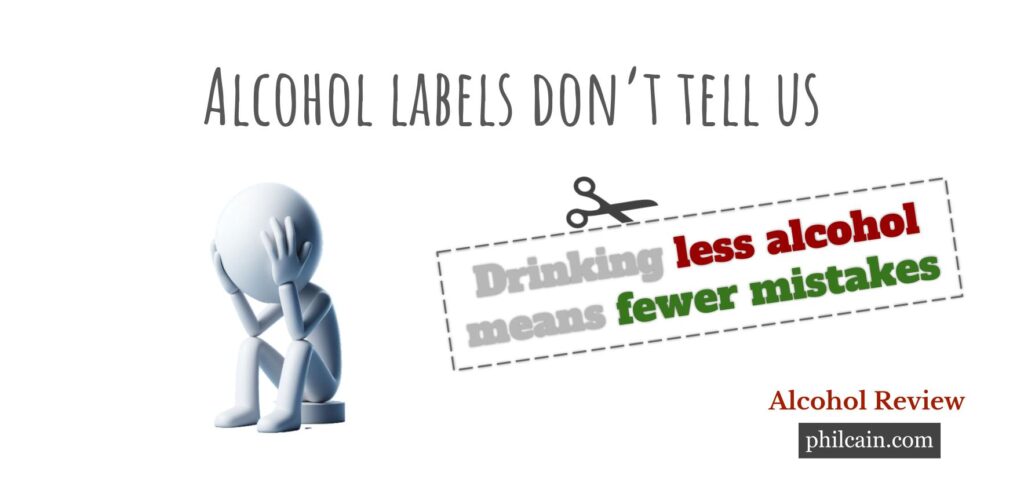
Alcohol impairs a wide range of brain functions, making a wide range of mistakes more likely, with consequences ranging from the minor to the life-changing. Drinking less alcohol means fewer mistakes.
This is one of a collection of shareable alcohol messages. If you think more people should know, please share and join the supporters. ■
Enhance your alcohol intuition
Remoulding our intuitions about alcohol can deliver an enriched experience requiring less effort.
Over time we can shape our unconscious as well conscious thoughts, allowing us to start to align our intuitive ideas about alcohol with scientifically establish facts.
Replacing our existing intuitions about alcohol with more reliable ones can be incredibly rewarding, allowing us to make good decisions quickly with little effort.
The intuitive responses do not necessarily come easily and, in the case of alcohol, as in other areas, can require perseverance, creativity and a wider rethink to cement them in place.
Brain training
We typically only really learn to walk, talk, eat and interact as a standard elements of our growing up curriculum. Beyond that what we learning is less uniform.
It is only thanks to years of practice and the efforts of our parents and wider society that most of us can draw, read, write and drive a car with ease. It is all down to training.
In the right circumstances we can acquire intuitive knowledge of obscure things too, like magnetic fields, like fluid mechanics, Russian irregular verbs, mitochondria, plastering or plumbing.
After years of consistent practice we all tend to become effortless performers in something that is likely to be marvelled at by people who have not had such immersion.
Similar learning process can also enable us to acquire softer skills like social skills, public speaking, or even correcting our posture.
Liquid learning
We learn about things we ingest too, like food and drink, medicines and psychoactives, with alcohol the most common and potent.
Most of us learn about alcohol much as we do riding a bike, with almost no theory and a lot of trial and error.
The fatal flaw is that hearsay and our own perceptions cannot be relied on when trying to form an understanding of a psychoactive.
Drinking alcohol leaves the overwhelming impression it eases stress, trauma, sleep and social awkwardness, but really makes them worse.
Vast advertising budgets and our need to fit in make our false first-hand impressions the easiest takeaways.
This means we can often live for years with very strong but very inaccurate intuitions about alcohol which backfire on us.
Reshaping our intuition
The good news is, however, that intuitions around alcohol are learned and can be remoulded to conform to reality.
A solid base of scientific research can be used to reshape them, allowing us to see where alcohol’s immediate impressions are misleading.
We can change our lifestyles and start gathering new impressions, so forming new intuitions, perhaps by having days and months off.
Like all learning remoulding our alcohol intuition comes most easily when seen as creative process with rewards along the way and payoffs.
There are many such payoffs: avoiding mishaps and illness, lower costs, and improved relationships, memories, mood, cognition and resilience.
Remoulding our intuition can enrich our ideas, shedding inspiring new light on psychology, relationships, lifestyle, philosophy and social goals.
Why would we not attempt to enrich our lives in this way? ■