• Skip to main content
  • Skip to primary sidebar

Alcohol Review

Alcohol understanding for all

  • Highlights
  • Events
    • AR2026
    • AR2025
    • Next year’s event
    • Earlier events
  • Register
  • About
    • Organisers
    • Contact
  • Log In

story

Tepid reception for industry alcohol labelling pledge

January 10, 2024

News the biggest players in the UK’s alcohol industry have agreed to put weekly drinking guidelines on their labels, a month before a government deadline to do so, has prompted little jubilation among health advocates.

The Portman Group, an alcohol industry mouthpiece, dribbled out the news in a piece in the Daily Mail, couching its promise with a caveat about it being subject to “feasibility”. Jubilation was muted, with the UK’s trust-based system taking some 1,300 days to get this far.

The government agreed to let the alcohol industry have a “grace period” until September 1st to comply in March 2017, only making the agreement widely known in January this year. The terms of any new arrangement underlying today’s statement are unknown.

“This half-hearted pledge, by some parts of the alcohol industry, is a strong indicator that the UK deserves a fair system that sets a level playing field for all food and drinks producers,” the Alcohol Health Alliance told Alcohol Companion.”

“All alcohol products must advise drinkers about both the contents and consequences of consumption to empower consumers to make fully- informed choices about their health.”

“While this marks a half-step forward, it shows that the current system of alcohol industry self-regulation is failing consumers,” said Katherine Severi, head of the Institute of Alcohol Studies, which provides a health slant on alcohol policy

It remains to be seen what effect the Portman Group agreement will have, if any. It could prove to be mostly about refreshing the label for a period of inaction from “grace period” to “feasibility period”. ■

How much alcohol are we really drinking post-covid?

January 10, 2024

Notes: MAT = Moving Annual Total, a rolling 52 week period. All in comparison to the same time period last year. 

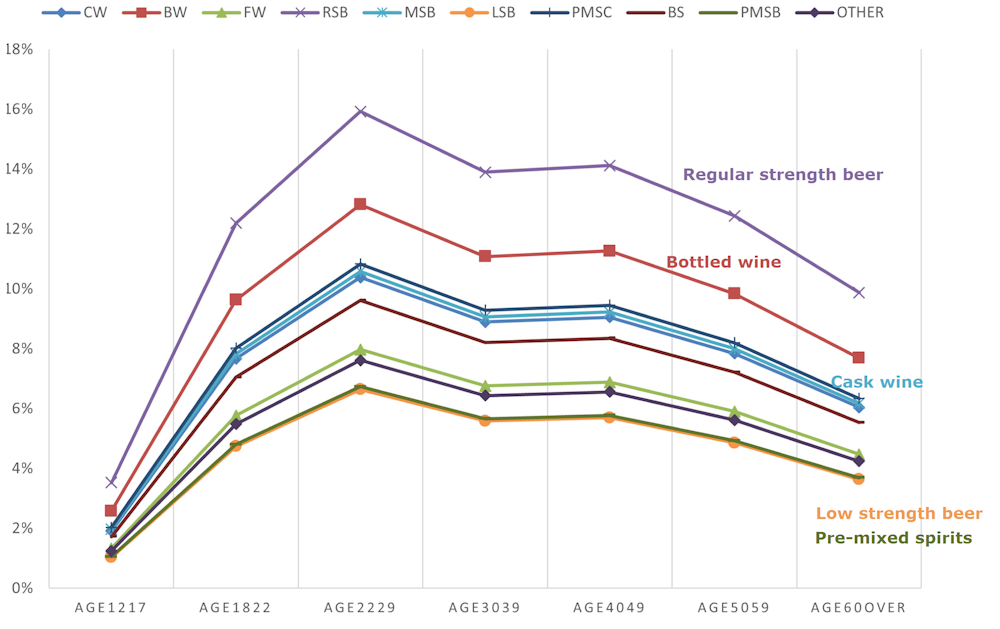
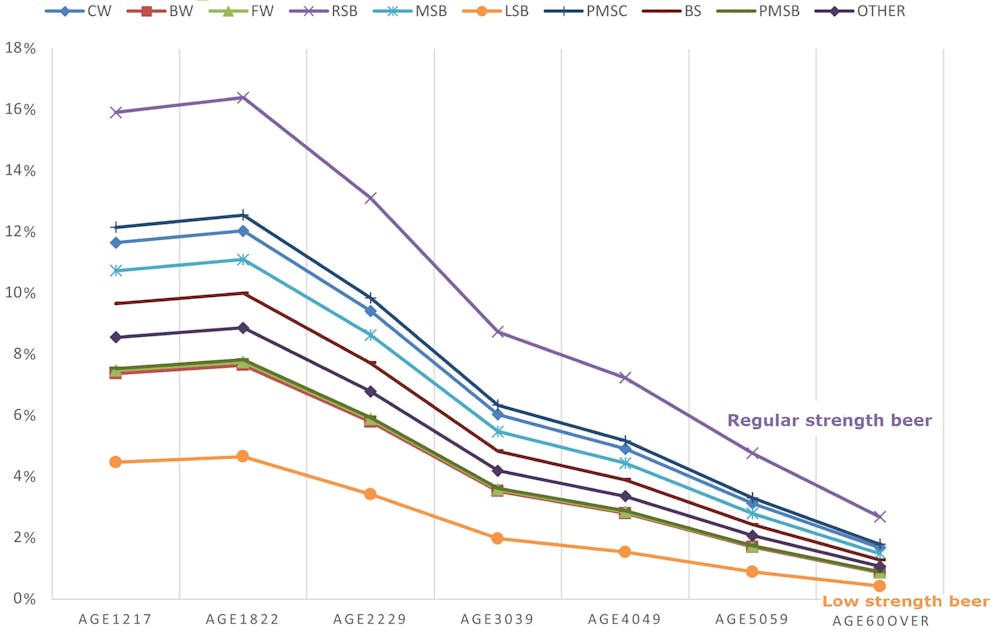
Data from mid-July showed a total volume of 1.3bn litres of alcoholic drinks were bought in shops in the first 17 weeks of lockdown, compared to 2bn litres in the same period the previous year. This is a 35% fall in the total volumes of alcoholic drink bought compared to last year. But this may overstate the fall in alcohol retail purchasing, because we tend to consume more wine at home than beer, so getting twice or three times the amount of alcohol per litre. So, for the statistically inclined, here are some figures on sales volumes growth by drink type, which should allow the calculation of an estimate of alcohol volume purchased. This story will be updated with any resulting analysis. ■

Guest post: We tested claims that limiting alcohol advertising in South Africa would violate rights

January 10, 2024

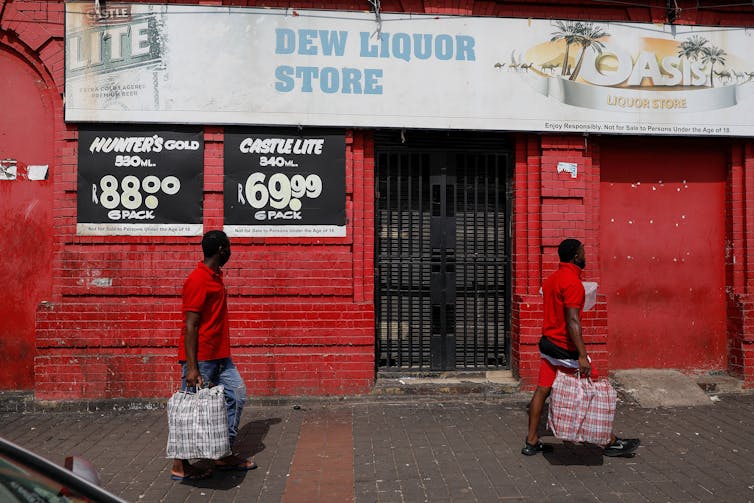
In December 2020 South Africa announced a new ban on alcohol sales.
Phill Magakoe / AFP via Getty Images

Adam Bertscher, University of Bath and Leslie London, University of Cape Town

The lockdown restrictions introduced in South Africa to curb the initial spread of COVID-19 in March 2020 were the tightest in the world. They included a ban on alcohol sales. This, the government said, was to reduce the pressure on hospitals caused by drinking-related trauma, and to discourage social gatherings.

This restriction exposed the huge public health and social impact of alcohol in South Africa. Dramatic decreases in violence, injuries and trauma-related hospital admissions were reported following the ban on alcohol sales.

The country has some of the heaviest drinkers in the world. Excessive drinking is a major contributor to the health burden. Children are especially vulnerable.

In South Africa 12% of adolescents consumed their first alcoholic beverage before the age of 13 years. In 2016, of the young people between 15 and 19 years old who consumed alcohol, 65% reported binge drinking.

Alcohol abuse is also linked to many societal problems. These include domestic violence, foetal alcohol syndrome, child abuse, injuries, and risky sexual behaviours.

In 2012, the South African government drafted the Control of Marketing of Alcoholic Beverages Bill. The Bill sought to restrict advertising, marketing, sponsorship, or promotion of alcoholic beverages except at the point of sale. It was drafted specifically to protect children from alcohol advertising. This intervention is consistent with World Health Organisation recommendations to control alcohol-related harm.

The Bill underwent three regulatory and socio-economic impact assessments. It was meant to be published for public comment in 2013 but was never made public. Our previous research found that the alcohol and allied industries lobbied heavily against the draft Bill.

One argument made by opponents to the draft Bill was that it would unjustifiably violate human rights. These include freedom of expression, and consumers’ rights to information.

In a recent paper we analysed these claims using the Siracusa Principles, which guide the circumstances under which it is justifiable to restrict some rights.

Human rights are a well-recognised framework based on ethics and embedded in international law. They can be used to find a balance between competing societal goals.

What does international human rights law say?

The Siracusa Principles emerged from a meeting of experts in international law in 1984. They were concerned that limitations on rights in the International Covenant on Civil and Political Rights might be abused for national security or in a public emergency. They then provided principles for when limitations were permitted, according to international law.

The Siracusa Principles have five criteria that should be met to permit a restriction on human rights. The restriction must be:

  • provided for and carried out in accordance with the law;
  • in the interest of a legitimate objective of general interest;
  • strictly necessary in a democratic society to achieve the objective;
  • the least intrusive means available to reach the objective; and
  • not arbitrary or unreasonable.

We used this framework in our research to answer the question: is restricting alcohol advertising, in the interest of public health, a justifiable limitation on the right to freedom of expression?

We concluded that restricting alcohol advertising to protect children’s rights and the right to health is justifiable, for several reasons.

Firstly, is it doubtful that corporations can claim human rights. Human rights are intended for natural persons and not legal entities like corporations. But even if rights apply to legal entities, it’s still possible that a limit on freedom of expression could be justified.

Secondly, public health reasons may be acceptable grounds for restricting freedom of expression according to the International Covenant on Civil and Political Rights. This is because there is strong evidence of the negative impact of alcohol consumption on children. And alcohol advertising is linked to earlier initiation of drinking. This suggests that South Africa’s draft Bill would be effective in reducing drinking in young people.

Thirdly, many international human rights laws support this restriction. For example, article 24 of the United Nations Convention on the Rights of the Child supports children’s right to survival and development, and their right to health.

Article 17(e) of the Convention obliges governments to protect children from harmful information. Alcohol advertising would be information that is harmful for children.

Moreover, article 12 of the International Covenant on Economic, Social and Cultural Rights obliges governments to protect people’s rights from violations by non-state actors – such as the alcohol industry. Government failure to regulate the activities of corporations that market harmful substances may amount to a violation of the right to health.

Lastly, there are no less intrusive and restrictive methods available other than restricting alcohol advertising. Given the scale of the problem, other kinds of interventions targeting high risk drinkers are either ineffective or pose insurmountable logistical challenges, such as the notion of identifying and targeting problem drinkers.

And self-regulation does not work. These industry-preferred interventions put the responsibility on individuals without recognising the responsibility of the alcohol industry in influencing drinking behaviours.

Reducing harm

Introducing regulation to reduce alcohol-related harm is fully consistent with human rights protection, particularly for children. Such regulation could include restricting alcohol advertising, marketing, sponsorship, or promotion.

The international treaty on transnational corporations, business enterprises and human rights is a new draft international law that could substantially strengthen public health goals. This treaty would place obligations on non-state actors, similar to those on governments, and help to make commercial actors accountable for their business practices.The Conversation

Adam Bertscher, PhD candidate, University of Bath and Leslie London, Head of the Division of Public Health Medicine in the School of Public Health and Family Medicine, University of Cape Town

This article is republished from The Conversation under a Creative Commons license. Read the original article.

World champion alcohol-free beers 2021

January 10, 2024

The UK took a narrow victory in this year’s World Beer Awards alcohol-free medals league table, bagging 23 of the 110 awards, two more than second-placed Germany. Canada took third, with 14 gongs, southern neighbour hot on its heels with ten. Brazil managed four, while Estonia, China, Japan and Russia also brought home honours. ■

Style/breweryNameCountryAward
Dark
Athletic Brewing CoAll OutUSWorld’s Best No & Low Alcohol Dark
Super BockFree PretaPortugalCountry Winner
La Voie MalteeLa Raisonnable RousseCanadaSilver
Big DropWoodcutter Brown AleUKSilver
LeffeBrown 0.0%BelgiumSilver
Super BockNegra SínPortugalSilver
WälsVienna FreeBrazilBronze
Flavoured
KarlsbergGrapefruit AlkoholfreiGermanyWorld’s Best No & Low Alcohol Flavoured
Athletic Brewing CoDownwinder GoseUSCountry Winner
KarlsbergGrapefruit AlkoholfreiGermanyCountry Winner
Sleeman PointFive Non-Alcoholic Citrus LagerCanadaCountry Winner
Lösch-ZwergWeizen Zitrone AlkoholfreiGermanySilver
KarlsbergFresh AlkoholfreiGermanySilver
KarlsbergRadler AlkoholfreiGermanySilver
Yanjing BeerNo Alcohol WeissbierChinaSilver
FentimansLemon ShandyUKSilver
MönchshofNatur Radler 0,0%GermanyBronze
BernardFree Sour CherryCzech RepublicBronze
San Miguel0,0 RadlerSpainBronze
LeffeRuby 0.0%BelgiumBronze
SchützengartenGinger Beer AlkoholfreiSwitzerlandBronze
IPA
Samuel AdamsJust The HazeUSWorld’s Best No & Low Alcohol IPA
Small BeerIPAUKCountry Winner
Twisted CatAlcohol Free IPALuxembourgCountry Winner
FrogBeerIncroyable IpaFranceCountry Winner
CampinasIpa ZeroBrazilCountry Winner
ÕllenautKainekenEstoniaSilver
Drop Bear Beer Co.Tropical IPAUKSilver
BrandIPA 0.0NetherlandsSilver
ThornbridgeZero FiveUKSilver
Samuel AdamsJust The HazeUSSilver
Goose Island Brewhouse São PauloLittle IpaBrazilSilver
Rügener Insel-BrauereiSnorkelers Sea Salt IpaGermanySilver
SiboireDisciplineCanadaBronze
UNLTD.IPAUKBronze
Partake BrewingIPACanadaBronze
Microbrasserie Le Trou du diableNano Perroquet IPACanadaBronze
InfiniteIPAUKBronze
Lager
Jump ShipYardarmUKWorld’s Best No & Low Alcohol Lager
Mahou0,0 TostadaSpainCountry Winner
Athletic Brewing CoAthletic Brewing CompanyUSCountry Winner
Greif BräuLeichtGermanyCountry Winner
Pito1St Czech Non Alcoholic BeerCzech RepublicCountry Winner
Jump ShipYardarmUKCountry Winner
Stella Artois0.0%BelgiumCountry Winner
B&BCelestial Sin Hoppy LagerSpainGold
SvyturysGo PilsnerLithuaniaSilver
WaldhausDiplom Pils AlkoholfreiGermanySilver
Drop Bear Beer Co.New World LagerUKSilver
ClausthalerOriginalGermanySilver
San MiguelMagna Roja 0,0%SpainSilver
Ambar0,0 TostadaSpainSilver
Partake BrewingBlondeCanadaSilver
SchützengartenAlkoholfreiSwitzerlandSilver
Maes0.0%BelgiumBronze
SpatenAlkoholfreiGermanyBronze
Swinckels’0.0%NetherlandsBronze
EngelKellerbier Hell AlkoholfreiGermanyBronze
Days BrewingLagerUKBronze
HofmeisterUltra LowGermanyBronze
Fortitude DrinksEveryday LagerUKBronze
KarlsbergPils AlkoholfreiGermanyBronze
WälsSession FreeBrazilBronze
Pale
Iwate Kura BeerHeel In The Prohibition EraJapanWorld’s Best No & Low Alcohol Pale
La Voie MalteeLa Raisonnable IPACanadaCountry Winner
Iwate Kura BeerHeel In The Prohibition EraJapanCountry Winner
Jupiler0.0%BelgiumCountry Winner
Heaps NormalQuiet XpaAustraliaCountry Winner
Rügener Insel-BrauereiSurfers Summer AleGermanyCountry Winner
Maisel & FriendsAlkoholfreiGermanyGold
AffligemBlond 0.0%BelgiumSilver
SvyturysGo Pale AleLithuaniaSilver
Palm0.0%BelgiumSilver
Wold TopIntuitionUKSilver
Surreal Brewing CompanyNatural Bridges Kolsch StyleUSSilver
San Miguel0,0%SpainSilver
Hawkesbury Brewing CoProhibitionAustraliaSilver
FrogBeerIncroyable BlondeFranceSilver
Big DropPine Trail Pale AleUKSilver
Störtebeker BrauspezialitätenAtlantik-Ale AlkoholfreiGermanySilver
Partake BrewingPaleCanadaSilver
TinniesUltra Low AlcoholAustraliaSilver
Mornington Peninsula BreweryMornington FreeAustraliaBronze
Drop Bear Beer Co.Yuzu Pale AleUKBronze
UweSummer AleGermanyBronze
Bowness Bay BrewingSwan FreeUKBronze
LibraPale AleCanadaBronze
Sour & wild
Microbrasserie Le BockaleAuroraCanadaWorld’s Best No & Low Alcohol Sour & Wild
Microbrasserie Le BockaleAuroraCanadaCountry Winner
Big DropDouble Strike SourUKBronze
Speciality
Big DropParadiso Citra IPAUKWorld’s Best No & Low Alcohol Speciality
Big DropParadiso Citra IPAUKCountry Winner
The Flying Dutchman Nomad Brewing CompanyFreak Kriek Zero Point Three Feel Free Merry Cherry BeerBelgiumSilver
Stout and porter
Big DropGalactic Milk StoutUKWorld’s Best No & Low Alcohol
Big DropGalactic Milk StoutUKWorld’s Best No & Low Alcohol Stout & Porter
Athletic Brewing CoAll OutUSCountry Winner
DeschutesNon-Alcoholic Irish Style DarkUSCountry Winner
Big DropGalactic Milk StoutUKCountry Winner
Surreal Brewing Company17 Mile PorterUSSilver
Drop Bear Beer Co.Bonfire StoutUKSilver
Wheet beer
FranziskanerAlcoholfree Wheat BeerGermanyWorld’s Best No & Low Alcohol Wheat
FranziskanerAlcoholfree Wheat BeerGermanyCountry Winner
Microbrasserie Le BockaleMeteoriteCanadaCountry Winner
SvyturysGo BaltasLithuaniaSilver
Athletic Brewing CoWit’s PeakUSSilver
Maisel’S WeisseAlkoholfreiGermanySilver
Sober CarpenterCanadaSilver
Bavaria0.0% WitNetherlandsSilver
Baltika0.0% Wheat UnfilteredRussian FederationSilver
FrogBeerIncroyable BlancheFranceSilver
La Voie MalteeLa Raisonnable Wheat BeerCanadaBronze
GrolschWeizen 0.0%NetherlandsBronze
Source: World Beer Awards

Cannabis: Let’s learn from alcohol

January 10, 2024

Cannabis is beginning to reach large commercial scale, with all the extra challenges that this brings. We should not let it become alcohol and tobacco 3.0.

THC Review has begun following global cannabis news, a foundation for in-depth reporting and discussion to come. It also has a nascent newsletter and LinkedIn page.

It will borrow heavily from the open format of Alcohol Review which unearthed numerous important stories and hosted a range of informed discussions since it began in 2016.

The coverage will again come from a public-interest perspective, centred on health and wellbeing. It also again does it acknowledging it always has much more to learn.

Why cover cannabis?
The reason for the crossover is that cannabis is beginning to gain the global scale of alcohol and tobacco, which have harms that reflect their enormous customer base.

There is little reason to think that commercialising cannabis will not have similar effects, with marketing, availability and product development, so boosting consumption. 

The duty to deliver shareholder returns means downplaying risk, promoting purported benefits, fighting regulation, often in the guise of a fight for individual freedoms.

THC Review will be vigilant in ensuring the motives and methods of economic interests are known. Cannabis is an unusual product but the business fundamentals apply.

Cannabis interests will increasingly impact public health, science, politics, law, media and public discussion. Those already in business are already making inroads.

Business interests, associates and enthusiasts widely downplay health concerns, berate any critics, and laud their potential economic contributions and cannabis’s ported medicinal use.

If thousands of prescriptions are being written for cannabis to treat someone’s low mood or frayed nerves, say, then why not make it available over-the-counter to everyone?

The US drug’s administrator, the FDA, has not licensed cannabis to treat any disease or condition. This should surely give non-experts some pause for thought, as should many reports of serious health risks.

Alcohol and tobacco trod a similarly confused scientific no-man’s land. Offering them the benefit of the doubt did not work out well. Let’s not do that again.

On legalisation
THC Review is not fundamentally opposed legalisation. Regulation seems better aimed at producers than consumers. But legalisation is not one thing either and all its forms cannot be given uncritical approval.

It is still an enormous job to police illegal alcohol and tobacco. And we are far from always successful in combating the problems created by large legitimate industries. The risk of repetition is real.

But it is too soon to get into all this now. It will unfold more naturally over time. The price of freedom is eternal vigilance, a task that is both stimulating and enlightening.

I hope you will join and look forward to hearing your news, views and ideas.

You can follow on THC Review on Twitter, LinkedIn and get the newsletter.

Alcohol worsens mental health problems

January 10, 2024

Alcohol can cause and worsen the common mental health problems anxiety and depression. Drinking little or no alcohol may help relieve these problems. For more alcohol understanding, please join the supporters. ■

  • « Go to Previous Page
  • Page 1
  • Interim pages omitted …
  • Page 11
  • Page 12
  • Page 13
  • Page 14
  • Page 15
  • Interim pages omitted …
  • Page 44
  • Go to Next Page »

Primary Sidebar

Follow us

  • Bluesky
  • Instagram
  • LinkedIn
  • Twitter
  • WhatsApp

Copyright © 2026 · Phil Cain Impressum


Loading Comments...