• Skip to main content

Alcohol Review

Alcohol understanding for all

  • Highlights
  • AR2026
    • AR2025
    • Earlier events
  • Register
  • About
    • Organisers
    • Contact
  • Log In

story

Alcohol and driving: an informative incompatibility

January 10, 2024

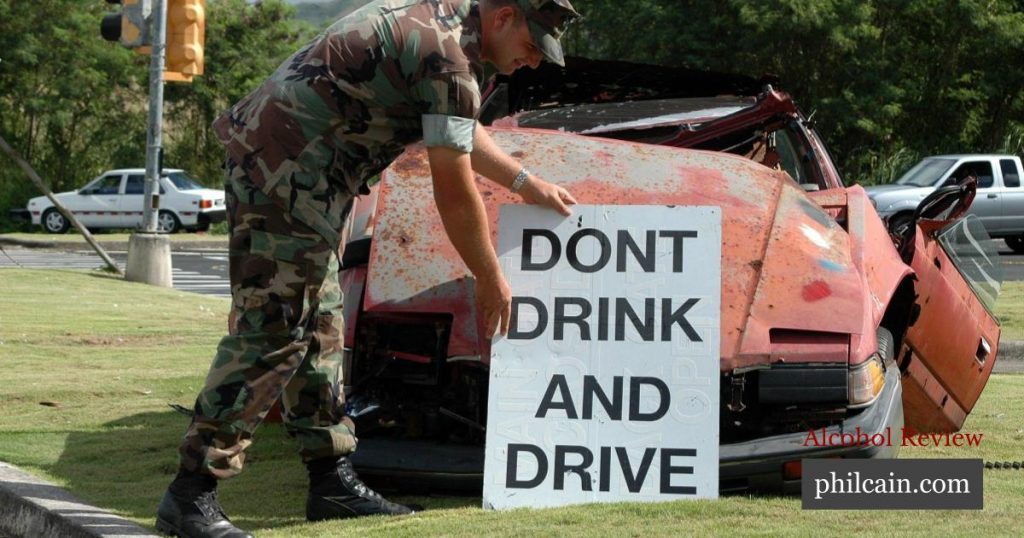
With a responsibility-driven covid unlocking in the news it is worth reminding ourselves that we are truly terrible at driving well after drinking alcohol. We can learn a lot from this.

Our ability to abide by legal limits and social norms on the road falls apart after alcohol resulting in countless injuries and deaths. This is because driving well needs more than a heartfelt wish to act “responsibly”. It needs drivers who have the skills and brain functions available to do it.

To drive well we need the mechanical skills to operate the wheel and pedals in a timely fashion; we need real-time perception and processing of what we see, hear and feel; navigational memory; the ability to read the road and think ahead; and a sense of what other drivers are thinking and doing too.

All this lot, and more, needs to be woven together to create a flow of clear, well-timed decisions and coordinated movements to propel us safely on our way. Alcohol renders us incapable of it, hampering the brain in delivering it. Driving well and drinking are simply incompatible.

One simple model of alcohol inebriation likens its effect to that of shortsightedness, limiting our mental horizons in all directions. It makes us unable to see beyond a relatively small set of factors in our immediate surroundings and, to make it worse, we also find it hard to see this profound limitation.

Our performance in other areas is similarly undermined by more than a little alcohol. Do we make any great business or personal decisions after a few drinks? Seen any timeless drunk performances? Any examples are mostly luck. Since we do not face prosecution or death, we tend not to register the effect.

Driving is a limited metaphor, as is every metaphor. But it can be useful if we see the whole. metaphorical picture For a society of tolerably good drivers we need a system of laws, good enforcement, etiquette, safe cars and, most importantly, trained, fully-functioning drivers at the wheel, which means they are sober.

Ignoring any link in the chain of factors allowing us to be good citizens on the road is itself irresponsible. Minimising mistakes from alcohol inebriation has to be part of any covid unlocking. And it we can also use it ourselves to eliminate many other avoidable errors. Searching for a parallel? Take a look at the roads. ■
Parliamentary influence worries touch alcohol harm

January 10, 2024

The discussion over parliamentary groups is important to tackling alcohol harm, with some promoting alcohol interests while another looks to curb alcohol harm. They are not mutually exclusive.

The chair of a group of UK parliamentarians focused on reducing alcohol harm is also co-chair of another recently revealed to have taken money from an alcohol-industry-linked group.

Christian Wakeford, who switched from the Conservatives to Labour in January, is chair of the Alcohol Harm All-Party Parliamentary Group (APPG), supported by charity Alcohol Change for a figure of £3,000.

But Wakeford is also co-chair of the alcohol-industry supported group on the Night Time Economy, which has the mission, “To recognise the cultural and economic importance of nightlife to the UK.” 

Records show this APPG received £7,500 or more from the Night Time Industries Association (NTIA), which campaigns to #SaveNightlife for pubs, clubs and alcohol companies including Pernod Ricard and Jägermeister.

Wakefield and Alcohol Change were both contacted for comment on the issues raised by this story, but had yet to respond at the time of publication. Any replies will be added accordingly.

Just over half the £25m put into all-parliamentary bodies since 2018 was from the private sector, says research from the Guardian newspaper, a sum which critics say gives them undue sway in politics.

Journalists and members of the public are, arguably, encouraged to confuse reports written and published by commercial interests with one which has had politically balanced parliamentary oversight.

The smallprint of a 46-page NTIA report on the impact of covid-19 last year was billed, “An inquiry by the All-Party Parliamentary Group for the Night Time Economy,” and bears the parliamentary portcullis logo. 

But, in a small footnote, it adds, “This is not an official publication of the House of Commons or the House of Lords. It has not been approved by either House or its committees.”

The disproportionate role of commercial interests in establishing and being the real power behind All-Party Parliamentary Groups has wider implications for alcohol harm too.

There APPGs for beer, recipient of £30,000 from beer business; scotch, set up by the Scotch Whisky Association; and wine and spirits, the brainchild of the Wine and Spirits Trade Association.

The wine and spirits APPG produced a report last week on the “unworkability” of the government’s tax proposals. Some of its contentions were inaccurate but still gained uncritical media attention. ■

Discover the invisi-fish

January 10, 2024

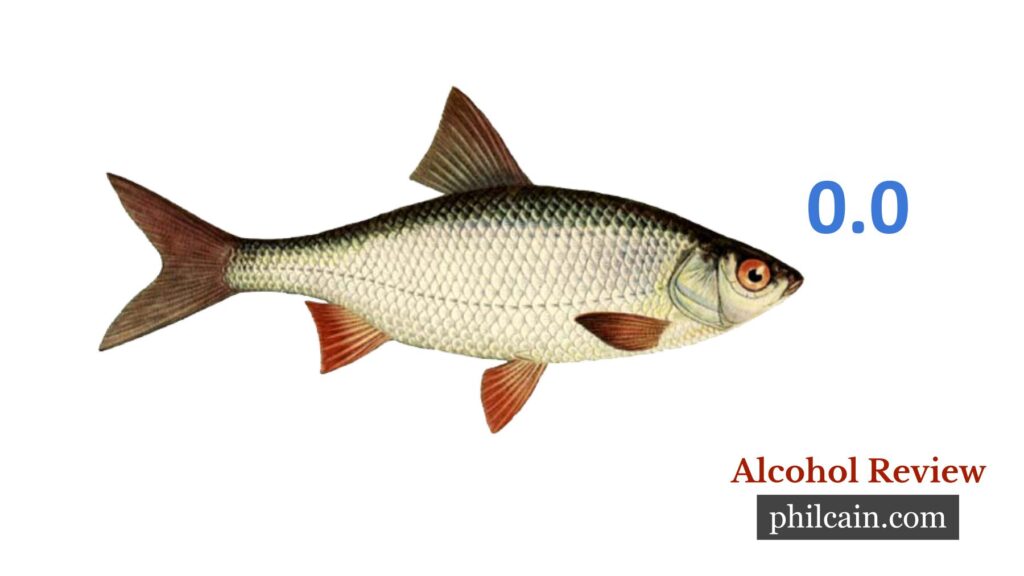
The invisi-fish is a remarkable optical phenomenon in which a fish become completely invisible when positioned next to the characters “0.0”. Do you see it? Explore this effect and more with Alcohol Review. ■

Join the supporters

QR codes are a sham

January 10, 2024

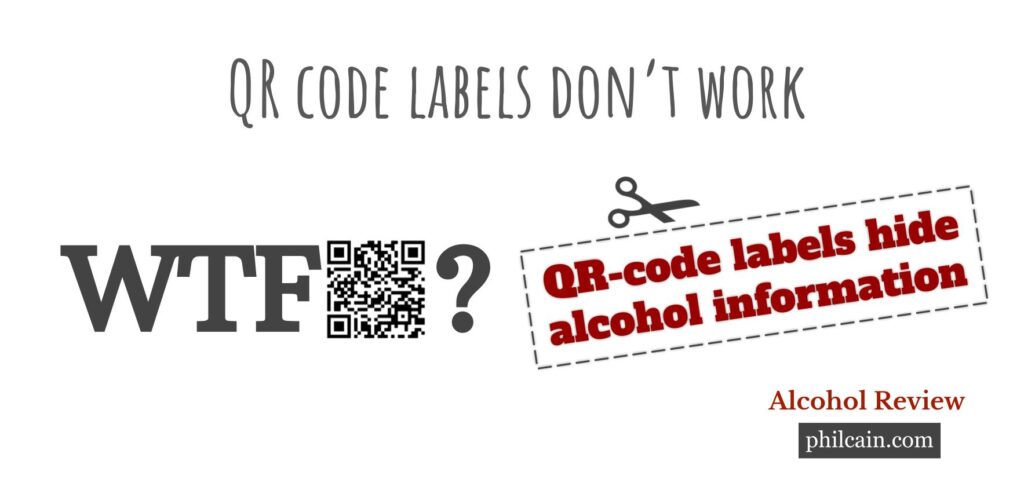
Only a tiny fraction of us scan QR codes, making them the perfect way to conceal information while also, technically, providing it. Consumers have a right to be told alcohol’s health effects directly on the label in plain language. Do you agree? If so, please, join the supporters? ■

Note: This is one of a collection of shareable key alcohol messages.

Compounding unfairness

January 10, 2024

Visit the story

Just one in five Brits know alcohol basics

January 10, 2024

Alcohol calories similar to cooking oil

Just one in five Brits know how many calories are in wine or beer or know the official low-risk drinking guidelines, according to a Yougov survey from campaigners calling for labelling to inform them.

“It is absolutely unacceptable that the alcohol industry is able to get away with not providing full information on its packaging,” said Holly Gabriel from Action on Sugar, a view echoed by campaign partners Alcohol Health Alliance.

Alcohol is a carcinogenic drug of dependence with a calorie density comparable to cooking oil, causing a wide range of common physical and mental health problems and mistakes ranging from the deadly to the embarrassing.

But a legal loophole means alcoholic drinks labels need to contain less nutritional information than orange juice. Alcohol suppliers compound the problem by omitting low-risk drinking advice to protect shareholder profits. 

Labels provide crucial information to consumers, but alcoholic drinks labels need only show alcohol content, allergens and container size. Campaigners see an upcoming consultation as a way to put this right.

Our individual decision making has major limitations in curbing harm from an addictive drug, but denying us basic pieces information is not a solution. ■

  • « Go to Previous Page
  • Page 1
  • Interim pages omitted …
  • Page 13
  • Page 14
  • Page 15
  • Page 16
  • Page 17
  • Interim pages omitted …
  • Page 44
  • Go to Next Page »

Copyright © 2026 · Phil Cain Impressum