• Skip to main content

Alcohol Review

Alcohol understanding for all

  • Highlights
  • AR2026
    • AR2025
    • Earlier events
  • Register
  • About
    • Organisers
    • Contact
  • Log In

story

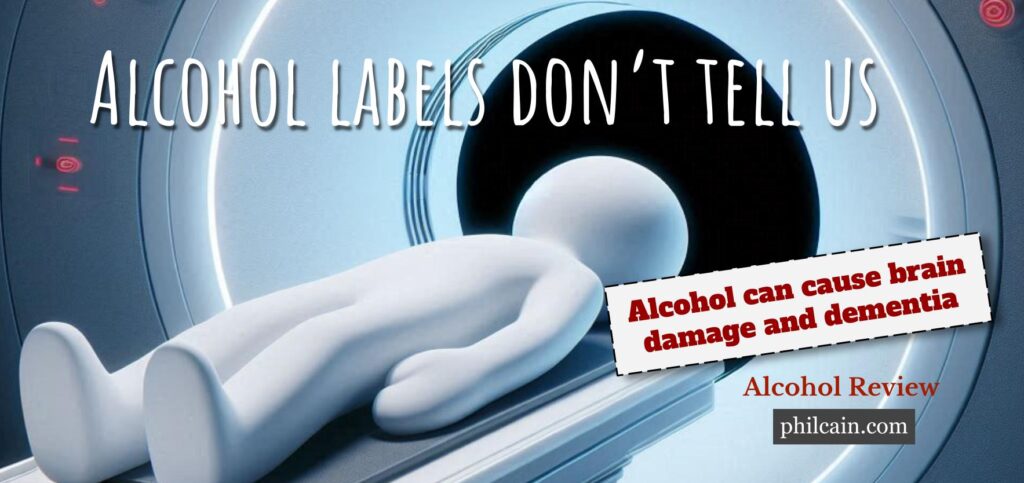
Alcohol can cause brain damage and dementia

January 10, 2024

Drinking more than a small amount of alcohol increases the risk of developing dementia in later life and can cause early-onset dementia and brain damage. ■
This is one of a collection of shareable alcohol messages. If you think more people should know, please share and join the supporters.

Guideline labelling’s welcome return leaves open question

January 10, 2024

Health minister gives UK the alcohol industry until September to introduce health guideline labelling

So it is welcome news that the government is pressing for the official guidelines to return in September (see video), albeit two years after they were quietly dropped.

I have joined calls for official health guidelines to appear on all alcoholic drinks labels since revealing that they had been dropped from the UK’s voluntary code in my reporting in late 2017.

It seems extraordinary that robust, scientific information about the safe consumption of a product could ever omitted from packaging, so undermining our right to make informed choices as consumers.

If official health guidelines do reappear on labels in September, as the government hopes, some can be forgiven for looking back and wondering whether self-regulation is an effective way to safeguard consumers?

The responsibility for such concerns about the current system of regulation lies with the alcohol industry. ■

Alcohol education is essential

January 10, 2024

Knowledge is necessary to inspire, shape and sustain positive change, with its dissemination providing the conditions for this change to occur. Alcohol is no exception.

We cannot require anyone to learn about alcohol, no more than we can require them to learn about physics or the Brontë sisters, but everyone should have the chance.

An accurate understanding of alcohol based on scientific research offers a solid basis for us to safeguard our wellbeing, both as individuals and as a society. 

Regulating alcohol prices, availability and ads are more effective as direct interventions, but education is necessary for these measures to be designed, justified and accepted.

Increasing the alcohol knowledge base of politicians, citizens and the media are preconditions for the implementation of effective alcohol policy. 

An asset for individualists 
A coherent understanding of alcohol is far better for us as individuals than relying on traditional rules of thumb, enabling us to avoid a wide array of misfortunes.

Those informed about alcohol can help themselves and others to avoid mistakes. Informed people can better help those who suffer alcohol harm and become a positive influence.

An understanding of the reasons for guidelines and regulations makes them far more likely to make people take heed than blind trust or irritation born of confusion.

The effects of alcohol are inherently misleading. We are bombarded by misleading ads with flimsy regulation and alcohol industry-run information platforms.

Inaccurate beliefs are therefore common, just as they are in stock market bubbles and politics. Grassroots education is the only way to put a lid on the spread of misconceived ideas.

Underpinning change
Financial education does not provide a safeguard from financial mistakes, but it does make us justifiably wary and recognise the benefit of robust regulation.

And, should we fall prey to financial misfortune, we can find the financial knowledge we need to understand what went wrong and how to avoid it in future.

Reliable alcohol knowledge can fulfil a similar role, helping to improve the lives of those who embrace it, for next to nothing, and enabling us to make the best of mistakes.

Alcohol education does not offer immediate, measurable payoffs, but a lack of understanding rarely has positive outcomes in any other area. Alcohol should not be shrouded in mystery.

Education ranks low on the policymakers’ alcohol to-do list, but it still remains vital to achieving a less harmful relationship with alcohol long term.

Learning about alcohol, a topic with enormous social, psychological, economic, health and political reach, can help us engage more fully as citizens as well as students. ■

Brits want alcohol-industry-protected policy

January 10, 2024

Seven in ten Brits want government policy to be protected from alcohol industry interference and a majority want a ban on alcohol advertising, says a survey for the Alcohol Health Alliance (which launches its manifesto in Parliament today.

“With a general election due to take place next year, our message to all political parties is that with the right political will there is a significant opportunity here to turn the tide on alcohol harm and drastically improve the lives of generations to come,” said Professor Sir Ian Gilmore, chair of the alliance.

The findings accompany the launch of a report and manifesto today in Parliament. The alliance points to National Audit Office figures showing alcohol deaths directly attributable to alcohol rose by 89% between 2001 and 2021, while alcohol harms cost the NHS £3.5bn a year.

The Yougov survey also found that 60% of people think alcohol displays and promotions in shops should only be visible to people who intend to browse or buy alcohol. They also showed strong support for making it mandatory to put basic information on alcohol product labels.

76% of respondents said the alcohol content of alcohol products should be required on labels, not just the alcohol percentage as is the case now, forcing consumers to work out how much alcohol a drink contains. Over half supported mandatory pregnancy warnings and nutritional information.

Alcohol products are exempt from laws requiring all other types of food and drink to include nutritional information on labels, despite alcohol being linked to seven types of cancer and over 200 other illnesses. The only requirement is for alcohol product labels to include volume, alcohol percentage and common allergens.

The UK government promised a consultation on alcohol labelling in 2020, but it did not deliver on its promise. ■

Twittersphere:

Report and manifesto here.: "70% of people surveyed support protecting Government policy from the influence of the alcohol industry and its representatives." (p3). Ad ban support below (p17). There were 12,000 on Yougov's panel.https://t.co/MWq2WAIxS5 pic.twitter.com/IB66MAQhKC

— Alcohol Review (@alcohol_review) July 11, 2023

Alcohol is not useful

January 10, 2024

Alcohol is not useful, with all of its purported benefits achievable by other means which are not hazardous to health or well-being. Please join the supporters of Alcohol Review to help bring alcohol understanding for all. ■

Alcohol-free beer in the EU*

January 10, 2024

At 8.1% France had the EU’s highest percentage of its beer production, exports and imports which is alcohol-free last year, according to Eurostat. Germany, which produced three times as much beer, came a close second. Hungary and the Czech Republic pushed Spain, the EU’s second largest beer producer, down to fifth place in terms of alcohol-free share but was comfortably above the EU average 5.6%. Belgium, the bloc’s third biggest beer producer, failed to qualify because there are no alcohol-free beer production figures, as was also the case with Italy. The numbers were also lacking for the Netherlands. ■

Note: The role alcohol-free beer might have in alcohol harm is unclear. It might help in some ways and might contribute to problems in others. More research is needed. There’s a discussion here.

  • « Go to Previous Page
  • Page 1
  • Interim pages omitted …
  • Page 15
  • Page 16
  • Page 17
  • Page 18
  • Page 19
  • Interim pages omitted …
  • Page 44
  • Go to Next Page »

Copyright © 2026 · Phil Cain Impressum